
Editor’s Note: Navigating Metabolic Health in 2026
Across the United States from the fitness-focused streets of Los Angeles to the clinical hubs of Houstonmetabolic health has become a game of precision. One of the most common mistakes patients make is assuming that “natural” fruit is always a free pass. At Pure Dietly, we’ve analyzed 2026 protocols from the Cleveland Clinic and Quest Diagnostics to bring you the definitive list of the worst fruits for diabetics. Understanding these “sugar bombs” is the first step toward a stable A1C.
1. The Fructose Myth: Why “Natural” Isn’t Always “Safe”
In 2026, the medical community has shifted its focus from simple calorie counting to Glycemic Variability. Fructose (fruit sugar) is processed almost exclusively by the liver. When you consume high-fructose fruits without enough fiber, it triggers a rapid insulin response and can contribute to Non-Alcoholic Fatty Liver Disease (NAFLD).
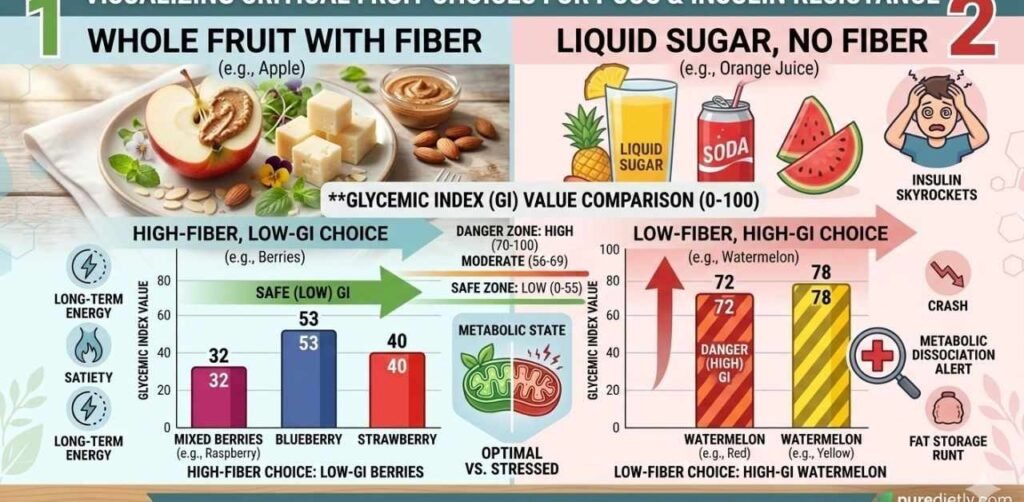
The worst fruits for diabetics are those that lack the “Fiber Matrix.” Fiber acts as a biological speed bump, slowing down the absorption of sugar. Without it, your blood glucose spikes as sharply as if you had consumed a sugary soda.
While understanding which fruits to avoid is crucial, it’s equally important to know what you CAN eat. Check out our detailed guide on the [15 Best Low Glycemic Fruits for Blood Sugar Control] to build a safer meal plan.”
2. The Top 10 Worst Fruits for Diabetics (2026 Clinical List)
1. Watermelon: The Rapid Glucose Spiker
Watermelon is often the biggest surprise for patients. While it is hydrating and rich in vitamins, it has a Glycemic Index (GI) of 72 to 76. This is considered high. Because it has very little fiber, the sugar enters your bloodstream almost instantly.
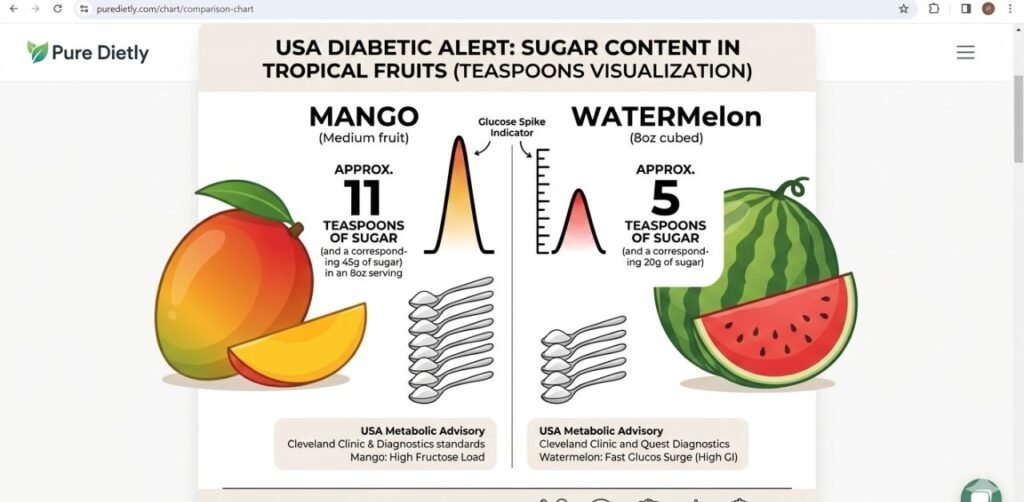
- The Risk: A single large slice can cause a massive “glucose excursion” in less than 30 minutes.
2. Overly Ripe Bananas: The Starch-to-Sugar Shift
A banana’s impact on your sugar depends on its color.
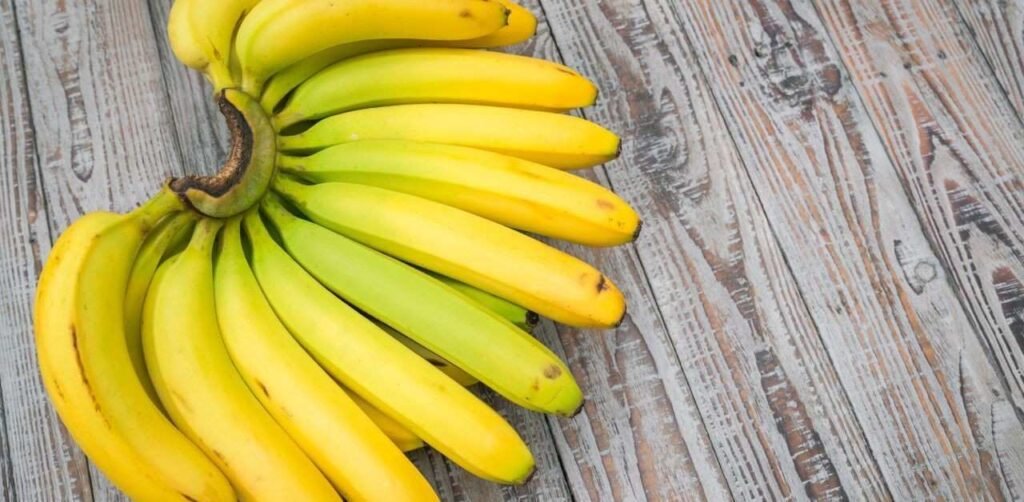
- Why it’s a “Worst” Fruit: As a banana develops brown spots, its “Resistant Starch” converts into simple sugars. In 2026, we classify spotted bananas as a high-GI food that should be avoided by anyone with insulin resistance.
3. Dried Dates: The Ultra-Concentrated Sugar Bomb
Dates are perhaps the most dangerous on this list. With a GI of 103, they actually rank higher than pure white bread.

- The 2026 Data: Drying removes the water content, concentrating the sugar. Eating just three dates is equivalent to eating a large candy bar in terms of glycemic load.
4. Pineapple: The Tropical Insulin Trigger

Pineapple contains a lot of manganese and Vitamin C, but its sugar profile is problematic for diabetics. With a GI of 66, it sits in the medium-high category.
- Pro Tip: If you must eat pineapple, stick to the core where the fiber is highest, but limit it to a 1/2 cup serving.
5. Mangoes: The “King” of Carbs
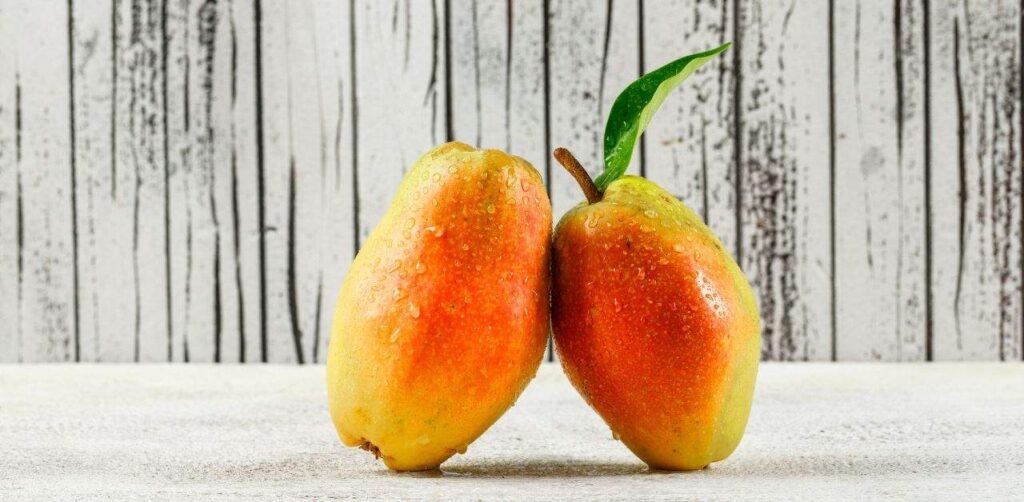
One medium mango contains roughly 45 to 50 grams of sugar. For most diabetics in the USA, the daily recommended fruit carb limit is 15-30 grams per serving. A mango easily doubles that in one sitting.
6 .Grapes: The “Candy” of the Vine

Grapes are tiny, which makes them easy to overeat. One cup of grapes contains about 23 grams of sugar and only 1 gram of fiber. This low-fiber ratio makes them one of the worst fruits for diabetics who struggle with portion control.
7. Canned Fruit in Heavy Syrup
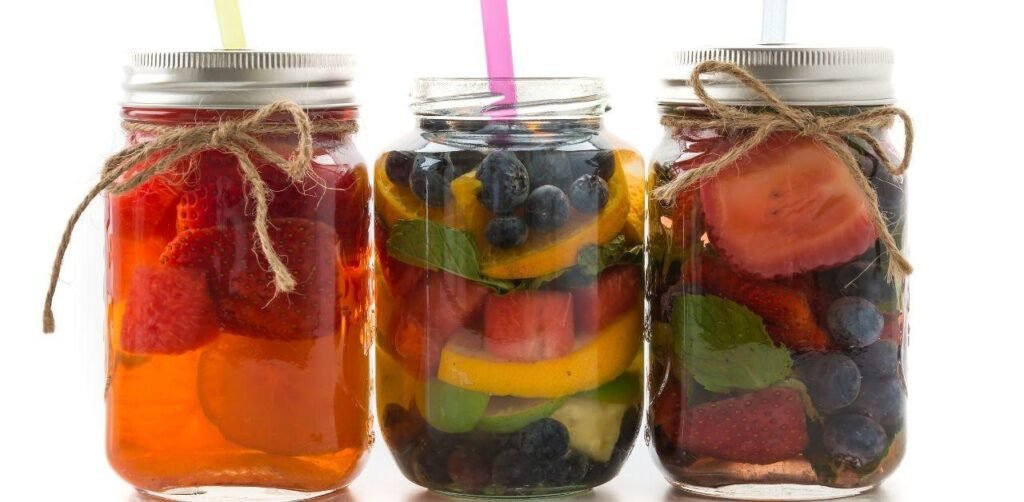
This is a staple in many USA pantries, but it is a metabolic disaster. Even if you “drain the juice,” the fruit has been soaking in high-fructose corn syrup. This adds unnecessary refined sugar to an already sweet food.
8. Lychees: The Hidden Fructose Spike

Popular in tropical diets, lychees have a very high sugar-to-fiber ratio. In 2026 clinical observations, lychees have been shown to cause sharp spikes in post-prandial (after-meal) glucose levels.
9. Sweetened Dried Cranberries
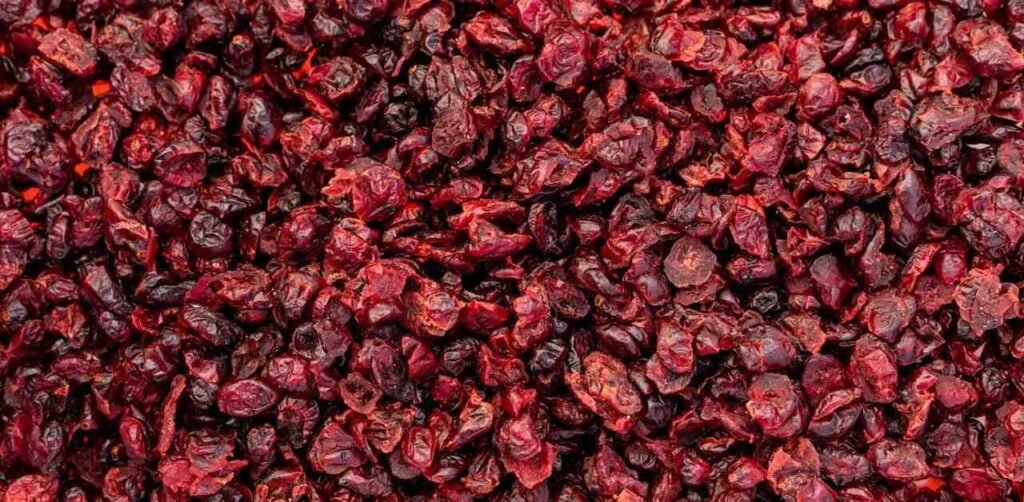
Fresh cranberries are tart, but most commercial dried versions found in the USA are heavily sweetened with added cane sugar. This makes them one of the most deceptive worst fruits for diabetics.
10. Fruit Juice (The Liquid Trap)
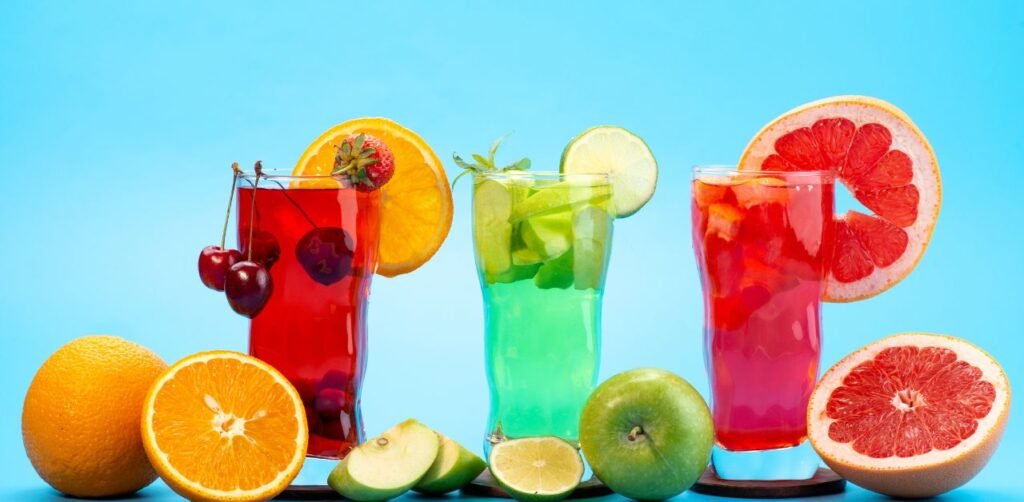
While technically not a “whole fruit,” fruit juice is how many Americans consume their fruit. In 2026, we categorize juice as a “Liquid Carb.” Without fiber, juice causes your insulin to skyrocket, leading to long-term insulin resistance.
3. The Glycemic Load (GL) Comparison Table
GI tells you how fast sugar rises, but Glycemic Load (GL) tells you how much sugar is in a typical serving.
| Fruit (Serving Size) | Glycemic Index (GI) | Glycemic Load (GL) | 2026 Status |
| Watermelon (120g) | 76 | 8 | Caution |
| Dried Dates (60g) | 103 | 42 | Avoid |
| Banana (Ripe, 120g) | 62 | 16 | Avoid |
| Blueberries (150g) | 53 | 5 | Safe |
| Strawberries (150g) | 41 | 3 | Highly Recommended |
4. The “Protein Shield” Strategy (USA 2026 Protocol)
In the 2026 health landscape, we use a technique called the “Protein Shield” to manage fruit consumption. The rule is simple: Never eat a high-GI fruit “naked.”
By pairing your fruit with a healthy fat or protein, you create a buffer that slows down the sugar’s entry into your bloodstream.
- The Almond Buffer: If you eat a small portion of grapes, pair them with 10-12 raw almonds.
- The Yogurt Barrier: Pair 1/2 cup of pineapple with plain, unsweetened Greek yogurt.
- The Cheese Trick: Pair a small apple or a few cherries with 1 oz of sharp cheddar cheese.
5. 2026 Nutrition Trends: Smoothies and Acai Bowls
USA audience loves “Green Smoothies” and “Acai Bowls.” However, from a diabetic perspective, these are often the worst fruits for diabetics in disguise.
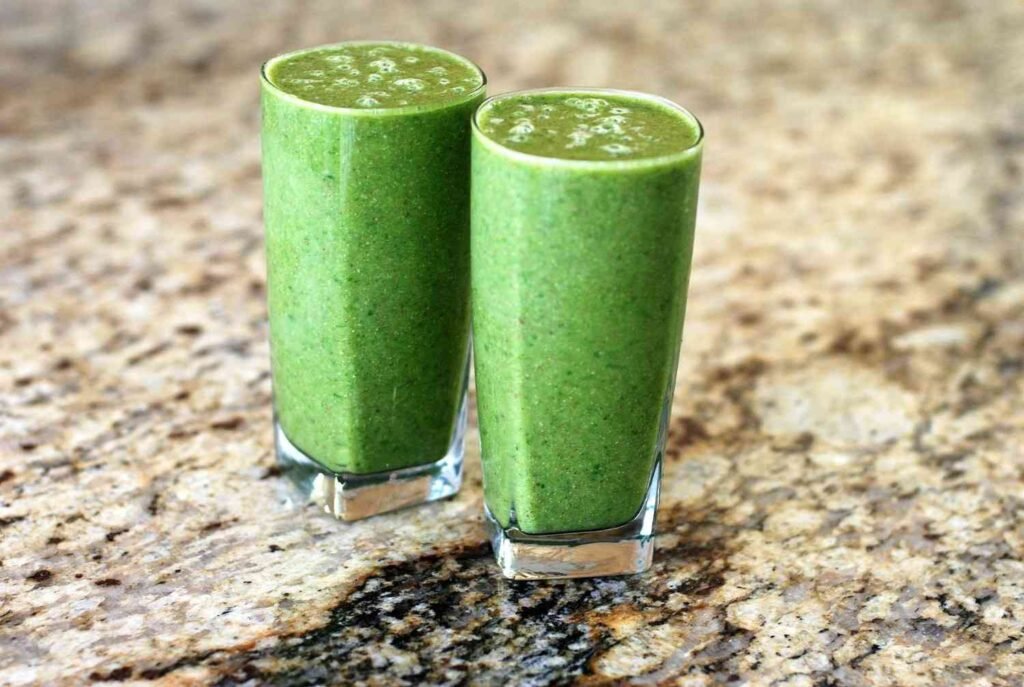
- The Blending Problem: When you blend fruit, the blades mechanically destroy the fiber. This means the “slow-release” benefit of fruit is gone.
- The Acai Scam: Pure acai is low-sugar, but retail acai bowls are often topped with honey, sweetened granola, and high-sugar fruits like mango, totaling over 70g of sugar in one bowl.
6. Smart Swaps: What to Eat Instead
To stay on track with your A1C goals, swap the worst fruits for diabetics with these metabolic powerhouses:
- Blackberries & Raspberries: These have the highest fiber content of any fruit.
- Grapefruit: Clinical data suggests grapefruit can actually help lower fasting insulin levels.
- Avocado: Yes, it’s a fruit! It contains healthy fats and almost zero sugar, making it the “Gold Standard” for diabetics.
7. FAQ: Common Questions from the USA Community
Q: Can I drink water before my glucose test if I ate fruit the night before
A: Yes. Hydration is essential for accurate lab work. Refer to our guide: [Can I Drink Water for Fasting Blood Sugar Test?] for a full checklist.
Q: Does organic fruit have less sugar?
A: No. Organic fruit has the same fructose content as conventional fruit. The benefit is fewer pesticides, not lower sugar.
Q: Can I use Berberine to manage fruit spikes?
A: Many people use natural supplements to help stabilize glucose. Read our definitive guide: [Is Berberine Good for Weight Loss?] to see how it impacts insulin sensitivity.
Q: How do I know if a fruit is affecting my long-term health?
A: Consistent tracking is key. Use our [Fasting Blood Sugar to A1C Converter] to see if your favorite fruits are pushing your A1C into the danger zone.
Conclusion: Data-Driven Choices for 2026
Managing diabetes in 2026 is about being smarter than the marketing. Avoiding the worst fruits for diabetics—like watermelon, ripe bananas, and dried dates can prevent the dangerous glucose spikes that lead to long-term complications. Focus on fiber-rich berries, use the “Protein Shield” hack, and always prioritize whole fruit over juices and smoothies.
Precision dieting starts with preparation. Stay hydrated, stay informed, and let Pure Dietly be your guide to metabolic freedom.
Your Final Lab-Day Checklist:
- [ ] Fasted for 8–12 hours.
- [ ] Avoided high-GI “Sugar Bombs” like Watermelon or Dates.
- [ ] Drank plain water to keep veins hydrated.
- [ ] Checked A1C trends using the [Metabolic Age Calculator].
About Gohar
Gohar is a metabolic health researcher and the founder of Pure Dietly. He specializes in translating 2026 clinical guidelines into simple, science-backed advice for blood sugar management. His mission is to empower the USA audience with accurate data from top-tier medical sources to optimize their health.
Medical Disclaimer:
This content is for informational purposes and follows guidelines from sources like Quest Diagnostics and Cleveland Clinic. Always consult your physician for personalized medical advice.