
Editor’s Note
At Puredietly, we understand that fruit can be intimidating when you’re managing Type 2 Diabetes. This guide is part of our “2026 Nutritional Series,” focused on the latest glucose science. We’ve analyzed CGM (Continuous Glucose Monitor) trends and medical research to bring you a strategy that works for real bodies, not just textbooks. This article was last updated in January 2026 to ensure the highest level of accuracy for our readers.
“Many people wonder, do bananas spike blood sugar level as rapidly as candy? Specifically, for the 2026 diabetic community, understanding the difference between a yellow and a green banana is a metabolic necessity. In fact, while bananas are packed with potassium and essential nutrients, their impact on insulin depends entirely on ripeness and portion size. Therefore, we have audited the latest nutritional science to show you how to enjoy this favorite fruit without compromising your glucose stability. Ultimately, this guide will help you master the ‘Metabolic Shield’ strategy for a safer, healthier breakfast.”
The Banana Dilemma
Can you eat a banana if you have diabetes? In the world of diabetic nutrition, the banana is perhaps the most misunderstood fruit. Some health gurus call it a “sugar bomb,” while others praise its potassium content.
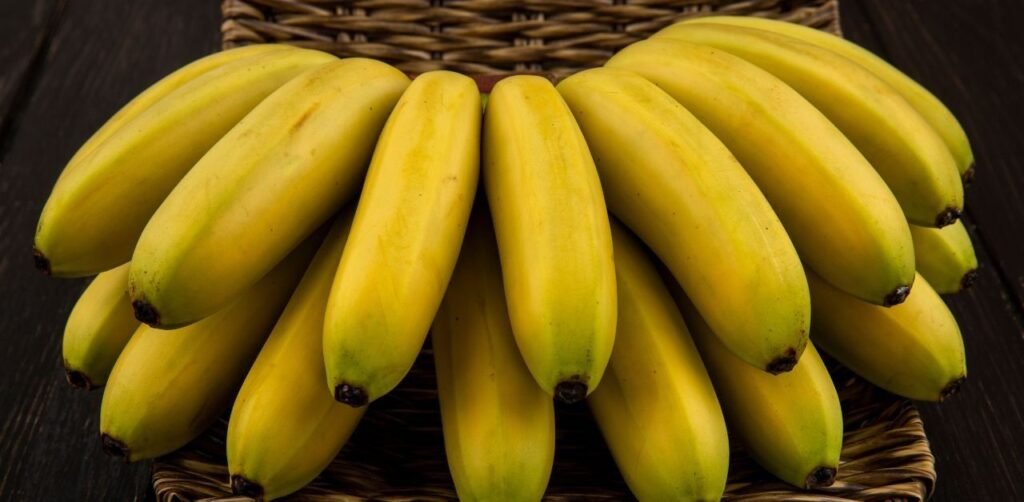
The truth? Bananas can spike blood sugar, but they don’t have to. It all depends on three critical factors: The Color (Ripeness), the Size, and the Food Pairing. In this comprehensive guide, we’ll show you how to master the art of eating bananas without the dangerous glucose roller coaster.
1. The Science: Why Do Bananas Affect Blood Sugar?
Bananas are primarily composed of carbohydrates. When you eat one, your body breaks down those carbs into glucose (sugar), which enters your bloodstream.
However, bananas are unique because they contain a mix of three types of carbohydrates:
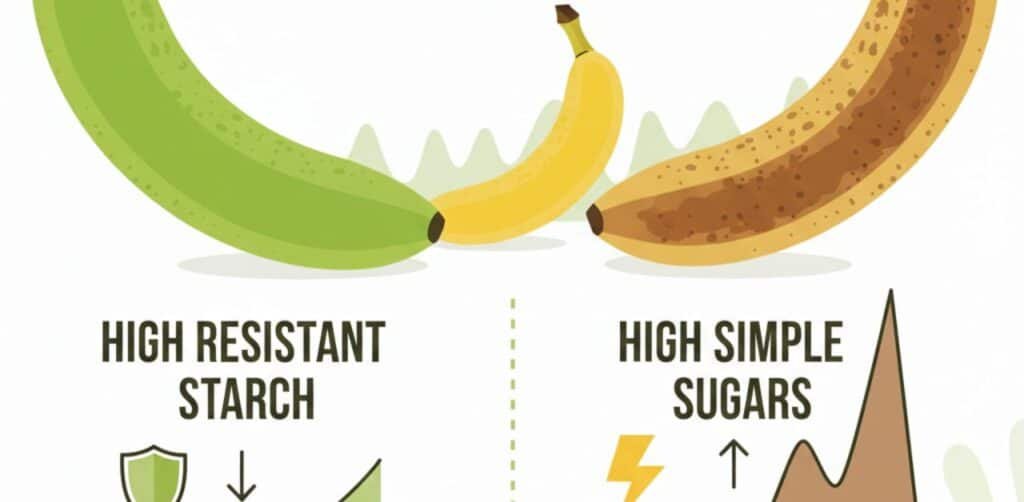
- Fiber: Specifically pectin, which acts like a “brake” to slow down digestion.
- Starch: Complex carbs that take longer for the body to process.
- Simple Sugars: Fructose, glucose, and sucrose.
The “spike” happens when the simple sugars outweigh the fiber and starch. This chemical balance changes every single day as the banana sits on your kitchen counter.
2. The Ripeness Hack: Why “Green” is the Diabetic Gold Standard
The most important thing to understand is that a banana’s chemical composition changes significantly as it ripens.
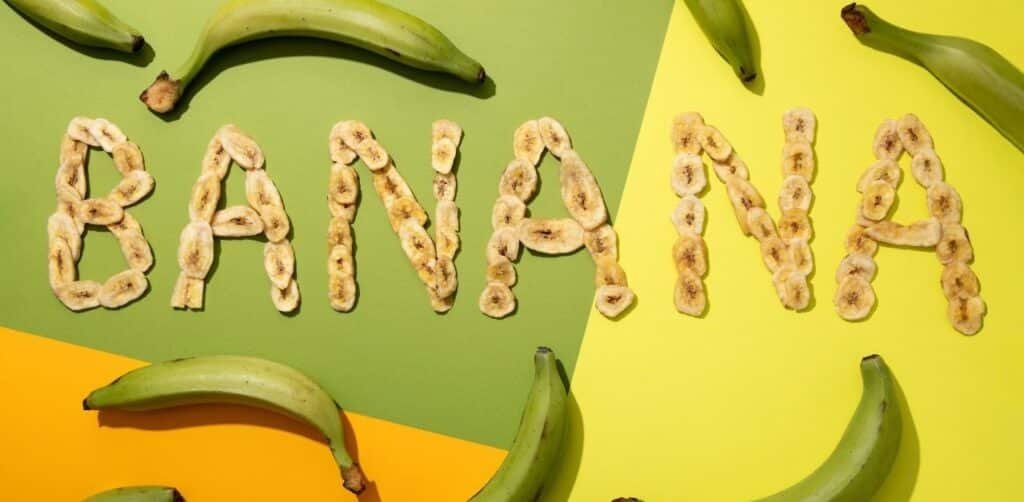
Green (Underripe) Bananas: These are a diabetic’s best friend. They are packed with Resistant Starch. Unlike regular starch, resistant starch acts like fiber; it “resists” digestion in the small intestine and reaches the large intestine, where it feeds healthy gut bacteria. This means the sugar enters your blood much more slowly.
Yellow (Ripe) Bananas: As the banana turns yellow, enzymes break down the resistant starch into simple sugars. The texture becomes softer, the sweetness increases, and the glycemic impact rises.
Brown (Overripe) Bananas: Once a banana has brown spots, almost all its starch has converted into sugar. These should generally be avoided by diabetics or used only in very small amounts for high-fiber baking.
Table 1: The Banana Ripeness vs. Glucose Impact Scale
| Banana Stage | Dominant Carb Type | GI Score (Approx) | Est. Glucose Rise |
| Deep Green | 80% Resistant Starch | 40-42 | Very Low |
| Bright Yellow | 50% Starch / 50% Sugar | 51-54 | Moderate |
| Brown Spotted | 90% Simple Sugar | 62-65 | High |
Export to Sheets
3. Glycemic Index (GI) vs. Glycemic Load (GL): The Missing Piece
Most articles only talk about the Glycemic Index (GI), which measures how fast a food raises sugar. But for diabetics, Glycemic Load (GL) is more important because it considers the portion size.
- GI of a Banana: ~51 (Medium)
- GL of a Small Banana: ~11 (Low to Medium)
By choosing a small banana (about 6 inches), you significantly reduce the “Load” on your body, making it much easier for your insulin to manage the sugar.
4. The “Protein-Fat-Fiber” Shield (The 2026 Strategy)
The biggest mistake diabetics make is eating a banana alone on an empty stomach. This is a recipe for a “sugar high” followed by a 10 AM crash. If you are looking for more ways to incorporate these strategies into your morning routine, check out our guide on [Healthy Diabetic Breakfast Ideas]for delicious, low-carb meal plans.
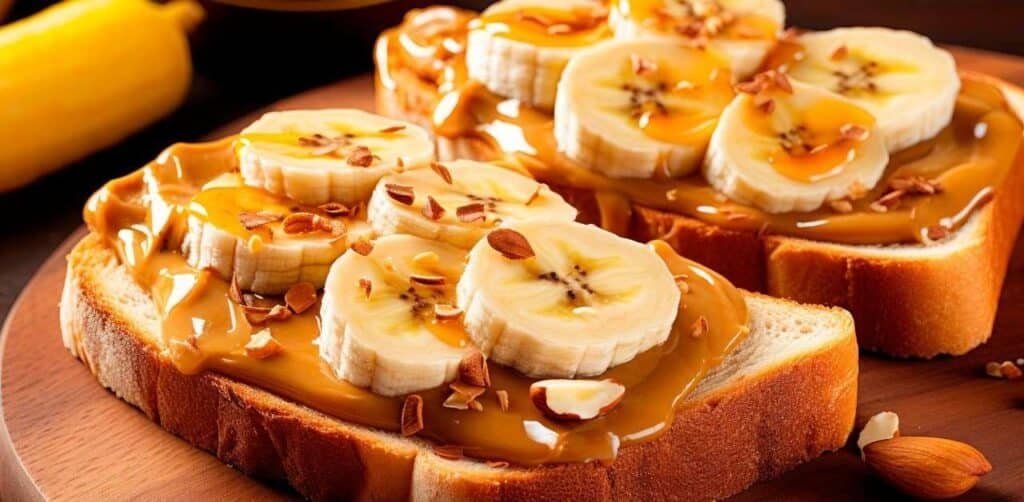
Why Pairing Works: Fats and proteins slow down gastric emptying (the speed at which food leaves your stomach). This creates a “filter” that prevents sugar from rushing into your blood all at once.
Top 5 Diabetic-Safe Banana Pairings:
- The Classic: Half a banana with 2 tablespoons of natural, unsweetened peanut butter.
- The Probiotic Power: Sliced green banana mixed into full-fat, plain Greek yogurt.
- The Fiber Bomb: Banana slices topped with 1 tablespoon of chia seeds.
- The Nutty Crunch: Half a banana paired with 10-12 raw almonds or walnuts.
- The Protein Shake: A small green banana blended with zero-sugar whey protein isolate.
Want to check the impact of this food on your sugar?
📊 Open Net Carb Calculator5. Potassium: The Heart-Protection Benefit
We often focus so much on sugar that we forget why bananas are healthy. Bananas are a powerhouse of Potassium, a mineral essential for heart health and blood pressure regulation.
Since many people with Type 2 Diabetes are also at a higher risk for hypertension (high blood pressure), the potassium in bananas can be protective. Potassium helps your body flush out excess sodium and eases tension in your blood vessel walls.
6. Practical “Hacks” to Lower the Spike

- The “Wait and Walk” Rule: After eating a banana, take a 10-15 minute brisk walk. Muscle movement helps soak up glucose from your blood without needing as much insulin.
- Avoid Liquid Bananas: Never drink banana juice or heavily blended smoothies. Mechanical blending destroys the fruit’s cellular structure, making the sugar instantly available to your bloodstream.
- The Vinegar Trick: As we discussed in our detailed review of [Apple Cider Vinegar for Diabetes], taking a tablespoon of ACV in water before your fruit snack can significantly improve your insulin response.
- Caffeine Awareness: Be mindful of your morning pairings; just as you should choose your fruit wisely, knowing [How Coffee Affects Blood Sugar] is crucial for maintaining stable glucose levels throughout the day.
7. 7-Day Banana Strategy for Diabetics
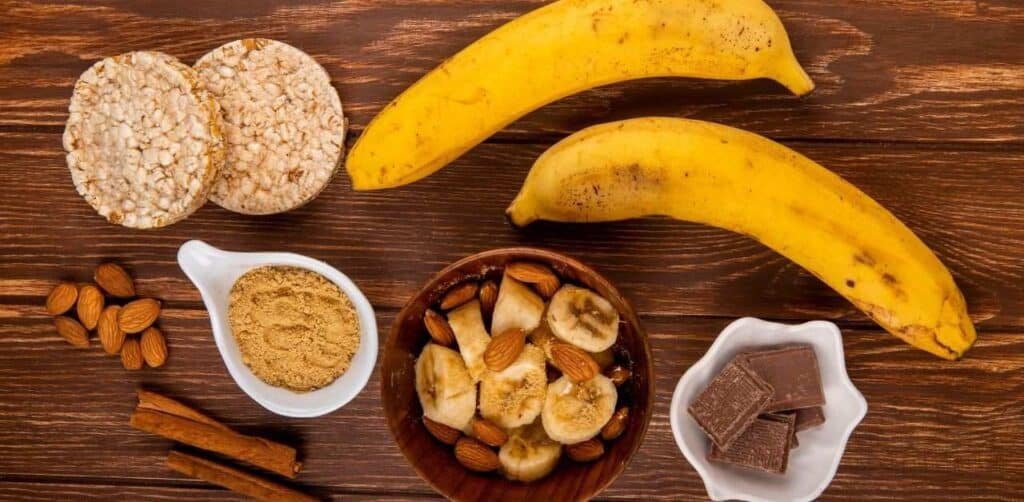
- Monday-Wednesday: Stick to small, slightly green bananas.
- Thursday: Try a banana-almond flour pancake (high protein, low carb).
- Friday-Sunday: If you only have ripe bananas, limit yourself to one-third of the fruit per serving.
Frequently Asked Questions (FAQs)
Q1: Can I eat a banana before bed?
A: It is generally not recommended. Your metabolism slows down at night, and any sugar spike before sleep can lead to high fasting glucose the next morning.
Q2: Are organic bananas better for blood sugar?
A: Organic bananas are better for your overall health (no pesticides), but they have the same amount of sugar and carbs as conventional ones.
Q3: Is it better to eat a banana before or after a workout?
A: Before a workout is better. Your muscles will use the glucose for energy during your exercise.
Q4: Can I use bananas in diabetic baking?
A: Yes, but use them as a sweetener replacement and always balance them with high-fiber flours like almond or coconut flour.
Conclusion
Bananas are not the enemy. They are a nutrient-dense fruit that provides energy, heart-healthy potassium, and gut-friendly fiber. The secret lies in mindful consumption. By choosing smaller, greener bananas and always pairing them with a healthy fat or protein, you can keep your A1C in check while still enjoying nature’s candy.
Author’s Note
I’m Gohar, and I’m passionate about making diabetic nutrition easy and stress-free. At Puredietly, my goal is to provide you with research-backed tips that fit into your busy life. If you found this guide helpful, check out our recent articles on [Diabetic Breakfast Ideas] and [Apple Cider Vinegar Diabetes]. Let’s take control of our health together!
Medical Disclaimer
Specifically, the content on PureDietly is for informational purposes only and not professional medical advice. Therefore, always consult your doctor before changing your diabetic diet or medication. Ultimately, individual glucose responses vary, so please use this guide as a metabolic reference only.