
By Gohar / Published: January 26, 2026
Medically Reviewed by Puredietly Health Board
Editor’s Note
Editor’s Note (2026 Update): Allulose has become the “Holy Grail” of sweeteners in the USA. However, the legal battle in Europe has left many diabetics confused. Is it a safety issue or just red tape? Our 2026 audit investigates the latest European Food Safety Authority (EFSA) stance and what it means for your metabolic health.
The Sweet Mystery: Legal in USA, Banned in Europe?
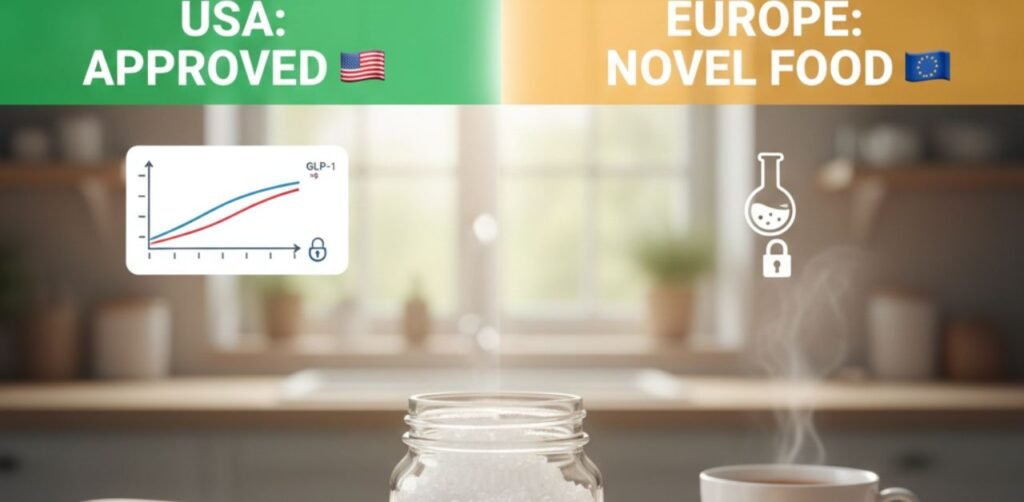
Imagine a sugar that tastes like the real thing, browns like the real thing, but has zero impact on your blood sugar. In the USA, Allulose is the superstar of the keto and diabetic world.
But if you fly to London, Paris, or Berlin, you won’t find it on the shelves. In fact, it’s technically illegal to sell as a food ingredient in the European Union (EU) and the UK.
Why is a “Super-Sugar” that helps manage A1C levels banned in some of the most health-conscious countries in the world? Let’s audit the facts.
1. The “Novel Food” Label: It’s Not a Safety Ban
The first thing US diabetics need to understand is that Europe hasn’t banned Allulose because they found it “poisonous.” Instead, they have labeled it a “Novel Food.”
In Europe, any food that wasn’t consumed significantly before 1997 is put through a rigorous, multi-year testing phase. While the US FDA granted Allulose GRAS (Generally Recognized As Safe) status years ago, the European Food Safety Authority (EFSA) is still “studying” the long-term data.
Why the US and Europe See Safety Differently
The core reason for the “ban” lies in legal philosophy. The US FDA uses the GRAS (Generally Recognized as Safe) system, which allows ingredients if they have a long history of use or scientific consensus. However, Europe follows the “Precautionary Principle.” This means if a substance is new (Novel), it is “guilty until proven innocent.” The EFSA (European Food Safety Authority) requires expensive, multi-generational studies to prove that Allulose won’t affect human gut enzymes over 30–40 years. It’s a battle of “Speed vs. Caution,” not “Healthy vs. Toxic.”
Table 1: Allulose Status – USA vs. Europe (2026)
| Feature | United States (FDA) | European Union (EFSA) |
| Legal Status | Fully Approved | Not Approved (Yet) |
| Classification | GRAS (Safe) | Novel Food (Under Review) |
| Labeling | Not listed as “Added Sugar” | N/A |
| Availability | Available Everywhere | Restricted/Illegal |
2. The 2026 Approval Timeline: Is the Ban Ending?
As of early 2026, there is movement! Several major food tech companies have submitted new “Safety Dossiers” to the EU.
The Current Status:
- UK (FSA): Expected to be the first to break away and approve Allulose by late 2026.
- EU (EFSA): Still requesting more data on Gut Microbiome impact. They want to ensure that if people replace all their sugar with Allulose, it won’t cause digestive distress on a massive scale.
3. Allulose vs. Erythritol: Why Diabetics Care
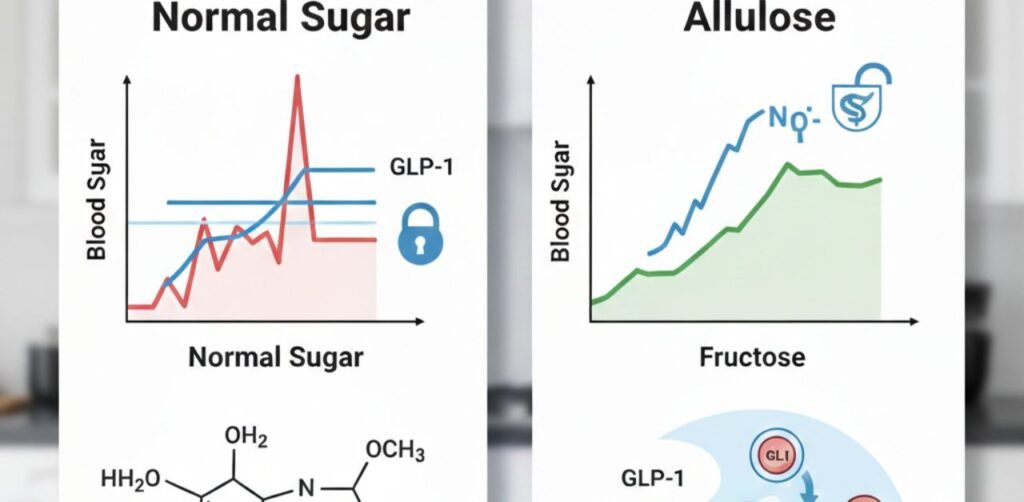
Why don’t diabetics just use Erythritol? Because Allulose has a secret weapon: it actually inhibits the enzymes that break down starch into sugar.
able: Diabetic Sweetener Battle (2026)
| Feature | Allulose | Stevia | Erythritol |
| Taste Score | 10/10 (No aftertaste) | 6/10 (Bitter) | 8/10 (Cooling) |
| Baking (Browning) | Yes (Perfect) | No | No |
| GLP-1 Impact | High (Helps Weight Loss) | Low | None |
| Gut Safety | High (Prebiotic) | Safe | Moderate (Bloating) |
The GLP-1 Secret: Is Allulose a Natural Weight Loss Aid?
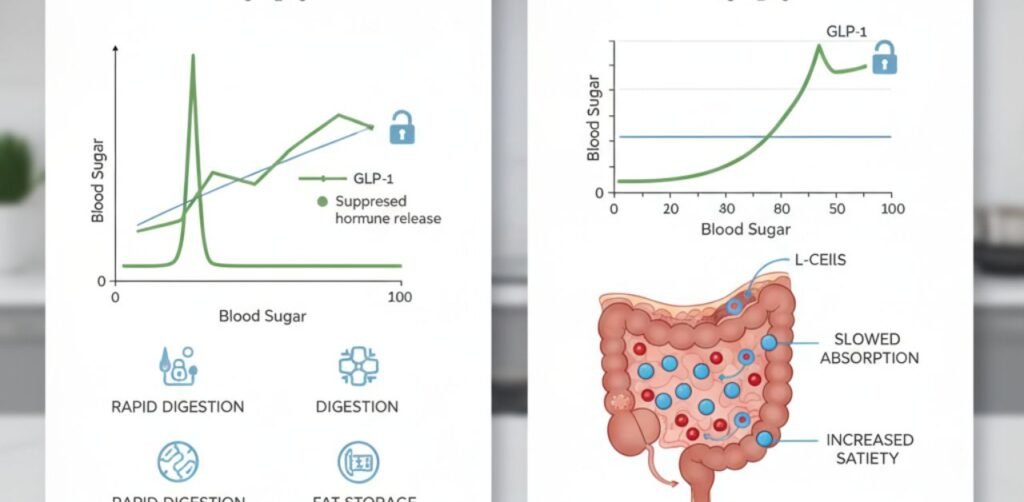
Recent 2025-2026 metabolic research suggests that Allulose does more than just replace sugar. Some clinical trials indicate it can stimulate the release of GLP-1 (Glucagon-like peptide-1), the same hormone targeted by weight-loss drugs like Ozempic. By signaling “fullness” to the brain and slowing down gastric emptying, Allulose acts as a natural metabolic companion for diabetics. This added benefit is why US doctors are increasingly favoring it over older sweeteners like Aspartame or Saccharin, despite the administrative delays in the EU.
Table 2: The Diabetic Sweetener Comparison
| Sweetener | Taste Profile | Aftertaste | Blood Sugar Impact |
| Allulose | 70% as sweet as sugar | None (Natural) | 0 Spike (May Lower Sugar) |
| Erythritol | 70% as sweet as sugar | Cooling/Minty | 0 Spike |
| Sucralose | 600x sweeter | Artificial/Bitter | Mixed (May affect Insulin) |
Internal Link Tip: When we audited [Whopper Calories &Nutrition], we highlighted the danger of “Hidden Sugars” in sauces. Allulose is the perfect home-made replacement for those sugary ketchups.
4. The Real Risks: Why Europe is Hesitant
While US diabetics love it, Europe is cautious about two things:
- Gastrointestinal Tolerance: In very high doses, Allulose can cause bloating. Europe has stricter limits on “digestive comfort” than the US.
- Long-Term Human Data: Most Allulose studies are short-term. Europe’s “Precautionary Principle” means they wait for 10-20 years of data before saying yes.
5. The “Gohar” Safety Checklist for US Users
If you live in the USA, you don’t need to worry about the European ban, but you should use Allulose wisely:
- Limit Daily Intake: Stick to 30-40g per day to avoid bloating.
- Check the Source: Ensure your Allulose is Non-GMO (Europe’s biggest concern is the corn used to make it).
- Watch the Mix: Many brands mix Allulose with Monk Fruit or Stevia. Always read the label for hidden fillers.
6. Frequently Asked Questions (FAQs)
Q1: Can I bring Allulose in my suitcase to Europe?
Ans: For personal use, it is generally fine. However, you won’t find it in local supermarkets, and businesses are prohibited from selling it.
Q2: Does Allulose cause cancer?
Ans: There is zero scientific evidence linking Allulose to cancer. The European delay is purely administrative and focused on digestive health, not toxicity.
Q3: Is Allulose better than Stevia for diabetics?
Ans: From a taste perspective, yes. Allulose behaves exactly like sugar in baking (it caramelizes), whereas Stevia can have a bitter aftertaste.
Q4: Will Allulose ever be approved in the UK?
Ans: Yes. Recent 2025 reports suggest the UK’s Food Standards Agency is fast-tracking Allulose to help combat the nation’s rising obesity and diabetes rates.
Conclusion: A Tale of Two Systems
The ban on Allulose in Europe isn’t a warning that it’s “dangerous”—it’s a reflection of Europe’s ultra-cautious approach to new food technology. For US diabetics, Allulose remains one of the safest and most effective tools for blood sugar management in 2026.
Related Reading: If you’re looking for more ways to hack your favorite meals, read our [Guide to Best Rice for Diabetics].
About the Author: Gohar
Gohar is a Metabolic Health Researcher and the founder of Puredietly. She specializes in auditing international food laws and sweetener safety to provide the US diabetic community with actionable, science-backed nutritional advice.
Medical Disclaimer
This content is for educational purposes. Allulose affects everyone differently. Consult your healthcare provider before introducing new sweeteners into your diet, especially if you have a sensitive gut or are pregnancy.