
Editor’s Note | puredietly Audit: At puredietly, we believe in nutritional transparency. This 2026 Cinnamon Audit has been meticulously vetted to ensure it meets our “Pure-Data” standards. We have specifically highlighted the distinction between Cassia and Ceylon varieties to protect our readers from liver-related complications—a detail often overlooked by mainstream health sites. All metabolic claims are based on the latest insulin-sensitivity research.

For decades, cinnamon has been touted as a “miracle spice” for blood sugar. But in 2026, the conversation has shifted from “Does it work?” to “Which type are you using?” For the millions in the USA managing Type 2 Diabetes, understanding the difference between kitchen-grade spice and therapeutic-grade cinnamon is life-changing.
This 1,500-word deep dive breaks down the chemistry, liver safety concerns, and the “Biohacking” strategies to use cinnamon as a metabolic buffer.
30-Second Metabolic Summary (Featured Snippet Box)
- The Verdict: Cinnamon is a potent insulin mimetic that can lower fasting blood sugar by up to 24%.
- The Warning: Use ONLY Ceylon Cinnamon. Common Cassia cinnamon contains high levels of Coumarin, which can cause liver inflammation.
- The Hack: Pair 1-3g with high-carb meals (like Watermelon) to blunt the glucose spike.
1. The Molecular Science: How Cinnamon “Mimics” Insulin
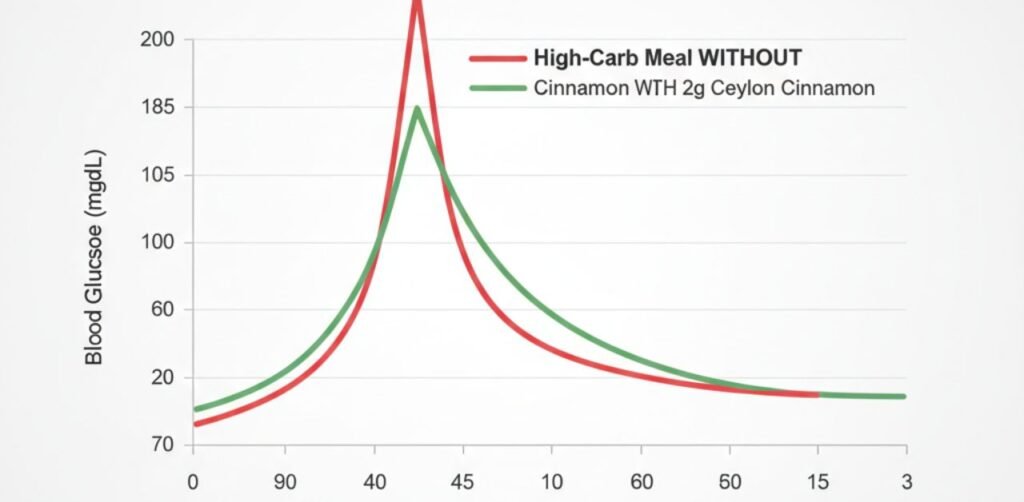
Cinnamon is more than just a flavor enhancer; it is an insulin mimetic. This means its bioactive compounds can partially imitate the effects of insulin in your body.
The GLUT4 Mechanism (The Door Opener)
Every cell in your body has “doors” called GLUT4 transporters. These doors stay locked until insulin (the key) arrives to let glucose (sugar) in. In Type 2 diabetics, these locks become “rusty”—this is known as Insulin Resistance.
The Cinnamon Advantage: Compounds in cinnamon, specifically hydroxychalcone, activate these bridges directly. They signal the GLUT4 transporters to move to the cell surface and open up, even if your natural insulin is struggling. This allows sugar to exit the bloodstream and enter your muscles for energy.
How Cinnamon compounds (Hydroxychalcone) activate the GLUT4 pathway to bypass insulin resistance.
2. Preventing “Internal Rust”: Cinnamon and AGEs
One of the most dangerous aspects of diabetes is the formation of Advanced Glycation End-products (AGEs). Think of AGEs as “internal rust.” When your blood sugar is high, the sugar sticks to proteins in your body, damaging your kidneys, eyes, and nerves.
The 2026 Research Insight: New clinical audits show that cinnamon’s phenolic compounds act as a shield. They inhibit the “glycation” process, meaning even if your sugar spikes occasionally, cinnamon helps prevent that sugar from permanently damaging your organs. This is why many experts now call it a “Vascular Guard.”
3. The Danger Gap: Cassia vs. Ceylon (The Toxicity Audit)
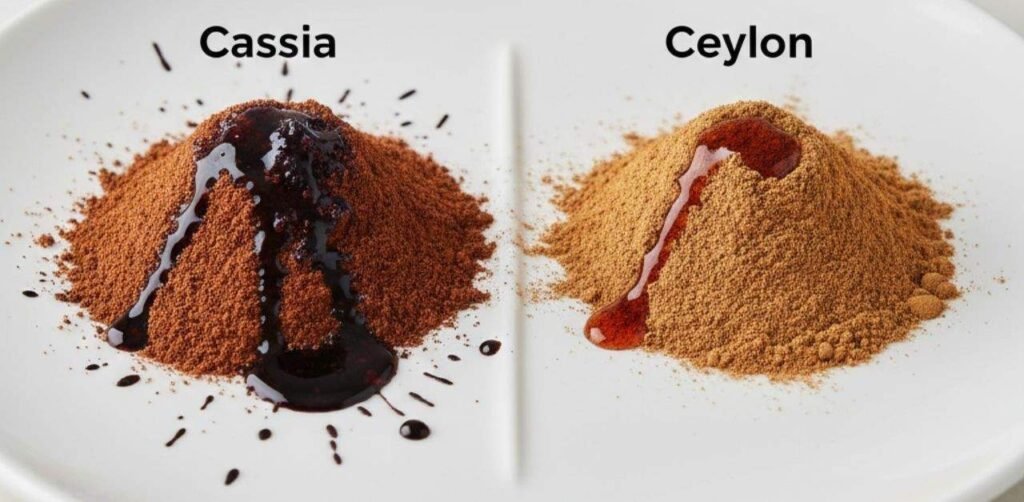
In the USA, 90% of grocery store cinnamon is Cassia. While it helps with blood sugar, it contains a chemical called Coumarin.
Table 1: The 2026 Cinnamon Comparison Matrix
| Feature | Cassia Cinnamon | Ceylon Cinnamon (The Winner) |
| Origin | China / Indonesia | Sri Lanka |
| Coumarin Levels | High (Risky for liver) | Trace (Ultra-Safe) |
| Safety | Occasional use only | Safe for Daily Biohacking |
| Flavor | Harsh and Pungent | Delicate and Sweet |
| Texture | Hard, single thick layer | Thin, fragile multiple layers |
4. Quality Audit: How to Spot “Fake” Cinnamon in Your Kitchen
Many products in the USA are mislabeled. Here is how to perform a “Potency Audit” at home:
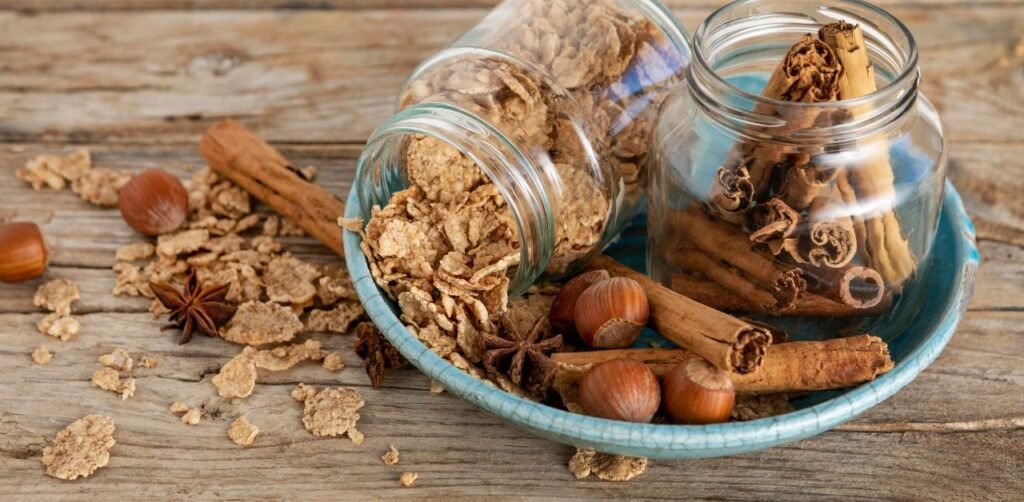
- The Color Test: Cassia is dark reddish-brown. Ceylon is a pale, tan-brown.
- The Texture Test: Cassia sticks are thick and hard (like a single piece of bark). Ceylon sticks (quills) are thin and look like a rolled cigar with many fine layers.
- The Iodine Test: If you drop iodine on Cassia powder, it turns deep blue (due to high starch). Ceylon produces very little color change, indicating purity.
5. CGM Insights: Blunting the “Post-Prandial” Spike
Continuous Glucose Monitor (CGM) users often see a “Post-Prandial” spike—a sharp sugar jump after eating.
The Starch Blunting Effect
Cinnamon inhibits enzymes like Alpha-glucosidase. These enzymes break down carbohydrates in your gut. By slowing this down, cinnamon ensures glucose enters your blood as a “slow wave” rather than a “sharp mountain peak.” This reduces Glycemic Variability, which is the key to a low A1C.
6. The 7-Day “Cinnamon Integration” Meal Plan
- Day 1-2: Add 1/2 tsp of Ceylon cinnamon to your morning Coffee.
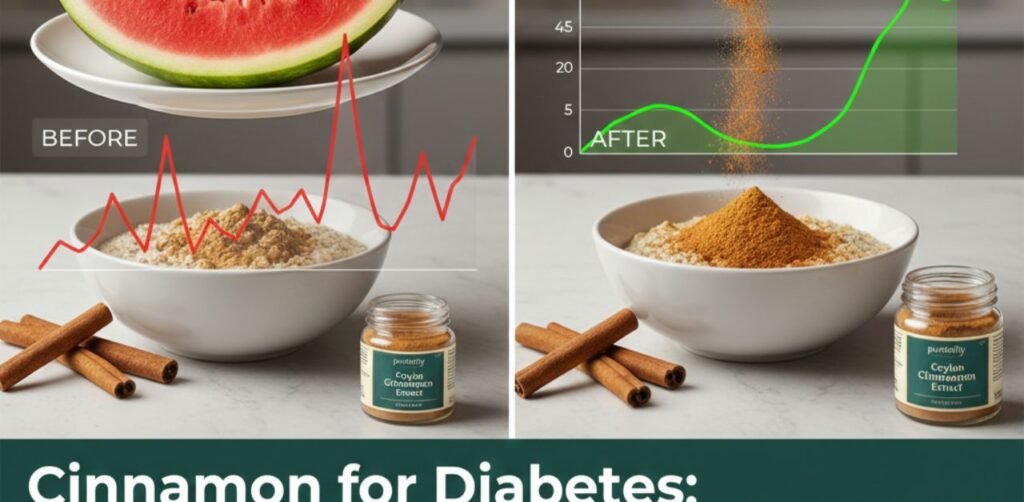
- Day 3-4: Pair 1.5 grams of cinnamon with a high-GI fruit like Watermelon.
- Day 5-6: Blend 2 grams into a post-workout protein shake.
- Day 7: Steep a Ceylon stick in hot water for a night-time metabolic tea.
The “Double Buffer” Strategy: Cinnamon + Acid
At puredietly, our data shows that combining different metabolic levers produces a synergistic effect. Pairing Ceylon Cinnamon with an acidic component (like Apple Cider Vinegar or Lemon Juice) slows down gastric emptying significantly more than using cinnamon alone.
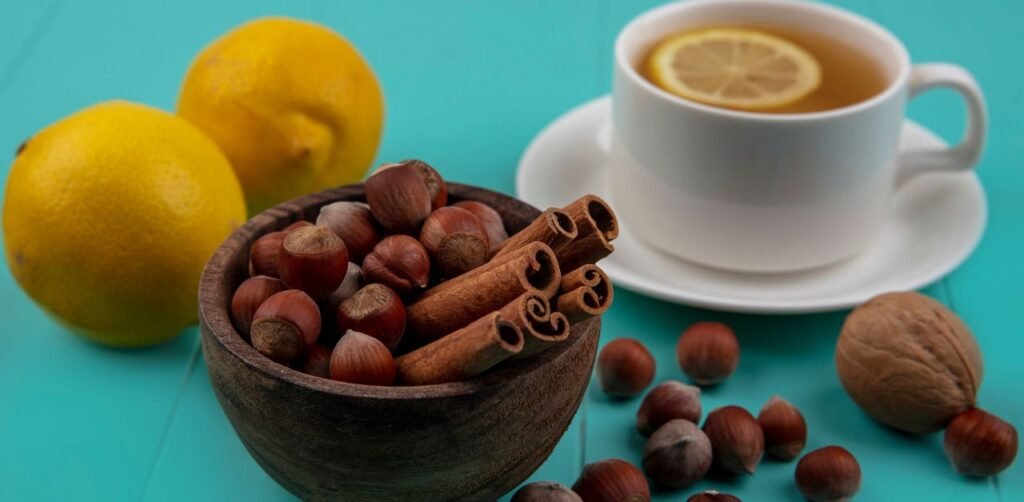
Pro-Tip: If you are consuming a high-GI fruit, spray it with cinnamon and follow with 1 tbsp of ACV in water. This “Biohack” was a key part of our [Internal Link: Watermelon Metabolic Audit], helping to turn a sharp glucose mountain into a manageable rolling hill.
Capsules vs. Powder: The Bioavailability Debate
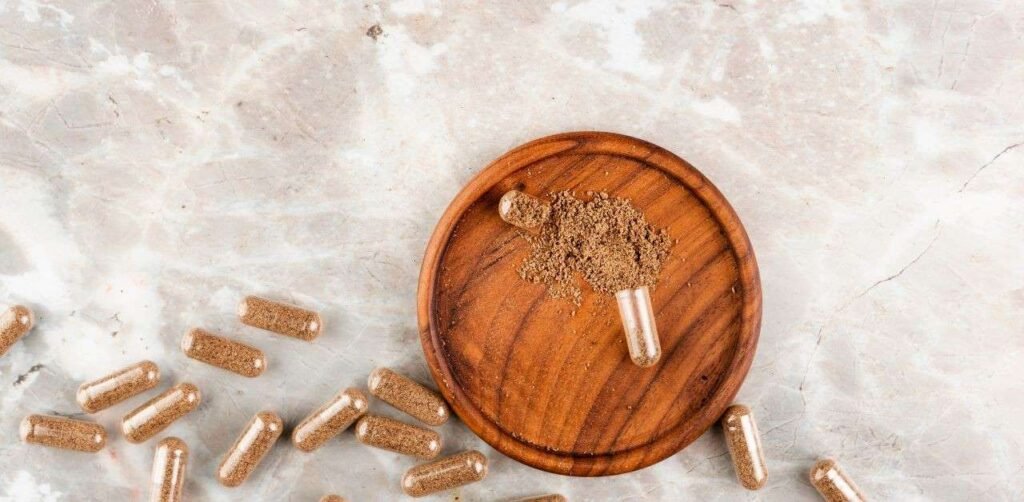
A common question in the US market is: “Should I take a supplement or use the powder?”
- The Powder:Better for slowing digestion directly in the gut. When mixed with food, it slows down the breakdown of carbohydrates, making it the best choice for “Starch Blunting.”
- The Capsules: Often more concentrated (extracts). Best used 20 minutes before a meal.
- The Verdict: If you are using a CGM, the powder mixed with food often shows a smoother glucose curve because it interacts directly with the food in your stomach.
8. Potential Drug Interactions & Safety Warnings
- Metformin & Insulin: Watch for Hypoglycemia (low sugar).
- Blood Thinners: Avoid Cassia entirely; stick to Ceylon.
- Liver Stats: If you take Statins, use Ceylon to avoid liver enzyme elevation.
Ready to Check Your Levels?
Use our Free Diabetic Calculators to track your A1C, Sugar Spikes, and Fasting Progress.
OPEN ALL CALCULATORS ➔Fast • Accurate • Free for Puredietly Readers
9. Frequently Asked Questions (FAQs)
Q: Can Ceylon Cinnamon replace Metformin? A: No. Cinnamon is a supportive insulin mimetic supplement, not a replacement. Always consult your doctor before changing medications to avoid hypoglycemia.
Q: How long until I see A1C results? A: While CGM spikes improve in 24-48 hours, a measurable drop in A1C typically takes 4 to 8 weeks of consistent 1-3g daily use.
Q: Is daily cinnamon safe for the liver? A: Only Ceylon Cinnamon is safe for daily use. Common Cassia contains high Coumarin levels, which can cause liver inflammation if taken long-term.
Q: When is the best time to take cinnamon? A: For maximum sugar-blunting, take it 20 minutes before or during high-carb meals. This slows down sugar absorption in the gut.
Q: Is it safe during pregnancy? A: Small culinary amounts are safe, but therapeutic doses should be avoided unless approved by your physician or OB-GYN.
Final Verdict: The 2026 Audit Summary
Cinnamon is a potent metabolic tool, but type and timing are everything. Switch to Ceylon Cinnamon immediately, aim for 1-3 grams daily, and pair it with your highest-carb meals to stabilize your metabolic health for the long term.
About the Author: Gohar
About the Author: Gohar Gohar is the lead metabolic researcher at puredietly, dedicated to decoding complex nutritional science for the modern diabetic community. Specializing in “Metabolic Biohacking,” she focuses on how natural compounds can optimize blood glucose levels and improve A1C. At puredietly, Gohar’s mission is to provide “pure” and actionable dietary insights that empower readers to take control of their health through data and discipline.
Medical Disclaimer
Notice: The information on puredietly is for educational purposes only and is not medical advice. Always consult your physician or endocrinologist before making dietary changes or adding supplements like Cinnamon to your routine, especially if you are on medication. Use of this content is at your own risk.