
By Gohar | February 5, 2026
Editor note:
Editor’s Note (February 2026): As metabolic health technology evolves, we have updated this guide to include the latest data from Dexcom G8 and FreeStyle Libre 4 sensors. Our team has cross-referenced recent clinical trials on “The Pizza Effect” and “Muscle Sponge” glucose clearance to ensure you have the most accurate, real-world strategies for 2026.
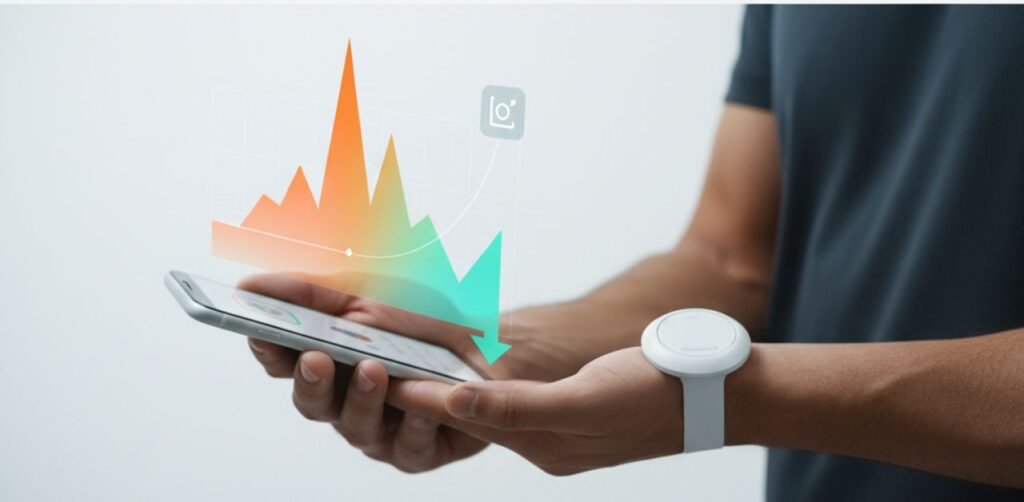
Whether you are a seasoned biohacker using a Dexcom G8 or a beginner with a Libre 4, a vertical line on your glucose graph is unsettling. In 2026, we prioritize the duration of the spike over the peak height. This guide explains how to manage and shorten those curves effectively.
1. Defining the “Spike”: Peak vs. Duration
In metabolic science, we measure the Area Under the Curve (AUC).
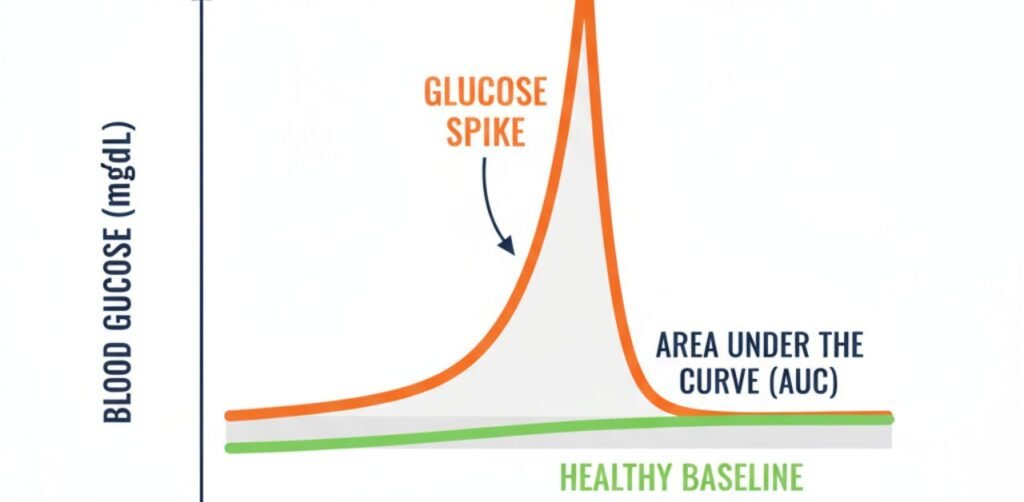
- The Peak: The highest mg/dL reached, usually 30–60 minutes post-meal.
- The Duration: The time taken to return to your pre-meal baseline. Target: For optimal health, stay below 140 mg/dL and return to baseline within 2 hours.
2. The “Food Fingerprint”: Why Some Spikes Last Longer
Not all carbs are created equal. The duration of your spike depends heavily on the “macronutrient matrix” of your meal.
The Simple Spike (The “Sprinting” Curve)
- Sources: Fruit juice, white bread, soda, candy.
- Duration: 60 to 90 minutes.
- Description: These are fast-absorbing sugars. They hit your bloodstream like a lightning bolt. Your pancreas responds with a quick burst of insulin, and the sugar usually drops just as fast—sometimes leading to a “reactive hypoglycemia” (sugar crash).
To make this actionable, here is how common USA food staples impact your glucose duration. Use this table as a reference for your CGM experiments:
| Food Scenario | Expected Spike Duration | Why it happens? | Recovery Strategy |
| Starbucks Oat Milk Latte | 60 – 90 Minutes | Liquid carbs + Oat maltose | 10-min brisk walk immediately |
| Chipotle Bowl (White Rice) | 2 – 3 Hours | High glycemic starch load | Drink 1L water + Apple Cider Vinegar |
| Movie Theater Popcorn | 4 – 6 Hours | Re-esterified fats + massive carbs | Fast until 12 PM the next day |
| Sushi (6-8 Rolls) | 2.5 Hours | Sugary vinegar rice + low fiber | 20 Soleus Pushups post-meal |
The Biphasic Spike (The “M” Shape)
- Sources: Complex meals like Sushi or Pasta.
- Duration: 2 to 3 hours.
- Description: This happens when you have fiber or protein mixed with carbs. You get an initial rise, a small dip, and then a second smaller peak as the body continues to process the slower-digesting carbs.
The “Pizza Effect” (The Long Plateau)

- Sources: Pizza, Lasagna, Fried Chicken, or any High-Carb + High-Fat combo.
- Duration: 4 to 8 hours.
- Description: This is the most dangerous spike. High fat causes temporary insulin resistance. This results in a high, flat plateau that refuses to budge, often keeping your sugar elevated all through the night.
If you want to see exactly how these heavy meals affect your long-term health, check out my 30-Day CGM Experiment Guide where I tested 50+ different cheat meals.
Night-Time Plateaus & Dawn Phenomenon
Ever noticed your glucose staying high all night? This is the Night-Time Plateau. When you eat heavy carbs for dinner, your body’s metabolism slows down during sleep, making it harder to clear glucose.
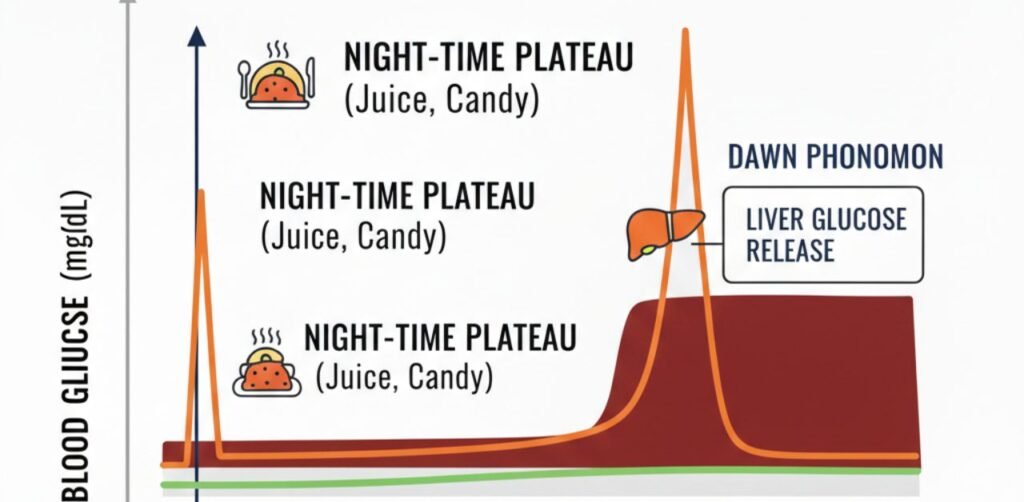
Additionally, you might see a 4 AM spike known as the Dawn Phenomenon. This is just your liver releasing glucose to give you energy for the day. To fix this, keep your dinner light and try a 10-minute walk before bed to deplete liver glycogen.
3. Beyond Food: Non-Dietary Factors Affecting Spike Duration
Lifestyle factors significantly influence your recovery window:
- Cortisol: Stress-induced spikes last as long as the stressor exists.
- Sleep Debt: Less than 6 hours of sleep makes spikes 20–30% longer the next day.
- Exercise Paradox: HIIT may cause a brief “false spike” (30 mins) as the liver dumps glycogen, while Zone 2 Cardio (walking) acts as a glucose vacuum for 2 hours.
In 2026, we know that glucose isn’t just about food. If you see a spike while fasting, it’s likely one of these:
The Invisible Triggers (Non-Food Spikes)
- Dehydration: Low water levels make your blood more concentrated, showing a “false” high sugar reading.
- Caffeine Surge: For some, black coffee triggers cortisol, which forced the liver to dump sugar into your bloodstream.
- Hot Showers/Saunas: Intense heat increases skin blood flow, which can cause CGM sensors to report a temporary “False Spike.”
Ready to Check Your Levels?
Use our Free Diabetic Calculators to track your A1C, Sugar Spikes, and Fasting Progress.
Fast • Accurate • Free for Puredietly Readers
4. How to Recuperate: The 2026 Emergency Protocol
If your CGM trends high, trigger these biohacks immediately:
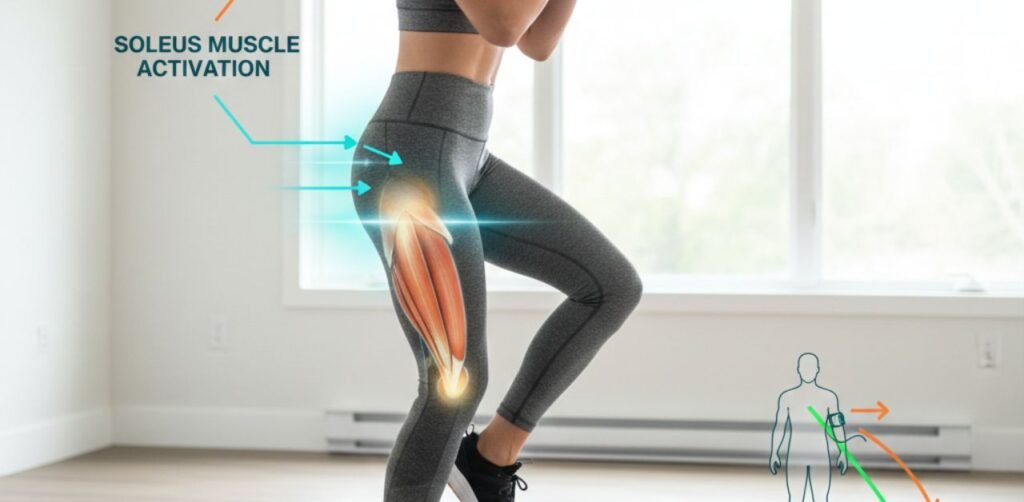
- Soleus Pushups/10-Min Stroll: Activates GLUT4 receptors to move glucose into muscles without needing extra insulin.
- Water Dilution: Drink 20oz of water to help kidneys filter excess glucose (Glycosuria).
- Cold Exposure: A 2-minute cold shower activates “Brown Fat,” which burns glucose for thermoregulation, shortening the spike duration.
5. 2026 Pro Hack: “The Sequencing Secret”
Food Sequencing: Eat fiber first, protein second, and carbs last to create a “gut mesh” that slows absorption.
Soluble Fiber Buffer: Taking 5g of Psyllium Husk 15 minutes before carbs can reduce the peak by 25% and prevent the subsequent “lethargy crash.”
6. Frequently Asked Questions (FAQ)
Q: Can I drink water to flush out a sugar spike?
Ans: Yes. Water helps your kidneys filter excess glucose (Glycosuria) and reduces blood viscosity, helping your sugar return to baseline faster.
Q: Why is my glucose still high 4 hours after eating?
Ans: This is likely the “Fat-Carb Paradox.” High fat intake slows down digestion and causes temporary insulin resistance, leading to a prolonged spike (Plateau).
Q: Is a 180 mg/dL spike dangerous?
Ans: For a non-diabetic, an occasional spike to 180 mg/dL isn’t an emergency, but if it stays there for hours, it can cause inflammation and fatigue.
7. Conclusion: Data is Power
A spike is a data point, not a disaster. Aim to return to baseline within 2 hours. If it takes longer, it’s a sign to tweak your “Carb-to-Fiber” ratio or look at your stress levels. Use this feedback to build your own personalized metabolic manual.
About Author :
About Gohar Gohar is a Metabolic Health Researcher and Biohacker specializing in USA health-tech and CGM data analysis. With 500+ days of personal CGM experiments, Gohar excels at turning complex science into simple, daily health hacks.
Medica lDisclaimer:
Medical Disclaimer: The information provided in this article is for educational purposes only and does not constitute medical advice. Always consult with a qualified healthcare provider or your doctor before making changes to your diet, exercise, or medication. Reliance on any information provided in this guide is solely at your own risk. Our team does not diagnose or treat any medical conditions through this content.