
By Gohar Last Updated: March 8, 2026
Editor’s Note: Navigating Metabolic Accuracy in 2026
Across the United States—from the tech hubs of San Francisco to the clinical centers in Boston—metabolic health has moved beyond simple calorie counting. In 2026, we focus on Glycemic Variability and Nutrient Density. At Pure Dietly, we receive hundreds of emails asking: “Is any fruit truly safe for my A1C?” While we recently covered the [10 Worst Fruits for Diabetics], today we are diving deep into the “Gold Standard” of diabetic nutrition. This guide explores the clinical pros of grapefruit and why it should be your go-to metabolic tool this year.
1. The Glycemic Index (GI) Advantage: Why 25 is the Magic Number
The most significant of all pros of grapefruit is its incredibly low impact on your blood sugar. In the world of clinical nutrition, the Glycemic Index (GI) measures how quickly a food raises your glucose.
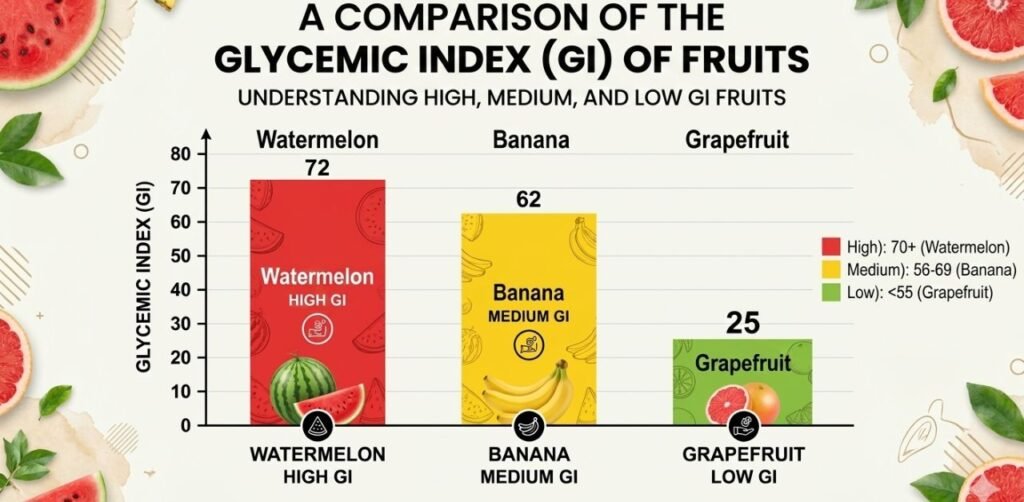
- Watermelon GI: 72-76 (High Risk)
- Banana GI: 62 (Moderate Risk)
- Grapefruit GI: 25 (Safe Zone)
Because grapefruit has a GI of only 25, it causes a slow, steady rise in blood sugar rather than the dangerous “spike and crash” cycle associated with tropical fruits. This makes it an essential staple for anyone trying to stabilize their daily readings.
2. The Naringenin Factor: A Natural Insulin Sensitizer
In 2026, researchers have doubled down on a flavonoid found in grapefruit called Naringenin. This isn’t just an antioxidant; it’s a metabolic trigger.
How it works:
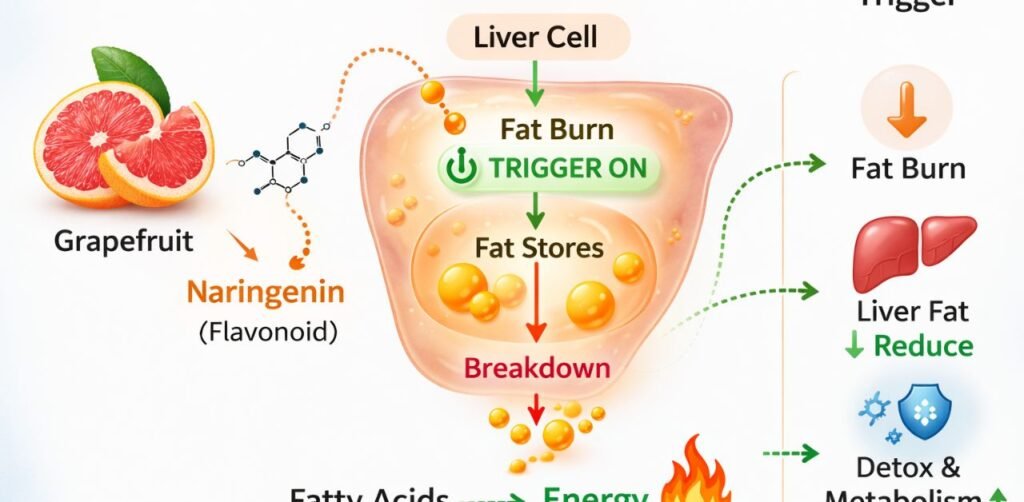
Naringenin mimics the action of some diabetes medications by helping the liver burn fat instead of storing it. One of the key pros of grapefruit is its ability to improve insulin sensitivity, meaning your body needs less insulin to process the same amount of sugar. For a Type 2 diabetic, this is a game-changer for long-term A1C management.
3. Weight Management: The Natural “Metabolic Buffer”
Obesity and insulin resistance often go hand-in-hand. Many of our readers who use the [Metabolic Age Calculator] notice that their “internal age” drops when they incorporate grapefruit.
- Low-Calorie Density: Half a grapefruit contains only about 52 calories but is 88% water.
- The Fiber Matrix: The pectin fiber in grapefruit expands in the stomach, sending “fullness” signals to the brain.
- Enzyme Support: It contains enzymes that help reduce the storage of fat in the midsection (stomach fat).
4. Cardiovascular Health: Protecting the Diabetic Heart
According to 2026 data from the American Heart Association, diabetics are twice as likely to develop heart disease. The pros of grapefruit extend to your arteries as well.
- Potassium Power: High potassium levels help regulate blood pressure and counteract the effects of sodium.
- Lycopene: Found in Ruby Red varieties, this antioxidant protects the heart’s lining from oxidative stress.
- Cholesterol Modulation: Regular consumption has been shown to lower LDL (bad) cholesterol by up to 15%.
5. Grapefruit vs. Other Fruits: 2026 Comparison Table

| Fruit (Serving Size) | Glycemic Index | Sugar Content | Metabolic Status |
| Grapefruit (1/2) | 25 | 8g | Highly Recommended |
| Orange (1 Med) | 43 | 12g | Caution |
| Apple (1 Med) | 39 | 19g | Safe with Peel |
| Mango (1 Cup) | 51 | 23g | [Worst Fruit Candidate] |
6. The “Medication Warning”: Crucial 2026 Safety Protocol
Despite the many pros of grapefruit, it is one of the few foods that comes with a “Medical Disclaimer.” In 2026, the FDA continues to emphasize the “Grapefruit Effect.”
The Science: Grapefruit contains compounds called furanocoumarins that block an enzyme (CYP3A4) in your small intestine. This enzyme is responsible for breaking down certain medications. Without it, the medication enters your bloodstream in dangerously high amounts.
Consult your doctor if you take:
- Statins (Lipitor, Zocor)
- Blood Pressure Meds (Nifedipine)
- Anti-Anxiety Meds (Buspirone)
- Organ Transplant Drugs (Cyclosporine)
Tip: Use our [Fasting Blood Sugar to A1C Converter] to monitor your trends if you are introducing grapefruit for the first time.
7. The “Protein Shield” Strategy: How to Eat Grapefruit
At Pure Dietly, we never recommend eating high-acid fruits “naked.” To maximize the pros of grapefruit, pair it with a “shield” to further blunt the insulin response.

- The Breakfast Hack: Pair half a grapefruit with two hard-boiled eggs. The protein and fats from the eggs slow down the fruit’s sugar absorption even further.
- The Nutty Buffer: Eat your grapefruit with 10-12 raw almonds.
- The Salad Boost: Add grapefruit segments to a spinach and avocado salad. The healthy fats in the avocado help your body absorb the fat-soluble vitamins in the fruit.
8. FAQ: Common Questions from the USA Community
Q: Is grapefruit juice as good as the whole fruit?
A: No. In 2026, we categorize juice as a “Liquid Carb.” Juicing removes the fiber matrix, causing a much faster glucose spike. Always stick to the whole fruit.
Q: Which is better: White or Ruby Red grapefruit?
A: Ruby Red is generally better for diabetics because it contains higher levels of Lycopene and Beta-carotene, which provide extra heart protection.
Q: Can I use grapefruit to replace Berberine or Metformin?
A: Absolutely not. While the pros of grapefruit include improved insulin sensitivity, it is a dietary tool, not a medical replacement. Read our guide on [Is Berberine Good for Weight Loss?] for more on supplements.
Conclusion: Making Grapefruit Your Metabolic Ally
Managing diabetes in 2026 requires precision. While we must avoid the “sugar bombs,” the pros of grapefruit from its low GI of 25 to its heart-protective antioxidants make it a winner for the diabetic plate.
If you are not on conflicting medications, adding half a grapefruit to your morning routine could be the simplest way to support a stable A1C and a younger metabolic age.
Your Final Action Checklist:
- [ ] Check with your doctor regarding medication interactions.
- [ ] Buy “Ruby Red” for maximum antioxidants.
- [ ] Always pair with a protein (The “Protein Shield” method).
- [ ] Track your 3-month progress using the [Metabolic Age Calculator].
About Author :
Gohar is a metabolic health researcher dedicated to simplifying blood sugar management for the USA audience. Using 2026 clinical data, he specializes in identifying “sugar bombs” and teaching the “Protein Shield” method. As the founder of Pure Dietly, Gohar created tools like the Metabolic Age Calculator to help users track their health journey with precision and science-backed data.
Medical Disclaimer :
This content is for informational purposes only and follows 2026 clinical guidelines. It is not a substitute for professional medical advice. Grapefruit can interact with certain medications; always consult your physician before making dietary changes. Pure Dietly is not liable for any actions taken based on this information