
Editor Note
At Pure Dietly, we don’t just follow health trends; we analyze the molecular science behind them. Following our recent deep dives into [Diabetic Drinks] and [Allulose], many of our readers asked: What is MCT, and why is every biohacker in the USA putting it in their coffee? In 2026, we now have the clinical data to show that this isn’t just a “keto fad” it is a powerful tool for insulin sensitivity and brain health.
The Simple Science: What is MCT?
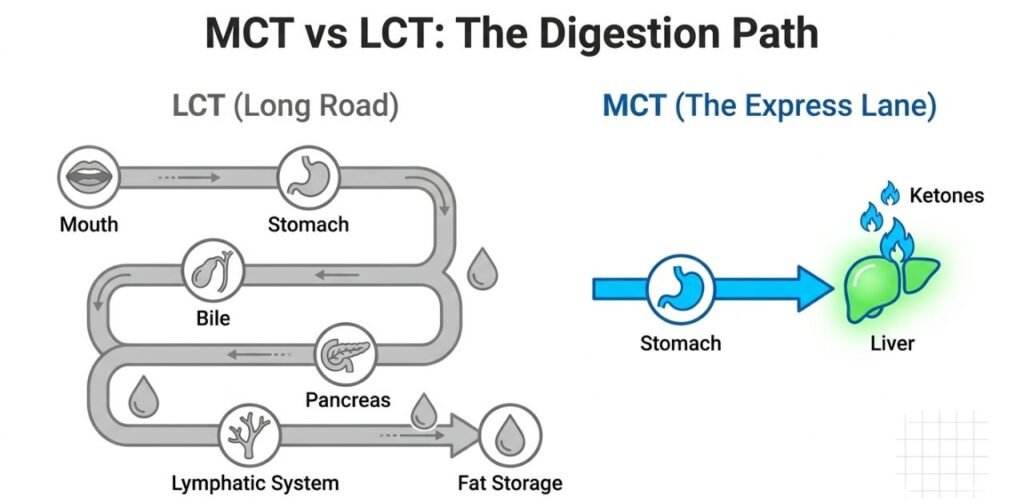
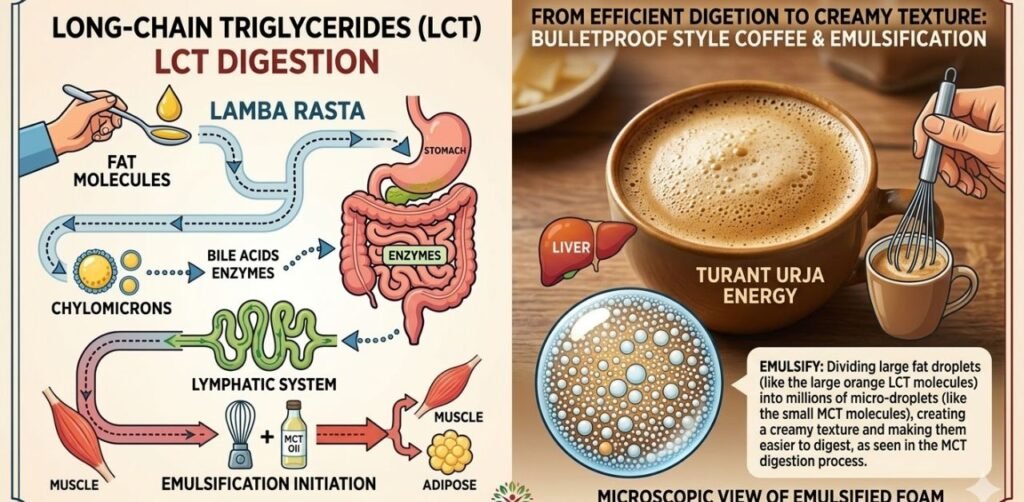
If you are wondering what is MCT, the answer lies in the molecular structure: Medium-Chain Triglycerides. Most fats in the American diet, like butter or soybean oil, are Long-Chain Triglycerides (LCTs). These have 13 to 21 carbons and take a long time to break down, often ending up stored in your fat cells.
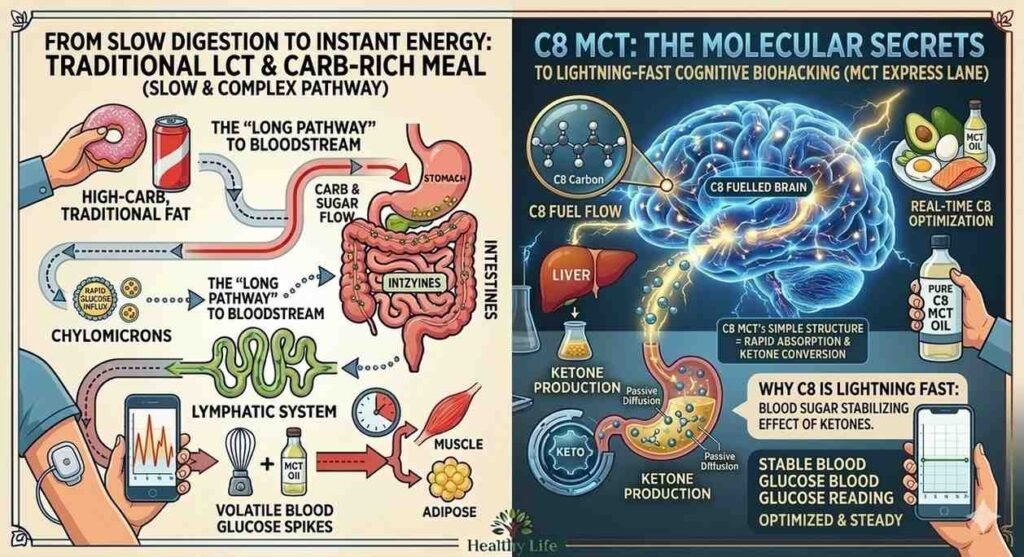
MCTs are different. They have 6 to 12 carbons, which allows them to bypass the normal digestive process. Instead of going through your lymphatic system and needing bile to break down, they go straight to your liver via the portal vein. Your liver then converts them into Ketones a clean, fast-burning energy source that your brain and muscles can use immediately, even if you aren’t on a strict Keto diet.
The 2026 Purity Standard: C8 vs. C10 vs. C12
In 2026, we’ve learned that not all MCTs provide the same metabolic “kick.” When people search for what is MCT, they often end up buying cheap coconut oil, which is a mistake for biohackers. Here is the breakdown:
| MCT Type | Scientific Name | Metabolic Speed | Best For |
| C8 | Caprylic Acid | Lightning Fast | Instant ketones, brain fog, and intense focus. |
| C10 | Capric Acid | Fast | Long-term energy and killing harmful gut bacteria. |
| C12 | Lauric Acid | Slow | Skin health, but acts like a “long-chain” fat in the liver. |
| C6 | Caproic Acid | Avoid | Tastes like “goat” and causes immediate stomach upset. |
The Pure Dietly Tip: Most “budget” MCT oils are 50% C12. For real metabolic results, look for “Pure C8” or “C8/C10 Blend” on the label.
New: The MCT-Brain Connection (2026 Research)
One of the biggest reasons for the 2026 MCT boom in the USA is Neuro-Protection. Your brain usually runs on glucose, but as we age (or deal with insulin resistance), the brain becomes less efficient at using sugar. This is often called “Type 3 Diabetes.”
MCTs provide an alternative fuel. Ketones can cross the blood-brain barrier and provide up to 70% of the brain’s energy requirements. Clinical studies in 2026 show that regular C8 MCT consumption can improve memory recall and eliminate the “3 PM Brain Fog” that many office workers struggle with.
MCT and Insulin Sensitivity: The Diabetic Advantage
For the diabetic community, the question isn’t just what is MCT, but “Can it lower my A1C?”
While MCT oil isn’t a replacement for medication, it acts as a metabolic buffer.
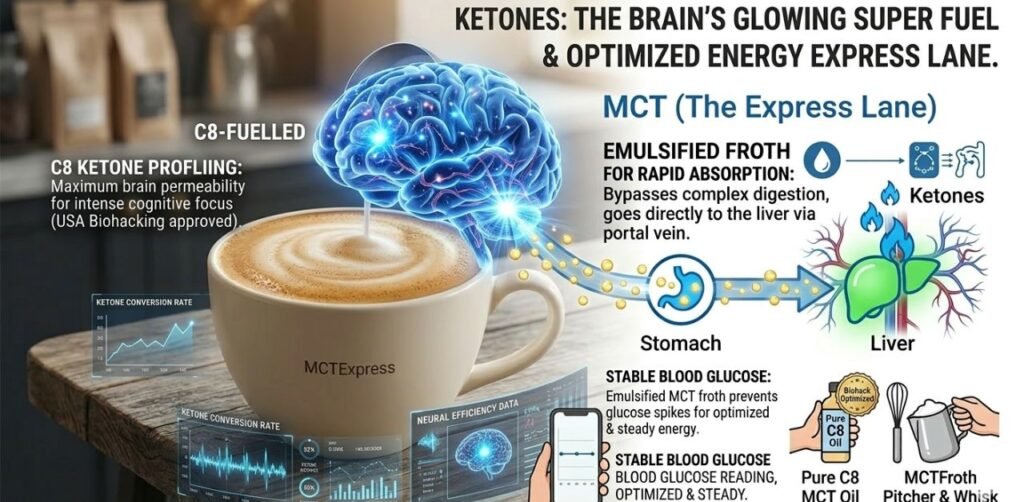
- Glucose Disposal: MCTs help your body move sugar out of the bloodstream and into the cells more efficiently.
- Reduced Fat Storage: Because MCTs are burned as energy rather than stored, they help reduce visceral (stomach) fat, which is the leading cause of insulin resistance.
- Appetite Control: MCT oil triggers Leptin and Peptide YY, the hormones that tell your brain, “I’m full.” This prevents the overeating that leads to sugar spikes.
The Pure Dietly Quality Test: Is Your MCT Oil Oxidized?
“MCT oil should be completely odorless and tasteless. If your oil has a slight ‘plastic’ smell or a harsh throat burn, it has likely oxidized or was stored in low-quality BPA plastic. In 2026, we recommend only buying MCT oil in Amber Glass bottles or high-density opaque containers to protect the delicate molecular bonds from light-induced oxidation.”
The Hidden Truth: MCT Oil vs. Coconut Oil
This is where most people get confused. Is coconut oil a good source of MCTs?
- Coconut Oil: It is roughly 50% Lauric Acid (C12). While C12 is healthy, it doesn’t give you the “instant energy” of pure MCT oil. You would have to eat 10 tablespoons of coconut oil to get the same C8 benefit as 1 tablespoon of pure MCT oil.
- MCT Oil: This is a “Fractionated” oil. The C8 and C10 are pulled out and concentrated. It is 100% pure “liquid fuel.”
New: The 2026 “Metabolic Morning” Protocol
How should you actually take MCT oil? Follow our expert-tested routine:
- Step 1: Start Small. Do not take a tablespoon on your first day. Start with 1 teaspoon to let your gut enzymes adjust.
- Step 2: Emulsify. Don’t just stir it into coffee; blend it. Blending creates “Micelles,” which are tiny fat droplets that your body absorbs 3x faster.
- Step 3: Timing. Take it on an empty stomach for maximum mental clarity, or 15 minutes before a high-carb meal to blunt the sugar spike.
2026 Nutrient Pairing: Maximizing MCT Absorption
“To get the most out of your C8 MCT oil, pair it with Polyphenols. Research in 2026 shows that the antioxidants in high-quality Coffee or Matcha work synergistically with MCTs to protect the mitochondria. Also, adding a pinch of Cinnamon can further stabilize the post-meal glucose response, making your ‘Metabolic Morning’ even more effective.”
Avoid the “Disaster Pants” Effect
If you take too much MCT oil too fast, you will experience “osmotic diarrhea.” Your body can’t process the fat quickly enough, and it flushes it out. Stick to the “1 teaspoon a day” rule for the first week!
Cooking with MCT: A Big No-No
A common question is, “Can I fry eggs in MCT oil?”
The answer is No.
MCT oil has a very low smoke point (around 320°F). If you heat it too high, it oxidizes and creates free radicals, which are harmful to your cells. Use it as a raw “finishing oil” on salads, or mix it into shakes and coffee.
Who Should Use MCT? (The 2026 Use-Case Map)
- The Athlete: Take 1 tbsp 30 minutes before Zone-2 cardio for sustained fat-burning.
- The Student/Professional: Use 1 tsp during deep-work sessions to bypass “Brain Fog.”
- The Type-2 Diabetic: Use as a “Glucose Buffer” before a carbohydrate-heavy social dinner to flatten the insulin curve.
Frequently Asked Questions (FAQ)
Q: Does MCT oil break a fast?
A: Pure MCT oil contains calories, but it does not trigger an insulin response. Most 2026 fasting protocols allow MCT oil because it keeps the body in a fat-burning (ketotic) state.
Q: Is MCT oil better than Powder?
A: Powder is more portable and often easier on the stomach. However, many powders use “fillers” like maltodextrin. Always check the label for zero-carb carriers like Acacia fiber.
Q: Can I take MCT oil at night?
A: Some people find the “brain boost” keeps them awake. However, others use it to prevent “Nocturnal Hypoglycemia” (low blood sugar at night). Test it and see how your body reacts.
Final Verdict: The Pure Dietly Stance
Understanding what is MCT is the first step toward reclaiming your metabolic health. It is more than just a supplement; it’s a biological hack for better energy, a sharper brain, and stable blood sugar. In 2026, we view MCT oil as a foundational tool for anyone serious about longevity and A1C management.
Start slow, choose a high-quality C8 source, and let your liver do the rest.
About the Author
Gohar is a Lead Metabolic Health Researcher at Pure Dietly. With a focus on 2026 nutritional science, Gohar helps the American health community navigate complex supplements to find real, data-driven results.
Medical Disclaimer
This content is for educational purposes. Consult your healthcare provider before adding MCT oil to your routine, especially if you have liver disease or are on blood sugar medication.