
Editor’s Note:
At Puredietly, we don’t just look at calories; we decode how ingredients interact with your hormones. This comprehensive 2026 guide explores the metabolic roadmap of sugar alcohols, specifically answering the burning question: sorbitol: what is it and how does it fit into a healthy American lifestyle?
Introduction: The Sweetener Revolution in the USA
In 2026, the American food landscape is obsessed with “Zero Sugar” and “Keto-Friendly” labels. Consequently, consumers are seeing ingredients like erythritol, xylitol, and sorbitol more than ever before. But to truly manage your health, you must ask, sorbitol: what is it exactly?
Sorbitol is a type of carbohydrate called a sugar alcohol, or polyol. Specifically, it occurs naturally in many stone fruits and berries. However, for mass production, it is often derived from corn syrup. While it looks and tastes like sugar, its chemical structure allows it to provide sweetness with significantly fewer calories and a much slower impact on your blood glucose.
Section 1: The Metabolic Breakdown (GI & Insulin Response)
The primary reason people use sorbitol is its “metabolic friendliness.” Specifically, it does not require a massive insulin surge to be processed. Therefore, it has become a staple for those following our [Guide to Reversing PCOS Permanently].
The Numbers You Need to Know:
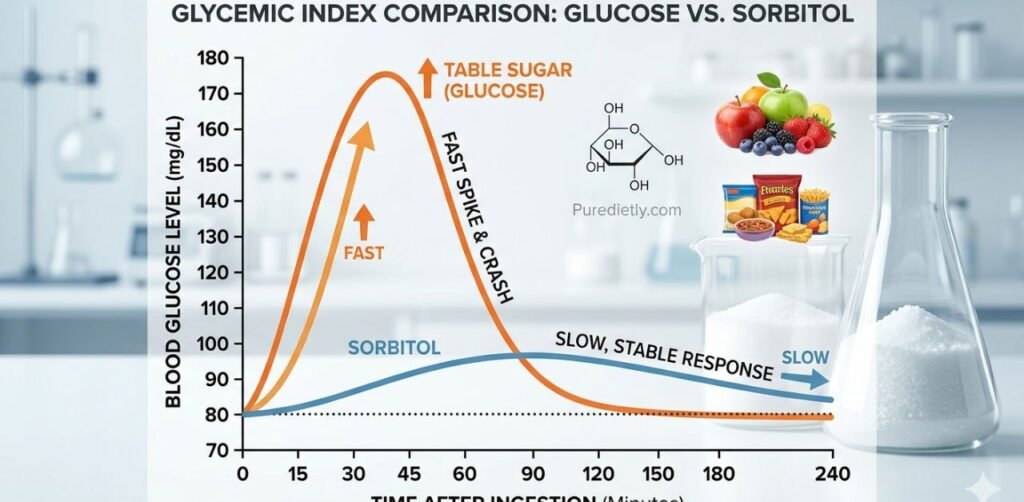
- Glycemic Index (GI): Sorbitol sits at a low 9. In comparison, table sugar (sucrose) is a staggering 65.
- Calorie Density: It provides approximately 2.6 calories per gram, whereas regular sugar provides 4.
- Absorption Rate: Only about 50% to 80% of sorbitol is absorbed in the small intestine. The rest travels to the large intestine, which is where the “gut trouble” begins.
Section 2: Natural vs. Synthetic—Where is Sorbitol Hiding?
To understand sorbitol: what is it, we must look at both its natural origins and its industrial applications.
Natural Sources (The “Whole Food” Version):
Specifically, nature provides sorbitol in fruits that are often recommended for fiber. These include:
- Apples and Pears: High natural concentrations.
- Stone Fruits: Peaches, nectarines, and plums (especially dried prunes).
- Berries: Blackberries and raspberries.
Industrial Applications (The “Processed” Version):
In the USA, the FDA categorizes sorbitol as “Generally Recognized as Safe” (GRAS). Consequently, manufacturers use it in:
- Sugar-Free Confections: Gums, hard candies, and “breath freshening” mints.
- Personal Care: It acts as a humectant (moisture retainer) in toothpastes, mouthwashes, and expensive skin creams.
- Pharmaceuticals: It’s a common base for cough syrups and “fast-melt” vitamins because it masks bitter tastes.
Section 3: The Gut Health Warning—The “Sorbitol Effect”
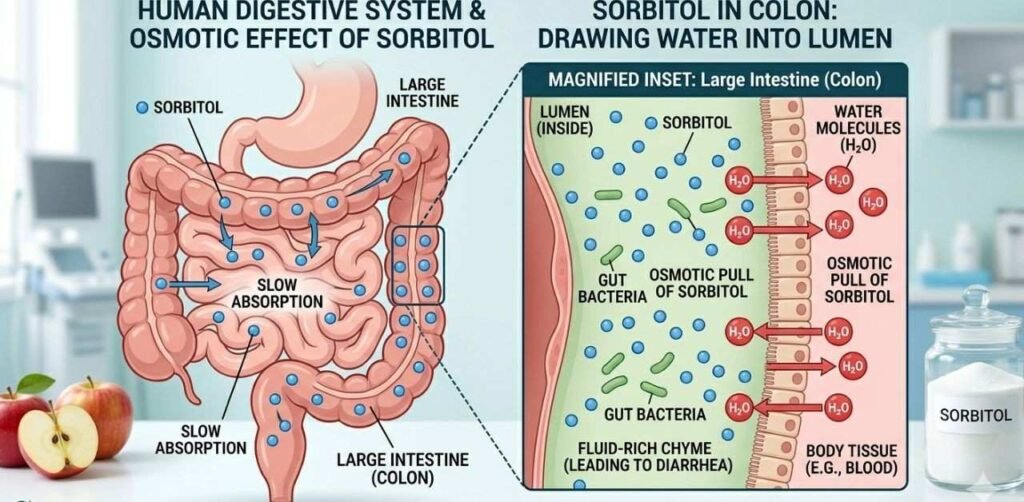
While sorbitol is excellent for insulin sensitivity, it can be a nightmare for your digestive tract. Because sorbitol is an osmotic laxative, it draws water into the colon. Specifically, if you consume a large amount, the bacteria in your gut ferment the unabsorbed portion.
Symptoms of Sorbitol Overload Include:
- Severe Bloating: Often described as “feeling like a balloon.”
- Abdominal Cramping: Sharp pains following a sugar-free meal.
- Osmotic Diarrhea: This occurs when the water levels in the colon become too high.
Gohar’s Tip: If you notice sudden digestive distress after switching to “diet” foods, check our guide on [How to Stop Morning Spikes] to see if hidden sweeteners are the culprit.
Example: “Sorbitol has a low GI, which is helpful for [managing insulin resistance in PCOS] naturally.”
Section 4: 2026 Comparison—Sorbitol vs. The Competition
When choosing a sweetener in 2026, you have many options. Ultimately, the best choice depends on your specific metabolic goals.
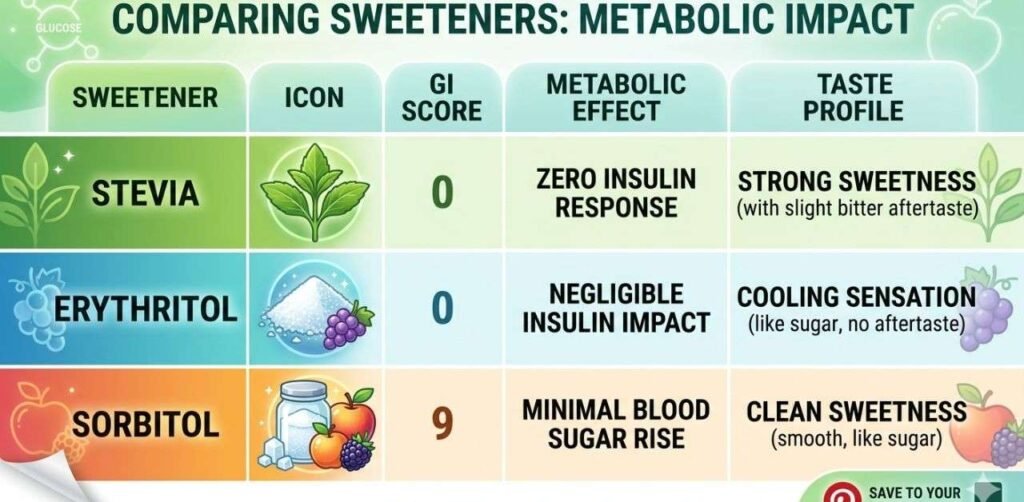
| Sweetener | GI Index | Sweetness | Digestibility | Best Use Case |
| Sorbitol | 9 | 60% | Moderate/Low | Gums & Mints |
| Erythritol | 0 | 70% | High | Keto Baking |
| Xylitol | 12 | 100% | Moderate | Dental Care |
| Allulose | 0 | 70% | High | Syrups & Sauces |
| Stevia | 0 | 300% | High | Coffee/Tea |
Section 5: USA FDA Regulations and Safety Standards
In the United States, the FDA requires a specific warning label on foods whose foreseeable consumption may result in a daily ingestion of 50 grams of sorbitol. Specifically, the label must state: “Excess consumption may have a laxative effect.” Furthermore, American researchers in 2026 are investigating the “long-term microbiome impact” of daily polyol consumption. Specifically, some data suggests that while it saves you from sugar spikes, it might alter the balance of “good” gut bacteria over time. Therefore, moderation is the absolute key.
Section 6: Sorbitol and Oral Health—A Hidden Benefit
One major advantage often overlooked is that sorbitol is “non-cariogenic.” Specifically, the bacteria in your mouth cannot ferment sorbitol into acid. Therefore, it does not erode your tooth enamel. This is why almost every major American toothpaste brand uses it as a primary ingredient.
Section 7: Is Sorbitol Right for You? (The Decision Matrix)
To decide if you should include sorbitol in your diet, consider these factors:
- Are you Diabetic? Yes, it’s a safer alternative to sugar.
- Do you have IBS? No, avoid it; it’s a high-FODMAP carbohydrate.
- Are you Keto? It’s okay, but erythritol or monk fruit are better for strict ketosis.
- Are you an Athlete? It can provide a slow release of energy without a crash.
Ready to Track Your Metabolic Progress?
Use our suite of free tools to stay ahead of your health journey.
[OPEN ALL CALCULATORS ➔]
Fast • Accurate • Mobile Friendly
Ready to Check Your Levels?
Use our Free Diabetic Calculators to track your A1C, Sugar Spikes, and Fasting Progress.
OPEN ALL CALCULATORS ➔Fast • Accurate • Free for Puredietly Readers
Section 8: Frequently Asked Questions (FAQs)
Q: Can sorbitol cause weight gain?
A: Indirectly, yes. Specifically, many people overeat “sugar-free” treats, leading to a caloric surplus.
Q: Does sorbitol break a fast?
A: Because it has 2.6 calories per gram, it can technically break a metabolic fast if consumed in large amounts.
Q: Is it safe for pets?
A: While sorbitol is safer than Xylitol (which is deadly for dogs), it can still cause severe stomach upset in pets. Therefore, keep your sugar-free gums away from your furry friends.
Final Thoughts from Gohar
Understanding sorbitol: what is it empowers you to make better choices in the grocery aisle. Ultimately, our goal at Puredietly is to help you build a lifestyle that prioritizes metabolic peace. Whether you choose sorbitol or stay natural, always prioritize how your body feels over what the label says.
About the Author:
Gohar Fatima is a metabolic health researcher and the founder of Puredietly.com. She is dedicated to helping American women navigate the complexities of modern nutrition through science-backed data.
Medical Disclaimer:
This content is for educational purposes only. Specifically, consult with a licensed healthcare professional in the USA before making significant changes to your medical or dietary routine.