
Editor’s Note: The 2026 Metabolic Perspective
“At Puredietly, we believe that health is more than just counting numbers. While the 16 calories in a teaspoon of sugar might seem minor on a standard nutritional label, our 2026 Metabolic Audit focuses on the hormonal impact—specifically how these ‘naked’ calories trigger insulin spikes and disrupt fat-burning. This guide has been meticulously researched to move beyond the scale and help you understand the internal chemistry of sweetness. Our goal is to empower you with data-driven swaps that protect your long-term vitality.”
— Gohar, Founder & Lead Researcher, Puredietly.com
30-Second Metabolic Summary (Featured Snippet)
A standard level teaspoon of granulated white sugar contains approximately 16 calories and 4.2 grams of pure carbohydrates. While 16 calories may seem insignificant, the metabolic impact is substantial due to its high Glycemic Index (GI) of 65. For those managing blood sugar, these “naked calories” trigger a rapid insulin spike, making it essential to audit your daily intake for long-term health.
1. The Basic Math: Breaking Down the 16 Calories
Many health-conscious individuals ask how many calories in a teaspoon of sugar when they start a new metabolic journey. On paper, the answer is simple: 16 calories. However, these are strictly “empty calories” because they provide zero protein, fiber, or essential vitamins.

In the USA, the average adult consumes about 17 teaspoons of added sugar daily. Consequently, this adds up to 272 extra calories every single day, often hidden in plain sight. Understanding this basic math is the first step toward reclaiming your metabolic flexibility.
2. Comparison: Not All Teaspoons Are Equal
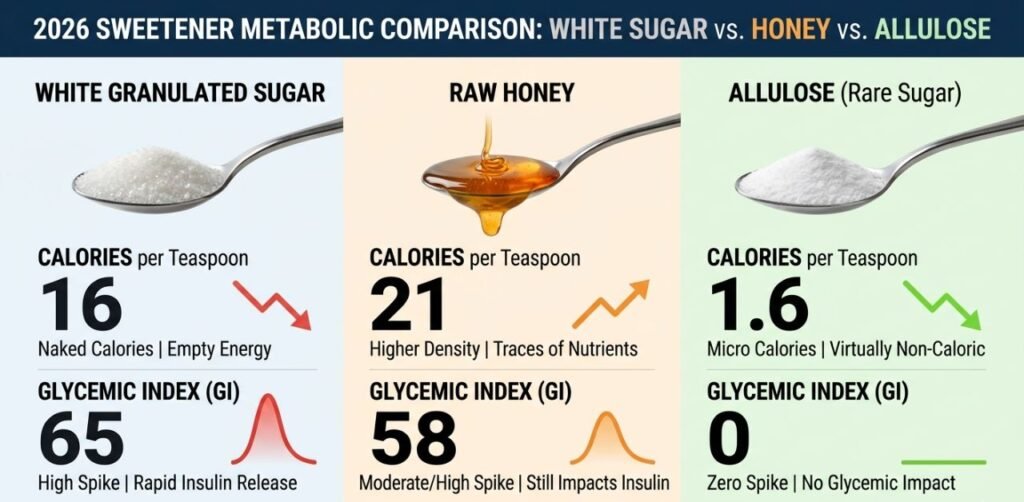
Different types of sugar have slightly different caloric densities and metabolic footprints. Moreover, their impact on your insulin levels varies based on their processing and mineral content.
Table 1: 2026 Sugar Calorie & GI Audit | Sugar Type (1 tsp) | Calories | Glycemic Index (GI) | Metabolic Impact | | :— | :— | :— | :— | | White Granulated | 16 | 65 | High Insulin Spike | | Brown Sugar | 17 | 64 | High Insulin Spike | | Raw Honey | 21 | 58 | Moderate/High Spike | | Coconut Sugar | 15 | 35 | Lower Glucose Spike | | Allulose (Rare) | 1.6 | 0 | Optimal Choice |
3. Why 16 Calories Can Ruin Your Fasting Progress
If you are practicing intermittent fasting, you might wonder if a small teaspoon of sugar in your coffee truly matters. Does black coffee break a fast? Yes, if you add sugar. Even those 16 calories trigger a hormonal response that signals your body to stop burning fat.
As we explored in our [Low Carb Diet for Diabetics Guide], insulin is the primary storage hormone. When insulin is present, the fat-burning process (lipolysis) is paused. Therefore, even one “innocent” teaspoon can halt your metabolic progress for several hours.
4. The “Insulin Spike” Audit: Beyond the Calories
In 2026, we focus more on the “Glucose Spike” than the literal calorie count. When you consume 4 grams of pure sucrose, it enters your bloodstreamIn 2026, we focus more on the “Glucose Spike” than the literal calorie count. When you consume 4 grams of pure sucrose, it enters your bloodstream almost instantly. This rapid entry creates a metabolic “shock” that the body must manage immediately. almost instantly. This rapid entry creates a metabolic “shock” that the body must manage immediately.
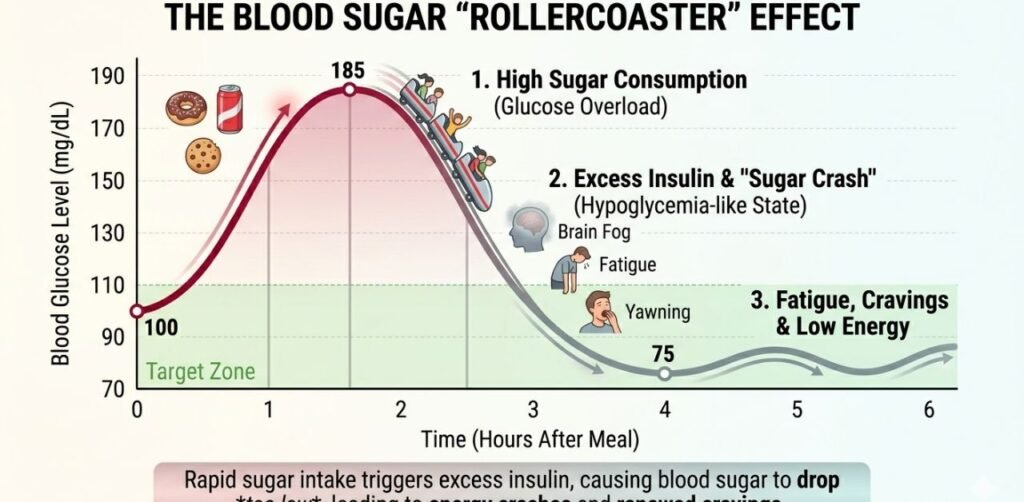
First, your blood sugar levels surge. Consequently, your pancreas releases a flood of insulin to bring levels down. Finally, you feel [tired after eating carbs] because your blood sugar levels often crash below baseline, leading to “reactive hypoglycemia.”
5. The Brain-Sugar Connection: Why 16 Calories Trigger Cravings
Understanding how many calories in a teaspoon of sugar is only half the battle; the real issue lies in your brain chemistry. When you consume those 4 grams of sugar, your brain releases a surge of Dopamine, the reward chemical.
This neural response acts on the same pathways as addictive substances. Consequently, even a small 16-calorie hit can trigger a cycle of intense cravings. When the initial energy burst fades, your brain demands another “hit,” leading to the overconsumption of calories later in the day.
6. Hidden Sugar: The Teaspoon Trap in USA Foods
Most of the sugar consumed in the USA is hidden in processed foods. For instance, a single can of soda contains about 10 teaspoons of sugar. That is 160 calories derived purely from refined sugar.
Common “Hidden Sugar” Sources:

- Ketchup (1 tbsp): 1 teaspoon of sugar.
- Low-Fat Yogurt: 5 to 7 teaspoons of sugar.
- Barbecue Sauce: 2 teaspoons per serving.
- Fruit Juice (8 oz): 6 to 8 teaspoons of sugar.
Therefore, reading labels for “Added Sugars” is crucial for anyone trying to maintain a healthy weight and stable mood.
7. Impact on Your Vital Organs
If you are monitoring your eGFR in blood work or liver health, sugar intake is a critical metric. Excessive sugar is a leading driver of Non-Alcoholic Fatty Liver Disease (NAFLD) because of how the body processes fructose.
Your liver is the only organ that can metabolize fructose. When overwhelmed by too many teaspoons of sugar, it converts that energy directly into visceral fat (hormonal belly). Furthermore, chronic high blood sugar puts immense pressure on your kidneys’ delicate filters. Reducing your daily teaspoons is a direct way to protect your long-term renal health.
8. Case Study: The 30-Day “Teaspoon Audit” Result
Let’s look at a typical Puredietly reader, ‘Sarah.’ She was consuming 12 teaspoons of added sugar daily through coffee, “healthy” snacks, and dressings. By performing a Metabolic Audit and swapping those 12 teaspoons for monk fruit, she saw a transformation.
In just 30 days, she lost 4 lbs and reported that her afternoon brain fog disappeared completely. This wasn’t because of a massive calorie deficit, but because she eliminated the daily insulin roller coaster caused by those “small” teaspoons.
9. Better Alternatives for 2026
You can enjoy sweetness without the 16-calorie hit or the metabolic spike. In our recent [Sugar Substitutes Audit], we highlighted rare sugars that support your goals.
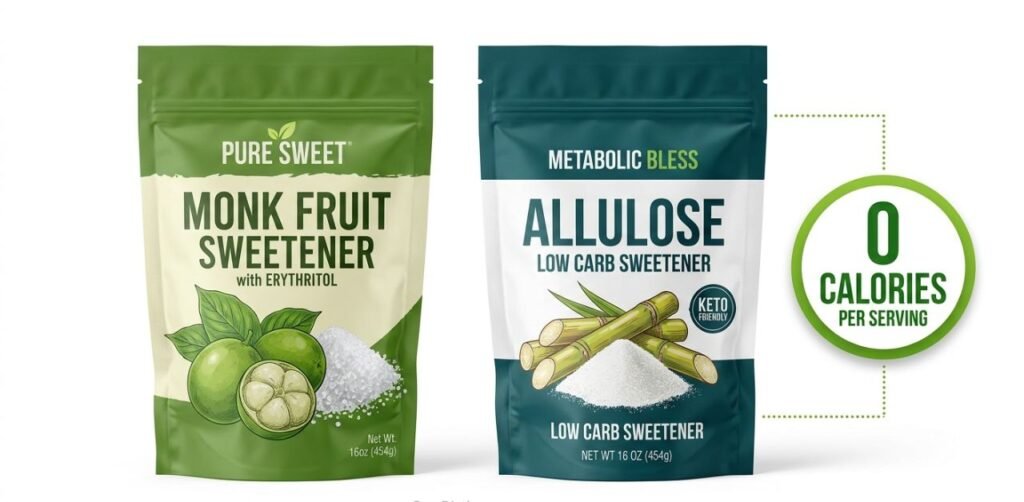
- Allulose: Provides only 1.6 calories per teaspoon and has a zero Glycemic Index.
- Monk Fruit: A natural, zero-calorie sweetener that doesn’t affect blood glucose.
- Stevia: A plant-based favorite for keto and diabetic enthusiasts alike.
10. How to Audit Your Daily Sugar Intake
To improve your health, you must know your numbers. Instead of just asking how many calories in a teaspoon of sugar, start tracking your total daily grams.
- Check Labels: Always look for “Added Sugars” on nutritional facts.
- The “Half-Rule”: Start by using only half a teaspoon of sugar in your drinks today.
- Track Spikes: Use our [Free Metabolic Calculators] to see how your diet impacts your long-term health markers.
Confused about food labels? Calculate your Net Carbs in seconds!
📊 Open Net Carb Calculator100% Free Tool for Gohar’s Readers
Frequently Asked Questions (FAQs)
Q: Does 16 calories of sugar break a fast?
A: Yes. Even one teaspoon triggers insulin, which pauses fat-burning. For a true fast, stick to black coffee or zero-calorie Monk Fruit.
Q: Is brown sugar better than white sugar?
A: No. Brown sugar has 17 calories and a similar Glycemic Index (64). Metabolically, your body treats it exactly like white sugar.
Q: Why do I feel [tired after eating sugar]?
A: It’s the “Sugar Crash.” The 16-calorie spike is followed by a rapid drop in blood glucose, leading to fatigue and brain fog.
Q: How much sugar is hidden in USA processed foods?
A: A lot! For example, one soda can has 10 teaspoons (160 calories). Always check labels for “Added Sugars” to protect your liver health.
Q: What is the best 0-calorie swap for 2026?
A: Allulose and Monk Fruit are top picks. They provide sweetness without the insulin spike or the 16-calorie burden.
Conclusion: Your Smallest Swap, Your Biggest Win
Knowing how many calories in a teaspoon of sugar is more than just a math lesson; it is the first step in your metabolic transformation. Those 16 calories might look tiny, but their impact on your insulin and energy levels is massive. By making one small “swap” today—choosing Allulose or simply cutting back—you are not just saving calories; you are protecting your brain, liver, and heart from the 2026 sugar epidemic. Ready to reclaim your energy? Start your journey with Puredietly and leave the sugar roller coaster behind for good.
About the Author
Gohar is a Metabolic Health Researcher and the founder of Puredietly.com. She specializes in decoding 2026 nutritional science to provide data-driven, “zero-fluff” guides for those managing blood sugar and insulin spikes. Consequently, her expert audits help readers across the USA simplify complex biohacking into actionable daily habits. Passionate about metabolic flexibility, Gohar’s mission is to help you reclaim your energy and live a spike-free life.
⚠️ The Puredietly Safety Audit (Medical Disclaimer)
We love sharing the latest 2026 metabolic research, but we aren’t your doctors! The insights at Puredietly.com are for educational “biohacking” and curiosity only. Since every body reacts differently to sugar and substitutes, please consult your healthcare provider before making major dietary shifts—especially if you are managing diabetes or kidney health. Let’s keep your health journey safe and scientific!