
By Gohar Fatima | Pure Dietly Research | April 14, 2026
Editor’s Note: The 2026 Clinical Standard
This guide is a cornerstone of the Pure Dietly Blood Biomarker Series. Our mission is to empower USA readers with clinical-grade insights that are often skipped in a standard 15-minute doctor’s visit. This article was audited on April 14, 2026, to include the latest findings on cortisol-induced immune suppression and thyroid-immune crosstalk.
Introduction
In the complex world of blood work, we often focus on the “big players” like Hemoglobin, Glucose, or Cholesterol. However, have you ever looked at your Complete Blood Count (CBC) and wondered why your low basophils count is sitting at zero or near-zero? Clinically, this condition is known as Basopenia. While many general practitioners might label a “0.0” as a normal finding, a metabolic health researcher sees a subtle story of internal stress, hormonal shifts, and autonomic nervous system activity.
![the immune army white blood cells [WBC]composition](https://puredietly.com/wp-content/uploads/2026/04/Untitled-design-2026-04-14T191212.004-1024x502.jpg)
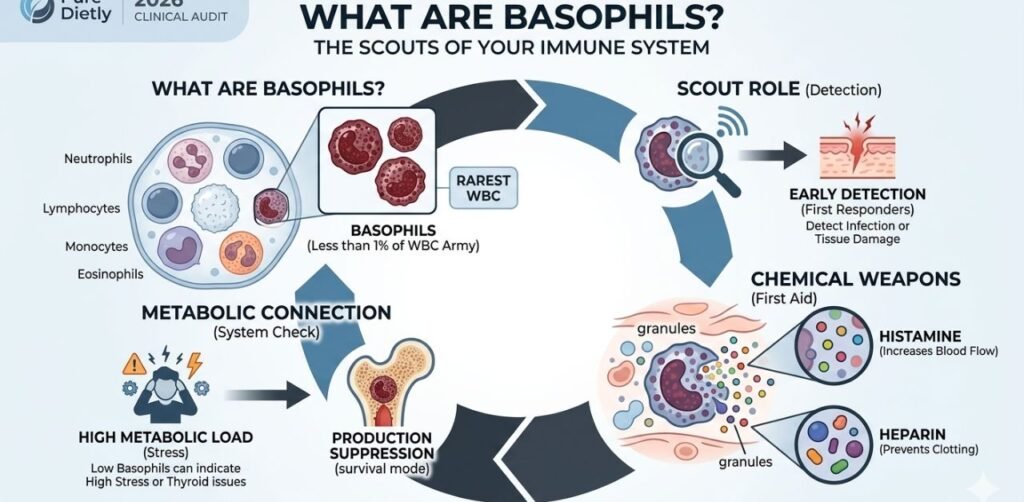
Specifically, basophils are the rarest type of white blood cell (leukocyte), making up less than 1% of your total immune army. Consequently, when these levels drop, it is rarely about the cells themselves and more about the physiological environment they live in. In this 1300-word audit, we will dive deep into the science of low basophils, the stress-metabolism connection, and how you can restore your body’s natural balance using data-driven lifestyle strategies.
1. What are Basophils? The Scouts of Your Immune System
Basophils are granular cells produced in the bone marrow. They are part of the innate immune system, acting as “scouts” that detect early signs of infection or tissue damage. They carry “chemical weapons” inside their granules, primarily histamine and heparin. When the metabolic load becomes too heavy or the body enters a state of “survival mode,” the bone marrow may temporarily suppress the release of these cells into the bloodstream.
2. Decoding the Numbers: Percentage vs. Absolute Count
When reviewing your labs, you might see two different numbers for basophils. Understanding the difference is crucial for a proper audit.
- Basophil Percentage (%): Tells you what fraction of your total white blood cells are basophils. A normal range is typically 0.5% to 1.0%.
- Absolute Basophil Count (ABC): The actual number of cells per microliter of blood. The normal range is usually 25 to 100 cells/µL.
Actually, in many American clinical settings, a count of 0 is reported as “normal” because it is the lower limit of the reference range. However, for those seeking optimal metabolic health, an absolute zero for an extended period could indicate that the immune system is being suppressed by external or internal factors.
3. The Hidden Causes: Why are my Basophils Low?
Generally, low basophils are not considered a disease on their own. Instead, they serve as a biomarker—a biological “check engine light.”
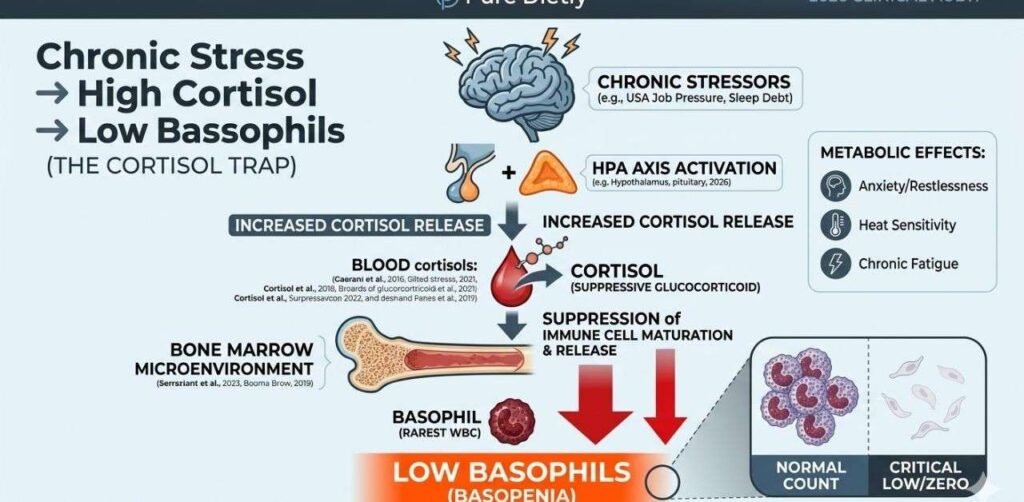
A. The Cortisol Trap (The Stress Connection)
B. Hyperthyroidism (Thyroid Overdrive)
Your thyroid is the master regulator of your metabolic speed. If your thyroid is overactive (Hyperthyroidism), every physiological process accelerates. Surprisingly, this metabolic “overdrive” often burns through immune markers. Therefore, persistent Basopenia is frequently linked to an overactive thyroid, as seen in conditions like Graves’ Disease.
C. Severe Acute Reactions
Sometimes, during the very early stages of a massive allergic reaction (Anaphylaxis) or a severe infection, the body “recruits” every available basophil to the site of the attack. Therefore, a blood test taken during this window might show low basophils because the cells have left the bloodstream to go into the “battlefield” of the tissues.
4. The 2026 Metabolic Audit: Data Reference Table
To help you interpret your current standing, refer to this clinical comparison table:
| Basophil Level (Absolute) | Metabolic Status | Interpretation & Action |
| 25 – 100 cells/µL | Optimal | Balanced immune response; healthy metabolism. |
| 10 – 20 cells/µL | Borderline | Possible chronic stress or early metabolic fatigue. |
| < 10 cells/µL (Basopenia) | Critical Focus | High cortisol, Thyroid issues, or Acute stress response. |
5. The Women’s Health Connection: Ovulation and Cycles
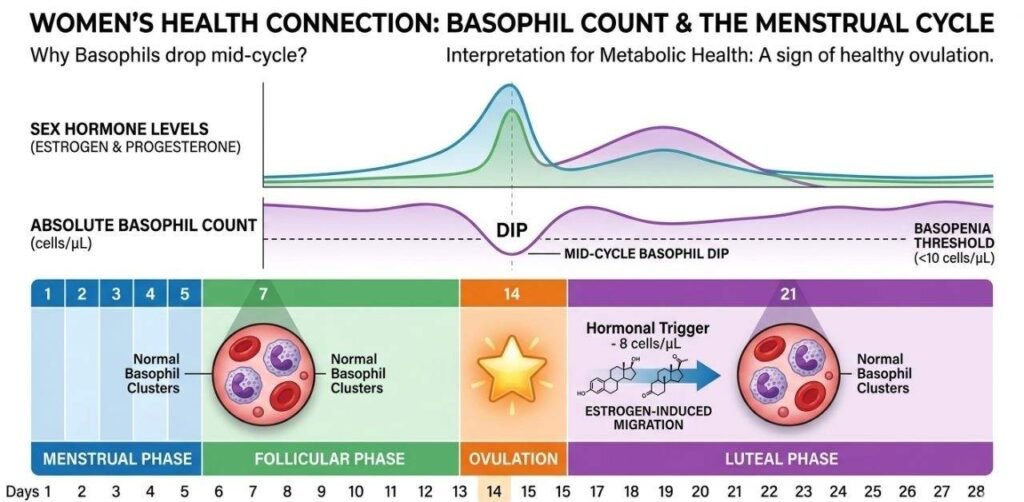
Research in 2026 has confirmed a strong correlation between sex hormones and basophil migration. If you notice your levels are low during the middle of your cycle, it is likely a sign of a healthy, functioning reproductive system. If you are managing hormonal imbalances, read our clinical audit on the Best Birth Control for PCOS to understand how synthetic hormones impact your metabolic markers.
Internal Link: If you are managing hormonal imbalances, read our clinical audit on the Best Birth Control for PCOS to understand how synthetic hormones impact your metabolic markers.
6. Symptoms and the “Metabolic Burnout” Profile
Because Basopenia itself doesn’t cause pain, you won’t “feel” the low cells. Instead, you will experience the symptoms of the underlying cause. If you have low basophils, you might notice:
- Anxiety and Restlessness: Often linked to high cortisol or thyroid issues.
- Unexplained Weight Loss: A common sign that your metabolism is in overdrive.
- Sensitivity to Heat: Specifically seen in hyperthyroid patients.
- Chronic Fatigue: The result of the body staying in a “fight or flight” mode for too long.
7. The Pure Dietly Protocol: Restoring Immune Balance
In 2026, we focus on “Metabolic Resilience.” To bring your markers back to the optimal zone, we must lower systemic inflammation.
Step 1: Cortisol Management
Lowering cortisol is the fastest way to allow basophils to return to the blood. Specifically, focus on adaptogens like Ashwagandha and ensuring you get 7-8 hours of quality sleep.
Step 2: The Resistant Starch Biohack
A healthy gut communicates directly with the bone marrow. By feeding your gut bacteria with resistant starch, you reduce the overall “inflammatory load” on your body.

Internal Link: Master the “Cook-and-Cool” method in our guide What Foods Are Starchy? to improve your gut-immune axis.
Step 3: Micronutrient Support
- Zinc: Essential for white blood cell maturation.
- Vitamin C: Helps stabilize the granules inside the basophils.
- Magnesium: Specifically helps calm the nervous system, reducing the stress that leads to Basopenia.
8. FAQ: Frequently Asked Questions
Q: Is it dangerous to have zero basophils?
Generally, having 0.0 basophils is not an immediate medical emergency. However, it is an invitation to look at your thyroid and stress levels. If your total white blood cell count is also low, seek a more detailed hematology review.
Q: Can certain medications cause low basophils?
Specifically, yes. Corticosteroids (like Prednisone) are designed to suppress the immune system and are a primary cause of Basopenia in the USA.
Q: Is there a specific diet for Basopenia?
Actually, there is no “basophil-specific” diet. Nevertheless, focusing on anti-inflammatory protocols—like avoiding foods that spike cholesterol—reduces the metabolic stress that keeps these levels low.
Check Your Metabolic Status – Free BMI Calculator
Conclusion: Listen to Your Internal Data
In summary, low basophils are a subtle yet powerful biomarker of your body’s stress response. Whether it is an overactive thyroid, the hormonal shifts of ovulation, or the burnout of a high-pressure lifestyle, your blood work is a roadmap to your internal health. Therefore, don’t just ignore a “0” on your lab report—use it as a prompt to dive deeper into your metabolic recovery.
Ready to see how your habits are affecting your longevity? Use our Free Metabolic Age Calculator to find out your “internal age” and start your reset today!
About the Author
Gohar Fatima is a prominent Metabolic Health Researcher and the founder of Pure Dietly. With a focus on nutritional science and clinical biomarkers, she specializes in helping the USA audience navigate complex health data with ease.
Medical Disclaimer
The information provided in this article is for educational purposes only. Always consult with a qualified healthcare provider in the USA before making changes to your medical treatment or diet.