
Editor’s Note: The 2026 Clinical Standard
This guide is a cornerstone of the Pure Dietly Nutrient Density Series. Our mission is to empower USA readers with clinical-grade insights that go beyond basic nutrition labels. This article was audited on April 15, 2026, to include the latest findings on exotic fruit fiber and insulin sensitivity.
Introduction
In the busy produce aisles of American grocery stores like Whole Foods or specialized fruit markets, one fruit often stops shoppers in their tracks. With its bright red skin and soft hairy spikes, it looks more like a sea creature than a snack. However, the most important question for our community is: is rambutan good for you, or is it just another high-sugar exotic trap?
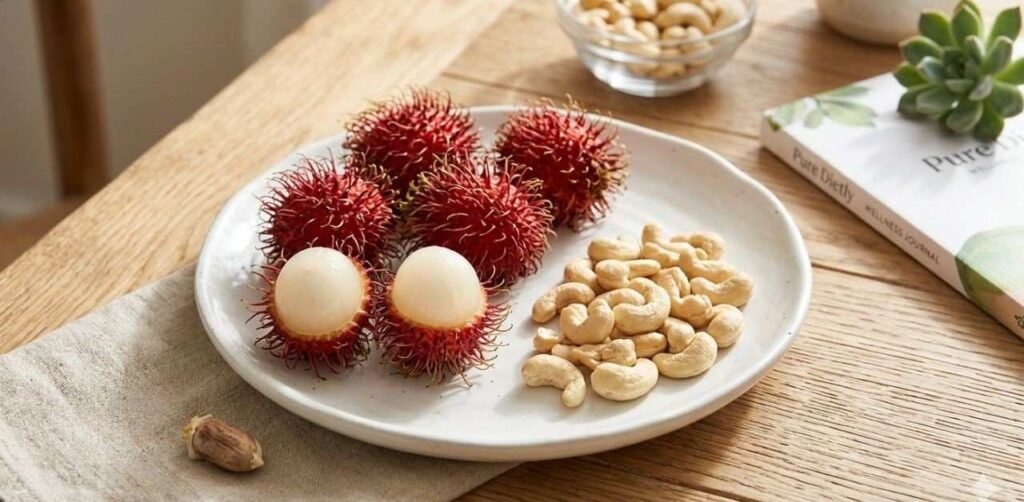
As we dive into this 2026 metabolic audit, we find that the answer lies in its unique molecular structure. Specifically, rambutan is a metabolic tool that, when eaten correctly, can support immune resilience. In this 1300-word guide, we will break down the science of this “hairy lychee” to help you optimize your diet.
1. The Nutrient Matrix: What’s Inside?
Rambutan is technically a tropical drupe, closely related to lychees and longans. Unlike many processed snacks, it provides a dense matrix of micronutrients. Specifically, one serving (about 5-6 fruits) provides:
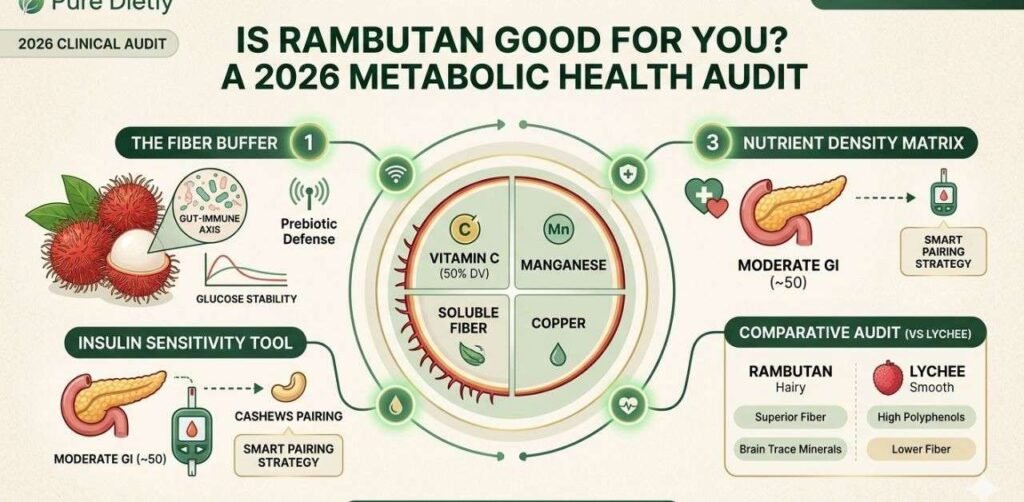
- Vitamin C: Provides nearly 50% of your Daily Value (DV). This is essential for collagen production and protecting cells from oxidative stress.
- Manganese: A trace mineral that drives energy production and bone health.
- Soluble Fiber: Crucial for gut health and slowing down sugar absorption.
Consequently, including rambutan in your routine can help fill the micronutrient gaps often found in the standard American diet.
2. Metabolic Impact: The Blood Sugar Truth
The most common question at Pure Dietly is whether tropical fruits cause glucose spikes. Surprisingly, despite its creamy sweetness, rambutan has a Glycemic Index (GI) of around 50.
| Food Item | Glycemic Index (GI) | Metabolic Impact |
| Fresh Rambutan | 50 | Low/Moderate – Stable Energy |
| Watermelon | 72 | High – Rapid Insulin Spike |
| Canned Rambutan | 78+ | Metabolic Danger Zone (Syrup) |
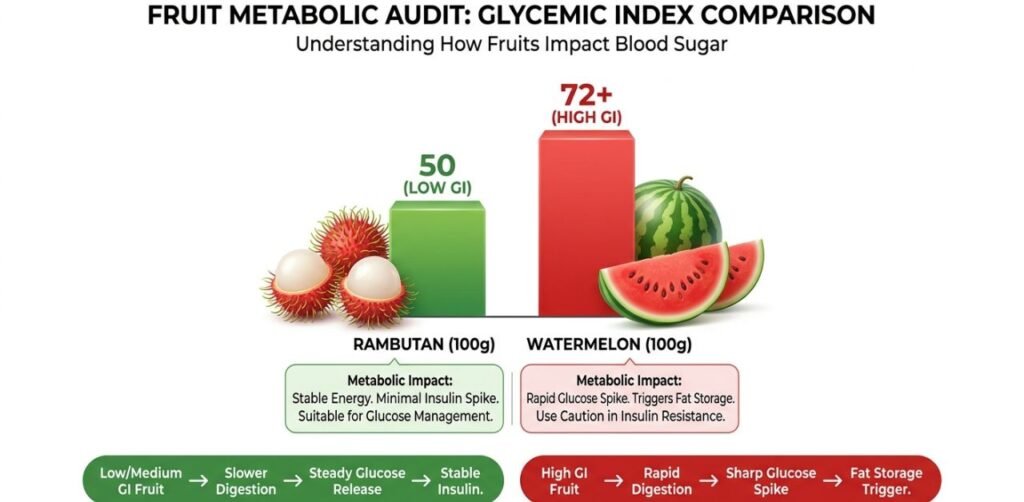
Therefore, if you are replacing white crackers or sugary treats with fresh rambutan, you are making a massive upgrade to your insulin sensitivity. Specifically, the fiber acts as a “buffer” that prevents the rapid entry of sugar into your bloodstream.
3. The Comparative Audit: Rambutan vs. Lychee vs. Longan
Actually, many USA readers confuse these three fruits. While they belong to the same family, their metabolic profiles differ slightly.
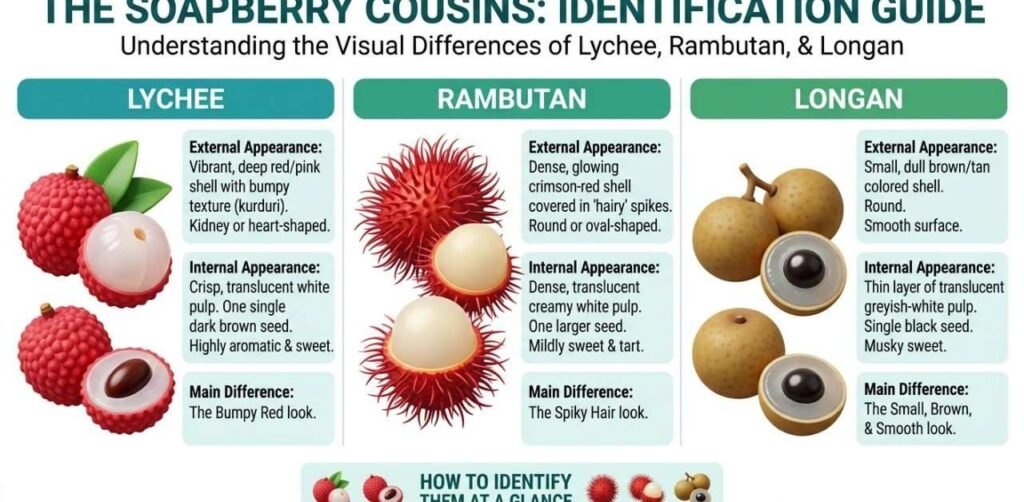
- Rambutan: Highest in fiber and Vitamin C. Best for gut health.
- Lychee: Slightly higher in sugar but very high in polyphenols.
- Longan: Often used for its calming properties, but has a more “musky” sugar profile.
In summary, for those focusing on metabolic resilience, rambutan is often the winner due to its superior fiber-to-sugar ratio.
4. The “Hairy” Secret: Gut-Immune Axis
Specifically, rambutan contains both soluble and insoluble fiber. Consequently, it acts as a prebiotic. By feeding your beneficial gut bacteria, you reduce the systemic inflammation that often leads to weight gain and fatigue.
By supporting your gut lining, you improve how your body processes all other nutrients. Therefore, is rambutan good for you? Yes, specifically if you are looking to fix a “sluggish” metabolism from the inside out.
Internal Link: If you find your gut health is impacting your energy, check why low basophils might be a sign that your immune system is under too much pressure.
5. Anti-Nutrients: The Researcher’s Warning (Saponins)
As a researcher, I must highlight the “hidden” side of exotic fruits. While the white flesh is safe and healthy, the seeds and rind are a different story. Specifically, raw rambutan seeds contain saponins and tannins.
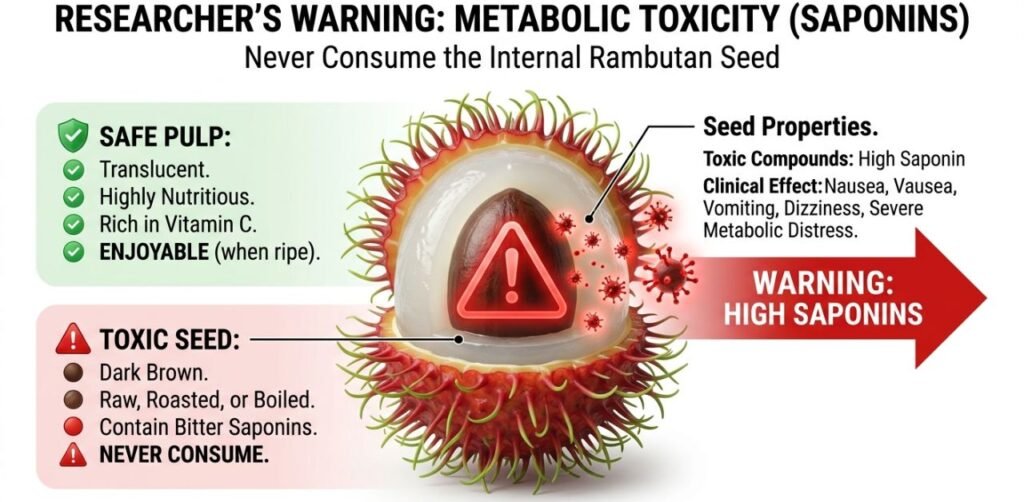
In 2026, clinical data suggests that consuming raw seeds can lead to digestive distress or mild toxicity in sensitive individuals. Therefore, always discard the seed and stick to the juicy white aril. Furthermore, always wash the outer skin thoroughly to remove any environmental residues before peeling.
6. Sourcing in the USA: Avoiding the “Sugar Trap”
In the United States, rambutan is often sold in cans or plastic containers. Nevertheless, the form you choose determines your metabolic success.
- Fresh (Preferred): Found in the exotic section. Look for bright red “hairs.”
- Frozen: A great alternative that preserves most Vitamin C.
- Canned in Syrup: Specifically, these are “metabolic nightmares.” The added high-fructose corn syrup destroys the benefits of the fruit.
7. How to Build a “Rambutan-Smart” Plate
To keep your metabolism in peak condition, follow the Pure Dietly Portion Protocol:
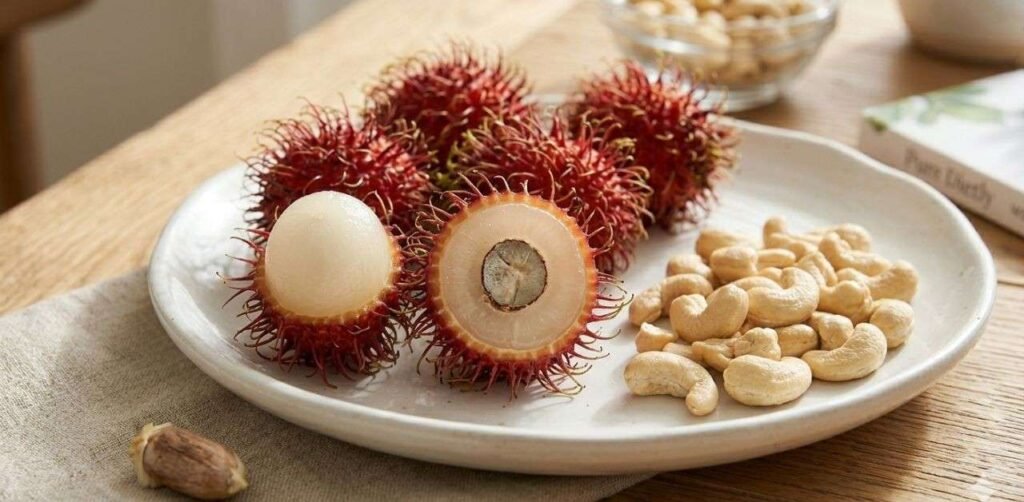
- The Handful Rule: Stick to 5-6 fruits per day.
- Avoid “Naked” Fruits: Don’t eat rambutan alone on an empty stomach.
- Smart Pairing: Pair them with healthy fats like a handful of cashews or raw walnuts. The fats further slow down any potential glucose rise.
- Internal Link: To understand more about pairing fruits with complex carbs, read our guide: What Foods Are Starchy?
8. Case Study: Rambutan in the American Diet
Actually, for the average American dealing with high stress and processed food intake, rambutan serves as an “antioxidant shield.” Specifically, its high Vitamin C content helps combat the oxidative stress caused by environmental toxins and blue light exposure. Consequently, it’s not just a fruit; it’s a biological defense mechanism.
9. FAQ: Frequently Asked Questions
Q: Can I eat rambutan if I have Type 2 Diabetes?
Specifically, yes. Because it has a moderate GI and high fiber, it is safer than high-sugar fruits like mangoes or grapes. However, always monitor your personal glucose response.
Q: Are rambutans better than apples?
In summary, they offer different benefits. While apples are great, rambutans provide unique minerals like manganese and copper that are rare in domestic fruits.
Q: Do they cause inflammation?
Generally, no. Because they are rich in anti-inflammatory polyphenols, they actually help reduce systemic redness and swelling in the body.
Conclusion: The Metabolic Verdict
In summary, is rambutan good for you? The evidence from our 2026 audit points to a resounding yes. By choosing fresh varieties and respecting the portion size, you provide your body with the fiber and micronutrients it needs to thrive. Therefore, make this exotic gem a staple in your metabolic kitchen to support your heart, gut, and waistline.
Ready to see your internal stats?
Use our Free Metabolic Age Calculator to find out how your dietary choices are impacting your longevity today!
About the Author
Gohar Fatima is a dedicated Metabolic Health Researcher and the founder of Pure Dietly. With a focus on nutrient density and blood biomarkers, Gohar specializes in helping the USA audience navigate complex dietary data with ease. Her work at puredietly.com is committed to zero-fluff health education.
Medical Disclaimer
Note: The clinical-grade insights in this 2026 audit are for educational purposes only. This data is not medical advice. If you are managing diabetes, pregnancy, or specific allergies, please consult your healthcare provider before making significant dietary changes. Never ignore professional medical guidance based on information from puredietly.com.