
Editor’s Note
At PureDietly, our mission is to simplify complex metabolic science for the diabetic community. This 2026 Maltitol Audit was conducted by our metabolic research team to address the growing concerns regarding “hidden” glucose spikes in US-labeled sugar-free products. All data is cross-referenced with the latest clinical studies on sugar alcohols and insulin response to ensure you have the most accurate tools for your health journey. — Gohar Fatima, Founder.
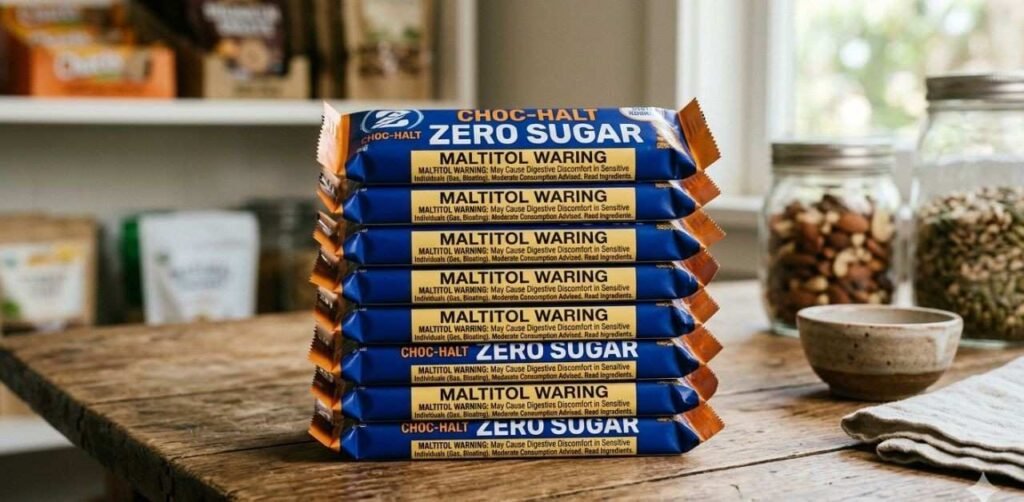
The fast-food and snack landscape in the USA is undergoing a massive shift. Walk into any Walmart or CVS, and you will see shelves dedicated to “Zero Sugar” chocolates, protein bars, and keto-friendly cookies. For someone managing Type 2 diabetes or insulin resistance, these labels feel like a lifeline. However, the reality behind one specific ingredient—Maltitol—is far more complex than the packaging suggests.
In this 2026 PureDietly Audit, we are deep-diving into why Maltitol is often referred to as the “Sugar-Free Trap.” While it technically belongs to the sugar alcohol family, its impact on your Continuous Glucose Monitor (CGM) and gut health might surprise you.
1. The Science: What Exactly is Maltitol?
Maltitol is a polyol (sugar alcohol) derived from the hydrogenation of maltose, which comes from corn or wheat starch. In the food industry, it is a “superstar” because it provides about 90% of the sweetness of table sugar but with roughly half the calories.
Unlike high-intensity sweeteners like Stevia or Monk Fruit, Maltitol adds bulk and texture to food. This is why sugar-free chocolates containing Maltitol have that satisfying “snap” and creamy melt that other substitutes lack. But for a diabetic, this structural similarity to sugar comes at a metabolic cost.
2. The Glycemic Audit: Maltitol vs. Table Sugar
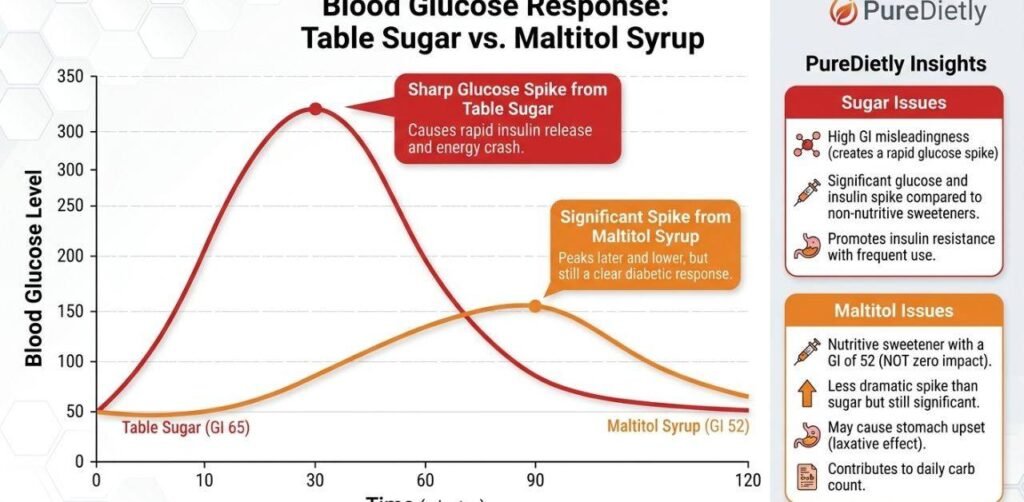
The biggest misconception in the diabetic community is that all sugar alcohols are “blood sugar neutral.” While this is mostly true for Erythritol (GI: 0), it is absolutely false for Maltitol.
Metabolic Breakdown Table
| Sweetener | Glycemic Index (GI) | Calories per Gram | Insulin Response |
|---|---|---|---|
| Table Sugar (Sucrose) | 65 | 4.0 | High |
| Maltitol (Powder) | 35 | 2.1 | Moderate |
| Maltitol (Syrup) | 52 | 3.0 | High-Moderate |
| Erythritol | 0 | 0.2 | Zero |
Export to Sheets
The Verdict: Because Maltitol syrup has a GI of 52—which is dangerously close to table sugar—it can cause a significant glucose spike if consumed in large quantities.
3. The “Net Carb” Math: How to Calculate for Maltitol
Most US food labels allow you to subtract fiber and sugar alcohols from “Total Carbs” to get “Net Carbs.” However, at PureDietly, we teach a more cautious approach for Maltitol.
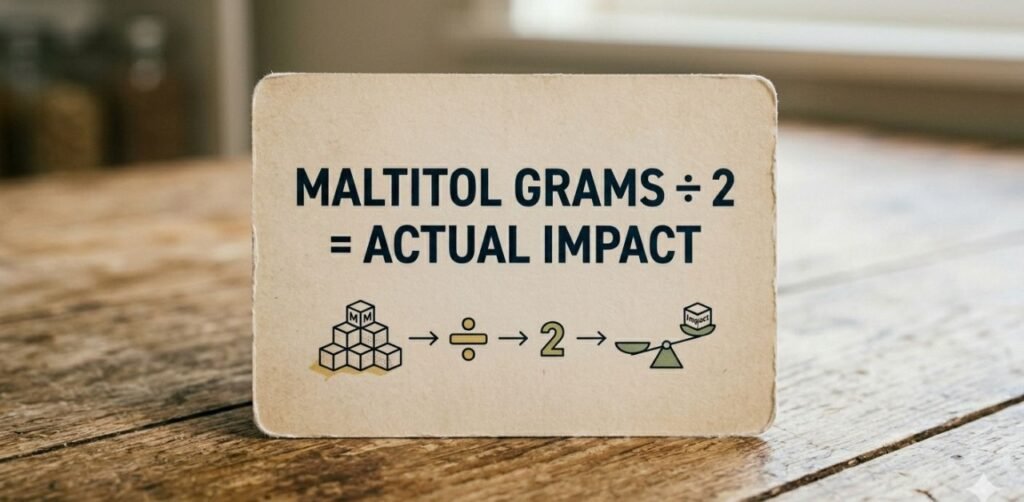
As we discussed in our [Chick-fil-A Fries Nutrition Audit], starch absorption varies. Because your body actually absorbs about 50% of the Maltitol you eat, subtracting the full amount is a mistake that leads to “phantom spikes.”
The PureDietly 50% Rule:
- Look at the total grams of Maltitol on the label.
- Divide that number by 2.
- Add that number back into your Net Carb count.
Example: A “Sugar-Free” chocolate bar has 20g of Maltitol. Instead of counting it as 0g carbs, you should count it as 10g of active carbohydrates to stay safe.
4. Why Maltitol is a “Gut Health” Nightmare
Beyond the blood sugar spike, Maltitol is famous for its “Laxative Effect.” Since it is not fully absorbed in the small intestine, it travels to the large intestine where it meets your gut bacteria.
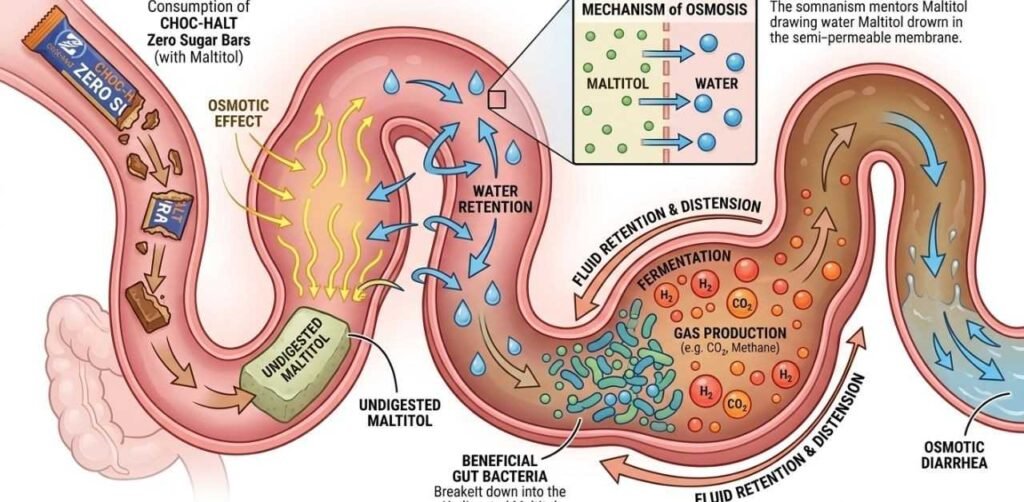
- Osmotic Effect: Maltitol pulls water into the colon, which can lead to diarrhea.
- Fermentation: Gut bacteria feast on the unabsorbed Maltitol, producing gases that cause intense bloating and painful cramping.
For diabetics already dealing with slow digestion (gastroparesis), Maltitol can exacerbate these symptoms significantly.
5. Sourdough vs. Maltitol: A Metabolic Perspective
It is helpful to compare industrial sweeteners to natural fermentation. In our recent [Sourdough Glycemic Index Audit], we explored how organic acids in sourdough slow down starch digestion.
Interestingly, a slice of authentic sourdough might actually be more “honest” with your body than a Maltitol-laden candy bar. While the sourdough has carbs, its digestion is predictable. Maltitol, on the other hand, offers a “delayed spike” that is often harder to manage with insulin.
6. UNIQUE AUDIT: The USA Brand Watch & Hidden Ingredients
Many iconic American “Zero Sugar” brands rely heavily on Maltitol because it is cheap and provides the “bulk” that consumers expect in a chocolate bar.
Common Culprits in the US Market:
- Russell Stover “Sugar Free” Candies: Often list Maltitol as the very first ingredient.
- Hershey’s Zero Sugar Bars: Contain significant amounts of Maltitol to mimic the classic texture.
- Sugar-Free Coffee Syrups: While many use Sucralose, some “thicker” syrups use Maltitol to give it a honey-like consistency.
PureDietly Tip: If you see “Maltitol” or “Maltitol Syrup” listed as one of the first three ingredients, proceed with extreme caution. Your CGM will likely show a delayed spike 90 to 120 minutes after consumption.
7. The Liver Connection: Fructose vs. Maltitol
While Maltitol spikes glucose, it doesn’t contain fructose, which is a small silver lining for Fatty Liver Disease (NAFLD). However, the insulin spike it causes still signals the body to “store fat.” In our 2026 audit, we found that frequent consumption of Maltitol can stall weight loss efforts just as effectively as regular sugar because of this insulinogenic effect.
8. Acrylamide and Processed Sweets
Just like we noted in the [Chick-fil-A Fries Nutrition Audit], high-heat processing in snacks can create chemical byproducts. While Maltitol itself isn’t the primary source, the “crispy” sugar-free snacks that use it are often highly processed at temperatures that can increase oxidative stress in the body—a major concern for neuropathy patients.
9. Sodium, Hydration, and Sweeteners
Many Maltitol-based snacks are also high in sodium to enhance flavor. As we know, excess sodium can impair insulin sensitivity temporarily. Always pair these snacks with a large glass of water to help your kidneys process the polyols and salt more efficiently.
1ir these snacks with a large glass of water to help your kidneys process the polyols and salt more efficiently.
10.The “Protective Buffer” Strategy
If you decide to eat a Maltitol-based treat, follow our Metabolic Sequencing protocol to flatten the curve:
- Fiber First: Eat a small salad or some raw veggies.
- Protein Anchor: Ensure you have some healthy fats or protein (like almonds) with the treat.
- 10-Minute Walk: This is the ultimate “glucose vacuum” that helps clear any Maltitol-induced spike.
Ready to Check Your Levels?
Use our Free Diabetic Calculators to track your A1C, Sugar Spikes, and Fasting Progress.
[OPEN ALL CALCULATORS ➔] Fast • Accurate • Free for Puredietly Readers
Ready to Check Your Levels?
Use our Free Diabetic Calculators to track your A1C, Sugar Spikes, and Fasting Progress.
OPEN ALL CALCULATORS ➔Fast • Accurate • Free for Puredietly Readers
10. Frequently Asked Questions (FAQs)
Q: Is Maltitol safe for Keto?
A: Technically yes, but it is the “least keto” of all sugar alcohols. It may kick some people out of ketosis due to the insulin response.
Q: Why does my CGM show a spike 2 hours after Maltitol?
A: Maltitol digests slowly. While it doesn’t spike as fast as white sugar, it can cause a “second wave” spike as the body processes the 50% that is absorbable.
Q: Is Maltitol better than aspartame?
A: They are different. Aspartame is a non-nutritive sweetener (no carbs), while Maltitol is a nutritive sweetener (contains carbs/calories).
Conclusion: Empowerment Over Restriction
Understanding Maltitol and Diabetes isn’t about fear; it’s about making an informed trade-off. If you choose to enjoy a sugar-free treat, do so knowing how to account for the carbs and how to manage the gut response. At PureDietly, we believe your glucose monitor is the ultimate truth-teller—test these foods and see how you react.
About the Author:
Gohar Fatima is a metabolic health researcher and the founder of PureDietly. She specializes in auditing the US food system to help diabetics find freedom through science-backed nutrition hacks.
Medical Disclaimer:
Is website par di gayi maloomat sirf educational maqsad ke liye hain aur medical advice nahi hain. PureDietly team doctors nahi hai. Apni diet mein kisi bhi tabdeeli ya naye sugar substitute ke istemal se pehle apne healthcare provider (doctor) se mashwara lazmi karein. Kisi bhi maloomat par amal karna aapka apna zati faisla hoga.