
By Gohar Fatima | June 22, 2026
Editor’s Note:
In the 2026 health landscape, the search for nutrient-dense protein often leads us to raw preparations like sashimi or poke bowls. However, as a metabolic researcher, I constantly remind my readers that “natural” does not always mean “automatically safe.” This audit deconstructs the risks of consuming raw salmon, providing you with a rigorous safety protocol that ensures you can enjoy your meals while keeping your gut health and insulin sensitivity in check. At PureDietly, we prioritize data over trends.
Introduction
In the fast-paced 2026 culinary and health landscape, the popularity of sushi and sashimi has transformed raw fish from a luxury into a staple in many American households. If you are focused on optimizing your nutrition, you have likely asked yourself: Can you eat raw salmon without compromising your long-term health? While this nutrient-dense fish is a powerhouse of essential Omega-3 fatty acids, it also carries potential biological risks that every conscious consumer must navigate. In this audit, we move beyond the marketing hype to provide a clear, science-backed safety guide for your kitchen, ensuring that your metabolic goals are never sacrificed for convenience.
1. The Safety Audit: Can You Eat Raw Salmon Safely?
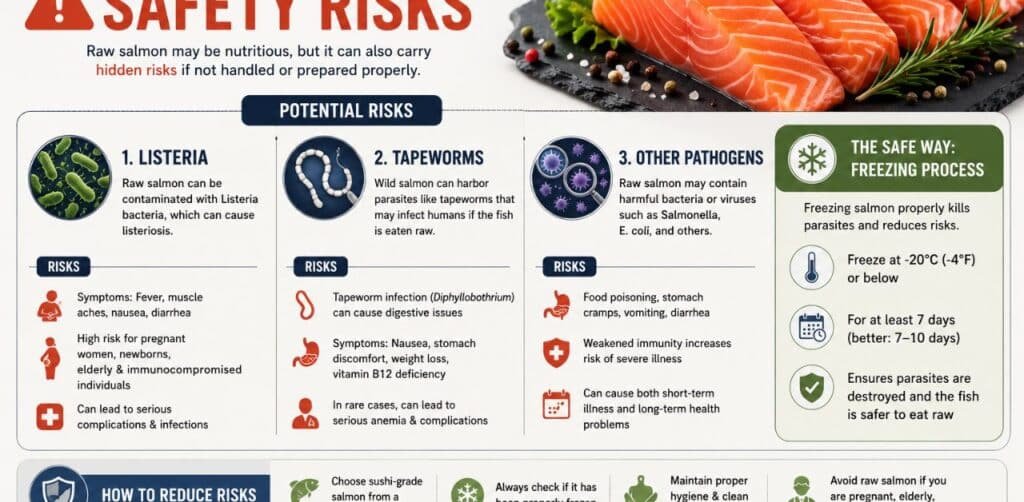
The short answer is yes, but with critical conditions. Raw salmon can be a healthy, protein-rich addition to your diet, provided it has been handled and processed correctly to eliminate hazardous parasites and bacteria.
- Parasite Risk: Wild-caught salmon often acts as a host for parasites like tapeworms (specifically Diphyllobothrium), which can cause severe digestive distress and nutrient malabsorption.
- The “Sushi-Grade” Myth: In the USA, there is no official federal definition or government-regulated safety standard for the term “sushi-grade.” It is largely a marketing term used by vendors to suggest quality, not a guarantee of parasite destruction.
- Bacterial Concerns: Raw fish can harbor dangerous pathogens such as Listeria, Salmonella, and Vibrio. These are particularly threatening to individuals with delicate metabolic profiles or compromised immune systems.
- Pathogen Survival: Unlike cooking, which uses heat to denature proteins and kill pathogens, raw preparations rely entirely on freezing to ensure safety.
2. The Metabolic Comparison: Raw vs. Cooked
Understanding the nutrient retention of salmon is vital for aligning your intake with your metabolic health goals. If you want to dive deeper into how different preparation methods affect insulin response, be sure to check our [Healthy Fat Sources Metabolic Audit].
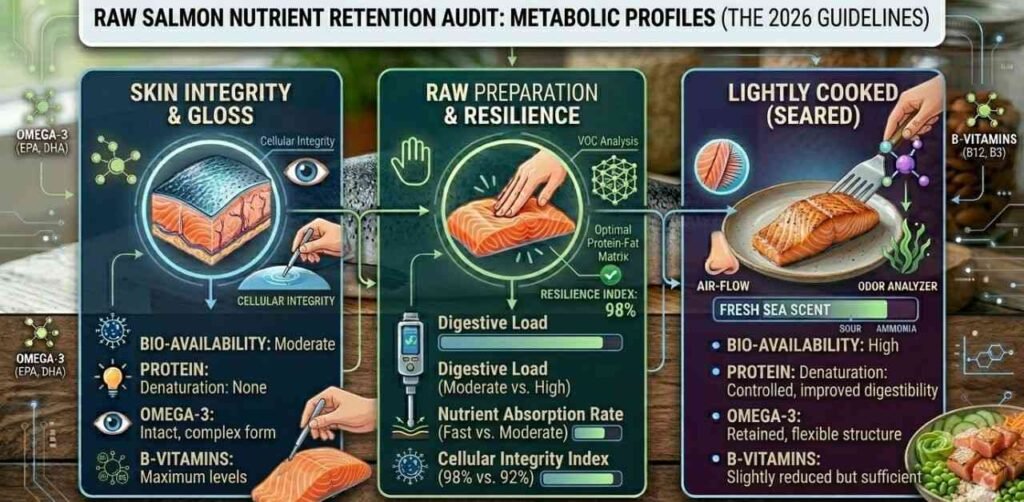
| Nutrient | Raw Salmon | Cooked Salmon | Metabolic Impact |
| Omega-3s | Very High | Retained | Anti-inflammatory |
| Protein | High | Denatured/Easier to Absorb | Muscle Maintenance |
| B-Vitamins | Maximum | Slightly Reduced | Energy Metabolism |
| Digestibility | Moderate | High | Gut Efficiency |
3. Critical Safety Protocols for Home Consumption
If you choose to consume raw salmon, you must follow strict preparation guidelines to protect your gut health a concept we deeply emphasize in our [Gut Health & Digestion Audit].
- Freezing is Non-Negotiable: To effectively kill parasites, salmon must be commercially frozen at specific, ultra-low temperatures (usually -4°F or -20°C for at least 7 days).
- Sourcing Matters: Always purchase your fish from reputable fishmongers who understand the specific, cold-chain requirements for raw consumption.
- Sanitization: Use separate, color-coded cutting boards and dedicated knives for raw fish to prevent cross-contamination in your kitchen.
- The Thawing Protocol: Always thaw your salmon in the refrigerator, not on the counter, to prevent the growth of bacteria during the warming phase.
4. Who Should Avoid Raw Salmon?
Safety is not one-size-fits-all. Our research indicates that specific populations should avoid raw fish entirely to prevent acute foodborne illness.
- Pregnant Women: The risk of foodborne illness, particularly Listeria, is significantly higher during pregnancy, which can have severe impacts on fetal development.
- Compromised Immune Systems: If you are currently undergoing medical treatment or have a weakened immune system, the risk of bacterial infection far outweighs any potential nutritional benefits.
- Young Children and Seniors: These groups are more susceptible to severe reactions and dehydration from pathogens often found in raw aquatic products.
- Individuals with SIBO: Due to the potential for microbial imbalance, those with existing digestive disorders should stick to cooked preparations.
5. USA Grocery Watch: Navigating Labels
When shopping for fish in the United States, do not blindly rely on the term “fresh,” as it can often lead to a false sense of security.
- Verify the Source: Do not hesitate to ask your store representative if the fish was specifically frozen for parasite destruction.
- Color and Odor: Fresh, safe salmon should have a mild, oceanic scent. If it smells sour, ammonia-like, or “fishy,” it indicates degradation.
- Physical Integrity: Look for firm flesh that bounces back when gently touched. Avoid fillets that appear slimy or dull.
- Storage: Keep your salmon at the coldest part of your refrigerator and commit to consuming it on the day of purchase to minimize bacterial growth.
6. Integrating Salmon into Your Metabolic Protocol

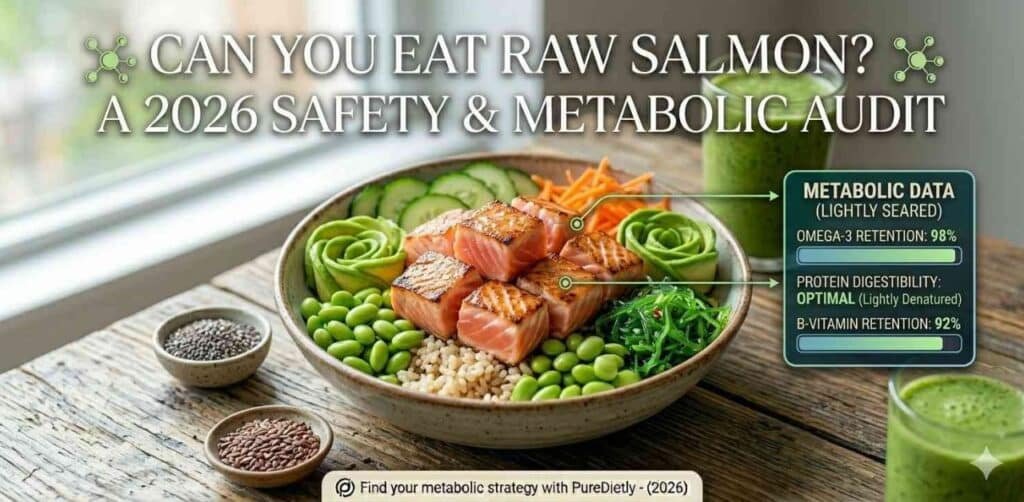
Navigating the USA food market can be tricky when you are prioritizing metabolic efficiency. While raw salmon offers a high concentration of intact nutrients, cooking it lightly such as quick searing can actually enhance protein digestibility while retaining the beneficial Omega-3 profile. By balancing raw preparations with cooked alternatives, you ensure that you are getting the maximum benefit from your fish intake without exposing your digestive system to unnecessary pathogen risks. Ultimately, whether you decide to eat it raw or cooked depends on your sourcing standards and your individual health profile.
7. The Role of Omega-3s in Metabolic Longevity
Salmon is renowned for its high levels of eicosapentaenoic acid (EPA) and docosahexaenoic acid (DHA). These long-chain fatty acids are essential for maintaining cellular membrane flexibility and reducing systemic inflammation. When consumed correctly, salmon acts as a metabolic stabilizer, helping to reduce the glycemic spikes often associated with a modern, high-stress lifestyle.
Frequently Asked Questions (FAQs)
Q: Is “sushi-grade” salmon safe to eat raw?
A: Not necessarily. Because it is an unregulated term, you should always ask your fishmonger if the salmon was commercially deep-frozen to kill parasites.
Q: Can freezing salmon at home kill all parasites?
A: Standard home freezers are usually not cold enough to reach the required temperature of -4°F to effectively kill all parasites. Commercial freezing is far more powerful.
Q: What are the main symptoms of eating contaminated raw salmon?
A: Symptoms may include nausea, abdominal pain, diarrhea, and in some cases, fever, typically appearing within a few hours to a few days. If symptoms persist, seek medical help immediately.
Conclusion: Precision Starts with Preparation
In the 2026 health landscape, accurate information is your best tool for longevity. The question of can you eat raw salmon is less about the food itself and more about the rigorous standards of sourcing and handling. By applying these protocols and prioritizing food safety, you can enjoy this metabolic powerhouse while keeping your gut health and energy levels stable. Stay informed, shop smart, and prioritize your cellular health.
Ready to optimize your metabolic intake?
[Open Diabetic Meal Planner & Carb Calculator]
Plan your next 2026 metabolic-friendly meal in seconds.
Calculate Your Personalized Diabetic Meal Plan →
Add Seaweed Salad to your daily carb limit in 30 seconds!
About the Author: Gohar Fatima
Gohar Fatima is a dedicated metabolic health researcher and the founder of PureDietly. She specializes in translating complex 2026 clinical guidelines into simple, science-backed advice for blood sugar management and healthy living.
Medical Disclaimer
Important Information: The content provided on PureDietly.com is for informational and educational purposes only and is not intended as a substitute for professional medical advice, diagnosis, or treatment. Always seek the advice of your physician regarding any medical condition.