
In the modern American health landscape, where processed pantry staples often dominate the kitchen, finding fats that support long-term vitality is a challenge. As a metabolic researcher, I constantly analyze new data on plant-based oils to help you cut through the marketing noise. Today, we are performing a deep-dive audit on Camelina oil, an ancient crop that is regaining popularity in the USA for its exceptional fatty acid profile. Unlike many unstable alternatives, this “Gold of Pleasure” offers a promising balance of nutrients for those prioritizing metabolic longevity.
1. Understanding Camelina Oil: The 2026 Perspective
Camelina oil is derived from the seeds of Camelina sativa, a member of the Brassicaceae (mustard) family. Historically used as a fuel source in Europe, it has transitioned into a highly valued food-grade oil in the American market.
In our 2026 audit, we focus exclusively on its cold-pressed form. Cold-pressing is critical because it preserves the delicate integrity of bioactive compounds without the use of harsh chemical solvents like hexane, which are often found in mass-produced refined oils.
2. The Metabolic Breakdown: Why It Matters
When we conduct a metabolic audit, we look at how an ingredient interacts with your internal systems specifically your blood sugar regulation, systemic inflammation, and lipid profiles. Camelina oil stands out due to its specific composition.
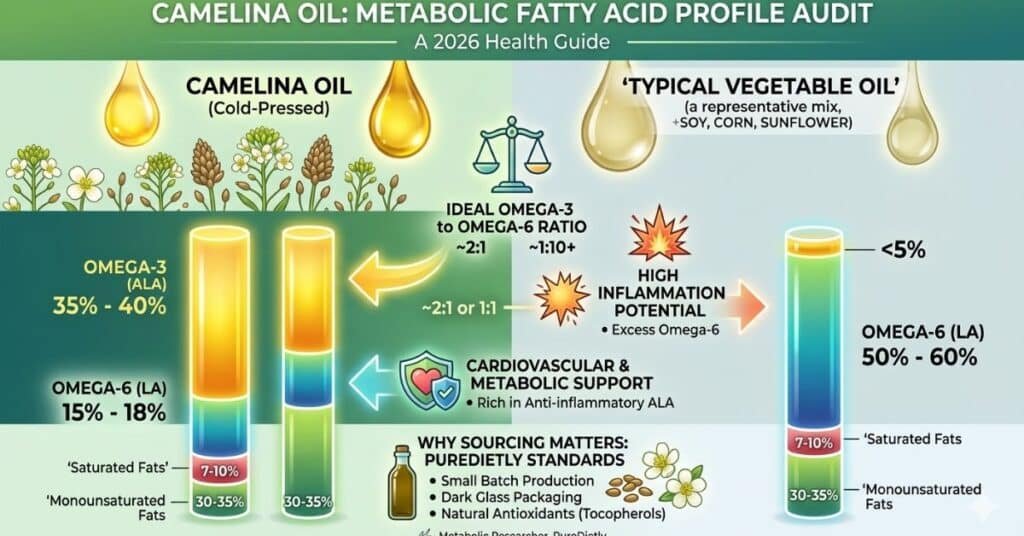
| Feature | Camelina Oil | Typical Vegetable Oil |
| Omega-3 (ALA) | Very High | Low to None |
| Stability | Excellent | Poor |
| Antioxidants | Naturally High | Often Stripped Away |
- Omega-3 Dominance: It is exceptionally high in Alpha-Linolenic Acid (ALA), a plant-based Omega-3 that supports heart health.
- Oxidative Stability: Because it contains natural tocopherols, it resists rancidity much better than many other high-PUFA oils.
- Inflammation Control: Regular, moderate intake may help manage systemic inflammation, a key marker for metabolic syndrome.
3. Comparison with Other Metabolic Fats
To understand why you might choose Camelina oil over other staples, we must compare them directly within your pantry protocol.
- Camelina vs. Avocado Oil: While both are excellent, [Avocado oil] is primarily composed of monounsaturated fats (oleic acid), making it perfect for moderate heat cooking. In contrast, Camelina is prized for its high ALA-based Omega-3 content, making it a functional supplement for your heart and brain health.
- Camelina vs. Pumpkin Seed Oil: We have previously explored how [Pumpkin seed oil] utilizes phytosterols to compete with cholesterol absorption in the gut. Camelina oil serves as a different metabolic tool, focusing more on systemic Omega-3 balancing and antioxidant support rather than direct cholesterol competition.
4. Top Health Benefits: Separating Fact from Hype
As researchers, we prioritize evidence over anecdotal marketing claims. Here is how Camelina oil fits into an optimized wellness protocol for the American consumer:
- Cardiovascular Support: Its high ALA content is strongly linked to better cholesterol management. By shifting your fat intake toward ALA-rich sources, you contribute to better cardiovascular markers over time.
- Skin and Cellular Health: The presence of Vitamin E and essential fatty acids promotes skin elasticity and hydration. It acts as an internal moisturizer that supports the skin barrier from the inside out.
- Joint and Muscle Integrity: Due to its anti-inflammatory properties, some users report reduced joint discomfort when using it as a daily finishing oil, making it a favorite for active individuals.
5.The Role of ALA in Insulin Sensitivity
As a metabolic researcher, I often emphasize that fats are not just “fuel” they are signaling molecules. Camelina oil’s high concentration of Alpha-Linolenic Acid (ALA) is not merely for heart health; it plays a subtle yet critical role in cellular membrane fluidity. When your cell membranes are fluid, insulin receptors can function more efficiently. This audit suggests that by replacing pro-inflammatory Omega-6 rich oils with Camelina oil, you may create a more favorable environment for glucose uptake, which is a cornerstone of any metabolic health proto Understanding the Omega-6 to Omega-3 Ratio
The modern American diet is heavily skewed toward Omega-6 fatty acids, which can trigger chronic, low-grade systemic inflammation. This imbalance is often a hidden driver of weight gain and metabolic fatigue. Camelina oil acts as a corrective tool. By integrating this oil, you are not just adding calories; you are actively working to rebalance your fatty acid ratio. This systemic rebalancing is what we call “Metabolic Housekeeping.”
6. The “PureDietly” Audit: Why Sourcing Matters
Not all Camelina oils are created equal. When purchasing for your home, look for:
- Small Batch Production: Often indicates a focus on quality over mass-market efficiency.
- Dark Glass Packaging: Light is the enemy of high-quality oils; dark bottles prevent photo-oxidation, keeping the nutrients intact until they reach your kitchen table.
- Transparency: Reputable brands will provide test results indicating the level of tocopherols (Vitamin E), which serves as a natural preservative.
7. Usage Protocol: Precision & Safety for USA Consumers
Since Camelina oil has a relatively high smoke point compared to other cold-pressed oils, it is surprisingly versatile in the kitchen. However, for maximum metabolic benefit, we suggest the following precision protocol:
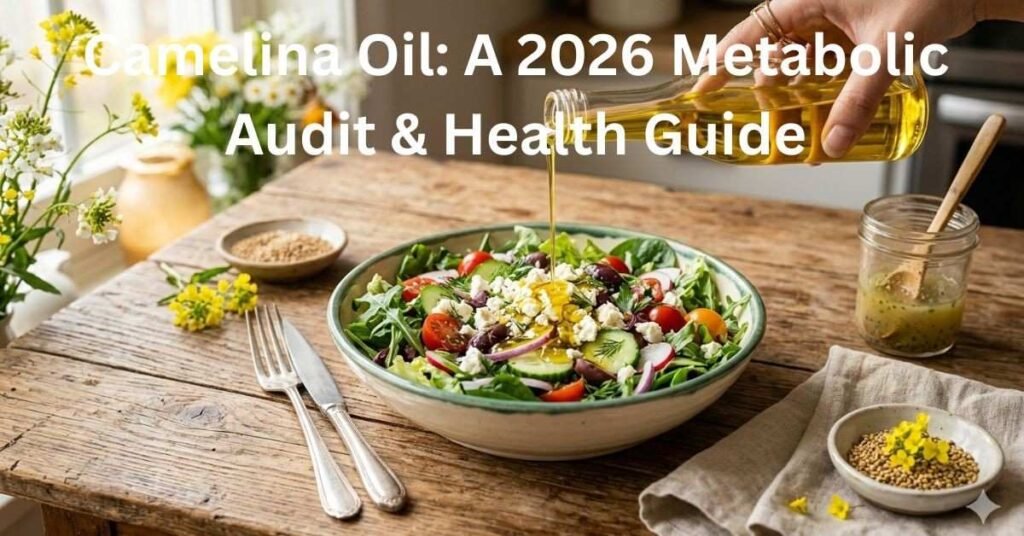
- Raw Finishing (Primary Choice): Use it as a base for salad dressings or drizzle it over finished roasted vegetables to preserve its delicate Omega-3 structure.
- Light Sautéing: It can handle light heat, but avoid deep-frying or high-heat searing to prevent nutrient degradation and oxidation.
- Storage Instructions: This is the most common point of failure for consumers. Always store your oil in a dark, cool place or ideally, the refrigerator to keep it fresh and prevent rancidity for up to 6 months.
6. Frequently Asked Questions (FAQs)
Q: How does Camelina oil differ from Flaxseed oil?
A: Both are high in Omega-3s, but Camelina oil is significantly more stable. Flaxseed oil goes rancid very quickly, whereas Camelina’s natural antioxidant content gives it a longer shelf life.
Q: Can I use it for daily skin care?
A: Yes. It is an excellent carrier oil that absorbs quickly without leaving a greasy residue, making it an effective, natural option for skin health.
Q: Is it safe for everyone?
A: While generally safe, those with mustard allergies should exercise caution or avoid it entirely, as it belongs to the Brassicaceae family.
Q: Is Camelina oil keto-friendly?
A: Yes, it is pure fat and has zero carbohydrates, making it an excellent addition to ketogenic or low-carb metabolic protocols.
Q: Can I use it in baking?
A: It works for low-temp baking, but avoid high-heat roasting to maintain its nutritional integrity.
Add Seaweed Salad to your daily carb limit in 30 seconds!
Final Researcher’s Verdict: A Sustainable Choice
For the American household, Camelina oil represents a strategic upgrade rather than just another kitchen trend. By swapping out inflammatory, highly processed seed oils for this stable, Omega-3-rich alternative, you are making a data-backed choice for your long-term metabolic health.
However, remember that no single oil is a “magic bullet.” True metabolic longevity is found in the consistency of your protocols. Whether you are adjusting your intake of [Avocado oil for high-heat cooking or utilizing [Pumpkin seed oil] for its specific phytosterol profile, the goal is to create a diverse ecosystem of healthy fats. Your health is a long-term audit; make choices today that provide consistent, sustainable, and measurable results tomorrow. Stay informed, stay precise, and keep auditing your intake.
About the Author
Gohar Fatima
Metabolic Health Researcher & Enthusiast

Gohar Fatima is the founder of PureDietly, where she bridges the gap between complex nutritional science and everyday dietary choices. As a dedicated researcher, she focuses on metabolic health, glycemic index management, and evidence-based nutrient profiling. Her mission is to empower individuals to make data-backed decisions through her signature “Metabolic Audits,” helping readers navigate the modern food landscape with precision and clarity.
Medical Disclaimer
Important Health Disclosure
The content provided on PureDietly, including this article, is for informational and educational purposes only. It is not intended to be a substitute for professional medical advice, diagnosis, or treatment. Always seek the advice of your physician or other qualified health provider with any questions you may have regarding a medical condition. Never disregard professional medical advice or delay in seeking it because of something you have read on this website. Reliance on any information provided here is solely at your own risk.