
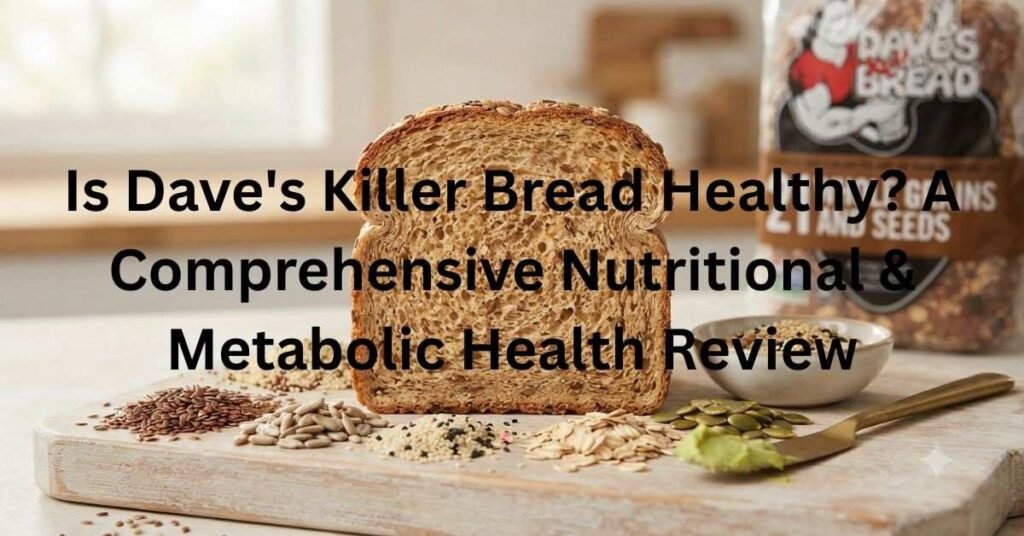
When navigating the supermarket bread aisle, finding a loaf that truly supports your wellness goals can feel overwhelming. Among rows of processed options, Dave’s Killer Bread instantly catches the eye with its bold packaging, organic seeds, and massive popularity across the United States. But past the marketing hype, is Dave’s Killer Bread healthy for your daily routine?
As a metabolic health researcher, I always look past the front label to evaluate how packaged foods impact blood sugar, digestion, and long-term vitality. Much like understanding how Can Diabetics Eat Bread? or choosing alternatives like Is Oatnut Bread Healthy?, evaluating loaf quality requires a close look at ingredients. In this comprehensive review, we will break down the nutrition facts, analyze its ingredient profile, compare it with alternatives like Ezekiel bread, and see how it fits into your lifestyle.
Nutritional Breakdown of Dave’s Killer Bread
To understand the health value, let us look closely at the flagship loaf: 21 Whole Grains and Seeds. Unlike standard white bread made from stripped, refined flour, this bread utilizes whole grains and organic seeds.
Here is what a standard single slice provides:
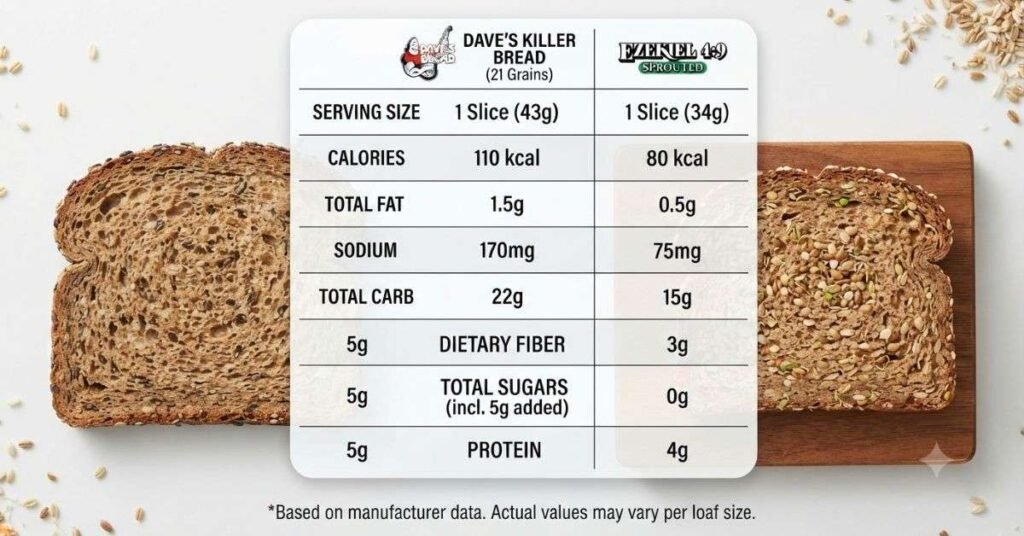
- Calories: 110
- Total Carbohydrates: 22 grams
- Dietary Fiber: 5 grams
- Protein: 5 grams
- Added Sugar: 5 grams
- Sodium: 170 milligrams
The Core Benefits
- High Fiber Content: With 5 grams of fiber per slice, it delivers significantly more digestive support than standard commercial white bread.
- Plant-Based Protein: Providing 5 grams of protein per slice, it helps promote satiety and keeps you feeling full longer.
- Whole Grains and Seeds: The inclusion of organic grains and seeds supplies healthy fats, vitamins, and minerals. Furthermore, all Dave’s Killer Bread products are certified organic, meaning they are produced without synthetic pesticides or genetically modified organisms.
Side-by-Side Comparison: Dave’s Killer Bread vs. Ezekiel Bread
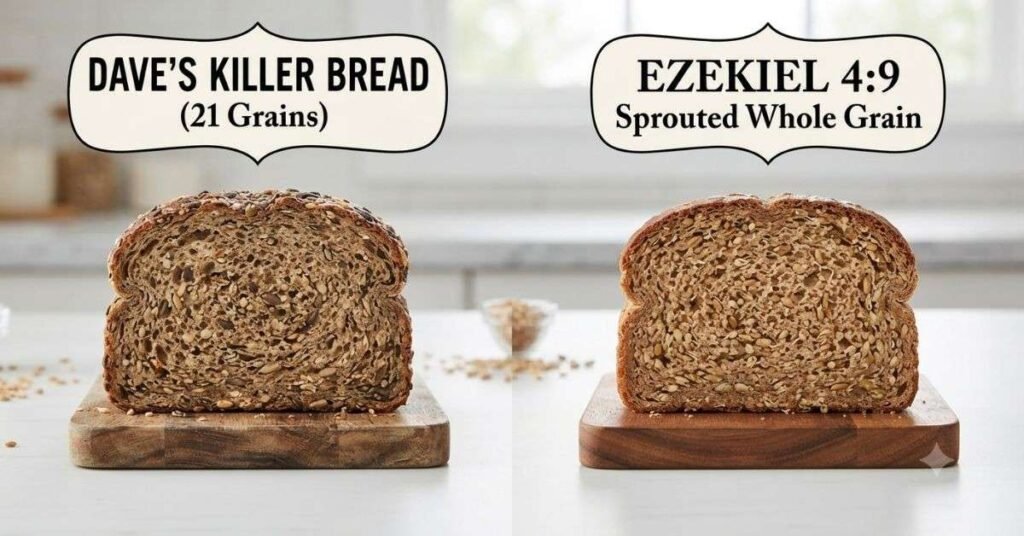
If you are trying to choose the ultimate health loaf, it helps to compare Dave’s Killer Bread against Ezekiel 4:9 Sprouted Grain Bread, another consumer favorite. When looking at grain-based options, it is also useful to consider how different grain structures compare to choices like Farro: The Ancient Grain Your Metabolic Health Needs.
| Nutritional Feature | Dave’s Killer Bread (21 Grains) | Ezekiel Sprouted Bread |
| Calories (Per Slice) | 110 | 80 |
| Protein | 5 grams | 5 grams |
| Fiber | 5 grams | 3 grams |
| Added Sugar | 5 grams | 0 grams |
| Processing Style | Whole grain, organic | Flourless, sprouted grains |
While Dave’s wins on fiber content, Ezekiel bread is unique because it uses sprouted grains, contains zero added sugar, and features a lower calorie count per slice.
Potential Caveats: Is There a Catch?
Although Dave’s Killer Bread is a massive step up from processed white bread, it is important to look at the full picture. Several factors deserve caution:
- Sugar and Sodium Levels: A single slice contains 5 grams of sugar and 170 mg of sodium. If you eat a two-slice sandwich, you consume 10 grams of added sugar and 340 mg of sodium before adding any spreads or proteins.
- Blood Sugar Impact: Because a two-slice serving contains around 44 grams of carbohydrates, it can cause rapid glucose shifts if not managed properly. To understand why certain grain and snack items trigger responses, check out our guide on The Fast-Digesting Carbs Audit.
- Portion Awareness: The “health halo” effect often tricks people into overeating, assuming that because a food is organic, portion sizes do not matter.
Smart Strategies to Enjoy It Healthily
You do not need to banish this bread from your kitchen, but pairing it strategically makes a major metabolic difference.

- Add Healthy Fats and Protein: Never eat a slice of toast plain if you want steady blood sugar. Pairing complex carbohydrates with healthy options from our Savory Breakfast Ideas list helps slow down carbohydrate absorption.
- Watch Your Portions: If you are managing your weight or blood glucose levels, consider opting for their thin-sliced varieties to cut down on excess carbohydrates.
- Check the Label: Different variations exist in their product lineup, so look for lower-sugar options like Powerseed if you want to minimize your sugar intake.
The Bottom Line
So, is Dave’s Killer Bread healthy? Generally speaking, yes—when compared to conventional supermarket white bread. It provides an impressive boost of whole-grain fiber and plant protein. However, because it contains notable amounts of added sugar and sodium, mindfulness is required. Treat it as a nutritious component of a balanced diet rather than a free pass, and always pair it with quality proteins and fats to protect your metabolic health.
Ready to Check Your Levels?
Use our Free Diabetic Calculators to track your A1C, Sugar Spikes, and Fasting Progress.
OPEN ALL CALCULATORS ➔Fast • Accurate • Free for Puredietly Readers
Frequently Asked Questions (FAQs)
Q1: Is Dave’s Killer Bread actually whole grain?
- Yes, the flagship loaves—such as 21 Whole Grains and Seeds—are made using certified organic whole grains and a rich mix of seeds, delivering high dietary fiber per slice.
Q2: Does Dave’s Killer Bread spike blood sugar?
- Because a standard two-slice serving contains roughly 44 grams of carbohydrates and 10 grams of added sugar, it can impact blood glucose levels if eaten plain. Pairing it with healthy fats and proteins helps slow down absorption.
Q3: How does Dave’s Killer Bread compare to Ezekiel bread?
- While Dave’s Killer Bread offers a higher fiber content and organic seed variety, Ezekiel bread is flourless, sprouted, and contains zero added sugar.
Conclusion
Navigating the bread aisle doesn’t have to derail your wellness goals. While Dave’s Killer Bread stands far above conventional processed white bread by offering wholesome organic grains, plant-based protein, and high fiber, it still requires mindful consumption due to its sodium and added sugar content. By watching your portions, opting for thin-sliced varieties when needed, and always pairing your toast with healthy fats and proteins, you can enjoy it without compromising your metabolic health.
About the Author
Gohar Fatima is a dedicated metabolic health researcher and wellness content writer. With a strong passion for nutritional science, Gohar specializes in breaking down complex ingredient labels, evaluating glycemic impacts, and guiding readers toward sustainable, health-conscious dietary choices for everyday living.
Medical Disclaimer
Disclaimer: The information provided in this article is for educational and informational purposes only and is not intended as medical advice. Always consult with a qualified physician or healthcare provider before making significant changes to your diet, especially if you are managing pre-existing conditions such as diabetes or metabolic disorders.