

By puredietly@gmail.com / September 8, 2026
At PSavory vs. Sweet Breakfast Blood Sugar Crash: The 2026 Metabolic Audit for Stable Energy
Editor’s Note
At PureDietly, we know that breaking your overnight fast with the wrong foods can set off a metabolic chain reaction. It often ruins your focus, drains your energy, and triggers relentless cravings before lunchtime. Whether you are managing insulin resistance, keeping a close eye on your continuous glucose monitor (CGM), or looking to optimize your daily productivity, choosing the right morning meal is essential. Let’s look at how shifting away from sugary, sweet breakfast traps and embracing nutrient-dense, savory proteins can protect your metabolic stability, maintain steady energy, and transform your daily health.
The Morning Glucose Spike: Why Sweet Breakfasts Trigger Crashes
Starting your morning with a sweet breakfast might feel comforting. However, if you experience a sudden mid-morning energy slump, brain fog, or an urgent craving by noon, your meal choice is likely to blame. In the modern American diet, breakfast is often treated as dessert in disguise—disguised as muffins, sweetened yogurts, sugary cereals, or flavored coffees.
For individuals managing insulin resistance, pre-diabetes, or simply trying to optimize their daily energy, understanding the biochemical differences between a sweet start and a savory protein-rich meal is vital. At PureDietly, we audit how daily nutritional habits impact your continuous glucose monitor (CGM) curves to help you achieve long-term metabolic harmony.
When you break your overnight fast with a carbohydrate-heavy, sugary meal, your digestive system rapidly breaks down those sugars into glucose. Consequently, this rapid influx floods your bloodstream, forcing your pancreas to release a massive wave of insulin to clear the sugar.
However, when insulin overcompensates, it pulls too much glucose out of your circulation. This phenomenon—known as reactive hypoglycemia or a “blood sugar crash”—leaves you feeling exhausted, irritable, and hungry less than two hours after eating. Furthermore, clinical research shows that starting your day with high glycemic loads sets off a volatile roller coaster of hunger hormones. As a result, it becomes nearly impossible to maintain stable energy or focus throughout the workday.
The Savory Advantage: Protein, Fats, and Sustained Insulin Stability
Shifting your focus to a savory breakfast completely changes your metabolic trajectory. By anchoring your first meal with high-quality protein, healthy fats, and fiber instead of refined sugars and grains, you effectively flatten your glucose curve.
- Blunted Insulin Response: Savory proteins and fats require minimal insulin to process compared to refined carbohydrates.
- Extended Satiety: Nutrients like amino acids and healthy lipids trigger the release of satiety hormones like peptide YY and cholecystokinin, signaling your brain that you are full.
- Elimination of Brain Fog: Keeping your blood sugar steady prevents the sudden drops that rob your brain of its primary fuel source, ensuring sharp mental clarity all morning.
Side-by-Side Comparison: Sweet Breakfast Traps vs. Savory Metabolic Wins
To help you visualize how morning choices impact your daily metabolic health, review the structural differences below:

| Evaluation Metric | Sweet Commercial Breakfasts | Savory Metabolic Breakfasts |
|---|---|---|
| Primary Macronutrients | Refined grains, added sugars, high fructose syrups | High-bioavailability proteins, healthy fats, minimal carbs |
| Glycemic Impact | Rapid spike followed by a steep reactive crash | Flat, stable glucose curve with sustained energy |
| Hormonal Response | Triggers high insulin output, leading to early hunger | Promotes stable leptin and ghrelin signaling |
| Long-Term Risk | Contributes to insulin resistance and metabolic fatigue | Supports metabolic flexibility and steady A1C levels |
Deep Dive: The Chemistry of Morning Cortisol and Glucose
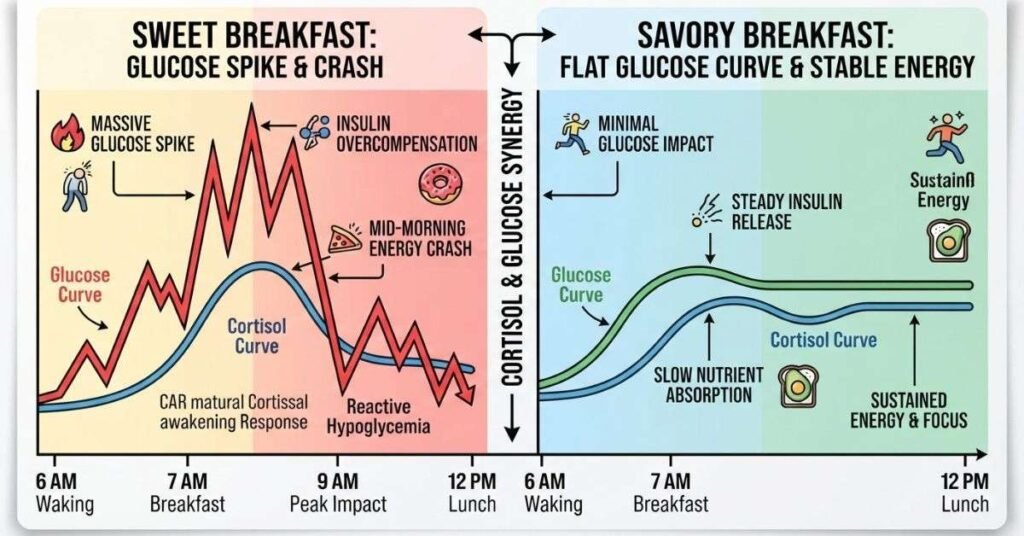
Your body experiences a natural phenomenon every morning called the cortisol awakening response (CAR). Upon waking, your adrenal glands release a surge of cortisol, which naturally raises your blood sugar to help you wake up and get moving.
If you stack a high-sugar, sweet breakfast on top of this natural morning cortisol spike, you double the glycemic burden on your system. Consequently, this combination creates an exaggerated insulin response that sets the tone for systemic inflammation and erratic blood sugar fluctuations for the rest of the day. Conversely, opting for a savory, low-glycemic meal works with your biology, cushioning the morning cortisol rise and maintaining cellular insulin sensitivity.
Deep Dive: How Corporate Marketing Disguises Desserts as “Healthy Breakfasts”
When walking down supermarket aisles in the United States, consumers are constantly bombarded with health claims like “made with whole grains,” “low fat,” or “source of Vitamin D.” Unfortunately, these marketing terms often conceal the harsh reality of industrial processing. To make shelf-stable cereals, flavored oatmeals, and breakfast bars palatable, manufacturers strip away natural fiber and dump in high amounts of high-fructose corn syrup or refined cane sugar.
When you consume a low-fat blueberry muffin or a bowl of honey-roasted granola, your body processes it almost identically to a slice of cake. Because of the absence of healthy fats and complete proteins, there is no physiological “brake” on gastric emptying. Consequently, the food hits your small intestine at maximum velocity, resulting in an immediate glucose spike and an inevitable afternoon crash. Shifting toward a savory breakfast paradigm cuts through this marketing noise by focusing entirely on whole food matrices that respect human metabolism.
Overcoming Common Obstacles When Transitioning to Savory Mornings
Transitioning away from sweet morning habits can present minor hurdles, especially if your palate is accustomed to sugary flavors. Here is how you can troubleshoot common challenges:
- Challenge 1: Lack of Time in the Morning
- Solution: Prep savory options in advance. Hard-boiled pasture-raised eggs, pre-cooked breakfast sausage patties, or leftover clean proteins from dinner can be warmed up in minutes.
- Challenge 2: Missing the Comfort of Sweet Tastes
- Solution: Gradually reduce sweetener usage while incorporating spices like cinnamon, nutmeg, or sea salt to enhance natural savory flavors without triggering blood sugar spikes.
- Challenge 3: Transitioning Away from Toast or Cereal
- Solution: Build a bridge by exploring our previous guidance on savory breakfast options or pairing clean proteins with high-fiber vegetables.
The PureDietly “Protective Buffer” Strategy for Busy Mornings
If you find yourself in a situation where a higher-carbohydrate breakfast is unavoidable, you can utilize metabolic sequencing to protect your glucose stability. Follow this protocol:
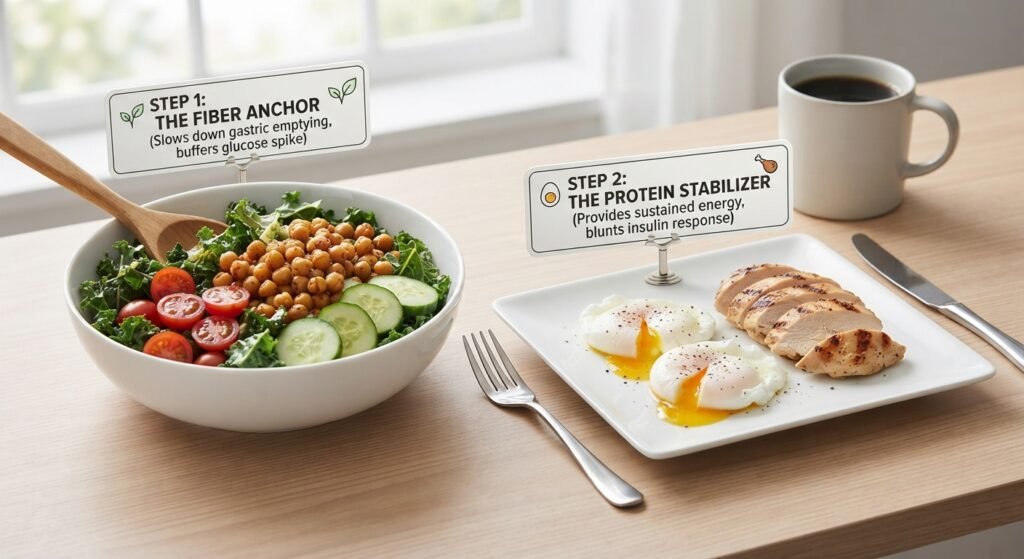
- Step 1: The Fiber Anchor: Consume a small serving of non-starchy vegetables or chia seed pudding first to slow down gastric emptying.
- Step 2: The Protein Buffer: Ingest clean proteins—such as eggs, cottage cheese, or grilled chicken—before introducing any complex carbohydrates.
- Step 3: Post-Meal Movement: Take a brisk 10-minute walk after your meal to help your muscles absorb circulating glucose without requiring massive amounts of insulin.
For further reading on optimizing your morning routine, cross-reference our detailed audit on lowest glycemic cottage cheese choices, which makes an excellent protein-packed savory addition. Additionally, if you are monitoring your daily carbohydrate threshold, you can use our internal tools to audit your favorite morning ingredients.
Frequently Asked Questions (FAQs)
Q1: Can fruit for breakfast cause a blood sugar crash?
Answer: Yes, eating high-sugar fruits on an empty stomach without a protein or fat buffer can rapidly spike your blood glucose, frequently leading to an energy crash shortly afterward.
Q2: Are oatmeal and honey safe for steady morning glucose?
Answer: While traditional oats contain fiber, instant varieties combined with honey or maple syrup act quickly on blood sugar. Therefore, they are less ideal for those managing insulin resistance compared to a savory egg or dairy dish.
Q3: How long does it take to reset morning sugar cravings?
Answer: Most individuals notice a significant reduction in sweet cravings within 7 to 14 days of consistently eating a high-protein, savory breakfast that stabilizes their insulin levels.
Conclusion: Reclaim Your Morning Energy
Breaking the cycle of blood sugar crashes starts with your very first meal of the day. By replacing inflammatory, sweet breakfast traps with nutrient-dense, protein-rich savory choices, you protect your metabolic health, eliminate brain fog, and sustain your energy from morning until night. Stay tuned to PureDietly for more data-driven food audits designed specifically for the modern US audience.
About the Author
Gohar Fatima is the founder and lead metabolic health researcher at PureDietly, dedicated to translating complex nutritional science and practical wellness habits into easy-to-follow advice for everyday readers.
Medical Disclaimer
Note: Ye maloomat sirf education ke liye hain, medical advice nahi. PureDietly team doctors nahi hai. Apni diet mein tabdeeli se pehle apne doctor se mashwara lazmi karein. Individual results aapki sehat ke mutabiq mukhtalif ho sakte hain.