
By Gohar Fatima / October 13, 2026

Editor’s Note
Are you tired of feeling bloated, low on energy, and disconnected from your body’s natural rhythms? You are not alone. Across the United States, millions of busy individuals battle daily stress, poor digestion, and sudden weight fluctuations. While modern crash diets focus strictly on counting calories, they often ignore how your digestive system actually processes food.
Switching to a holistic Ayurvedic Diet offers a proven, time-tested approach to heal your gut, balance your unique body type, and achieve lasting weight loss. In this complete guide, we explore how ancient Ayurvedic principles improve your daily digestion while keeping meal prep simple and practical for modern schedules.
Introduction: Understanding the Ayurvedic Eating Philosophy
In a world filled with overly processed foods and restrictive eating trends, holistic wellness is making a massive comeback. When you explore natural health practices, adopting an Ayurvedic Diet provides an intuitive way to nourish both your body and mind.
Originating over 5,000 years ago, Ayurveda teaches that food is powerful medicine. Rather than treating every body the same, this philosophy recognizes that each person possesses a unique mind-body constitution. Consequently, by choosing foods that align with your specific energy type, you boost your digestive fire, eliminate toxic buildup, and maintain steady daily energy. To learn how slow-cooked wholesome meals can support healthy daily digestion, check out our popular guide on [High Protein Crockpot Meals].
The Core Concept: The 3 Doshas and Metabolic Health
At the center of Ayurvedic medicine are the three primary energy forces, known as Doshas: Vata, Pitta, and Kapha. Every person has a unique blend of these three energies, but usually, one or two doshas dominate.
[Vata (Air & Ether)]   ➔  Controls Movement & Nervous System
[Pitta (Fire & Water)] ➔  Controls Digestion & Metabolism
[Kapha (Earth & Water)]➔  Controls Body Structure & Weight
When your dominant dosha falls out of balance due to poor food choices, physical stress, or seasonal changes, your body experiences metabolic sluggishness. Review the simple breakdown below to identify your primary dosha and how it affects your appetite:

| Dosha Type | Primary Elements | Physical Characteristics | Digestive Pattern | Ideal Food Focus |
| Vata | Air & Ether | Lean frame, cold hands, quick mind | Irregular digestion, frequent gas/bloating | Warm, cooked, grounding foods with healthy fats |
| Pitta | Fire & Water | Medium build, sensitive skin, strong focus | Strong appetite, prone to heartburn or acidity | Cooling, fresh, non-spicy whole foods |
| Kapha | Earth & Water | Larger frame, strong stamina, calm nature | Slow metabolism, easy weight gain | Light, warm, spicy, and high-fiber whole foods |
The Importance of Agni (Digestive Fire)
In Ayurveda, your digestive system revolves around Agni, which translates to “digestive fire.” When your Agni is strong, your body easily converts food into physical energy and vital nutrients. However, when your Agni is weak or overloaded with processed foods, your body creates Ama—a toxic residue that leads to fatigue, weight gain, and systemic inflammation.
By restoring your digestive fire, you naturally improve your resting metabolic rate. For smart grain options that help keep your digestive fire steady without causing glucose spikes, explore our guide on [Couscous Calories: Nutrition Facts, Carbs, and Weight Loss Guide].
Key Pillars of an Ayurvedic Lifestyle
To get the maximum benefits from Ayurvedic eating without feeling overwhelmed, keep these fundamental principles in mind:
- Eat Fresh, Seasonal Whole Foods: Prioritize freshly prepared meals over canned, frozen, or highly processed factory foods.
- Practice Mindful Eating: Sit down while eating, chew your food thoroughly, and avoid distractions like screens or work emails during meal times.
- Respect Your Hunger Signals: Eat your largest meal at lunch when your internal digestive fire is naturally at its peak strength.
- Incorporate Healing Spices: Use gentle, digestive-boosting spices such as turmeric, cumin, ginger, and fennel in your daily cooking.
- Protect Gut Integrity: Nourish your stomach lining with warm broths and collagen-rich foods. For deeper insights into strengthening your digestive system, read our analysis on [Is Gelatin Good For You? The Ultimate 2026 Gut, Skin & Metabolic Health Guide].
Step-by-Step Guide to Eating for Your Body Type
1. Balancing the Vata Dosha
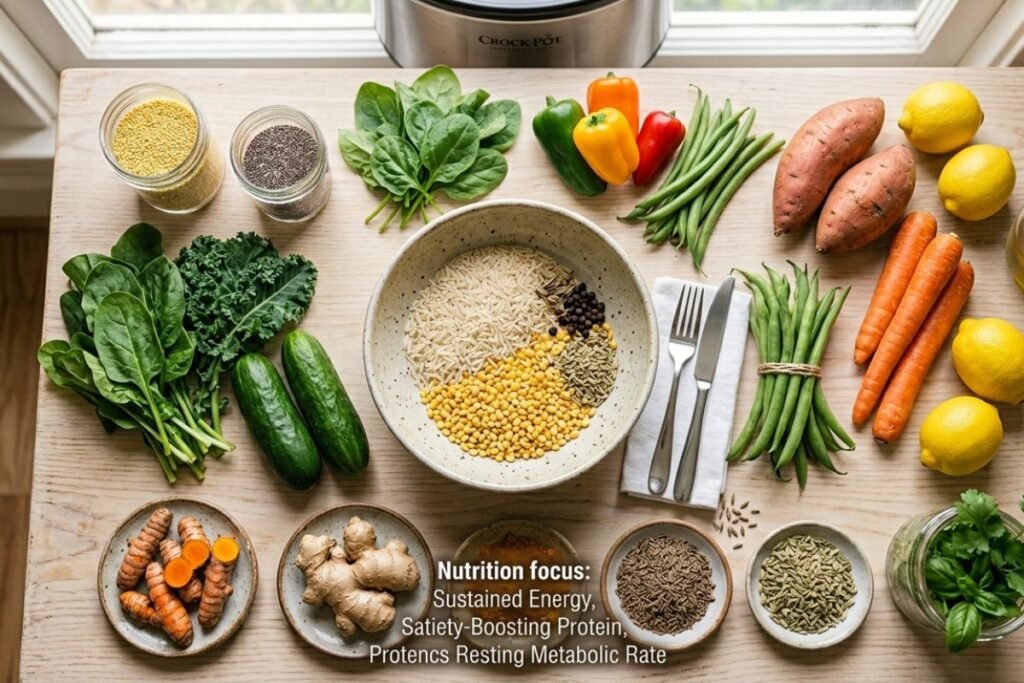
If you experience dry skin, anxiety, or unpredictable digestion, your Vata energy needs grounding.
- Foods to Enjoy: Warm soups, cooked root vegetables, oats, avocados, ghee, and sweet fruits like bananas and berries.
- Foods to Limit: Raw cold salads, dry crackers, iced drinks, and excessive caffeine.
2. Balancing the Pitta Dosha
If you tend to feel overly warm, irritable when hungry, or suffer from acid reflux, your Pitta energy needs cooling.
- Foods to Enjoy: Leafy green vegetables, cucumbers, sweet apples, coconut oil, basmati rice, and herbal teas.
- Foods to Limit: Deep-fried foods, hot chili spices, alcohol, garlic, and sour fermented items.
3. Balancing the Kapha Dosha
If you struggle with slow weight loss, heavy morning sluggishness, or water retention, your Kapha energy needs stimulating.
- Foods to Enjoy: Light steamed greens, lentils, beans, apples, black pepper, ginger, and warm herbal infusions.
- Foods to Limit: Heavy dairy products, cold sugary desserts, excessive oily foods, and refined wheat.
Foods to Embrace vs. Foods to Limit
Shopping for an Ayurvedic lifestyle becomes simple when you follow a balanced food grid:
┌─────────────────────────────────────────┬─────────────────────────────────────────┐
│         FOODS TO EMBRACE (HEALING)      │         FOODS TO LIMIT (AMA-PRODUCING)  │
├─────────────────────────────────────────┼─────────────────────────────────────────┤
│ • Fresh Organic Vegetables & Root Crops │ • Frozen Pre-Packaged TV Dinners        │
│ • Warm Cooked Whole Grains (Quinoa, Rice)│ • Highly Refined Sugars & Artificial Sodas│
│ • Healthy Fats (Ghee, Sesame & Olive Oil)│ • Excessively Cold or Iced Beverages    │
│ • Digestive Spices (Ginger, Cumin, Cloves)│ • Heavily Processed Seed & Canola Oils  │
│ • Mung Beans, Lentils, & Soaked Nuts    │ • Leftover Foods Kept Over 48 Hours     │
└─────────────────────────────────────────┴─────────────────────────────────────────┘
Staying hydrated with warm or room-temperature liquids plays a crucial role in flushing out metabolic toxins. To learn about clean drink options that keep your body balanced during exercise, check out our expert guide on [Sugar-Free Isotonic Drinks: The Ultimate 2026 Metabolic & Hydration Guide].
Sample 1-Day Ayurvedic Meal Blueprint
Here is a balanced, easy-to-follow meal plan designed for modern working schedules:
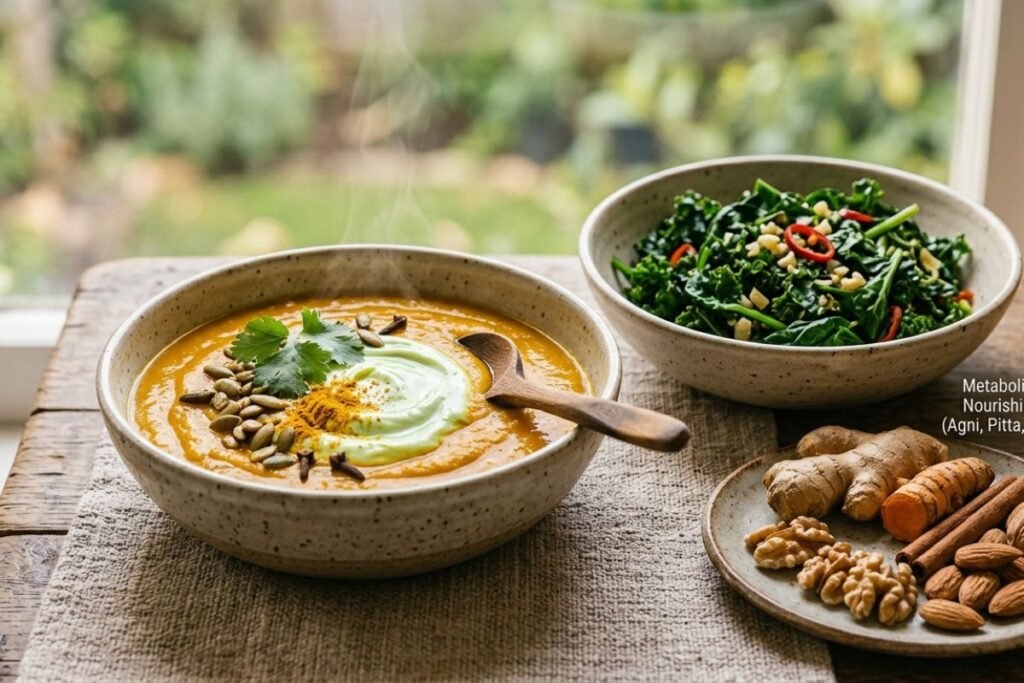
- Morning Kickstart (7:00 AM): A warm cup of water with fresh lemon juice and a pinch of ground ginger to awaken your digestive fire.
- Breakfast (8:00 AM): Warm spiced oatmeal cooked with almond milk, a pinch of cinnamon, diced apples, and a few soaked almonds.
- Lunch – Main Meal (12:30 PM): Kitchari (a traditional Ayurvedic dish made with yellow mung dal, basmati rice, ghee, cumin, and steamed zucchini).
- Afternoon Teatime (4:00 PM): Warm fennel or peppermint herbal tea with 2 raw walnuts.
- Light Dinner (7:00 PM): A cozy bowl of roasted pumpkin or sweet potato soup served with sautéed spinach and a drizzle of olive oil.
Common US Lifestyle Problems & Ayurvedic Solutions
Problem 1: Eating Rush Meals While Working at a Desk
Solution: Eating quickly while responding to emails weakens your digestive fire and causes severe gas and bloating. In Ayurveda, taking 15 uninterrupted minutes to eat in a calm environment allows your body to produce proper digestive enzymes.
Problem 2: Drinking Ice Water with Heavy Meals
Solution: Most American restaurants serve large glasses of ice water with dinner. However, drinking freezing liquids during a meal acts like pouring water over a fire, instantly slowing down digestion. Switching to warm water or room-temperature herbal tea helps break down fats efficiently.
Problem 3: Late-Night Heavy Dinners
Solution: Eating heavy, late-night meals forces your liver and stomach to work hard while you sleep, leading to poor sleep quality and morning fatigue. Eating a light, warm dinner before 7:30 PM allows your body to focus on cellular repair and fat oxidation overnight.
Frequently Asked Questions (FAQs)
Can I lose weight on an Ayurvedic Diet?
Yes. By eliminating toxic processed foods, reducing systemic inflammation, and eating according to your metabolic dosha, your body naturally sheds excess stored fat without strict calorie counting.
Is the Ayurvedic Diet completely vegetarian?
Not necessarily. While classical Ayurveda strongly emphasizes plant-based whole foods, it occasionally includes organic animal broths or lean poultry as healing remedies for specific physical weaknesses.
How quickly will my digestion improve?
Many individuals notice a reduction in stomach bloating, smoother bowel movements, and lighter energy within 3 to 5 days of drinking warm liquids and eating freshly cooked foods.
Can I combine Ayurvedic eating with intermittent fasting?
Yes. In fact, Ayurveda naturally aligns with intermittent fasting by encouraging an early, light dinner and a overnight digestive rest period of 12 to 14 hours.
Do I need hard-to-find Indian spices to follow this diet?
No. You can easily find core Ayurvedic spices like ginger, turmeric, cinnamon, cumin, and black pepper at any local US supermarket.
Conclusion: Embrace Mindful Healing Today
Adopting an Ayurvedic Diet is not about following a short-term trend, but rather reconnecting with your body’s natural wisdom. By honoring your unique dosha, supporting your digestive fire with fresh whole foods, and eating mindfully, you create a solid foundation for sustainable weight control and long-term health.
For more intuitive nutrition guides, gut health strategies, and evidence-based wellness tips, continue exploring our latest articles right here at PureDietly!
About the Author
Gohar Fatima is the founder and lead metabolic health researcher at PureDietly. She translates traditional wellness wisdom and nutritional science into practical advice for everyday readers.
Medical Disclaimer
The content provided on PureDietly is for educational purposes only and is not medical advice. Always consult your healthcare provider before making major changes to your personal diet or lifestyle.