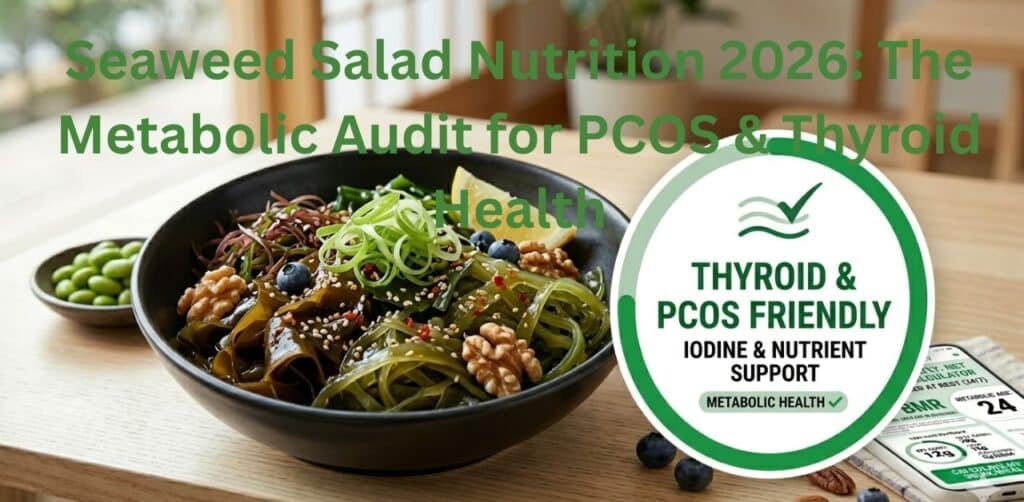
Seaweed Salad Nutrition 2026: The Metabolic Audit for PCOS & Thyroid Health
By Gohar (Metabolic Health Researcher) / March 23, 2026 Editor’s Note: At Pure Dietly, we don’t just look at calories. We audit how food affects your hormones. This guide breaks down why Seaweed Salad Nutrition is a double-edged sword for women with PCOS and those managing insulin resistance. Introduction: The Sushi Bar Deception If you are sitting at a sushi bar in 2026, you likely reach for the green side dish thinking it’s the ultimate health hack. However, understanding Seaweed Salad Nutrition requires looking past the vibrant green color. While seaweed (Wakame) is a nutritional powerhouse, the commercial versions are often “Insulin Traps” loaded with high-fructose corn syrup and inflammatory dyes. In this audit, we will dive deep into Seaweed Salad Nutrition to show you how to harness its thyroid-boosting powers while avoiding the metabolic spikes that most “healthy” eaters miss. 1. The 2026 Nutritional Audit: What’s Inside? Seaweed is one of the few plant-based sources of Complete Nutrition. It’s packed with minerals that are often stripped from modern soils. Nutrient Benefit for PCOS/Diabetes Why it Matters in 2026 Iodine Thyroid Support Regulates metabolism & energy levels. Fucoxanthin Fat Oxidation A unique compound that targets visceral fat. Magnesium Insulin Sensitivity Reduces cortisol and improves sleep quality. Vitamin K Blood Clotting Essential for bone health in hormonal balance. Prebiotic Fiber Gut Microbiome Feeds “good” bacteria to reduce systemic inflammation. 2. Deep Dive: The Micronutrient Powerhouse Understanding Seaweed Salad Nutrition means recognizing that it absorbs minerals directly from the ocean, making it more potent than land-based kale or spinach. 3. The “Hidden Sugar” Scandal & Dye Warning The biggest gap in standard Seaweed Salad Nutrition guides is the failure to mention the dressing and coloring. Most restaurant-grade seaweed salads are pre-packaged and contain: 4. Seaweed Salad vs. Other Sushi Sides How does Seaweed Salad Nutrition stack up against other common appetizers in a 2026 menu audit? Side Dish Glycemic Impact Best For Seaweed Salad Moderate (Due to Sugar) Thyroid/Mineral Boost Edamame Low High Protein/Satiety Miso Soup Low Probiotics & Digestion Gyoza (Fried) High Avoid (Glucose Spike) 5. Why PCOS Warriors Need Seaweed For women with PCOS, Seaweed Salad Nutrition offers two critical advantages that you won’t find in our [Starbucks Sugar-Free Guide]: 6. The Pure Dietly “Anti-Spike” Seaweed Salad Recipe If you want the benefits of Seaweed Salad Nutrition without the Starbucks-level sugar, make this 5-minute version at home: Ingredients: Why this version wins: By swapping sugar for Monk fruit, you save 12g of sugar per serving, keeping your insulin at baseline. 7. 2026 Biohacks: How to Order & Eat To keep your glucose flat while enjoying the benefits of Seaweed Salad Nutrition, follow these Pure Dietly rules: 🥗 Calculate Your Personalized Diabetic Meal Plan → Add Seaweed Salad to your daily carb limit in 30 seconds! Frequently Asked Questions (FAQs) Conclusion: Reclaiming the Superfood Understanding Seaweed Salad Nutrition is about balance. It is a mineral powerhouse that can fix a sluggish metabolism, provided you watch out for the added syrups. By following the Pure Dietly audit, you can turn a sugary appetizer into a hormonal healing tool. About Author Metabolic Health Researcher | Founder, Pure Dietly Gohar is a Metabolic Health Researcher specializing in glucose biohacking and hormonal optimization for PCOS and Diabetes. As the founder of Pure Dietly, Gohar audits modern food landscapes from Starbucks to Chipotle to help thousands of readers navigate hidden sugars and insulin traps. With a focus on data-driven nutrition and 2026’s latest metabolic audits, Gohar’s mission is to empower individuals to reclaim their hormonal health through informed, “Insulin-Safe” eating strategies. Medical Disclaimer Notice: This guide is for educational purposes. If you have a diagnosed thyroid condition (Hashimoto’s or Grave’s), consult your doctor before increasing iodine intake. Pure Dietly is not a medical provider.