
Editor Note:
In the USA, Black Eyed Peas are often avoided due to bloating and gas. At Pure Dietly, we’ve biohacked this metabolic powerhouse to make it 100% “gut-friendly.” This guide replaces traditional cooking with science-backed protocols to help you manage A1C without digestive stress. Mastering these 3 secrets means no more gas—just pure nutrition.
1. The 2026 Metabolic Protocol (Quick Answer)
The healthiest way to cook black-eyed peas for maximum insulin sensitivity is a 12-hour soak, followed by a slow simmer with digestive spices. This protocol targets the two biggest issues: anti-nutrients (lectins) that cause gut distress and starch structures that cause glucose spikes. By following this method, you transform a simple legume into a powerhouse for metabolic health.
2. How to Cook Black-Eyed Peas Without the Gas (The Soaking Secret)
Black-eyed peas contain Oligosaccharides (complex sugars) and Lectins that the human gut cannot break down without specific preparation. If you skip this step, these sugars ferment in your colon, leading to the infamous “bean bloat.”
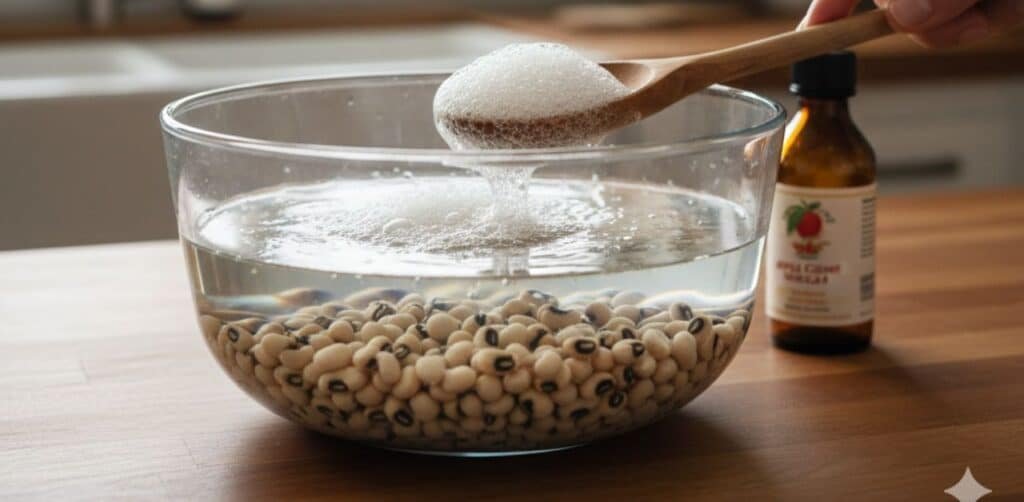
- The 12-Hour Cold Soak:
- This is non-negotiable. Soaking initiates the breakdown of gas-causing sugars and makes the nutrients more bioavailable.
- The Acidification Step:
- Add 1 tablespoon of Apple Cider Vinegar or lemon juice to your soaking bowl. This acidic environment activates phytase, an enzyme that neutralizes phytic acid (which otherwise blocks mineral absorption).
- The Discard Rule:
- Never reuse soak water. It is a concentrated solution of the anti-nutrients you just removed. Always rinse your peas under cold running water before they hit the cooking pot.
3. The Insulin Hack: Using Resistant Starch to Prevent Blood Sugar Spikes
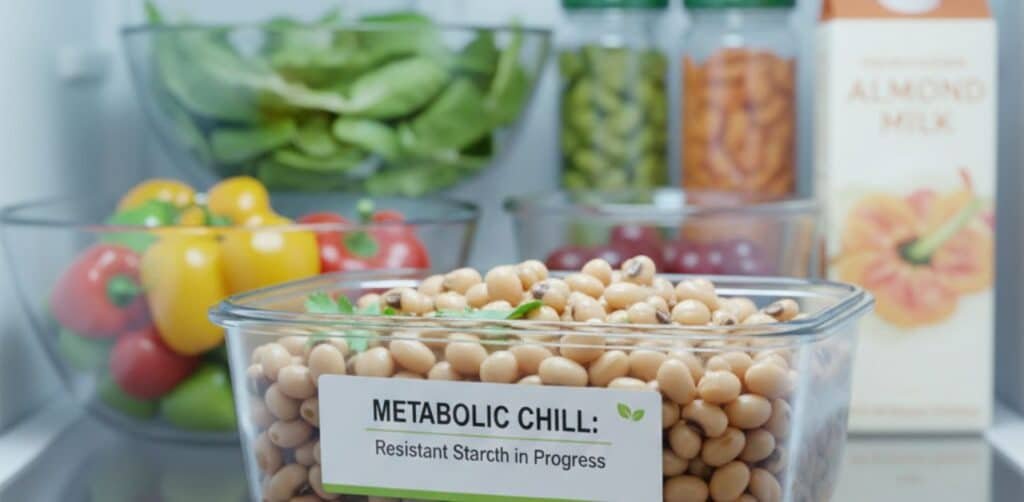
For those managing insulin resistance or using a Continuous Glucose Monitor (CGM), the “Cook-and-Cool” method is a revolutionary biohack.For those managing insulin resistance, the “Cook-and-Cool” method is a revolutionary biohack. When you master how to cook black eyed peas and then cool them, you create Type 3 Resistant Starch.
While cooking methods matter, when you eat these peas is equally crucial. For maximum glucose control, make sure to follow the strategies in our guide on The Best Time to Eat Carbs for Insulin Resistance.
- Retrograded Starch Transformation: Cooling cooked peas for 24 hours at 4°C (40°F) converts regular starch into Type 3 Resistant Starch.
- Lower Glycemic Response: Unlike regular starch, resistant starch isn’t fully absorbed in the small intestine. This means it doesn’t convert to glucose quickly, preventing the sharp insulin spikes associated with high-carb meals.
- Prebiotic Power: These cooled peas act as a prebiotic, feeding the “lean-promoting” bacteria in your gut microbiome, which further improves long-term insulin sensitivity.
4. Choosing Your Cooking Method: Slow Simmering vs. Pressure Cooking
The speed of heat directly impacts digestibility. Whether you choose a slow simmer or a quick pot, knowing how to cook black eyed peas to the right texture is key to enzyme processing.
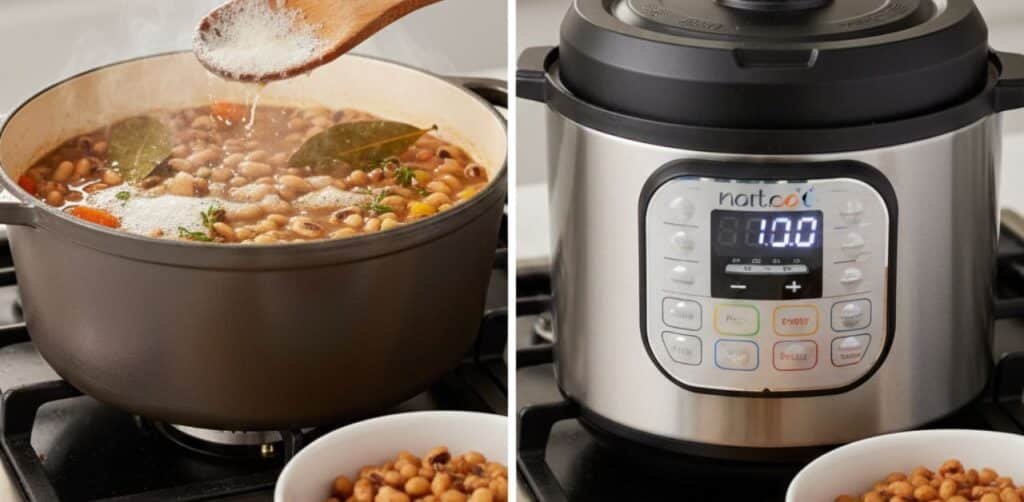
- The Traditional Simmer (60-90 Mins): This is the gold standard. A low, slow heat allows the proteins to denature gently, making them significantly easier for your digestive enzymes to process.
- The Instant Pot/Pressure Cooker (15-20 Mins): While efficient for busy Americans, high-pressure cooking can sometimes “lock” certain fibers in place if a long soak wasn’t performed first. If using this method, always allow for a natural pressure release.
- The Scum Removal: During the first 10 minutes of boiling, a white foam will rise to the surface. Skim this off! These are residual saponins that cause a bitter taste and contribute to digestive upset.
5. The Biohacker’s Secret: Sprouting (Angori) for Maximum Nutrition
To truly optimize black-eyed peas for a metabolic diet, consider Sprouting.
- Enzyme Activation :Sprouting “wakes up” the seed, activating enzymes that pre-digest the starch for you. This makes the peas the most blood-sugar-friendly legume option available.
- Nutrient Boost: Research shows that sprouting for 24-48 hours can significantly increase levels of Vitamin C, Folate, and antioxidants.
- How to Sprout: After the initial 12-hour soak, place the peas in a damp colander or glass jar. Rinse them twice a day until small white “tails” (sprouts) appear. Then, cook them as usual—they will cook even faster!
[Take the 2-Minute Insulin Resistance Quiz]
Confused about food labels? Calculate your Net Carbs in seconds!
📊 Open Net Carb Calculator100% Free Tool for Gohar’s Readers
6. Metabolic Spice Pairing: The Anti-Inflammatory Upgrade
In the USA, “Hoppin’ John” is a staple, but it’s often cooked with inflammatory fats. For 2026, we recommend pairing your black-eyed peas with spices that aid glucose metabolism:
| Spice | Metabolic Benefit | Why Use It? |
| Turmeric + Black Pepper | Anti-Inflammatory | Reduces systemic inflammation linked to insulin resistance. |
| Cumin & Fennel | Carminative | Breaks down bean fibers in the gut to prevent gas. |
| Ginger | Pro-kinetic | Speeds up digestion so food doesn’t ferment in the stomach. |
7. Metabolic Matrix: Black-Eyed Peas vs. White Rice
Why should you swap your side of rice for black-eyed peas? The data speaks for itself:
| Nutrient (1 Cup Cooked) | Black-Eyed Peas | White Rice (Standard) | Health Win |
| Fiber | 11g | 0.6g | Prevents Glucose Spikes |
| Protein | 13g | 4.3g | Increases Satiety (Fullness) |
| Glycemic Index | 38 (Low) | 73 (High) | Reverses Insulin Resistance |
| Magnesium | 86mg | 19mg | Essential for Insulin Signaling |
8. Meal Prep & Storage: How to Preserve Resistant Starch
Storage is actually a part of the “cooking” process when biohacking for blood sugar.
- The 24-Hour Rule: Cook a large batch on Sunday. Cool it immediately in the fridge. By Monday, the resistant starch levels will be at their peak.
- Reheating Tip: You can reheat your peas! Scientific studies show that reheating resistant starch does not destroy its structure; in many cases, the “cool-heat-cool” cycle actually increases the resistant starch content.
- Freezing: If you make too much, freeze them. Freezing preserves the fiber integrity and makes them an easy “grab-and-go” metabolic protein.
9. The “Perfect Plate” Strategy for the USA Audience
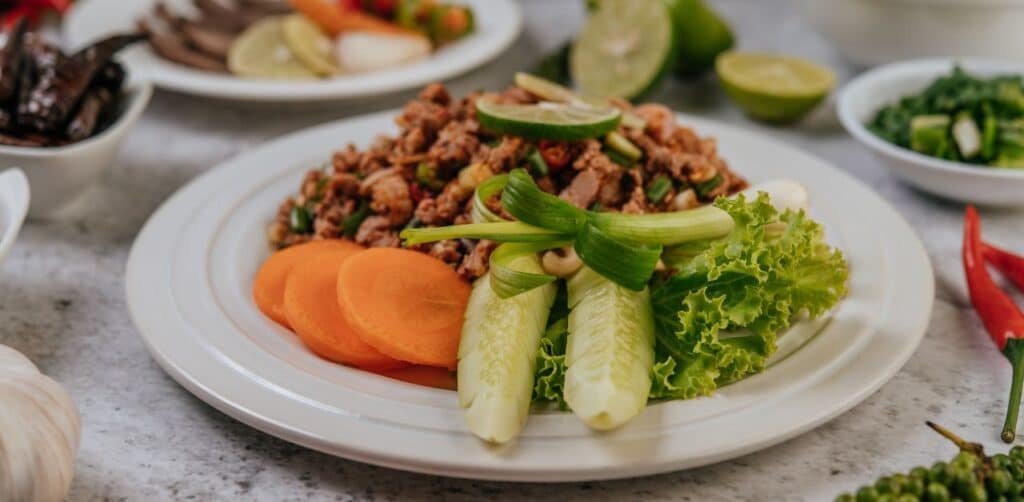
Don’t eat black-eyed peas as a standalone “carb-bomb.” For 2026, we follow the 25/25/50 Rule:
- 50% Green Buffer: Start your meal with a large salad, kale, or roasted broccoli. This fiber “clogs” the sugar receptors in your gut.
- 25% Lean Protein: Pair your peas with grilled chicken, wild-caught salmon, or turkey.
- 25% Healthy Carbs: This is where your perfectly cooked black-eyed peas go.
Pro-Tip: Always eat your protein and veggies before the peas to ensure the slowest possible glucose absorption.
10. FAQs: Solving Common Cooking Frustrations
Q: Why are my peas still hard after 2 hours of boiling?
A: You likely added salt or acid (like tomatoes/vinegar) too early. Salt toughens the protein structure of the bean skin. Always add salt in the final 10 minutes of cooking.
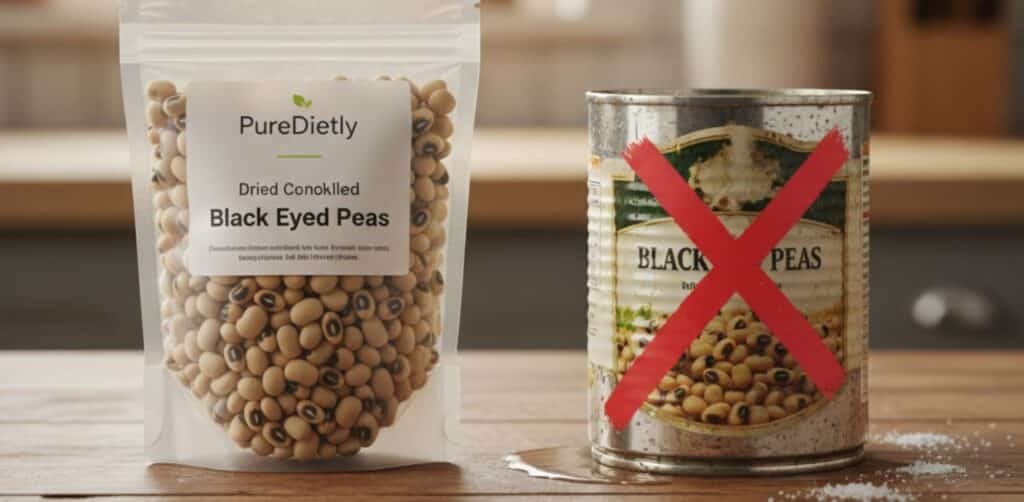
Q: Are canned black-eyed peas okay?
A: Dried is superior for biohacking, but canned is acceptable if you are in a rush. Crucial: Rinse canned peas for at least 2 minutes under cold water to remove the excess sodium and canning preservatives.
Q: Is it safe to eat black-eyed peas every day?
A: Yes! Their high fiber and magnesium content make them one of the best daily staples for someone trying to reverse Type 2 Diabetes or manage weight.
Q: Why are my peas still hard after 2 hours of boiling?
A: You likely added salt or acid too early. When learning how to cook black eyed peas, remember to always add salt in the final 10 minutes to keep the skins tender.
Conclusion: The Ultimate Legume Strategy
Learning how to cook black eyed peas in 2026 is about more than just a recipe; it’s about metabolic control. By mastering the soak, the simmer, and the cool-down, you turn a simple pantry staple into a powerful weapon against insulin resistance.
About Author:
About Gohar Gohar is a dedicated Metabolic Health Researcher and the driving force behind PureDietly. With a focus on the intersection of traditional whole foods and 2026 biohacking strategies, Gohar specializes in creating actionable protocols for reversing insulin resistance and optimizing gut health. Through data-backed insights and a “food-first” philosophy, Gohar helps thousands of readers navigate metabolic challenges with clarity and confidence.
Medical disclaimer:
The information provided on PureDietly, including text, graphics, and images, is for educational and informational purposes only. It is not intended to be a substitute for professional medical advice, diagnosis, or treatment. Always seek the advice of your physician or a qualified healthcare provider with any questions you may have regarding a medical condition especially when managing insulin resistance or diabetes. Never disregard professional medical advice or delay in seeking it because of something you have read on this website.