
Editor Note
At Pure Dietly, we don’t just look at calories. We analyze how molecules interact with your insulin. Following our viral deep dive into why [Allulose is Banned in Europe], many of our American readers asked: “Is Maple Syrup a safe natural alternative?” This 2026 clinical guide breaks down the maple syrup glycemic index and reveals the “hidden buffers” that most health blogs miss.
The Natural Sugar Trap: Is “Natural” Always Safe?
In the United States, the word “natural” is often used as a marketing shield. Many pre-diabetics at stores like Whole Foods choose maple syrup over white sugar, thinking it’s a free pass for their glucose levels.
However, the reality of the maple syrup glycemic index is more nuanced. While it is lower on the scale than table sugar, it still contains concentrated sucrose. In 2026, we categorize maple syrup not as a “health food,” but as a “Conditional Sweetener.” If you use it right, it’s a tool; use it wrong, and it’s a spike.
1. The Data: Maple Syrup Glycemic Index vs. Others
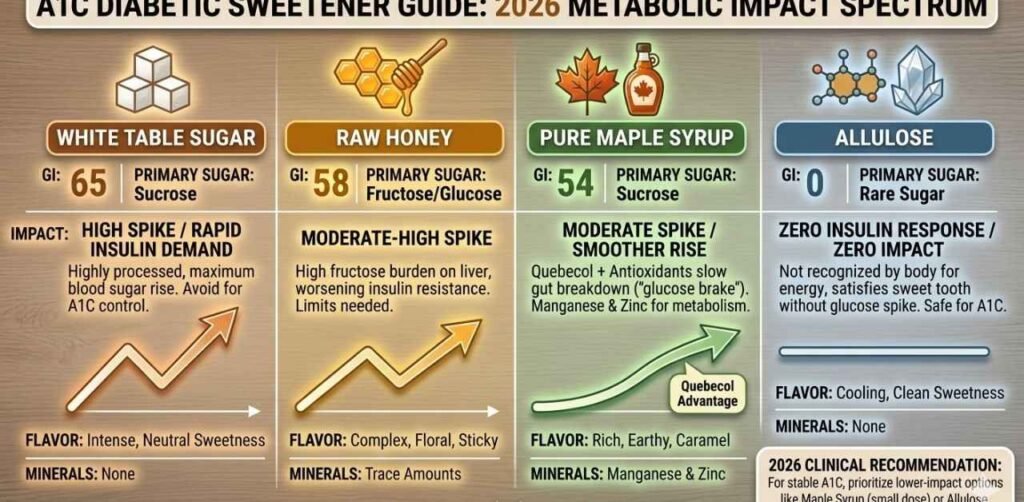
To understand why your A1C reacts the way it does, we have to look at the numbers. The Glycemic Index (GI) measures how fast a food raises blood sugar on a scale of 0 to 100.
| Sweetener Type | Glycemic Index (GI) | Primary Sugar Type | Metabolic Impact |
| White Table Sugar | 65 | Sucrose | High Spike |
| Raw Honey | 58 | Fructose/Glucose | Moderate-High |
| Pure Maple Syrup | 54 | Sucrose | Moderate |
| Agave Nectar | 19 | Fructose | Low (Heavy on Liver) |
| [Allulose] | 0 | Rare Sugar | Zero Impact |
2. Why the “Glycemic Load” (GL) Matters More
A common mistake in diabetic meal planning is looking only at the GI. In 2026, clinical researchers focus on Glycemic Load (GL).
While the maple syrup glycemic index is a moderate 54, its GL depends entirely on your portion.
- 1 Teaspoon: Low impact.
- 1/4 Cup (Standard Pancake Serving): High impact.
For a stable A1C, the goal is to keep your per-meal GL under 10. Maple syrup can fit into this, but only if you respect the dose.
3. The 2026 “Quebecol” Factor: A Hidden Defense
One reason maple syrup outperforms honey in some metabolic studies is a unique molecule called Quebecol. This compound is formed during the boiling process of maple sap.
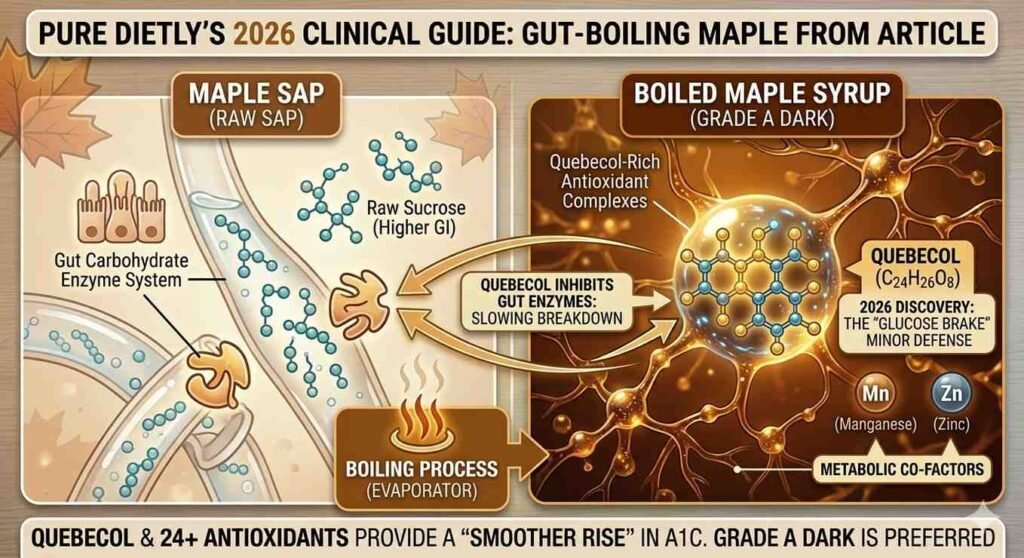
2026 research suggests that Quebecol and the 24 other antioxidants in maple syrup act as a minor “glucose brake.” They slow down the enzymes in your gut that break down carbohydrates into simple sugars. This is why a 54 GI in maple syrup feels “smoother” than a 54 GI in processed corn syrup.
4. Grade A Dark vs. Amber: Which is Better for A1C?
When shopping in the USA, you will see different grades. For a diabetic, the choice is clear: Go Dark.
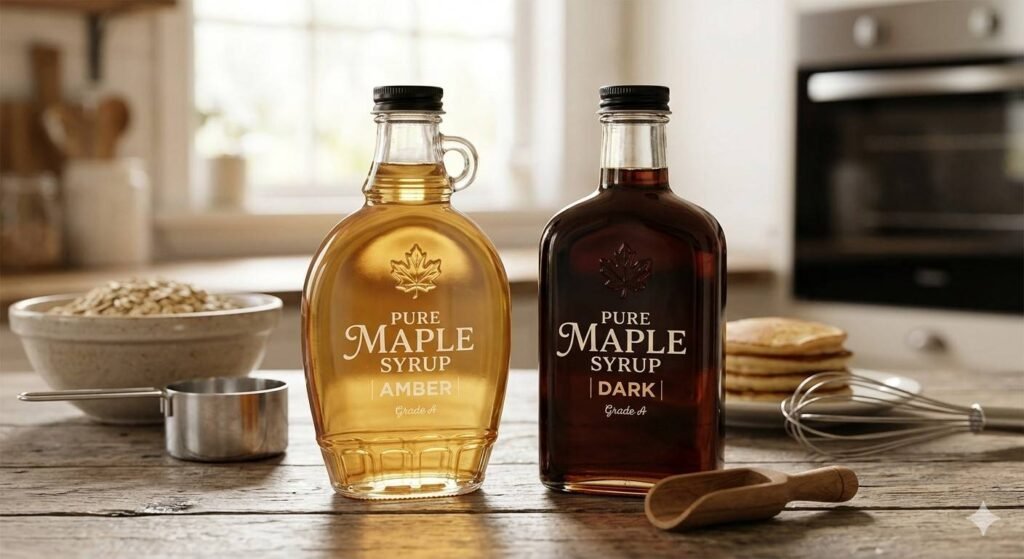
- Grade A Amber: Lighter taste, fewer minerals.
- Grade A Dark (Formerly Grade B): Stronger flavor and higher concentration of Manganese and Zinc.
Manganese is a key co-factor for enzymes that manage carbohydrate metabolism. By choosing Dark Maple Syrup, you are getting more metabolic “tools” to help your body process the sugar.
5. The “Maple-Fat” Biohack: How to Prevent the Spike
Never eat maple syrup on “naked” carbs. If you are adding a drizzle to your [Sweet Potato Glycemic Index] optimized meal, follow these rules:

- The Protein Buffer: Always pair maple syrup with high-protein fats like walnuts, pecans, or Greek yogurt.
- The Vinegar Shield: A tablespoon of ACV (Apple Cider Vinegar) before a meal containing maple syrup can reduce the glucose response by up to 30%.
- The Cinnamon Trick: Use “True” Ceylon cinnamon. It mimics insulin and works synergistically with the minerals in maple syrup.
The Nightcap Warning: Maple Syrup and the “Dawn Phenomenon”
A critical 2026 observation for US diabetics is the timing of sugar intake. Consuming maple syrup in the evening—even with the “Maple-Fat Biohack” can sometimes trigger the Dawn Phenomenon. This is when your liver releases extra glucose in the early morning hours, leading to a high fasting blood sugar reading.
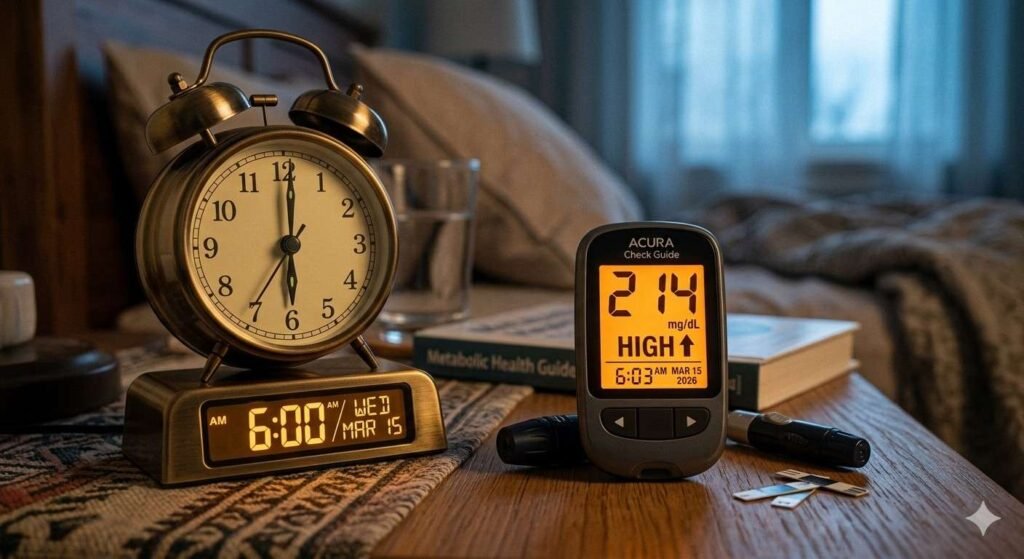
If you are using maple syrup as a glaze for dinner, monitor your morning numbers closely. Because of the maple syrup glycemic index, your body takes longer to process these sugars. To stay safe, we recommend consuming maple-based treats before 4:00 PM to allow your insulin levels to stabilize before sleep.
6. Maple Syrup vs. Honey: The 2026 Verdict
Many Americans ask which is better. While honey has antibacterial properties, it is very high in Fructose. Excessive fructose can lead to non-alcoholic fatty liver disease (NAFLD), which worsens insulin resistance.
Maple syrup is mostly Sucrose. While it’s still sugar, it is often easier for the liver to process in small amounts compared to the high-fructose hit of commercial honey.
### The 2026 Sweetener Spectrum: Maple vs. Zero-Calorie Alternatives
While the maple syrup glycemic index is impressive for a natural sugar, it’s important to understand where it sits compared to non-nutritive sweeteners like Stevia and Monk Fruit.
- For Weight Loss: If your primary goal is calorie deficit, Stevia and Monk Fruit are superior as they have a GI of 0.
- For Metabolic Flavor: Many American diabetics struggle with the “chemical” aftertaste of Stevia. In this case, a controlled 1-teaspoon serving of Pure Dark Maple Syrup provides essential minerals (Zinc/Manganese) that Stevia lacks.
In 2026, the clinical consensus is “Sweetener Rotation.” Use [Allulose] for baking, Stevia for coffee, and save Pure Maple Syrup for high-fiber meals where its impact can be buffered by fats and protein.
7. 2026 Buying Guide for US Consumers
Avoid “Pancake Syrup” at all costs. These are usually made of High Fructose Corn Syrup (HFCS) and caramel coloring.
Pure Dietly Checklist:
- Label Check: Must say “100% Pure Maple Syrup.”
- Ingredient List: Should only have one ingredient: Maple Syrup.
- Packaging: Look for the “Product of USA” or “Canada” seal.
8. FAQ: Common Concerns
Q: Can I use maple syrup in baking?
A: Yes, but reduce the temperature by 25°F to prevent over-caramelization, which can slightly increase the GI.
Q: Is it better than Stevia?
A: For blood sugar, Stevia is “safer” (GI 0). But for those who hate the aftertaste of Stevia, maple syrup is the best “real sugar” alternative if used with the biohacks mentioned above.
Q: How much can I have?
A: In 2026, metabolic health experts recommend a limit of 1 tablespoon per day for well-controlled diabetics.
Final Verdict: The Pure Dietly Stance
The maple syrup glycemic index makes it a “safer” natural sugar, but it is not a free pass. It is a premium sweetener that should be treated with respect. By pairing it with fats, choosing the dark grade, and keeping portions small, you can enjoy the taste of New England without destroying your A1C.
If you find that even a small amount of maple syrup causes a spike, it may be time to switch to [Allulose], the only rare sugar that satisfies the sweet tooth with a literal zero-glucose impact.
About the Author
Gohar is a Metabolic Health Researcher at Pure Dietly, specializing in functional nutrition and glucose biohacking for the modern American lifestyle. With a focus on how preparation methods and ingredient synergy affect the maple syrup glycemic index, Gohar translates complex 2026 clinical data into actionable kitchen habits. His mission is to empower the diabetic community to enjoy natural foods without compromising their A1C goals.
Medical Disclaimer
This content is for educational purposes only and does not constitute medical advice. While we analyze the maple syrup glycemic index based on 2026 metabolic research, individual glucose responses vary. Always consult your healthcare provider before changing your diabetic diet or A1C management plan.