
Editor Note
At Pure Dietly, we bypass general advice to analyze the molecular impact of food preparation on blood sugar. This 2026 definitive guide explores the sweet potato glycemic index and why traditional cooking methods often fail the diabetic community. Our goal is to provide American readers with clinical biohackssuch as starch retrogradation and acidic buffering to transform this starchy vegetable into a safe, A1C-friendly staple. All recommendations are based on the latest 2026 metabolic research for systemic longevity.
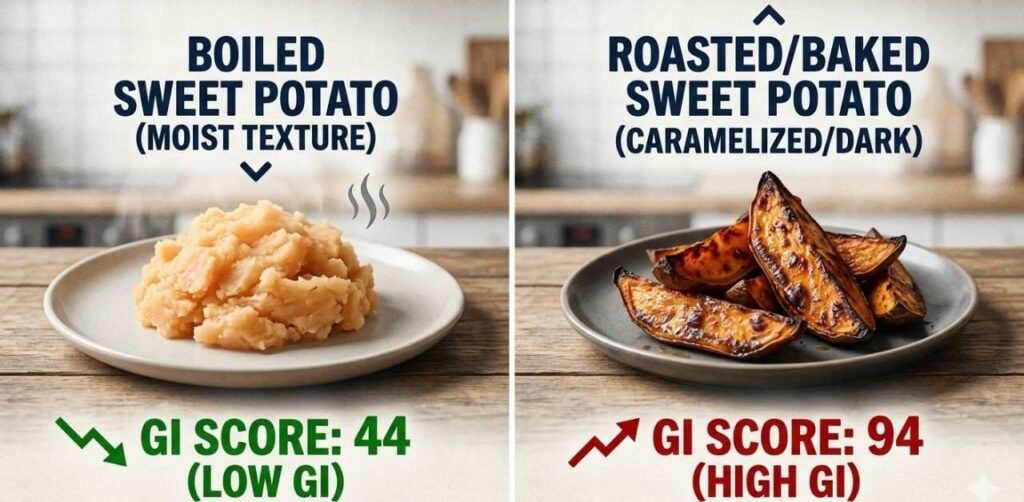
For years, Americans have been told to choose sweet potatoes over white potatoes. But here is the 2026 reality check: if you bake your sweet potato for an hour, its sugar impact can be almost as high as a candy bar. However, if you boil it, it becomes a slow-burning fuel that keeps your A1C stable.
To master your blood sugar, you must understand that the sweet potato glycemic index isn’t just a number on a chart it’s a result of your kitchen habits. If you are transitioning from [low-carb grains] and looking for a hearty vegetable alternative, this guide will show you how to eat tubers without the spike.
1. The Glycemic Index Paradox: It’s Not Fixed
Most people think a food has one “fixed” GI score. In 2026, we know that’s a myth. The sweet potato glycemic index is a moving target. Depending on how you prepare it, the score can swing from a safe 44 (Low) to a dangerous 94 (High).
For a diabetic, the goal is to keep the GI under 55. As we discussed in our guide on [black bean pasta], the molecular structure of your food determines how fast sugar enters your blood. With sweet potatoes, heat and water change that structure completely.
2. 2026 Clinical Data: GI Score by Cooking Method
Here is the data that every US diabetic needs to know before they start meal prepping. These numbers represent the glucose response per standard serving.
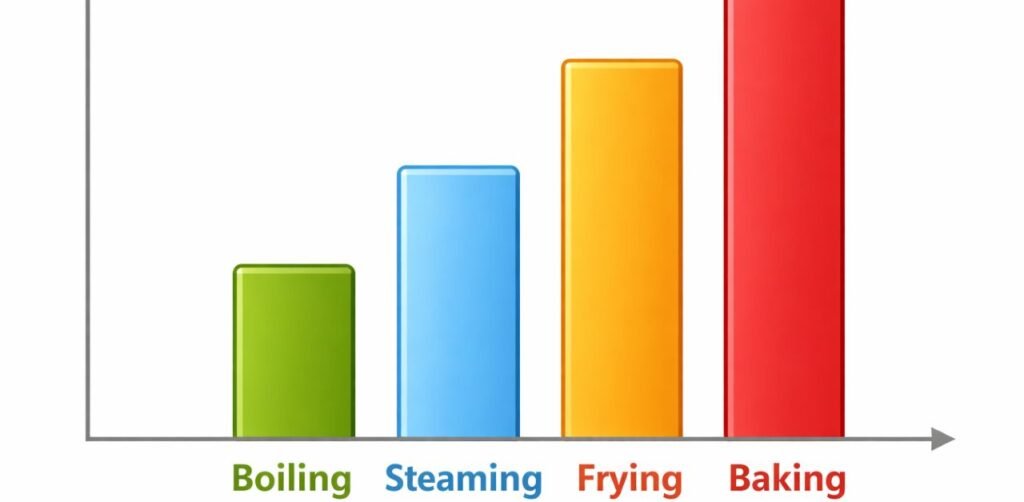
| Cooking Method | Glycemic Index (GI) | Metabolic Impact |
| Boiled (30 mins) | 44 – 46 | Low (Safe) |
| Steamed | 63 | Moderate |
| Fried / Chips | 76 | High (Caution) |
| Roasted / Baked | 82 – 94 | Very High (Danger) |
3. Why Baking is the “Enemy” (The Science of Maltose)
When you roast or bake a sweet potato in a high-heat oven, the enzymes inside the potato break down its complex starches into Maltose. Maltose has a Glycemic Index of 105 higher than pure table sugar!
This is why a baked sweet potato tastes so much sweeter than a boiled one. While it’s delicious for a Thanksgiving treat, for daily A1C management, baking is a metabolic trap. If you look at the sweet potato glycemic index after 45 minutes in a 400°F oven, it’s virtually indistinguishable from white bread.
4. The 2026 “Purple Potato” Hack
If you are shopping at Whole Foods or Sprouts, look for Purple Sweet Potatoes (often called Stokes or Okinawa potatoes).
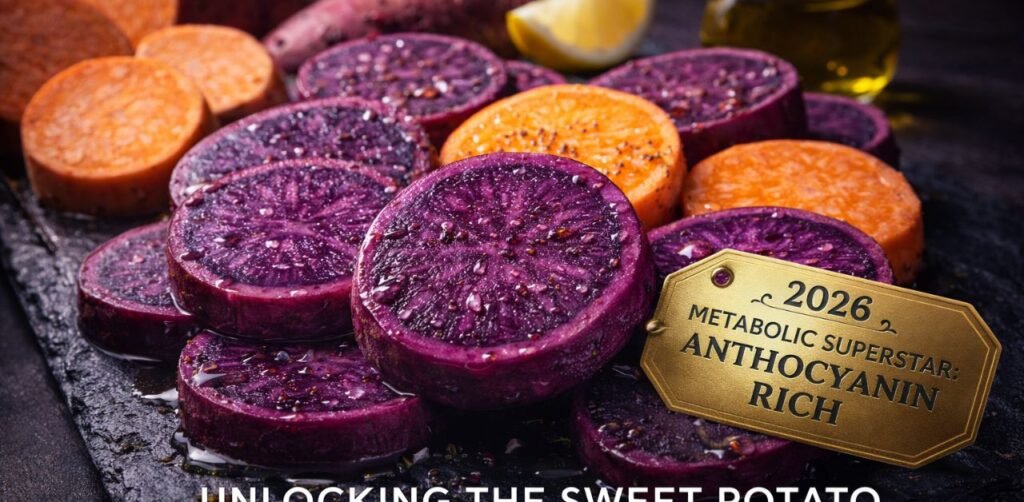
2026 research confirms that purple varieties have a lower GI than the standard orange ones. This is due to their high concentration of Anthocyanins—the same powerful antioxidants we found in [black bean pasta]. These pigments slow down starch digestion and improve insulin sensitivity.
5. The “Cook-and-Chill” Biohack (Resistant Starch)
Just like our pasta hack, sweet potatoes can be “biohacked” through temperature. This is the most effective way to lower the sweet potato glycemic index naturally.
- Step 1: Boil your sweet potato with the skin on (30 mins).
- Step 2: Place it in the refrigerator for at least 12 hours.
- Step 3: Eat it cold in a salad or gently reheat it.
This process creates Type 3 Resistant Starch. Your small intestine cannot absorb this starch, so it passes to your colon where it feeds “good” bacteria. This simple step can drop the glucose spike by another 20%.
6. Pairing for Success: The “Acid & Fat” Shield
Never eat a sweet potato alone. To create a “metabolic shield,” you need to pair it with specific ingredients that slow down sugar absorption.

- The Acid Hack: Drizzle lemon juice or raw Apple Cider Vinegar (ACV) over your potato. The acid slows down gastric emptying.
- The Fat Buffer: Add a tablespoon of extra virgin olive oil or grass-fed butter.
- The Fiber Boost: Always keep the skin on! The skin contains the majority of the fiber that keeps the sweet potato glycemic index manageable.
7. Hydration: Fiber’s Best Friend
Sweet potatoes are incredibly dense in soluble fiber. However, fiber needs water to move through your system without causing bloating or “false” high glucose readings due to dehydration stress.
If you find your morning numbers are high after a sweet potato dinner, you might need to check your hydration. Read our guide: [Can I drink water for fasting blood sugar test?] to understand how water intake affects your laboratory results.
8. 2026 USA Buying Guide: Orange vs. White vs. Purple
When you are at the grocery store, use this quick guide to choose the best option for your A1C:
- Best Choice: Purple Sweet Potatoes (Highest antioxidants, lowest GI).
- Second Best: Japanese White Sweet Potatoes (Creamy texture, moderate GI).
- Use with Caution: Standard Orange (Garnet/Jewel) Potatoes (Highest sugar potential if baked).
9. FAQ: Sweet Potatoes & Diabetes
Q: Can I eat sweet potato fries?
A: Rarely. Deep-frying adds oxidized fats, and the high heat increases the GI. If you must have fries, use an Air Fryer at a lower temperature and keep the skins on.
Q: Is the portion size important?
A: Absolutely. Even with a low GI method like boiling, we recommend a portion the size of a computer mouse (about 5 ounces).
Q: Does cinnamon help?
A: Yes! Sprinkling true Ceylon cinnamon on your boiled sweet potato can further improve insulin response.
10. Final Verdict: The Boiled Benefit
The sweet potato is a nutritional powerhouse, but it is a “conditional” food. It can be your best friend or your metabolic enemy depending on how you cook it. In 2026, the clinical recommendation for keeping the sweet potato glycemic index low is clear: Boil, Chill, and Pair with Fat.
By following these simple USA-based metabolic hacks, you can enjoy the comfort of a potato while keeping your A1C in the green zone.
About the Author
Gohar is a Metabolic Health Researcher at Pure Dietly. He specializes in “Functional Cooking”—the art of preparing high-carb foods in a way that minimizes their glucose impact for the 2026 American lifestyle.
Medical Disclaimer:
This content is for educational purposes. Always monitor your postprandial glucose levels when introducing starchy vegetables and consult your healthcare provider.