
By puredietly@gmail.com / May 6, 2026
PureDietly Editor’s Note
As part of our “Superfood Intelligence” series, this 2026 audit on avocado oil vs olive oil breaks away from generic advice. While most health blogs focus on basic fats, our research team at PureDietly analyzes these oils through the lens of metabolic flexibility and oxidative stability. For our USA audience—from the high-tech hubs of Silicon Valley to the fitness communities in Miami—understanding these cellular impacts is vital for long-term health.
Introduction: The Battle of Liquid Gold
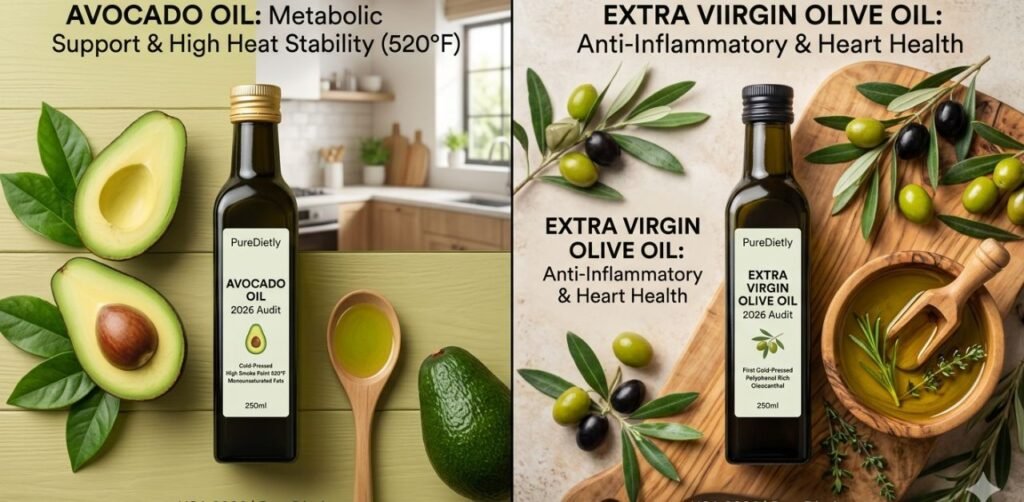
In the modern American kitchen, choosing the right fat is no longer just about flavor. Specifically, the debate over avocado oil vs olive oil has become a cornerstone of metabolic health discussions. Whether you are meal-prepping in New York or looking for heart-healthy options in California, your choice of oil dictates your cellular inflammation levels.
At PureDietly, we don’t just look at “good fats.” Instead, we audit how these oils interact with your postprandial glycemia and lipid profiles. As we move through 2026, the clinical focus has shifted. It is now about how these oils maintain their integrity under heat and how they support your journey toward metabolic restoration. Furthermore, with the rise of processed seed oils in packaged foods, choosing the right “liquid gold” is a defensive move for your DNA.
1. The Smoke Point Audit: Cooking for Cellular Safety
One of the most significant differences in the avocado oil vs olive oil comparison is their thermal stability. Furthermore, using an oil past its smoke point can release toxic fumes and free radicals. These free radicals are responsible for oxidative stress, which accelerates aging and metabolic dysfunction.
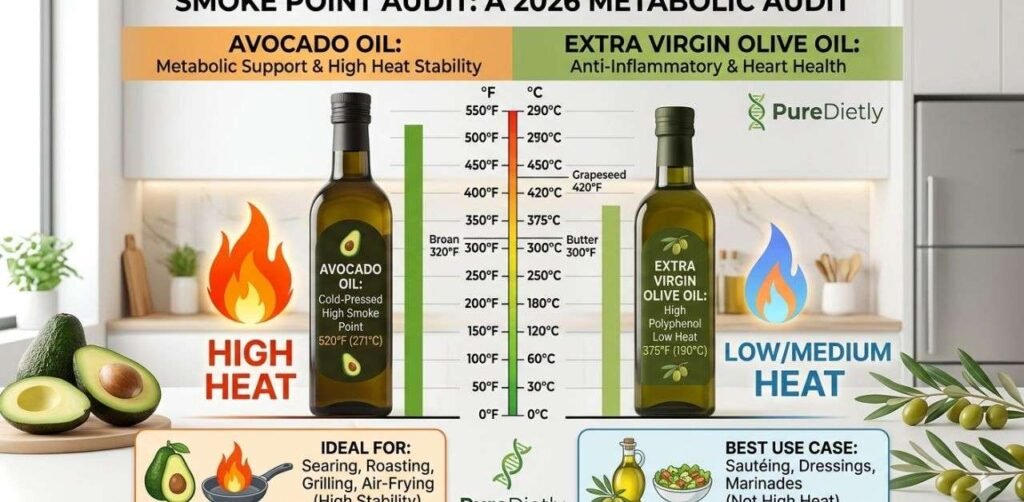
- Avocado Oil: Boasts an incredibly high smoke point (approx. 520°F or 271°C). Consequently, it is the safest choice for high-heat searing, air-frying, and roasting.
- Extra Virgin Olive Oil (EVOO): Has a lower smoke point (approx. 375°F or 190°C). Therefore, it is better suited for low-heat cooking, light sautéing, or as a finishing oil.
| Feature | Avocado Oil | Extra Virgin Olive Oil |
| Smoke Point | 520°F (High Heat) | 375°F (Low/Medium Heat) |
| Primary Fat | Oleic Acid (Omega-9) | Oleic Acid (Omega-9) |
| Vitamin E Content | High | Very High |
| Polyphenol Count | Moderate | Extremely High |
| Oxidative Stability | Excellent | Good (if not overheated) |
| Best Use Case | Grilling & Searing | Salads & Raw Finishing |
2. Metabolic Impact: Satiety and Insulin Sensitivity
Both oils are rich in monounsaturated fats (MUFAs). However, their impact on your metabolic sequencing protocol differs slightly. Specifically, avocado oil contains lutein, which is excellent for eye health, while olive oil is a powerhouse of oleocanthal—a natural anti-inflammatory compound that mimics the effects of ibuprofen.
For those following our [Metabolic Sequencing] guide, adding these fats to your fiber-rich meals can significantly dampen sugar spikes. Consequently, you achieve better satiety and avoid the mid-afternoon energy crash common in the high-carb American diet. By coating your carbohydrates in healthy fats, you slow down the gastric emptying process, leading to a flatter glucose curve.
3. The Extraction Audit: Cold-Pressed vs. Refined
To truly understand the benefits, we must look at how these oils are made. In 2026, the USA consumer is more aware than ever of industrial processing.
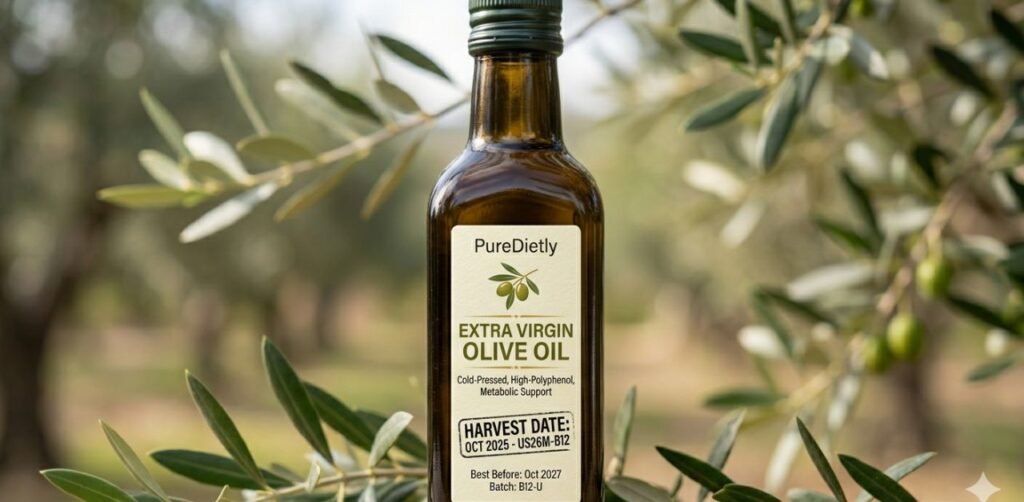
- Cold-Pressed (Unrefined): This method uses mechanical pressure without heat. Consequently, all the delicate antioxidants and flavors are preserved. This is where you get the “Extra Virgin” status in olive oil.
- Refined Oils: These are often treated with heat or chemicals to increase the smoke point and neutralize the flavor. While refined avocado oil is great for searing, it loses some of its “Superfood” intelligence during the process.
At PureDietly, we prioritize Cold-Pressed Extra Virgin versions for daily wellness. If you are auditing your pantry for 2026, ensure your bottles are dark glass, as light is the enemy of fat stability.
4. Heart Health and Lipid Profile Optimization
Recent 2026 clinical trends suggest that replacing saturated seed oils (like corn or canola) with MUFAs can lower LDL cholesterol while maintaining HDL levels. Furthermore, if you are using our [Diabetic Health Calculators], you will notice that consistent use of high-polyphenol olive oil often correlates with improved A1C levels over time.
- Anti-Inflammatory Power: The oleocanthal in olive oil helps clear amyloid-beta plaques in the brain, potentially protecting against cognitive decline.
- Endothelial Function: Both oils support the health of your blood vessel linings. This keeps your arteries flexible and your blood pressure within a healthy 2026 clinical range.
5. Bioavailability: Absorbing Your Micronutrients
Did you know that eating a salad without fat is a waste of nutrients? Many vital vitamins like A, D, E, and K are fat-soluble. Specifically, when you audit avocado oil vs olive oil, you find that both act as “nutrient boosters.”
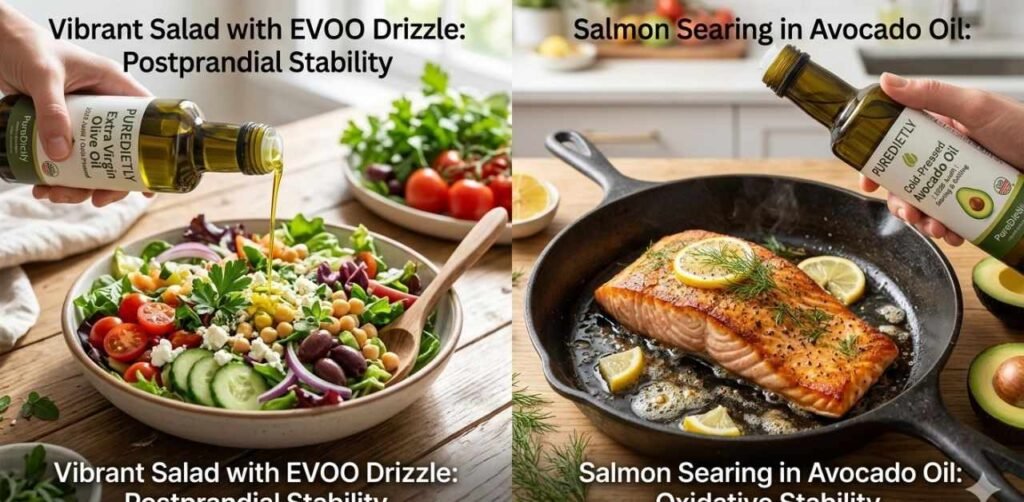
By drizzling olive oil over your greens or adding avocado oil to your morning smoothie, you increase the absorption of carotenoids by up to 400%. This is a crucial part of our [Chia Seeds Benefits] protocol, where we combine healthy fats with high-fiber seeds to maximize cellular repair.
6. Avoiding the “Purity Crisis” in the USA Market
Unfortunately, the USA market is currently facing a “Purity Crisis.” Recent audits show that up to 70% of avocado oils sold in major retail chains are either rancid or adulterated with soybean oil.
To maintain your topical authority on health, you must be a savvy shopper.
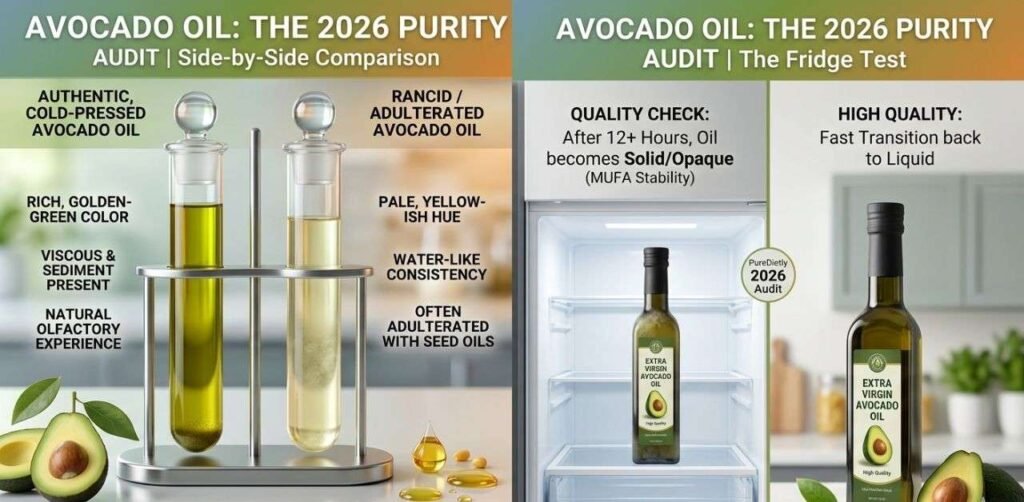
- Check for Origin: Look for oils from single-origin estates (California, Italy, or Mexico).
- The Fridge Test: While not 100% foolproof, high-quality olive oil tends to thicken in the fridge, while adulterated oils remain liquid.
- The Harvest Date: Always look for a harvest date within the last 12-14 months. Freshness is the key to high antioxidant counts.
7. Practical 7-Day Metabolic Oil Protocol
To help our PureDietly readers integrate these oils, here is a simple weekly roadmap:
- Monday-Wednesday (The High-Heat Phase): Use avocado oil for air-frying salmon or roasting seasonal vegetables. This protects the protein structure from oxidation.
- Thursday-Friday (The Raw Polyphenol Phase): Focus on Extra Virgin Olive Oil as a dressing for kale salads or drizzled over warm soups.
- Saturday-Sunday (The Hybrid Phase): Experiment with “Chia Fresca” (from our [Chia Seeds Benefits] guide) and use avocado oil for a healthy weekend brunch.
8. EEAT Perspective: Safety and Precautions
As a health researcher, I must emphasize that quality matters more than quantity. While these fats are “healthy,” they are calorie-dense.
- Caloric Density: One tablespoon contains roughly 120 calories. Therefore, use them intentionally.
- Storage: Never store your oils above the stove. The heat from cooking will turn your expensive “liquid gold” rancid within weeks.
- Digestive Adjustment: If you are transitioning from a low-fat diet, start with half a tablespoon to let your gallbladder adjust to the increased fat intake.
Conclusion: The PureDietly Verdict for 2026
In the final audit of avocado oil vs olive oil, there is no loser—only different roles. For high-heat cooking and neutral flavor, Avocado Oil is your best friend. For longevity, heart health, and anti-inflammatory benefits, Extra Virgin Olive Oil remains the undisputed king.
By diversifying your intake, you ensure your body receives a wide spectrum of MUFAs, polyphenols, and fat-soluble vitamins. This is the essence of metabolic flexibility: giving your body the right tools at the right time.
Ready to Track Your Metabolic Progress?
Use our Free Diabetic Calculators to monitor your markers and see how healthy fats are improving your data.
[OPEN ALL CALCULATORS ➔]
Fast • Accurate • Free for PureDietly Readers
Ready to Check Your Levels?
Use our Free Diabetic Calculators to track your A1C, Sugar Spikes, and Fasting Progress.
OPEN ALL CALCULATORS ➔Fast • Accurate • Free for Puredietly Readers
Frequently Asked Questions (FAQs)
Which oil is better for weight loss?
Both promote satiety by regulating “ghrelin” (the hunger hormone). However, olive oil’s polyphenols have more clinical backing for long-term weight maintenance.
Can I use olive oil for frying?
Only for light sautéing or pan-frying. For deep frying or high-heat searing, avocado oil is much safer to avoid toxic oxidation.
Is avocado oil better than coconut oil?
For heart health, yes. Avocado oil is primarily monounsaturated, while coconut oil is high in saturated fat, which may impact LDL levels differently in some individuals.
About the Author
Gohar Fatima is a health researcher and digital entrepreneur specializing in metabolic audits and nutritional science. Under the mentorship of SEO strategist Sir Abdullah, she leads PureDietly.com in providing the USA audience with research-backed, mobile-friendly dietary solutions.
Medical Disclaimer
This audit on avocado oil vs olive oil is for educational purposes and is not medical advice. Always consult your healthcare provider before making significant changes to your diet, especially if you have a history of cardiovascular disease or lipid disorders.