
By Gohar Fatima | Published: May 21, 2026
Editor’s Note
“At PureDietly, we filter out corporate marketing metrics like basic calorie counting to expose raw biological truth. In this comprehensive cellular audit, we decode the true physiological cost of drinking. Specifically, we analyze the hidden mechanisms of alcohol with minimum calories so you can protect your liver axis, prevent nocturnal sugar crashes, and maintain an optimized metabolic rate.”
Introduction: The Low-Calorie Illusion
While walking through high-end lounges or navigating weekend social gatherings in the United States, health-conscious individuals frequently search for alcohol with minimum calories to avoid stalling their fat-burning goals. Historically, major commercial beverage corporations have masterfully marketed light beers, hard seltzers, and “skinny” pre-mixed cocktails as entirely guilt-free choices. Consequently, millions of fitness-conscious consumers now believe that as long as a liquid fits within their daily caloric boundaries, their systemic health remains perfectly shielded.

However, when our primary goals are cellular energy conservation, gut microbiota alignment, and permanent insulin optimization, superficial marketing buzzwords simply fall short. Therefore, this 2026 PureDietly metabolic audit will look past standard nutritional labels to deconstruct the widespread biochemical myths surrounding low-calorie drinking. As a result, you will discover how ethanol alters your liver pathways, dampens your fat oxidation, and learn how to make highly optimized choices at the bar counter.
1. The Science of Ethanol: Understanding the Metabolic Freeze
To uncover the true scientific reality of consuming alcohol with minimum calories, we must analyze mammalian hepatic biology and human elimination pathways. Fundamentally, the human body views ethanol as an active metabolic toxin because it cannot be safely stored in any cellular compartment or tissue. Specifically, when alcohol enters your bloodstream, your liver immediately halts its standard, vital operations—such as fatty acid beta-oxidation and gluconeogenesis—to prioritize ethanol detoxification. This immediate physiological shutdown creates a temporary, highly counterproductive state known as the “metabolic freeze.”
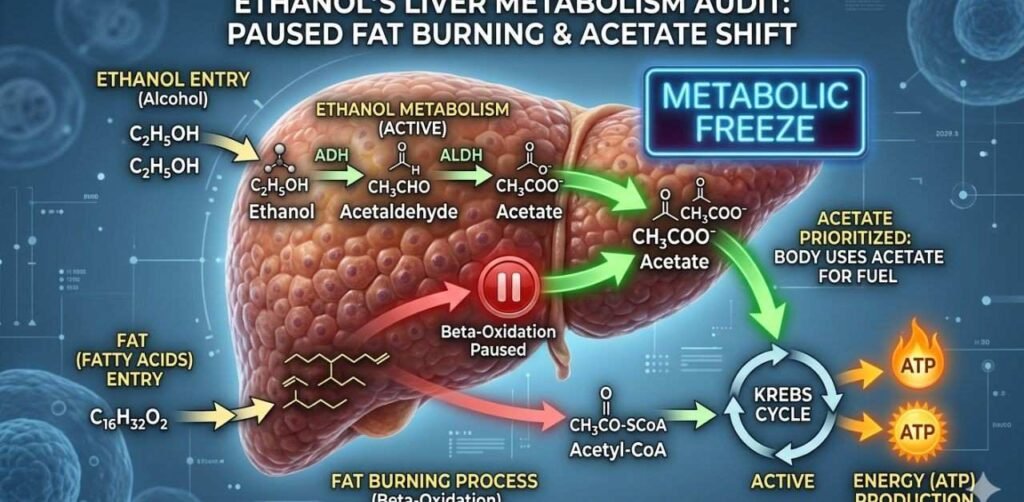
[Alcohol Consumption] ➔ [Liver Halts Fat Burning] ➔ [Prioritizes Ethanol Clearance] ➔ [Metabolic Freeze]
During this intensive detoxification window, your liver cells utilize the localized enzyme alcohol dehydrogenase to convert ethanol into acetaldehyde. Because acetaldehyde is an exceptionally reactive and destructive intermediate compound, your body rapidly breaks it down into acetate. Consequently, your mitochondria are forced to utilize this newly formed acetate for immediate cellular energy instead of burning your stored body fats. Therefore, even if you explicitly select a beverage containing minimal macronutrients, your underlying fat-burning mechanics are completely paused until the acetate is entirely cleared from your system.
Furthermore, this metabolic shift alters your cellular $NAD^+$ to $NADH$ ratio. Because your body requires $NAD^+$ to burn body fat, the sudden depletion of this coenzyme blocks your fat-metabolism pathways completely. Consequently, prioritizing the elimination of ethanol over macronutrient processing directly shifts the entire metabolic landscape, making the search for alcohol with minimum calories a secondary factor to liver processing speeds.
2. The Clean Spirits Matrix: Selecting Low-Sugar Drinks
When evaluating physical options at an upscale lounge, clear distilled spirits stand out as the most biological form of alcohol with minimum calories. Because the traditional, high-temperature distillation process removes all residual sugars, yeasts, and complex starches, unflavored clear spirits carry a net carbohydrate count of zero. This unique, clean macronutrient profile makes them highly popular among practitioners of ancestral ketogenic protocols and low-carb lifestyles.
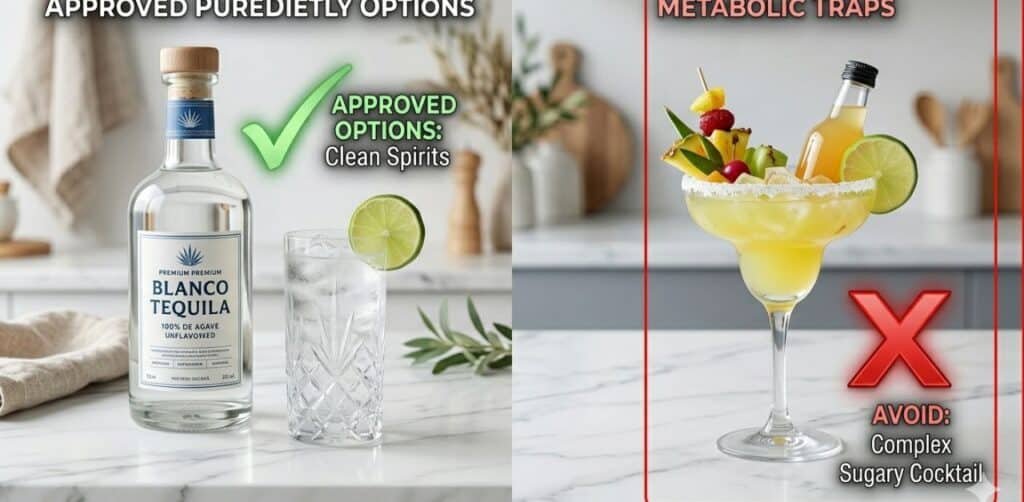
To help you navigate your next social gathering with high topical authority, our research team has compiled a comprehensive scannable comparison table detailing popular American beverage choices.
Glycemic & Caloric Density Profiles Table
| Beverage Type | Average Calories (per 1.5 oz shot / 5 oz wine) | Net Carbs | Metabolic Cost Rating | PureDietly Status |
| Clear Spirits (Vodka, Tequila, Gin) | 64 – 70 Calories | 0g | High (Prioritizes Detox) | Approved (Unflavored Only) |
| Dry White & Red Wines | 120 – 125 Calories | 1g – 3g | Medium | Conditional |
| Commercial Light Beers | 90 – 100 Calories | 3g – 5g | High (Gluten Risk) | Avoid ❌ |
| Traditional Sugary Cocktails | 250 – 400+ Calories | 30g+ | Extreme Danger 🚨 | Avoid Completely ❌ |
Additionally, if you want to perfectly track your daily food portions, carbohydrate counts, and liquid macro consumption to ensure your metabolism stays in the green zone, you can smoothly utilize our interactive [Diabetic-Friendly Carb Manager] tool directly on our platform.
Want to check the impact of this food on your sugar?
📊 Open Net Carb Calculator3. The Blood Sugar Paradox: Insulin and Nocturnal Crashes
Furthermore, a critical question arises: how do options labeled as alcohol with minimum calories influence your daily blood glucose levels and insulin sensitivity? Interestingly, consuming pure clear spirits without added sugars can initially cause a noticeable drop in your circulating blood sugar. Because the liver is completely occupied with clearing acetate, it temporarily loses its capacity to release stored glycogen into the bloodstream.
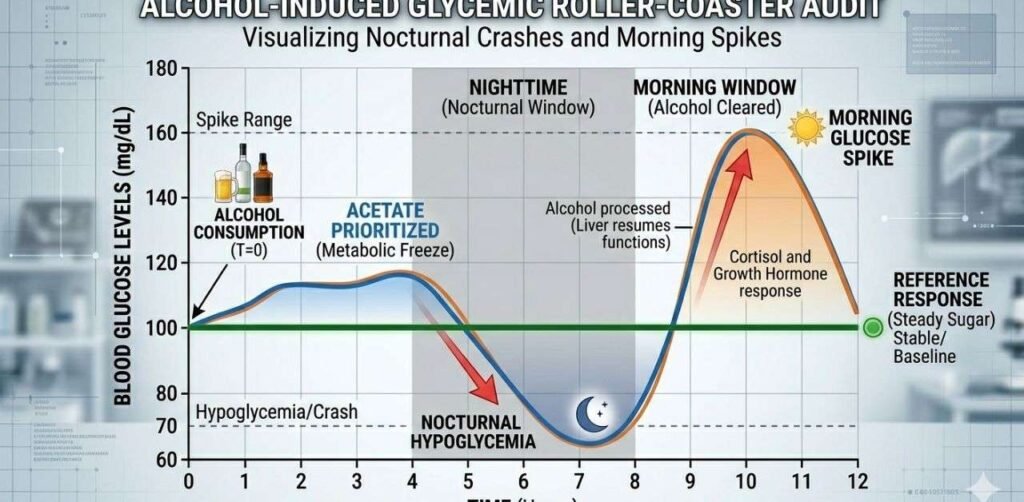
Conversely, this sudden drop frequently triggers nocturnal hypoglycemia, which causes individuals to experience intense late-night sugar cravings and fragmented sleep patterns. When you wake up the next morning, your adrenal glands release high amounts of cortisol to correct the low blood sugar, resulting in an artificial morning glucose spike. This roller-coaster effect can easily mimic the glycemic damage caused by high-sugar foods. If you are tracking your overall glucose inputs, you should also be careful with whole foods that carry excessive fructose loads, as detailed in our viral guide on the [10 Worst Fruits for Diabetics].
As we previously demonstrated in our comprehensive analysis, [Is Turkey Bacon Healthy? The 2026 Metabolic Health Audit], choosing highly processed nutritional options quickly compromises your gut lining and destabilizes internal metabolic harmony. Ultimately, the exact same principle applies to low-calorie mixers that utilize artificial sweeteners like Aspartame or Sucralose, which drastically alter your delicate gut microbiome and degrade overall insulin sensitivity over time.
4. Hidden Inflammation Traps: Congeners and Mixers
Although choosing an alcohol with minimum calories keeps your carbohydrate intake low, ignoring chemical additives and processing byproducts can introduce severe systemic inflammation. At a cellular level, conventional commercial drinks contain hidden traps that undermine your metabolic longevity:
- The Congener Imbalance Trigger: During the fermentation of dark liquors like bourbon, whiskey, and dark rum, complex chemical byproducts called congeners are naturally produced. Because these compounds require intense processing by your filtration pathways, they cause localized cellular stress and amplify standard hangover symptoms.
- Artificial Sweetener Disruptions: Many commercial “skinny” hard seltzers substitute cane sugar with synthetic chemical sweeteners. Consequently, these ingredients irritate human tight gut junctions, leading to uncomfortable bloating and systemic immune responses.
Fortunately, you can actively mitigate some of these metabolic stressors by supporting your ancestral cellular pathways. For instance, prioritizing premium, highly bioavailable proteins from whole food sources can protect your lean tissue mass before a social event. You can learn more about this by reading our rigorous evaluation of restaurant options in the [Chick-fil-A Grilled Nuggets Nutrition Audit].
Furthermore, if you are looking for clean ways to prepare your digestive system at home, preparing a whole-food dinner like our pasture-raised pork recipes provides an excellent zero-carb, protein-dense baseline. However, to ensure your meat sourcing is clean, check out our structural biological breakdown in [Is Pork Red Meat? The 2026 PureDietly Metabolic Audit]. To understand how to protect your ingredients and maintain proper systemic pH balances, you can also explore our technical guide, [Baking Soda for Cooking: The 2026 Pantry Blueprint].
5. USA Beverage Guide: How to Source Clean Options
Navigating modern American liquor establishments or supermarket chains requires a very precise approach to finding alcohol with minimum calories that also respects your metabolic pathways. If you want to maintain clean, anti-inflammatory habits, utilize this checklist before placing your next beverage order:
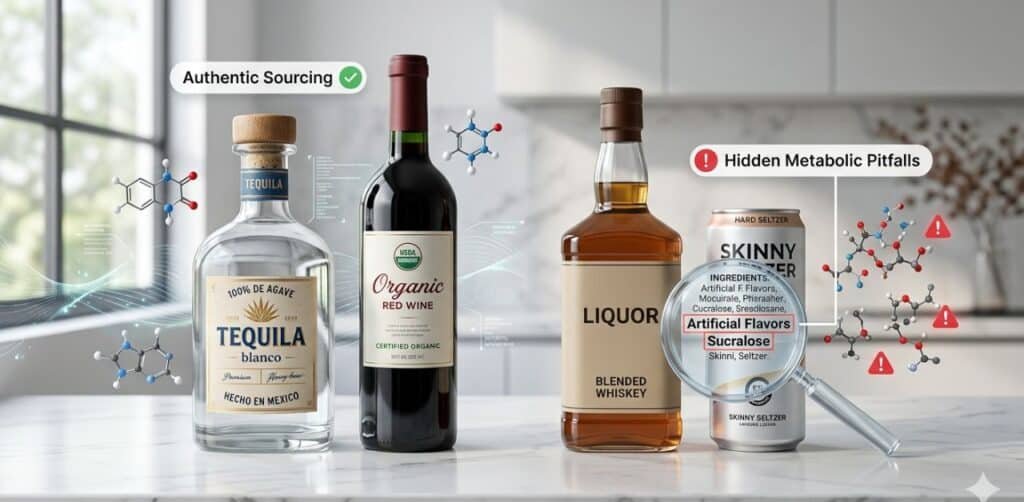
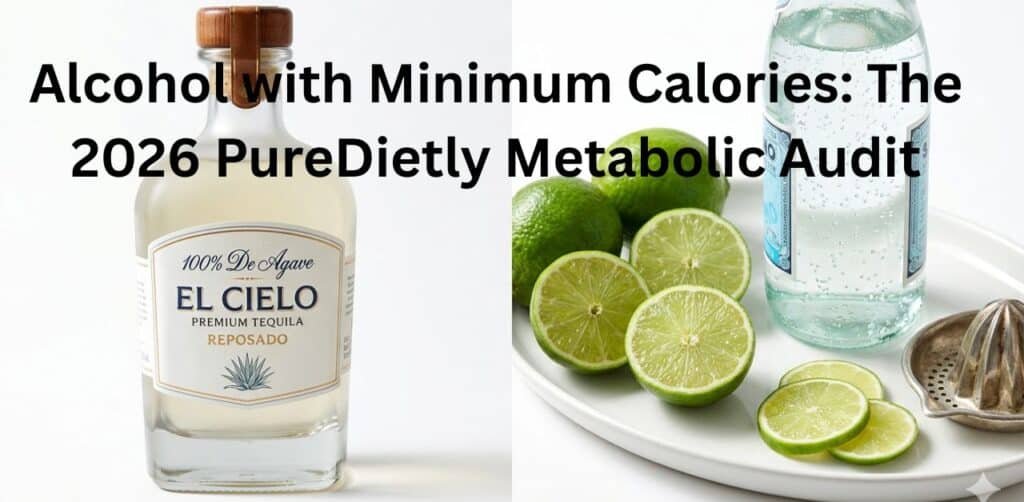
- Demand 100% Blue Agave: When choosing tequila, ensure the label explicitly states “100% De Agave.” Lower-grade options are frequently blended with cheap corn syrup sugars that trigger massive insulin spikes.
- Select Organic Biodynamic Wines: Look for independent validation stamps from certified organic vineyards. These specialized selections contain minimal synthetic sulfites, reducing toxic loads on your liver.
- Utilize Seltzer Mixers Wisely: Completely bypass commercial club mixers that feature artificial colorings. Instead, pair your clear spirits with natural sparkling mineral water and fresh, hand-squeezed lime juice.
6. FAQ: Community Metabolic Questions
Q: Does drinking low-calorie alcohol stop my body from burning body fat?
Ans: Yes, absolutely. Even if a drink has zero carbohydrates, your liver must clear the ethanol completely before it can resume breaking down stored fatty acids for energy.
Q: Can I safely consume dry red wine on a strict low-carb or ketogenic diet?
Ans: Yes, dry varieties contain very minimal residual sugars. However, you must limit your intake to one or two servings to prevent prolonged metabolic stall phases.
Q: Are commercial hard seltzers better for my metabolism than a standard vodka soda?
Ans: Absolutely not. While both options feature low calorie profiles, many packaged seltzers contain hidden chemical preservatives and artificial flavor structures that disrupt your gut environment.
Q: Why does alcohol make me feel bloated the next day?
Ans: Alcohol acts as a systemic diuretic, causing immediate cellular dehydration. Consequently, your body overcompensates by retaining water, while artificial mixers simultaneously irritate the tight junctions of your intestinal walls.
Conclusion: Prioritizing Cellular Integrity Over Marketing Metrics
Ultimately, the final verdict of this metabolic audit is thoroughly clear. Selecting an alcohol with minimum calories is an effective way to control your structural carbohydrate intake, but it does not completely shield you from the energetic cost of processing ethanol. Nevertheless, by selecting high-quality clear spirits, avoiding toxic synthetic mixers, and focusing on proper pre-drink nutrition, you can successfully protect your body from modern metabolic pitfalls.
The core guiding principle of PureDietly is to reclaim ancestral health integrity while bypassing corporate shortcuts. Therefore, leave the engineered sweet cocktails behind, choose authentic clean options, and keep your cellular energy securely optimized in the green zone!
About the Author
Gohar Fatima is a dedicated metabolic health researcher, nutritional analyst, and the founder of PureDietly. With a deep-passion for cellular biochemistry and ancestral lifestyle protocols, she specializes in breaking down complex nutritional science into actionable, evidence-based insights. Gohar’s core mission is to filter out corporate marketing hype and deliver raw biological truth, helping readers optimize their insulin sensitivity, stabilize blood glucose, and reclaim their metabolic health. When she isn’t auditing food components, she actively develops custom digital tracking tools to make healthy living scannable and accessible.
Medical Disclaimer
The information provided on PureDietly is for educational and informational purposes only. No material on this site is intended to serve as a substitute for professional medical advice, diagnosis, or treatment.