

At PureDietly, we bypass corporate marketing hype and simple calorie counting to expose the raw biological truth. Many health-conscious individuals consume expensive probiotic supplements hoping for a quick fix. However, without the right prebiotic foods, these beneficial microbes simply starve. In this comprehensive audit, we decode which fibers truly fuel your microbiome to stabilize insulin levels, repair your gut lining, and optimize your metabolic rate.
1. The Science of the Gut-Metabolic Axis
Prebiotics are non-digestible fibers that act as the primary fuel source for your gut bacteria. When your microbiota ferments these fibers, they produce Short-Chain Fatty Acids (SCFAs), specifically Butyrate. This process is the cornerstone of metabolic longevity.
These SCFAs are critical for:
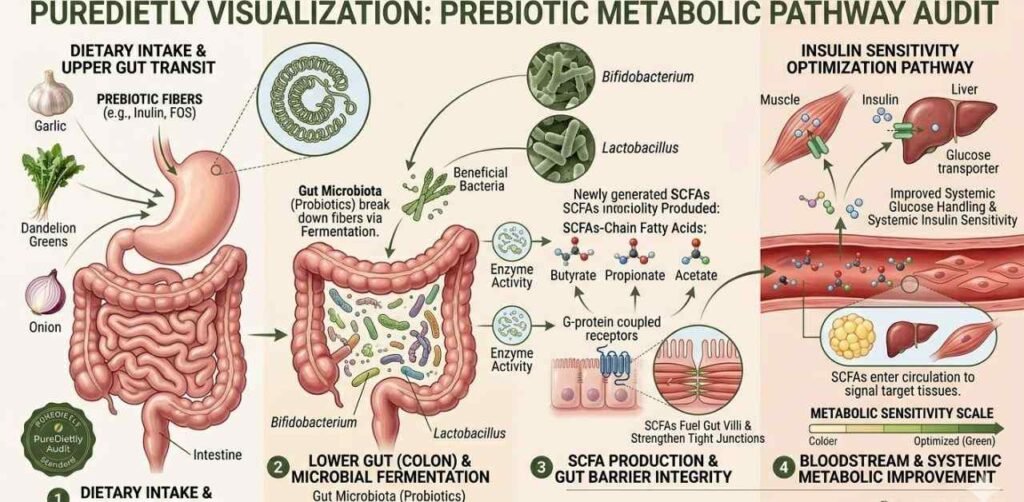
- Insulin Optimization: Improving systemic glucose handling by signaling muscle tissues to absorb glucose more efficiently.
- Inflammatory Control: Protecting the gut lining, which prevents “leaky gut” and systemic inflammation.
- Metabolic Rate: Supporting overall energetic efficiency, ensuring your body utilizes fuel rather than storing it.
The “Microbiome-Insulin” Connection (The Science Edge)
“While most health platforms treat gut fiber as a simple tool for digestion, the 2026 biological audit reveals a more critical function: Metabolic Signaling. When your gut microbiota ferments prebiotic fibers, they generate Short-Chain Fatty Acids (SCFAs) like butyrate, which act as master switches for insulin sensitivity. By consuming specific prebiotics, you aren’t just ‘keeping regular’; you are essentially signaling your adipose tissue to prioritize fat oxidation over glucose storage. In the USA, where metabolic syndrome is rising due to ultra-processed food environments, fueling this pathway is the most effective biological counter-measure to blunt the glycemic impact of modern diets.”
2. Metabolic Audit: Top Prebiotic Sources
Not all fibers are created equal. We have categorized these sources based on their prebiotic density and metabolic impact.
| Food Source | Prebiotic Type | Metabolic Benefit |
| Raw Garlic | Inulin | High Anti-inflammatory |
| Dandelion Greens | Inulin | Liver Detox Support |
| Cooked/Cooled Potato | Resistant Starch | Glucose Stability |
| Asparagus | Fructo-oligosaccharides | Microbiome Diversity |
| Raw Onion | Inulin/FOS | Immune Modulation |
Note: For individuals with SIBO or severe FODMAP sensitivity, start with very small portions (1/2 teaspoon) to avoid digestive distress and gradually scale up.
3. Avoiding the Digestive Distress Trap
Many people experience bloating when increasing their fiber intake. At PureDietly, we recommend a “Gradual Audit” approach:

- Start Low: Begin with micro-doses to let your gut flora adapt.
- Hydrate: Fiber requires adequate water to move through the digestive tract efficiently.
- Preparation Matters: Use our [Baking Soda for Cooking: The 2026 Pantry Blueprint] protocol to neutralize anti-nutrients in fibrous vegetables, making them easier to digest.
The “Hidden Stressor” Protocol (The Actionable Edge)
“It is a common misconception that all fiber is universally beneficial; in fact, the ‘FODMAP Sensitivity’ observed in millions of Americans is often a sign of a microbial imbalance rather than a fiber intolerance. Instead of abandoning prebiotics, we propose a ‘Metabolic Reconditioning Protocol’: begin by neutralizing anti-nutrients in fibrous vegetables using our [Baking Soda cooking method], followed by a slow, progressive increase in prebiotic intake. This allows your microbiome to adapt without triggering the systemic inflammation or bloating commonly misdiagnosed as food allergies. Remember, your goal is to reclaim metabolic flexibility—not to stress your gut lining with rapid, poorly sequenced fiber spikes.”
4. The 2026 Prebiotic Protocol
To maintain gut harmony, you don’t need an expensive supplement. Integrate these habits into your daily routine:

- The Morning Reset: Add raw dandelion greens or chicory root to your morning salad.
- The Evening Fuel: Eat cool-cooked potatoes with your dinner to boost resistant starch levels, which helps stabilize morning blood glucose.
- Authentic Sourcing: Always prioritize organic produce. Pesticide residues are known to damage the gut lining, effectively neutralizing the benefits of the fiber you are consuming.
5. Connecting Your Metabolic Journey
Gut health does not operate in a vacuum. It is deeply connected to your broader metabolic habits:
- The Fast Food Connection: When you consume fast food, the “Pizza Effect” (discussed in our [Pizza Hut Glucose Experiment Guide]) disrupts insulin sensitivity. Prebiotic foods act as a buffer, slowing down the absorption of glucose and mitigating the post-meal crash caused by fast-food additives.
- The Cheese & Dairy Paradox: High-quality, fermented dairy like [Cottage Cheese] contains proteins that work synergistically with prebiotic fibers. When you combine the two, you create a “Synbiotic” environment that accelerates gut repair.
- The Ethanol Factor: As detailed in our [Alcohol with Minimum Calories Audit], alcohol acts as a metabolic toxin that slows down gut transit. Prebiotics help counteract this sluggishness, keeping your digestive system moving effectively after social events.
6. Why Most Prebiotic Advice Fails

Most “gut-healthy” advice ignores the impact of artificial ingredients. Many commercial snacks labeled as “high-fiber” use synthetic sweeteners like Sucralose. These ingredients irritate the tight junctions of your gut lining and can alter the composition of your microbiota. As you curate your [7-Day Metabolic Meal Plan], ensure that every gram of fiber comes from whole-food sources rather than processed alternatives.
FAQ: Community Metabolic Questions
What is the difference between Prebiotics and Probiotics?
- Ans: Think of them as a biological partnership. Probiotics are the live, beneficial bacteria themselves, while Prebiotics are the specific types of fiber that serve as food for those bacteria. For optimal gut health, you need both: the beneficial microbes to colonize your gut and the prebiotic fuel to keep them thriving.
Q: Do prebiotic foods assist in weight loss?
- Ans: Yes. Prebiotics are fermented by gut bacteria to produce Short-Chain Fatty Acids (SCFAs). These SCFAs help regulate metabolic hormones such as GLP-1, which naturally suppresses appetite, stabilizes blood sugar, and significantly reduces unhealthy cravings.
Q: How can I avoid bloating when increasing my fiber intake?
Ans: Bloating typically occurs when gut bacteria ferment fiber too rapidly. To avoid this, increase your fiber intake gradually rather than all at once. Additionally, ensure you are using our [Mason Jar Salads] prep guide to control portion sizes and keep your digestive system balanced as it adapts.
Conclusion: Reclaiming Your Metabolic Integrity
Gut health is the foundation of your metabolism. When you choose the right prebiotic foods, you aren’t just improving digestion; you are protecting your insulin sensitivity and reclaiming your metabolic health from the influence of corporate shortcuts. Focus on authentic whole foods, prioritize diversity in your fiber sources, and fuel your microbiome correctly.
Start your journey today:
- Download our [2026 Metabolic Health Toolkit] to track your glucose responses.
- Read the full [Quinoa Glycemic Index Audit] for the best low-carb grain alternatives.
- Remember: Authentic eating leads to optimized energy.
About the Author
Gohar Fatima is a dedicated metabolic health researcher, nutritional analyst, and the founder of PureDietly. With a deep passion for cellular biochemistry and ancestral lifestyle protocols, she specializes in breaking down complex nutritional science into actionable, evidence-based insights. Gohar’s core mission is to filter out corporate marketing hype and deliver raw biological truth, helping readers optimize their insulin sensitivity and stabilize blood glucose.
Medical Disclaimer
The information provided on PureDietly is for educational and informational purposes only. No material on this site is intended to serve as a substitute for professional medical advice, diagnosis, or treatment. Always monitor your own glucose trends via CGM data and consult with a medical professional regarding changes to your insulin protocols or dietary habits.