
By Gohar Fatima | May 23, 2026

Editor’s Note:
“At PureDietly, we audit how modern additives impact your cellular energy. While the food industry markets diet soda as a ‘weight-loss hack,’ our 2026 metabolic audit reveals a different biological reality. We’re peeling back the label to see what happens to your gut and insulin response when you replace real food with synthetic sweetness.”
1:The Illusion of “Zero-Calorie” Wellness
For years, fitness enthusiasts in wellness hubs like Austin, Los Angeles, and NYC have traded traditional sugary colas for diet soda. On the surface, the decision seems logical; the math of “calories in vs. calories out” suggests that zero-calorie drinks should lead to weight loss. However, when we apply a strict metabolic lens, this narrative begins to shatter.

Biology is not merely a math problem it is a sophisticated chemical signaling system. When you consume diet soda, you are introducing non-nutritive sweeteners (NNS) like aspartame, sucralose, and acesulfame potassium into your system. While these do not cause an immediate spike in blood glucose, they trigger your brain and gut receptors to expect energy that never arrives. This creates a “metabolic mismatch,” where your body’s hormonal pathways are activated but remain unrewarded, leading to long-term insulin sensitivity issues.
2. The Gut-Metabolic Axis: The 2026 Research Edge
The most alarming discovery in recent metabolic research is how artificial sweeteners disrupt the gut microbiome. Think of your gut bacteria as your body’s metabolic support team. They are responsible for digestion, immune function, and most importantlyre gulating your metabolic rate.
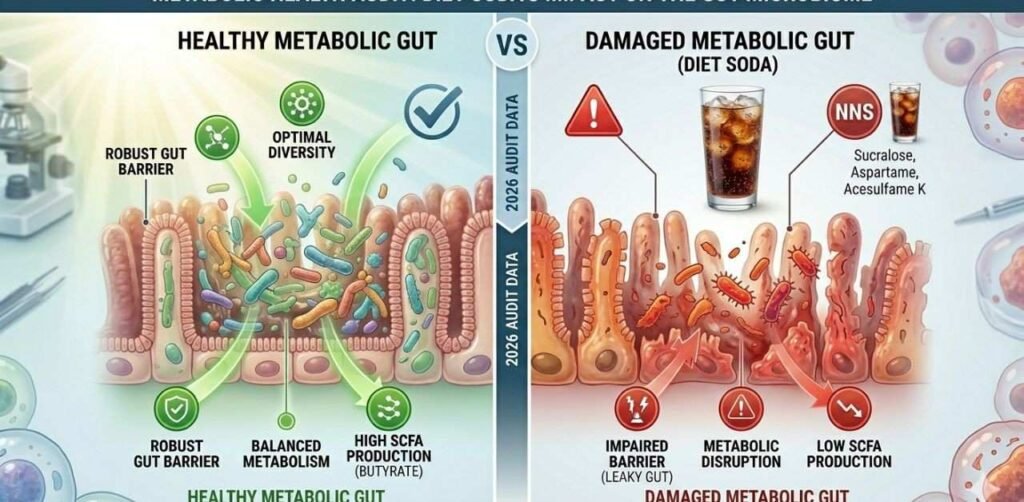
- Microbial Diversity Shift: Studies from 2026 indicate that frequent intake of sucralose and stevia can significantly reduce the population of beneficial bacteria like Bifidobacterium.
- SCFA Reduction: Beneficial microbes produce Short-Chain Fatty Acids (SCFAs) like butyrate through the fermentation of fiber. SCFAs are essential for maintaining the integrity of your gut lining (preventing “leaky gut”) and signaling to your liver that your blood sugar is under control.
- Inflammatory Signaling: When your gut bacteria balance is thrown off, it can trigger low-grade systemic inflammation, which is a major hurdle for anyone trying to reach their fat-loss goals.
“While artificial sweeteners disrupt your gut, you can actively repair the damage through proper fiber intake.: [Prebiotic Foods Audit]
3. Metabolic Audit Table: Real vs. Synthetic Impact
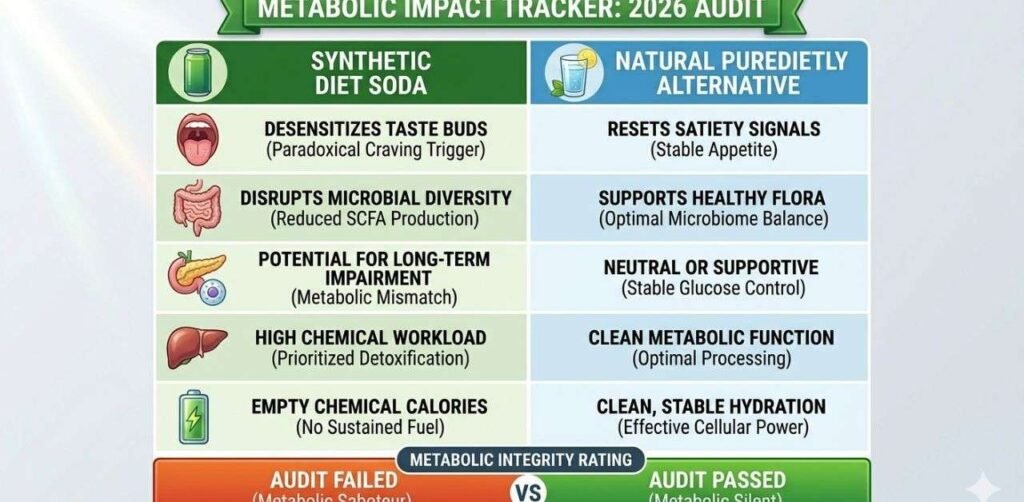
| Feature | Diet Soda (Synthetic) | PureDietly Alternative (Natural) |
| Metabolic Signal | Confuses gut/brain receptors | Provides clear biological input |
| Gut Impact | Disrupts microbial diversity | Supports healthy SCFA production |
| Insulin Sensitivity | Potential long-term impairment | Neutral/Supportive |
| Cellular Energy | Empty chemical workload | Stable, clean hydration |
| Satiety Signals | Triggers false hunger | Satisfies natural thirst |
4. The “Sweetness Paradox” and Insulin Resistance
Why do diet soda drinkers often struggle with stubborn weight? The answer lies in the “Sweetness Paradox.” Because these synthetic sweeteners are hundreds of times sweeter than table sugar, they effectively desensitize your taste buds over time.
When your taste threshold is altered, naturally sweet foods like berries or carrots seem dull, while processed, hyper-palatable snacks become the new standard. Furthermore, research suggests that the gut’s sweet-taste receptors may trigger minor hormonal responses that interfere with your natural satiety signals. This is why many people who switch to diet soda find themselves craving more processed foods throughout the day your body is trying to compensate for the “energy gap” created by the synthetic sweetness.
5. The Semantic Angle: Chemical Additives & Your Liver
We must also analyze how the liver processes the additives in diet soda. Beyond the sweeteners, commercial sodas contain phosphoric acid, artificial colors, and preservatives like sodium benzoate. These are not inert substances. Your liver the metabolic engine of your body has to expend significant energy to detoxify and excrete these chemicals.
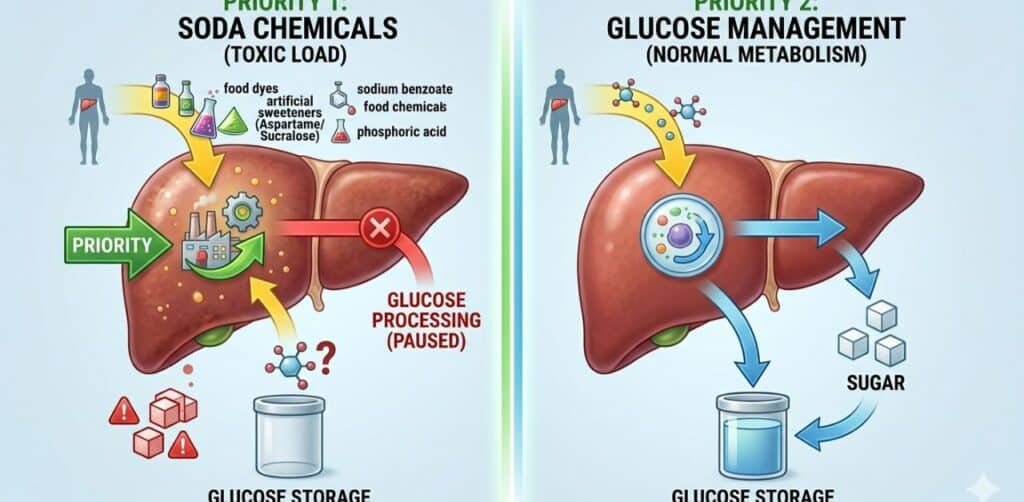
When your liver is occupied with “chemical maintenance,” it prioritizes this over its primary roles: regulating lipids and managing glucose storage. Over years of consumption, this can contribute to fatty liver markers and reduced overall insulin sensitivity. For true metabolic optimization, we must prioritize clean hydration that supports liver pathways rather than draining them.
“The liver treats synthetic additives in diet soda with the same defensive response it uses for alcohol. Learn how to manage your metabolic load in our [Alcohol with Minimum Calories Audit].”
6. Detailed USA Grocery Guide: 2026 Supermarket Sourcing
Navigating a modern American supermarket requires more than just reading the “Zero Calorie” front-label claims. To protect your cellular health, you must employ a strict “Detective Mindset” in the beverage aisle.
- The Front Label Deception: Never trust buzzwords like “Natural,” “Zero Sugar,” or “Fit.” These are unregulated marketing terms designed to trick health-conscious buyers.
- The Ingredient Scan: Turn the bottle over. If you see sucralose, aspartame, or “natural flavors” (which often mask chemical binders), it is not a metabolic-friendly choice.
- Sourcing Better Alternatives: If you crave carbonation, opt for plain sparkling mineral water. You can enhance the flavor profile at home using fresh-pressed citrus or organic herbs.
7. Reclaiming Your Metabolic Integrity: The 2026 Protocol
If you are currently relying on diet soda to survive your workday, don’t worry—your gut is resilient. You can begin a “Metabolic Reconditioning Protocol” today to heal the damage and restore your insulin sensitivity.
- The Gradual Audit: Don’t quit cold turkey if it causes withdrawal headaches or stress. Simply swap one soda a day for sparkling water with a squeeze of fresh lemon or lime.
- Prioritize Prebiotics: Since artificial sweeteners harm gut diversity, nourish your system with Prebiotic Foods Audit] like garlic, onions, and dandelion greens to restore your microbiome colonies.
- Hydration Audit: Often, what we perceive as a craving for sweetness is actually just cellular dehydration. Try adding a tiny pinch of Himalayan sea salt to your water for better mineral balance.
FAQ: Community Metabolic Questions
Q: Is diet soda safe for Keto or Low-Carb diets?
Ans: While technically low in carbs, the artificial sweeteners can trigger cravings and stall your progress by disrupting your gut health, which is counterproductive to metabolic goals. Always verify the back label and monitor your glucose via your [Net Carb Calculator].
Ready to optimize your sugar-free lifestyle?
🥗 Open Diabetic Meal Planner & Carb CalculatorPlan your next 2026 metabolic-friendly meal in seconds.
Q: Can I drink diet soda occasionally?
Ans: Occasional consumption is unlikely to cause acute damage. However, if your goal is “Metabolic Silence” and optimized fat-loss, these chemical additives are the first things to audit out of your routine.
Q: Are “natural” sodas (like Zevia) better?
Ans: They are a cleaner alternative because they avoid synthetic dyes and phosphoric acid. However, they still contain non-nutritive sweeteners that can impact taste-bud sensitivity. Use them as a bridge, not a permanent hydration solution.
“Ready to swap out chemical-laden drinks for a stable metabolic routine? We’ve mapped out a full week of clean, whole-food nutrition for you.”
Conclusion: Choose Clean Fuel
Ultimately, diet soda is a product of industrial engineering rather than true nutritional science. While it presents a zero-calorie facade to the public, its impact on your gut microbiome, taste bud sensitivity, and insulin pathways makes it a poor choice for an optimized human metabolism.
At PureDietly, we believe true wellness comes from choosing whole, intact ingredients that respect your biological systems. Skip the chemical slurry, choose clean hydration, and prioritize [7-Day Metabolic Meal Plan] structures to unlock true, sustained cellular energy.
About the Author
Gohar Fatima is an independent metabolic health researcher, professional SEO digital entrepreneur, and the founder of PureDietly.com. She specializes in deep product audits and evidence-based nutritional science, providing data-driven wellness guidance specifically tailored for the USA health and bio-hacking community.
Medical Disclaimer
Educational Purposes Only: The information published on PureDietly.com is intended for informational and educational use only. It should never be used as a replacement for professional medical advice, diagnosis, or personalized treatment from a qualified healthcare practitioner.