
Editor’s Note
At PureDietly, we audit breakfast staples not by marketing claims, but by their real-time impact on glucose and insulin. In this 2026 update, we have analyzed the latest nutritional data to help you navigate the cereal aisle with confidence.
Best diabetic-friendly breakfast bowl with nuts and seeds.

Introduction: The Morning Dilemma
For millions living with diabetes, breakfast is the most complex meal of the day. You wake up with your blood sugar stabilized, only to face a cereal aisle filled with “heart-healthy” traps. In this 2026 Metabolic Audit, we cut through the noise to find the best cereal for diabetics.
Metabolic health isn’t just about counting carbs; it is about how your body manages fuel. Many brands labeled “whole grain” still trigger rapid glucose spikes. By the end of this guide, you will know exactly how to choose a bowl that sustains your energy without crashing your metabolism.
The Metabolic Reality: Why Most Cereals Fail
Most commercial cereals are highly processed. Even “healthy” grains are often refined into powders and extruded, which makes them easier for your body to break down leading to a faster, more dangerous blood sugar spike.
- The Fiber Paradox: Standard wheat bran adds bulk but lacks the soluble fiber needed to create a gel-like barrier in the gut that slows glucose absorption.
- Hidden Sugars: Terms like “evaporated cane juice” or “rice syrup” are just sugar in disguise, designed to bypass your metabolic defenses.
The “Hidden Sugar” Trap (The Chemistry of Spikes)
Many manufacturers use “sugar masking” to keep their cereals looking healthy. Even if the label says “no added sugar,” the ingredient list might contain Maltodextrin or Rice Starch.
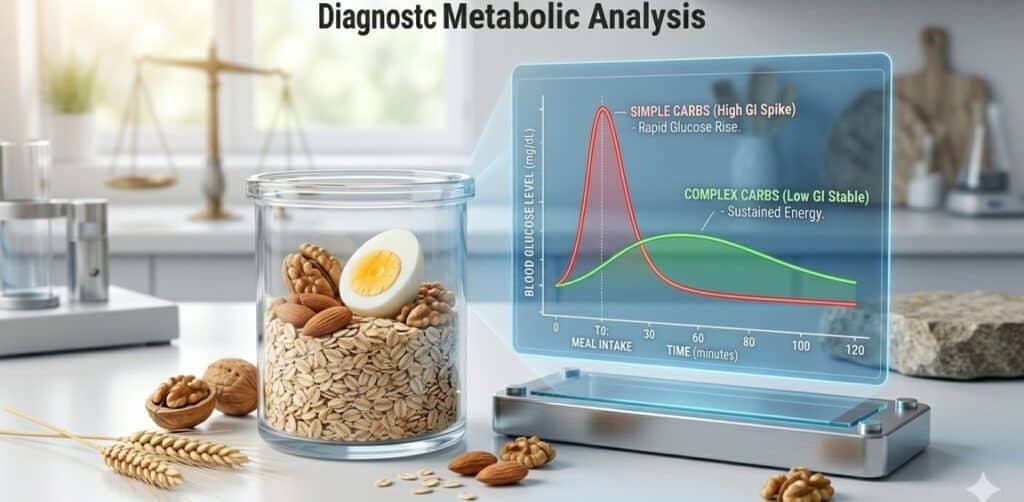
- The Maltodextrin Danger: This is a highly processed powder with a Glycemic Index (GI) of 105—higher than table sugar. It causes an almost immediate spike in blood glucose.
- The Starch Breakdown: Cereals made from “extruded” grains (grains that have been cooked and pushed through a machine) have their cellular structure destroyed. This makes them “pre-digested,” meaning your body spends zero energy breaking them down. Consequently, the glucose hits your bloodstream faster than if you had eaten raw fruit or even some candies.
Audit Checklist: How to Read Labels Like a Pro
Before you buy, audit the box using these three 2026 standards:
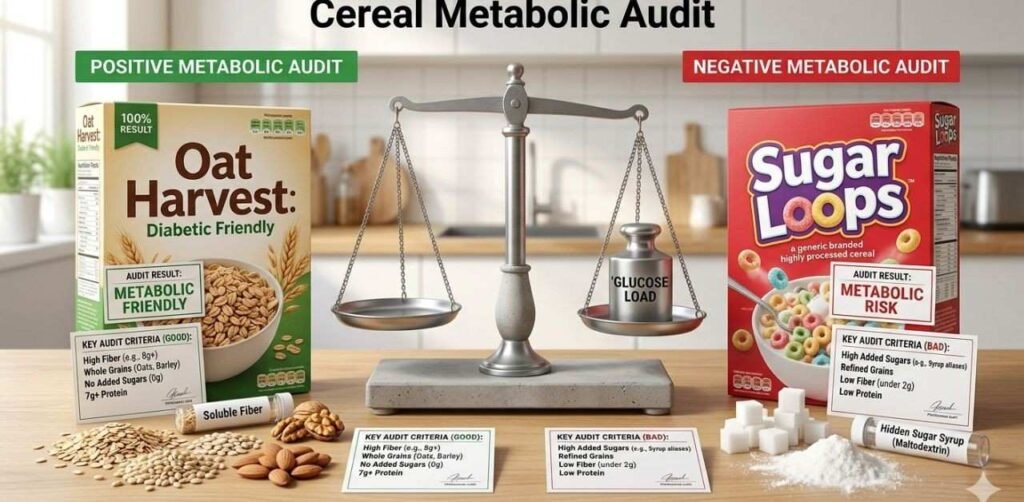
- Total vs. Added Sugar: Always target 0g of “Added Sugar.”
- Fiber-to-Carb Ratio: Look for a 1:5 ratio (e.g., 20g carbs should have at least 4g fiber).
- Protein Content: Aim for at least 7g of protein per serving.
Comparison Table: Metabolic Performance
| Cereal Type | Glycemic Impact | Protein | Recommendation |
| Corn Flakes | Very High | Low | Avoid |
| Bran Flakes | Moderate | Low-Mid | Use with caution |
| Keto-Friendly Nut Granola | Very Low | High | Excellent |
| Steel-Cut Oats | Moderate-Low | Mid | Good (w/ fat) |
The “Real-Time” Metabolic Audit
Consider two individuals, both managing Type 2 diabetes.
- Person A eats a bowl of “Heart Healthy” wheat flakes with skim milk. Within 60 minutes, their Continuous Glucose Monitor (CGM) shows a spike of +70 mg/dL.
- Person B eats a grain-free granola (almond and coconut base) with unsweetened almond milk and a tablespoon of flax seeds. Their CGM shows a flat line with a rise of only +15 mg/dL.
The difference isn’t just the calories; it is the metabolic load. Person B’s meal provided fats and fibers that acted as a “buffer,” preventing the rapid absorption of glucose. This proves that for the metabolic-conscious eater, the quality of the fat and fiber matrix is far more important than the total calorie count on the back of the box.
The “Protein-First” Breakfast Strategy
Even the best cereal can spike blood sugar if eaten alone. To master your metabolic wellness, use our “Protein-First” audit strategy:
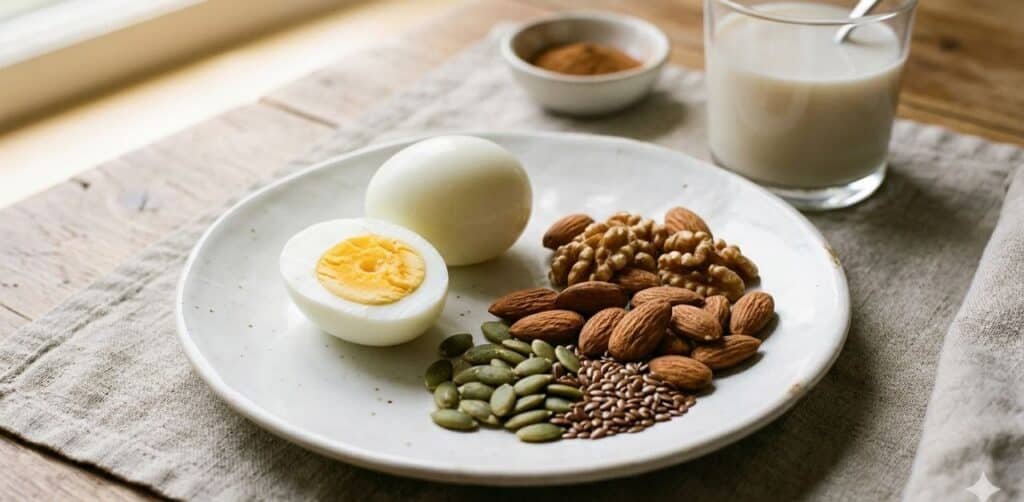
- Pre-load: Eat a hard-boiled egg or walnuts before your cereal.
- The Milk Switch: Swap dairy for unsweetened almond or hemp milk to avoid lactose spikes.
- Fat Addition: Add chia or flax seeds to slow down digestion significantly.
Addressing Common Myths
- Are “Diabetes-Specific” Cereals worth it?
- Often, these are overpriced processed starches. Audit the label yourself; don’t trust the box claim.
- Can I eat oatmeal every day?
- If you have a Continuous Glucose Monitor (CGM), test it. Some individuals respond better to steel-cut oats than instant varieties.
Practical Tips for Long-Term Success
- Portion Control: Even “healthy” cereal is dense. Use a measuring cup.
- Timing: Eat your cereal after a short walk to increase insulin sensitivity.
- Ingredient Audit: If “sugar” is in the first three ingredients, leave it on the shelf.
Frequently Asked Questions (FAQ)
Q: Is granola better than cold cereal?
A: Usually, yes, because granola is often fat-based. However, check for honey or maple syrup content.
Q: Can I use stevia to sweeten my cereal?
A: Yes, natural sweeteners like stevia or monk fruit have a negligible impact on glucose levels.
Q: Does cinnamon really lower blood sugar?
A: Some studies suggest cinnamon improves insulin sensitivity, but it is not a cure-all. Use it for flavor instead of sugar.
Conclusion: Your Metabolic Journey
Finding the best cereal for diabetics is a personal experiment. By auditing your food, tracking your glucose response, and prioritizing protein, you can transform breakfast into a source of sustained energy.
For more in-depth research, check out our [2026 Metabolic Audit of Breakfast Staples] and learn how to optimize your [Gut Health for Better Blood Sugar Control].
About the Author: Gohar Fatima
Gohar Fatima is a passionate researcher of metabolic health and nutrition. With a focus on evidence-based living, she translates complex food science into actionable “Metabolic Audits” to help you reclaim your health.
Medical Disclaimer
The information provided at PureDietly is for educational purposes only and does not constitute medical advice. Always consult your doctor or a registered dietitian before making significant changes to your diet, especially if you are managing diabetes or other health conditions.