

Editor’s Note
At PureDietly, we believe that health is not a marketing claim—it is a biological reality. In this 2026 Metabolic Audit, we move beyond the generic “healthy” label to examine how almond flour interacts with your internal system. This analysis is based on current nutritional data, focusing on glycemic response, systemic inflammation, and gut health. Our goal is to empower you to make informed decisions that align with your unique metabolic profile. Please remember, this audit is for educational purposes; your metabolic journey should always be guided by evidence and, where necessary, personalized clinical consultation.
In the modern quest for healthier eating, the search for the “perfect” flour substitute has led many to the baking aisle. You have likely seen it in keto recipes, gluten-free cookies, and low-carb pancakes. But is almond flour good for you, or are we just replacing one processed grain with a nut-based trap?
At PureDietly, we believe that health is not a marketing claim; it is a biological reality. In this 2026 Metabolic Audit, we look beyond the hype to see how almond flour interacts with your insulin, gut health, and systemic inflammation.
The Nutritional Profile: A Data-Driven Comparison
Before diving into the risks, we must examine the hard numbers. Almond flour is fundamentally different from traditional wheat flour, as it is composed primarily of fat and protein rather than starch.
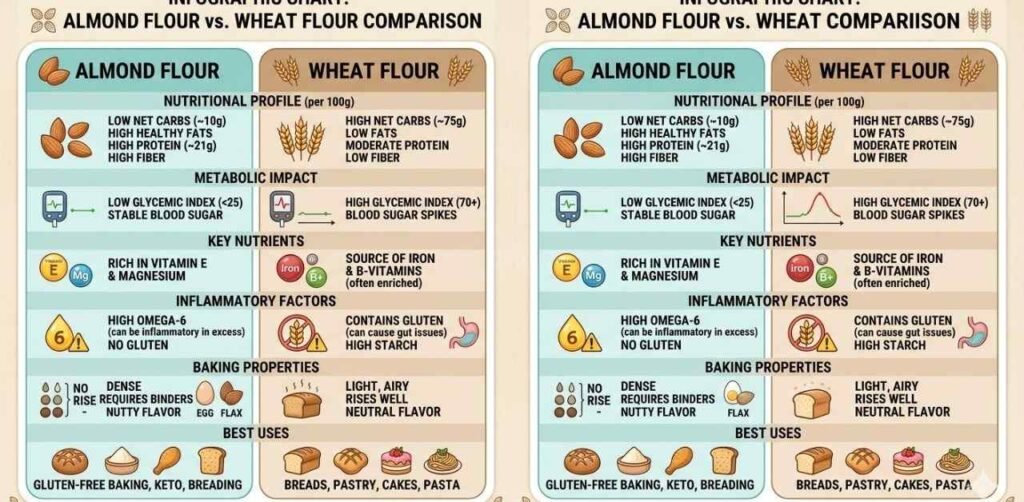
| Nutrient (per 100g) | Almond Flour | Refined Wheat Flour | Metabolic Impact |
| Net Carbs | ~10g | ~75g | Low |
| Fiber | ~10g | ~3g | High |
| Protein | ~21g | ~10g | High |
| Glycemic Index | <25 | 70+ | Negligible |
Data Note: Unlike grain-based flours, almond flour provides a sustained energy release, making it a favorite for those managing blood sugar.
Why Almond Flour Earns Its “Metabolic-Friendly” Title
When people ask, is almond flour good for you, they are usually looking for a way to enjoy baked goods without the dreaded “blood sugar crash.” Here is why it consistently passes our metabolic audit:
1. Superior Blood Sugar Stability
The primary reason for its popularity is the low glycemic impact. Because it is high in fat and fiber, it slows down the digestion of the meal. Consequently, your glucose levels remain flat, avoiding the intense insulin spikes that lead to fat storage and metabolic fatigue.
2. Nutrient Density and Antioxidants
Almond flour is a powerhouse of Vitamin E. This fat-soluble antioxidant is crucial for protecting your cells from oxidative stress. Furthermore, it contains significant amounts of magnesium, a mineral that over 50% of the US population is deficient in. Magnesium plays a vital role in over 300 biochemical reactions, including blood pressure regulation and insulin sensitivity.
3. Satiety and Portion Control
Because it is much denser in calories and protein than wheat flour, you naturally feel fuller faster. This makes it easier to practice portion control compared to traditional wheat-based breads or pastries.
The Hidden Audit: Risks and Considerations
At PureDietly, we do not believe in “miracle foods.” Every food has a potential downside if misused. Here are the factors that every metabolic-conscious eater should audit before switching to almond flour.
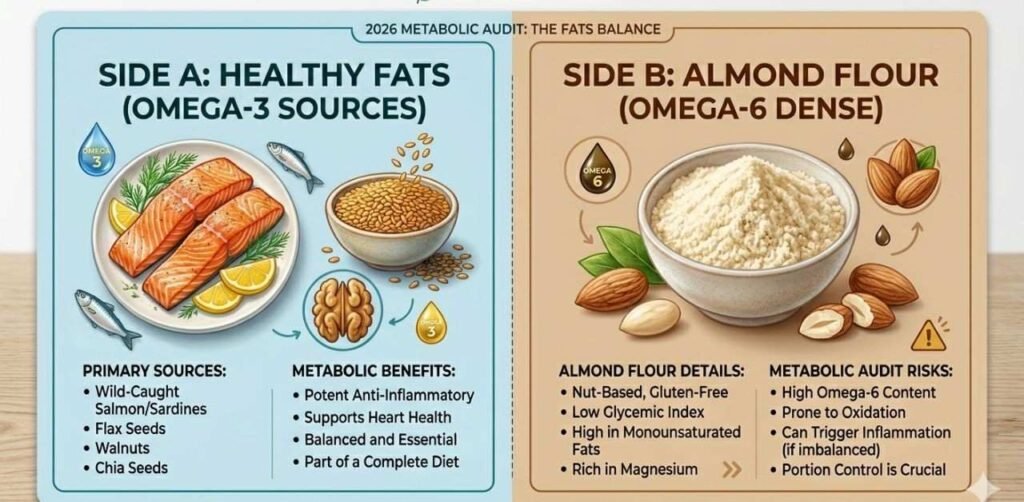
The Omega-6 Inflammatory Factor
This is where the audit gets serious. Almonds are high in Omega-6 polyunsaturated fatty acids. While these are essential, the modern diet is already saturated with them. If your diet is heavy in seed oils (like soybean or canola oil) and you add a daily dose of almond flour, you may tip the scale toward systemic inflammation. Therefore, balance is the key to maintaining metabolic harmony.
Antinutrients and Phytic Acid
Like most seeds and nuts, almonds contain phytic acid. This is an “antinutrient” that can bind to minerals like calcium and zinc, potentially making them harder to absorb. However, most commercial almond flour is blanched, which removes the skin—the part containing the highest concentration of phytic acid.
Digestive Sensitivity
If you have a compromised gut, high fiber and high fat can be difficult to digest. If you feel bloated after eating almond-based products, your gut microbiome may be struggling to break down the dense fiber matrix. We discuss how to test your personal tolerance in our [Gut Health for Better Blood Sugar Control] guide.
How to Use It Strategically (The “Audit Protocol”)
To optimize your health, treat almond flour as a tool, not a daily necessity. Follow these three rules to keep your metabolism on track:

- Do Not Bake Daily: Even healthy alternatives can lead to weight gain if consumed in excess. Use almond flour-based treats as a reward, not a base for every meal.
- The Protein-First Strategy: Never eat almond flour baked goods in isolation. To keep your insulin response perfect, always pair your snack with a high-protein source. Use our [Protein-First Breakfast Strategy] to build balanced, metabolic-sustaining meals.
- Choose Blanched: Always opt for blanched almond flour. It is easier to digest and contains fewer antinutrients compared to “almond meal” (which includes the skin).
Ready to optimize your sugar-free lifestyle?
🥗 Open Diabetic Meal Planner & Carb CalculatorPlan your next 2026 metabolic-friendly meal in seconds.
Frequently Asked Questions (FAQ)
Q: Does almond flour spike insulin?
A: Generally, no. Its low glycemic load means it triggers a minimal insulin response, making it one of the best alternatives for those managing insulin resistance.
Q: Is almond flour inflammatory?
A: It can be if consumed in extreme excess due to its Omega-6 content. If you balance your diet with Omega-3 sources (like fish or flax seeds), the impact is negligible for most.
Q: Can I use almond flour in all my old recipes?
A: Not directly. Because it lacks gluten, almond flour does not rise. You often need to add extra eggs, psyllium husk, or a binder to ensure the structure holds up.
Q: How do I know if it is right for my metabolism?
A: The best way is to monitor your response. If you have a Continuous Glucose Monitor (CGM), test a small portion of almond flour bread and observe your glucose line. If it stays flat, it is a green light for your metabolic profile.
The Verdict: Is Almond Flour Good For You?
So, is almond flour good for you? Yes—but with conditions.
It is a fantastic tool for those trying to break the cycle of high-carb, processed-grain consumption. It provides stability, essential nutrients, and a way to enjoy life while staying on track with your health goals. However, it should not be treated as a “free” food. By auditing how it makes you feel and pairing it with high-protein foods, you can turn this ingredient into a sustainable part of your metabolic lifestyle.
For those ready to take the next step in their journey, explore our full [2026 Metabolic Audit of Breakfast Staples] to see how you can refine your morning routine for maximum energy and insulin sensit
About the Author: Gohar Fatima
Gohar Fatima is a metabolic health researcher and the founder of PureDietly. She specializes in translating complex nutritional science into actionable “Metabolic Audits.” With a focus on insulin resistance and evidence-based living, Gohar helps individuals navigate the modern food landscape to reclaim their metabolic freedom. Her mission is to move beyond marketing claims and focus on the biological reality of food.
Medical disclaimer
Disclaimer: The information provided at PureDietly is for educational purposes only and does not constitute medical advice. Every metabolic system is unique. Always consult with your primary care physician or a registered dietitian before making significant changes to your diet, especially if you are managing diabetes or other chronic health conditions.