

Editor’s Note
This article has been meticulously audited for nutritional accuracy based on the latest 2026 data regarding carbohydrate metabolism and glycemic response. At PureDietly, our research team prioritizes evidence-based insights to help the American consumer navigate the complexities of food alternatives with clinical precision. Please note that while we provide strategic guidance on metabolic health, individual responses can vary based on underlying health conditions and baseline glucose sensitivity. As with all our metabolic audits, this content is designed to provide actionable tools for your wellness protocol. If you require further clarity on how these specific food swaps align with your personal glucose targets, please reach out to our research desk at puredietly@gmail.com.
For many Americans, snacking feels like a constant, stressful calculation. You want something sweet, but you are also rightfully concerned about the potential for a post-meal glucose spike. As a metabolic researcher, I am frequently asked: “Mulberry vs. Blackberry: which one is actually better for my blood sugar?” While both fruits appear similar and are packed with essential nutrients, their specific metabolic impacts differ in ways that matter for glucose stability. In this 2026 metabolic audit, we will break down the science to help you make a smarter choice for your wellness protocol.
“While we have previously audited the glucose response of Strawberries
and Blueberries, the comparison between mulberries and blackberries offers unique insights for your metabolic audit.”
1. Understanding the Metabolic Profile
When we evaluate metabolic health, we are looking at how a specific food impacts your insulin response and long-term glucose management. Although both mulberries and blackberries are fiber-rich, they belong to different botanical families, which fundamentally changes how your body digests them.

| Feature | Mulberry | Blackberry |
| Glycemic Index | Low-Moderate | Very Low |
| Primary Benefit | Antioxidant Rich | High Fiber/Low Carb |
| Best For | Steady Energy | Blood Sugar Stability |
Blackberries are widely considered the “gold standard” for those managing diabetes because they possess one of the lowest glycemic loads of any fruit. However, mulberries offer unique compounds that may support metabolic longevity when consumed correctly.
2. Why Blackberries Win for Glucose Stability
If your primary objective is to keep your Continuous Glucose Monitor (CGM) readings flat, blackberries are your best friend.
- Low Net Carbs: Blackberries contain a high amount of insoluble fiber compared to their total carbohydrate content. This fiber acts as a natural physical barrier, slowing down the absorption of sugar into your bloodstream.
- Polyphenol Content: Research indicates that the specific anthocyanins the compounds that give them their deep color found in blackberries can help improve insulin sensitivity over time.
- Portion Control: Because they are nutrient-dense, a small half-cup of blackberries provides significant satisfaction without triggering a dangerous glucose response.
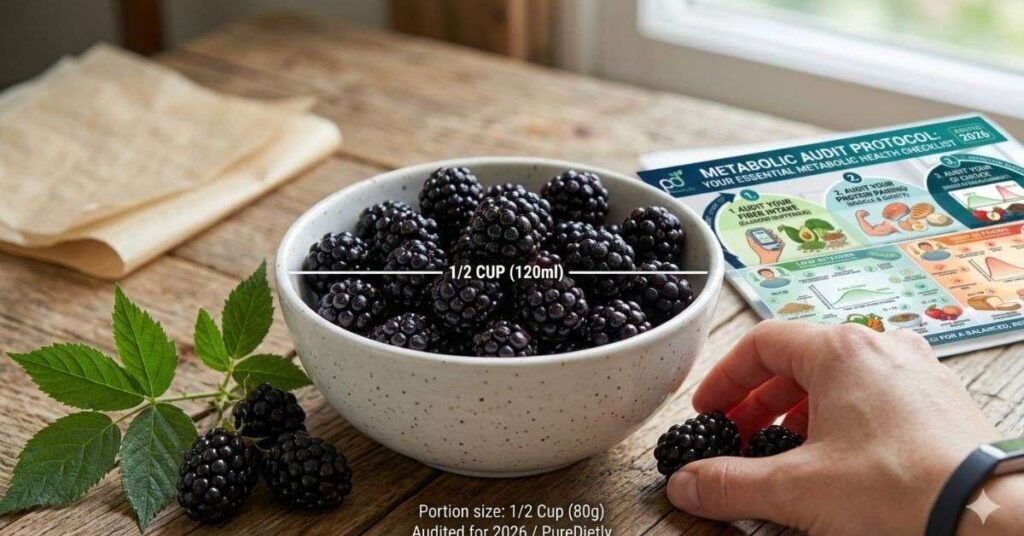
If you are interested in how other popular fruits compare to these, check out our recent Dates Glycemic Index: A 2026 Metabolic Audit.
3. The Case for Mulberries: The Metabolic “Dark Horse”
Mulberries are often misunderstood and overlooked in the standard American diet. While they can be slightly higher in natural sugars than blackberries, they contain a unique compound called 1-deoxynojirimycin (DNJ).
- DNJ Impact: This specific compound is scientifically known to inhibit the alpha-glucosidase enzymes in your digestive tract, which are responsible for breaking down complex carbohydrates into simple sugars.
- Natural Glucose Buffer: By effectively slowing down the breakdown of sugars, mulberries can help blunt the glucose spike of an entire meal.
- Usage Strategy: Because they have this potent metabolic effect, I recommend keeping your mulberry portions slightly smaller than your blackberry portions to avoid over-consuming natural sugars.
4. How to Integrate These Into Your Protocol
You do not have to choose just one; both can fit into a metabolic-friendly lifestyle. However, the way you eat them determines the final metabolic outcome.

- Pairing is Essential: Never eat berries alone on an empty stomach. Always pair them with a healthy fat, such as a handful of walnuts or a tablespoon of organic almond butter. This further slows gastric emptying and keeps your glucose stable.
- Timing Matters: The best time to enjoy these berries is post-meal rather than as a mid-morning snack. This prevents your insulin levels from fluctuating multiple times throughout the day, supporting better metabolic health.
- Audit Your Response: As I always emphasize, every metabolism is unique. Use your CGM to observe how your body specifically responds to the blackberry’s high fiber versus the mulberry’s DNJ profile.
Need help tracking how these impact your daily carb limit? Use our Net Carb Calculator to stay on target.
Add Seaweed Salad to your daily carb limit in 30 seconds!
5. Evolutionary and Botanical Context
While they look similar, these berries are not closely related. Blackberries are “aggregate fruits” that grow on thorny brambles, while mulberries grow on large, deciduous trees. Interestingly, their similarity in appearance is a case of evolutionary convergence, where different plants developed similar strategies to attract seed-dispersing animals. For the metabolic researcher, this means we must look past the appearance and focus strictly on the nutrient density and glycemic load.
6. Addressing Common Questions (FAQs)
Are both berries safe for a diabetic diet?
Yes, both are safe when consumed in moderation. However, due to their lower net carb count, blackberries are generally preferred for those who are highly sensitive to blood sugar fluctuations.
Can I eat mulberries if I am strictly monitoring my glucose?
Certainly, but portion control is vital. Because of their unique DNJ content, they can actually help blunt glucose spikes, but they do contain more natural sugars than blackberries, so they should not be consumed in large quantities.
How often should I include these berries in my meal plan?
You can include them as part of your post-meal dessert or snack 3–4 times a week. Always prioritize the “Pairing Protocol” (pairing with healthy fats) to ensure your glucose response remains stable.
7. Final Researcher’s Verdict
In the debate of Mulberry vs. Blackberry, which one comes out on top?

If you are currently struggling with daily blood sugar volatility, blackberries are the safer, more reliable choice due to their lower sugar content and higher fiber profile. However, mulberries are a fantastic, therapeutic addition to a balanced diet when consumed in strict moderation.
Remember, true metabolic health is not about eliminating all your favorite foods; it is about auditing your intake and choosing the right tools to keep your glucose stable. Stay precise, keep monitoring, and enjoy your berries!
About Author
Gohar Fatima is a metabolic researcher who specializes in helping Americans understand how specific foods impact glucose levels. As the founder of PureDietly, she focuses on evidence-based audits that empower individuals to take control of their metabolic health without the need for restrictive, unsustainable dieting. Her work bridges the gap between complex nutritional science and actionable, everyday lifestyle protocols.
Medical Disclaimer:
This information is for educational purposes and is not medical advice. Always consult with your physician before making significant changes to your diet.