

Editorial Note
At PureDietly, our content is audited by metabolic health experts. We prioritize peer-reviewed research and clinical data over wellness trends. Every piece of information in this article has been vetted to ensure it meets our “Zero-Spike” standard for blood sugar management.
For individuals managing insulin resistance, Type 2 diabetes, or PCOS, the dietary landscape is often fraught with conflicting advice. Many individuals are left wondering: Is coconut sugar good for diabetics? While some natural sweeteners are frequently flagged as “healthy” or “low-glycemic,” the metabolic reality is much more nuanced. In this 2026 metabolic audit, we analyze the glycemic impact, nutritional profile, and metabolic science of coconut sugar to determine if it truly deserves a place in your “Zero-Spike” lifestyle.
What Is Coconut Sugar?
Coconut sugar is derived from the dehydrated sap of the coconut palm flower. Because it is less refined than standard white cane sugar, many consumers perceive it as a healthier “superfood” alternative. However, chemically, it remains primarily sucrose—composed of roughly 50% glucose and 50% fructose.
The primary allure of coconut sugar in the American health market is its perceived “natural” state. Unlike highly processed high-fructose corn syrup or refined white sugar, coconut sugar undergoes minimal heat processing. However, from a strictly biological standpoint, your pancreas and liver process the sugars in coconut palm sap very similarly to how they process standard table sugar.
The Glycemic Index (GI) Reality
To answer the question of whether coconut sugar is safe, we must look at the data. The Glycemic Index (GI) measures how quickly a food raises blood glucose levels.
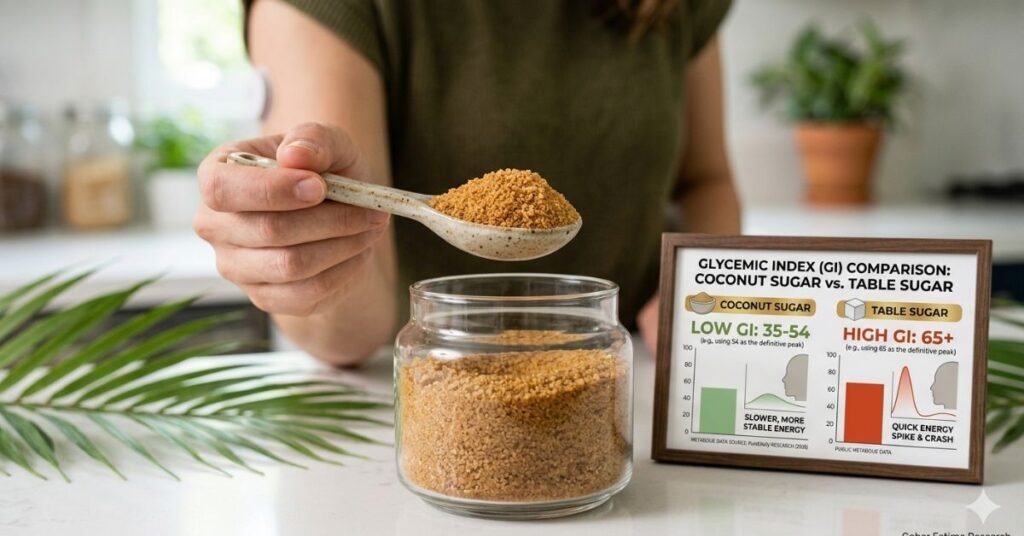
- White Table Sugar: GI roughly 58–65.
- Coconut Sugar: GI ranges widely from 35 to 54.
While a GI of 35 might seem “safe” to some, GI scores can fluctuate based on processing methods, soil quality, and individual metabolism. Although it sits lower on the scale than refined sugar, it is not glucose-neutral. Relying on this lower GI score to justify large portions is a common metabolic trap that can lead to unexpected blood sugar spikes.
The Science of Insulin Response
When you consume sucrose (whether from cane or coconut), your body breaks it down into glucose and fructose. The glucose component triggers an immediate insulin release from the pancreas to manage blood sugar levels.
For those who are already struggling with insulin resistance, the body’s cells are less responsive to this signal. This means your pancreas must work harder, often leading to elevated insulin levels (hyperinsulinemia) even after consuming “natural” sweeteners. Because coconut sugar still contains a high percentage of glucose, it contributes to this cycle of resistance, essentially keeping your metabolic system in a state of high alert.
Nutritional Comparison: The “Mineral” Myth
Many marketing claims highlight the minerals in coconut sugar, suggesting that the presence of potassium, iron, and zinc makes it a nutritional powerhouse. Let’s look at the metabolic lens:
| Feature | Coconut Sugar | White Cane Sugar |
| Primary Component | Sucrose | Sucrose |
| Calories | ~15–16 per tsp | ~15–16 per tsp |
| Fiber (Inulin) | Trace amounts | Zero |
| Minerals | Trace Iron, Zinc | None |
| Processing | Minimal | Highly Refined |
Crucial Note: You would need to consume an impractical amount of coconut sugar to get meaningful nutritional benefits from those trace minerals. At that high consumption level, the sugar itself would cause more systemic harm to your glucose levels than the trace minerals provide in benefit.
The Verdict: Is It Safe for Diabetics?
The scientific consensus is clear: All forms of added sugar, including coconut sugar, will raise blood glucose levels.
- Clinical studies have shown no significant difference in blood sugar response between coconut sugar and regular cane sugar in people with Type 2 diabetes.
- The small amount of inulin (a type of prebiotic fiber) in coconut sugar may slightly slow absorption in some individuals, but not enough to prevent a significant glucose spike.
- Like other sweeteners, it should be treated as an “added sugar” and limited strictly to maintain your metabolic health.
If you are currently relying on coconut sugar as a “freebie” in your diet, it is time to audit that habit. For those who are highly insulin-resistant, the glucose response is often indistinguishable from refined sugar.
Better Alternatives for a “Zero-Spike” Lifestyle
If you are looking to stabilize your glucose curves, consider evidence-based alternatives that have minimal or zero impact on blood sugar. When navigating these options, it is important to be aware of how your body reacts to them. For an in-depth look at the safety and potential side effects of common sugar replacements, read our detailed analysis in our Allulose Side Effects: The 2026 Metabolic Safety Audit.

Understanding the safety profile of these alternatives is key to maintaining your “Zero-Spike” lifestyle. Some top-tier recommendations include:
- Stevia: A plant-based sweetener that generally does not raise blood glucose.
- Monk Fruit: Provides sweetness via mogrosides without the calorie or glucose load.
- Allulose: A rare sugar that does not spike blood sugar and may even support improved insulin sensitivity.
- Erythritol: A well-tolerated sugar alcohol that has virtually no impact on post-prandial glucose.
Practical Implementation: The “Zero-Spike” Kitchen
Building metabolic resilience isn’t about finding a “healthy” sugar; it’s about reducing the total sugar load in your daily diet. While coconut sugar is marginally less processed than white sugar, it remains a sweetener that your body handles similarly to other carbohydrates.

Remember, avoiding blood sugar spikes does not mean you have to sacrifice the joy of eating. Once you have identified which sweeteners work for your specific metabolic profile, you can experiment with our 20 Sweet Treats That Won’t Spike Your Blood Sugar. Combining data-backed, low-impact sweeteners with these recipes is the ultimate way to stay resilient while enjoying your favorite desserts.
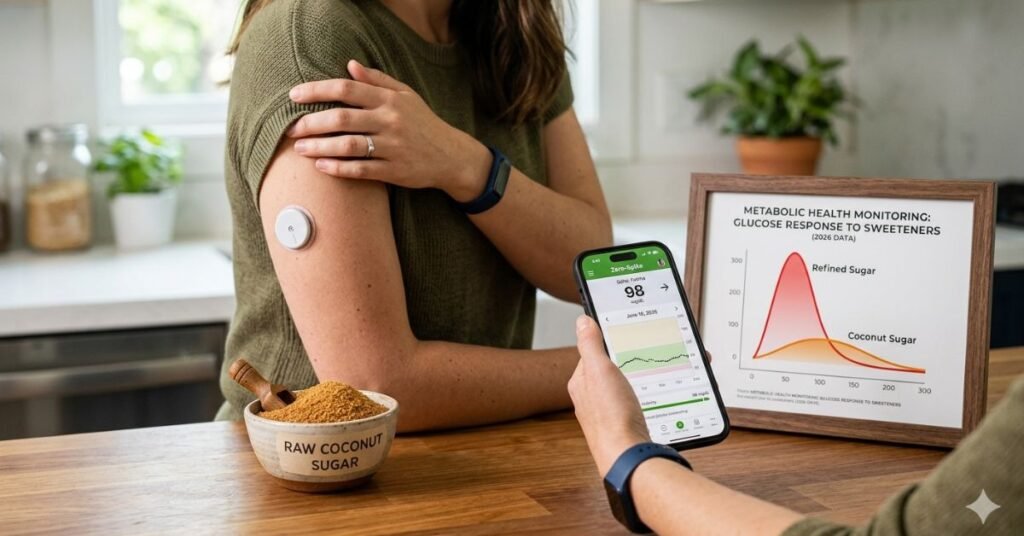
For the best results, prioritize whole-food sources of sweetness like fresh berries, and reserve added sweeteners for occasional use. If you are tracking your glucose stability, use a continuous glucose monitor (CGM) or finger-prick test to see how your unique body responds to different sweeteners.
Addressing the “Hidden Sugar” Trap
In the American grocery landscape, “natural” is often used as a marketing tool to justify higher price points for products that ultimately deliver the same metabolic result: a spike in blood sugar. By auditing your pantry, you take control of your metabolic autonomy. Look past the “natural” label and focus on the glycemic load. Whenever you see “coconut palm sugar” in an ingredient list, treat it with the same caution you would apply to standard cane sugar. True metabolic health is built on the foundation of consistent, low-glycemic dietary choices.
About the Author
Gohar Fatima Gohar Fatima is a metabolic health researcher and the founder of PureDietly. With a data-driven approach, she translates complex glycemic science into actionable, “Zero-Fluff” lifestyle strategies. Dedicated to strict E-E-A-T standards, Gohar helps individuals manage insulin resistance and blood sugar through evidence-based dietary audits, bridging the gap between rigorous research and everyday kitchen habits.
Medical Disclaimer
The information on PureDietly is for educational purposes only and is not a substitute for professional medical advice, diagnosis, or treatment. Always consult your physician or a qualified healthcare provider regarding your specific diabetes management plan. Do not ignore or delay seeking professional medical advice because of something you have read on this website. Responses to dietary changes vary by individual; please prioritize your personal health data and consult your doctor before making significant modifications to your diet.