

Editor’s Note:
At PureDietly, we believe that nutrition is not a static set of rules but a dynamic, personal journey. This article has been reviewed based on the latest 2026 metabolic research regarding glycemic velocity and the impact of dairy proteins on insulin sensitivity. While we advocate for metabolic flexibility, our goal is to help you understand how specific foods interact with your unique biology. Always prioritize your personal CGM data and metabolic markers when making dietary adjustments to ensure you are fueling your body optimally.
As a metabolic health researcher, I frequently hear the same question: “Is feta cheese actually good for me?” In the world of clinical nutrition, we often get caught up in the “calorie trap,” ignoring the deeper impact of our food choices on metabolic health. When we evaluate feta cheese metabolic health in 2026, we have to look beyond the basic nutrition label. Instead, we must audit how this dairy staple influences your insulin levels and glycemic velocity throughout the day.
For many, feta is a staple of a “healthy” Mediterranean-style diet. However, for those of you managing insulin resistance or prediabetes, understanding the nuances of how dairy interacts with your unique biology is essential for maintaining metabolic autonomy. In this audit, we will break down the science behind feta and determine whether it serves as performance fuel or a potential trap for your blood sugar.
The Nutritional Reality of Feta Cheese (USA Standard)
To understand feta, we first need to look at its structural makeup. Unlike many other cheeses, feta is traditionally made from sheep’s milk or a mixture of sheep and goat milk, which gives it a distinct profile.
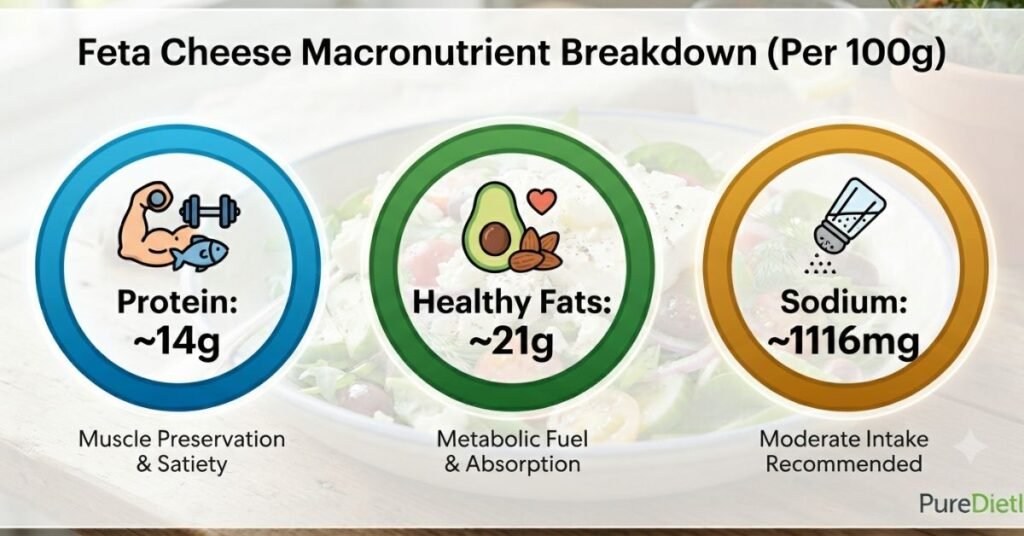
- Protein Content: Feta is a high-quality protein source, which is critical for muscle preservation and metabolic rate.
- Fat Profile: It contains both saturated and unsaturated fats, providing a dense energy source that can help keep you satiated longer.
- Sodium: Feta is naturally high in sodium, which is something to monitor if you are sensitive to salt or managing blood pressure alongside your glucose levels.
- Calorie Density: It is relatively moderate in calories compared to harder, aged cheeses, making it a versatile addition to nutrient-dense meals.
The Metabolic Impact: Why Context Matters (Glycemic Velocity)
The primary reason we conduct a feta cheese metabolic health audit is to understand its impact on your glucose. Because feta cheese contains near-zero carbohydrates, it has an effectively non-existent Glycemic Index (GI). Consequently, it does not cause a direct, rapid spike in blood glucose the way refined starches do.

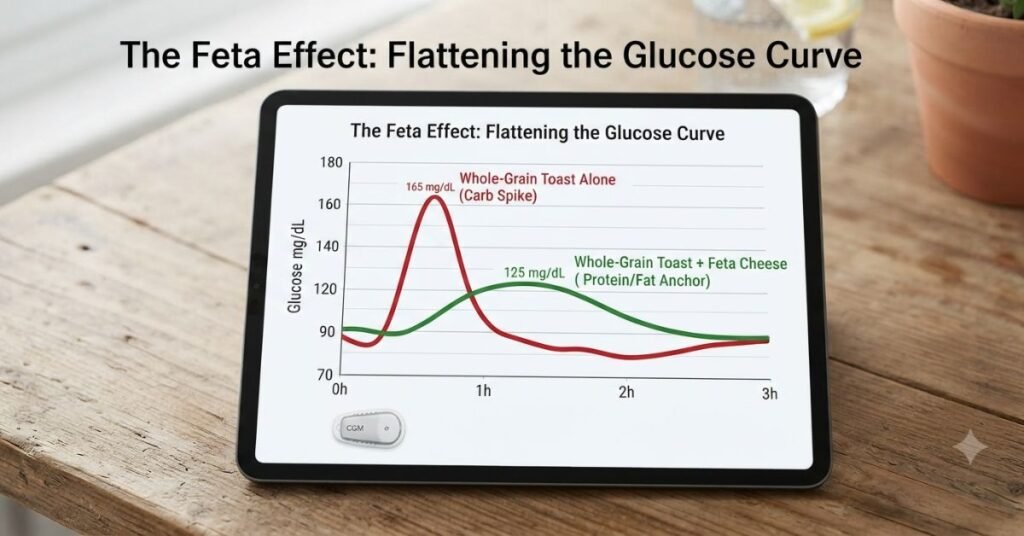
However, the “protein/fat anchor” effect is where feta truly shines. When you pair a high-carb food like a piece of whole-grain toast with a serving of feta, the protein and fat act as a buffer. This combination slows down the “glycemic velocity,” or the speed at which glucose enters your bloodstream.
| Feature | Feta Cheese | Processed American Cheese |
| Carbohydrate Content | Near Zero | Moderate (often contains fillers) |
| Glycemic Impact | Minimal/None | Potential Spike |
| Protein Quality | High (Natural) | Low (Often processed) |
| Metabolic Effect | Stabilizing (if paired) | Volatile |
The 2026 Metabolic Audit: Beyond the Macros
While feta is low in carbs, we must address the “Insulin Index.” Clinical research in 2026 confirms that dairy products can trigger an insulin response even in the absence of carbohydrates. This is because the amino acids in dairy protein stimulate insulin release from the pancreas.

For individuals with severe insulin resistance, this means that even “zero-carb” snacks can cause a subtle insulin bump. Furthermore, feta contains conjugated linoleic acid (CLA), a type of fatty acid that some emerging research suggests may have benefits for metabolic regulation and body composition when consumed in moderation. Therefore, while feta is a “safe” food regarding glucose spikes, it should still be consumed mindfully as part of a balanced protocol.
Moreover, the impact of dairy on your gut microbiome is a hot topic in 2026. Traditional feta, particularly if it is unpasteurized or contains live cultures, can offer probiotic benefits that support gut health. A healthy gut lining is crucial for reducing systemic inflammation, which is a major driver of metabolic dysfunction. When your gut is thriving, your body becomes more efficient at managing blood sugar variability.
Is Feta Cheese Healthier for Your Metabolic Goals?
When compared to other options, feta often ranks high on the “metabolic-friendly” scale. Many processed cheeses are packed with starches and gums that can inadvertently affect your blood sugar. Conversely, traditional feta especially if you check the label for “minimal ingredients” remains a clean, whole-food choice.

- Compared to Cream Cheese: Feta offers significantly more protein, which helps prevent the post-meal hunger common with higher-fat, lower-protein spreads.
- Compared to Cheddar: Feta is often lower in total calories per serving while providing a strong flavor profile that allows for smaller portions.
- Comparison to Ricotta: While ricotta is also popular, feta has a more concentrated nutrient density, making it a better choice for those tracking their overall caloric intake while maintaining high protein consumption.
Actionable Tips: Your “Zero-Spike” Feta Protocol
To optimize your feta cheese metabolic health, follow these simple, data-driven guidelines:

- The Pairing Protocol: Never eat feta in isolation if you are prone to hunger. Pair it with high-fiber, non-starchy vegetables like cucumbers, bell peppers, or spinach to maximize satiety.
- Sourcing Matters: Always read the nutrition label. Some commercial “crumbled” fetas use potato starch or other anti-caking agents that can add unnecessary carbohydrates.
- Mind the Sodium: Because feta is salty, ensure you are drinking plenty of water throughout the day to support your metabolic processes.
- Strategic Consumption: If you are using a CGM, try having feta before your highest-carb meal of the day to see if it blunts your post-meal peak. This personal audit is the gold standard for metabolic autonomy.
Frequently Asked Questions (FAQ)
1. Is feta cheese healthy for diabetics?
Yes, feta cheese can be a healthy choice for diabetics because it is naturally low in carbohydrates and does not significantly impact blood glucose levels. However, it is important to monitor portion sizes due to its high sodium content.
2. Does feta cheese cause an insulin spike?
While feta contains near-zero carbohydrates, dairy proteins can trigger a subtle insulin response. It is considered a “low-impact” food, but individual responses can vary based on personal insulin resistance.
3. What is the best way to eat feta without spiking sugar?
The most effective way to eat feta is to use it as a “protein/fat anchor” by pairing it with high-fiber, non-starchy vegetables or complex carbohydrates. This combination physically slows down the rate of glucose absorption, preventing rapid spikes.
4. Is crumbled feta safe for a metabolic diet?
Not always. You must check the ingredient label carefully, as some store-bought crumbled fetas contain added potato starch or anti-caking agents that can add unwanted carbs to your meal.
5. Can I eat feta if I am lactose intolerant?
Traditional feta made from sheep or goat milk is sometimes easier to digest than cow’s milk cheese, but it still contains lactose. If you are sensitive, observe your gut response or choose an aged, lower-lactose alternative.
Example:Q: Can diabetics eat cheese? “Yes, zyada tar natural cheeses diabetics ke liye safe hoti hain, lekin ye janna zaroori hai ki kaunsi varieties aapke glucose ke liye best hain. Aap hamari guide Is Cheese a Hidden Glucose Killer? mein top 10 choices dekh sakte hain.”
Conclusion: Your Metabolic Autonomy
Ultimately, feta cheese can be a powerful “performance fuel” in your dietary toolkit. By moving away from fear-based nutrition and toward a protocol centered on protein, healthy fats, and glucose stability, you take control of your metabolic autonomy.
If you are just starting your path, don’t miss our foundational post: The Bagel Audit: How Your Favorite Breakfast Impacts Your Metabolic Health in 2026. Remember, the best way to determine your personal tolerance to feta is to observe your own CGM (Continuous Glucose Monitor) data. Treat every meal as an educational data point on your journey to lasting metabolic resilience. Your metabolic health is not just about what you eliminate; it is about how you strategically choose the foods that nourish your mitochondria and stabilize your energy levels for the long term.
About the Author
Gohar Fatima is a Metabolic Health Researcher and the founder of PureDietly. Specializing in Clinical Nutrition and Glycemic Variability, Gohar is dedicated to helping individuals transition from restrictive dieting to metabolic autonomy. With a focus on “Zero-Spike” strategies and evidence-based clinical nutrition, she empowers her readers to take control of their health through data-driven insights and rigorous metabolic audits.
Medical Disclaimer
The information on PureDietly is for educational purposes only and does not constitute medical advice, diagnosis, or treatment. Always seek the advice of your physician or qualified health provider regarding any medical condition or dietary changes. Never disregard professional medical advice or delay in seeking it because of something you have read on this website. If you are experiencing a medical emergency, call your doctor or emergency services immediately.