

Editor’s Note:
At PureDietly, we believe that nutrition is not a static set of rules but a dynamic, personal journey. This article has been reviewed based on the latest 2026 metabolic research regarding glycemic velocity. While we advocate for metabolic flexibility, our goal is to help you understand how specific foods interact with your unique biology. Always prioritize your personal CGM data and metabolic markers when making dietary adjustments.
For many, the morning ritual isn’t complete without a toasted bagel. It’s convenient, satisfying, and deeply embedded in modern breakfast culture. But if you are managing insulin resistance, prediabetes, or simply aiming for metabolic resilience in 2026, the humble bagel deserves a closer look.
Is it just “empty” calories, or can it fit into a balanced lifestyle? Let’s audit the science behind the bagel to help you make informed decisions.
For a broader understanding of how we categorize these foods, visit our Metabolic Audit Library.
The Nutritional Reality: What’s in a Bagel?
The challenge with bagels is that there is no “one-size-fits-all” number. A standard, store-bought plain bagel typically contains 270–300 calories and 55–60 grams of carbohydrates.
Macronutrient Breakdown (Standard 105g Bagel):
| Nutrient | Amount (Approx.) |
| Calories | 270–300 kcal |
| Carbohydrates | 55–60 g |
| Protein | 10–12 g |
| Fiber | 1–3 g |
| Fat | 1–2 g |
Source: Average values based on standard commercial production.
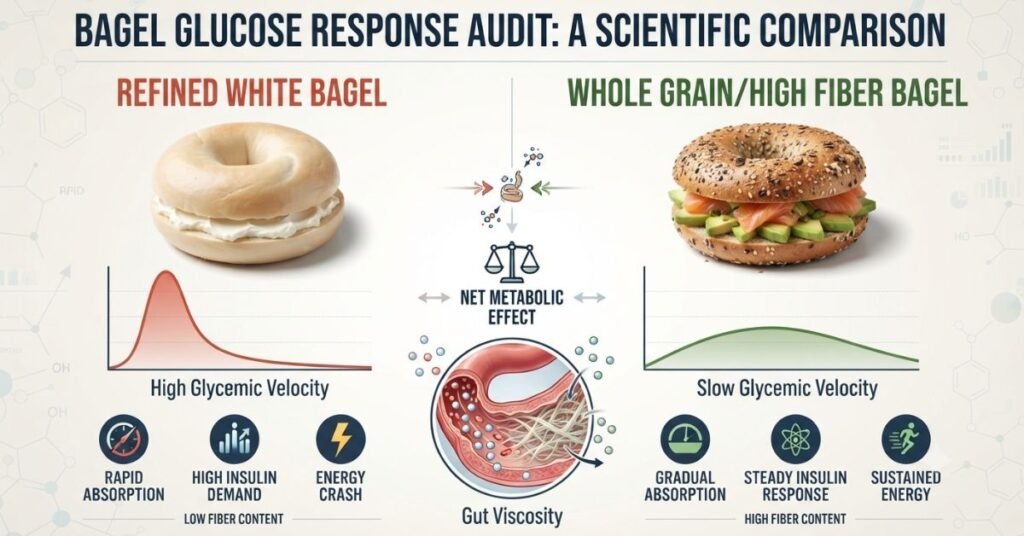
Most of these carbohydrates come from refined white flour, which is rapidly converted into glucose in your bloodstream. Unlike whole-grain alternatives, refined bagels lack the fiber necessary to slow this absorption process.
The Metabolic Impact: Why You Might Feel a “Crash”
When you consume 50–60 grams of refined carbs in one sitting, your blood glucose levels often rise sharply. For individuals with insulin resistance, this forces the pancreas to pump out a significant amount of insulin to manage the load.
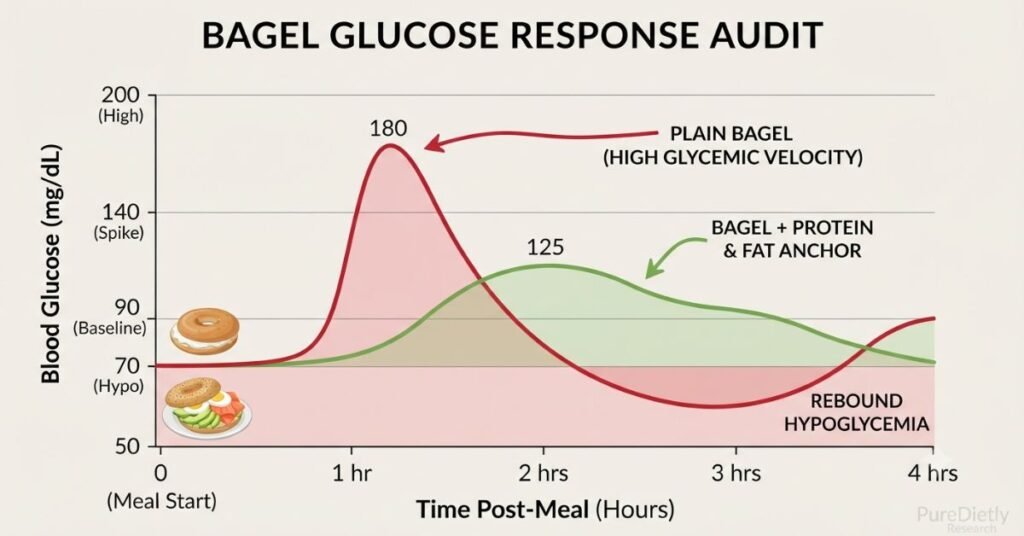
- The Glucose Spike: Rapid absorption leads to a blood sugar peak often within 45–60 minutes.
- The Rebound Effect: Following the spike, an aggressive insulin response can cause blood sugar to drop below baseline, leading to mid-morning cravings, brain fog, and “rebound” hunger.
- Systemic Inflammation: Chronic spikes from refined starches can contribute to long-term systemic inflammation, which is a known driver of metabolic dysfunction.
The Hidden Cost of “Glucose Variability”
Understanding the impact of a bagel goes far beyond just counting calories; it is about managing your daily glucose variability. In 2026, clinical research increasingly points toward glucose swings not just chronically high blood sugar as a primary driver of oxidative stress in the body. When you consume a refined carbohydrate like a plain bagel, the rapid influx of glucose creates a sudden demand on your mitochondria to process the energy. If your cells are already struggling with insulin resistance, this frequent “start-stop” cycle of energy availability forces your body to prioritize fat storage over fat burning, effectively locking your metabolic engine into a state of stagnation. By choosing to audit these “high-velocity” foods, you are not just managing diabetes; you are protecting your cellular health from the cumulative damage of repetitive glucose spikes.
The 2026 Metabolic Audit: Beyond the Calorie
If you are auditing your metabolic health this year, you must move beyond the “calories in, calories out” mindset. The speed of glucose entry (glycemic velocity) is what defines your metabolic day. When you eat a bagel, you aren’t just eating 300 calories; you are triggering a hormonal cascade.
In our internal research at PureDietly, we’ve observed that the context of the bagel matters more than the bagel itself. A bagel eaten in isolation acts as a “metabolic bomb,” whereas a bagel integrated into a larger, fiber-heavy meal acts as “performance fuel.”
Why Fiber Density is Your Metabolic Shield
The reason health experts emphasize fiber-first protocols isn’t just about digestion; it is about the structural integrity of your blood sugar response. When you pair a bagel with fiber-dense foods such as leafy greens, chia seeds, or even a side of roasted cauliflower you are essentially changing the “molecular architecture” of the meal. This fiber creates a viscous, gel-like barrier in your small intestine, which physically obstructs the rapid absorption of glucose into your bloodstream. This doesn’t mean you are eating “less” carbohydrate; it means you are reprogramming how that carbohydrate is delivered to your cells. For those aiming for metabolic autonomy, this shift from “fast-tracking” glucose to “slow-releasing” energy is the single most effective tool for preventing the mid-morning brain fog and energy crashes that characterize the standard American breakfast.
Is There a “Zero-Spike” Way to Eat Bagels?
You don’t have to banish them entirely, but you do need Metabolic Autonomy. Here is how to audit your bagel habit for better results:

- The Protein/Fat Anchor: Never eat a “naked” bagel. Pairing it with protein (eggs, smoked salmon, turkey) and healthy fats (avocado, nut butter) significantly blunts the glucose curve.
- Fiber-First Protocol: Start your breakfast with a side of non-starchy vegetables or a fiber-rich salad.
- Portion Management: Consider eating half and saving the rest, or opting for “bagel thins.”
- Strategic Timing: If you must have a higher-carb breakfast, consume it around periods of physical activity.
Choosing Better Options: An Expert Guide
If you are shopping for your pantry, look for these markers of better metabolic quality:
For a deeper dive into choosing the right pantry staples, check out our recent analysis on Sugar Substitutes for Diabetics.
Whole-Grain Variants: Oats, spelt, or rye-based bagels.
Resistant Starch: Newer functional bagels formulated to improve insulin sensitivity.
Minimal Ingredients: Always check the label if sugar is one of the first three ingredients, put it back.
The Digital Metabolic Audit: Leveraging Data in 2026
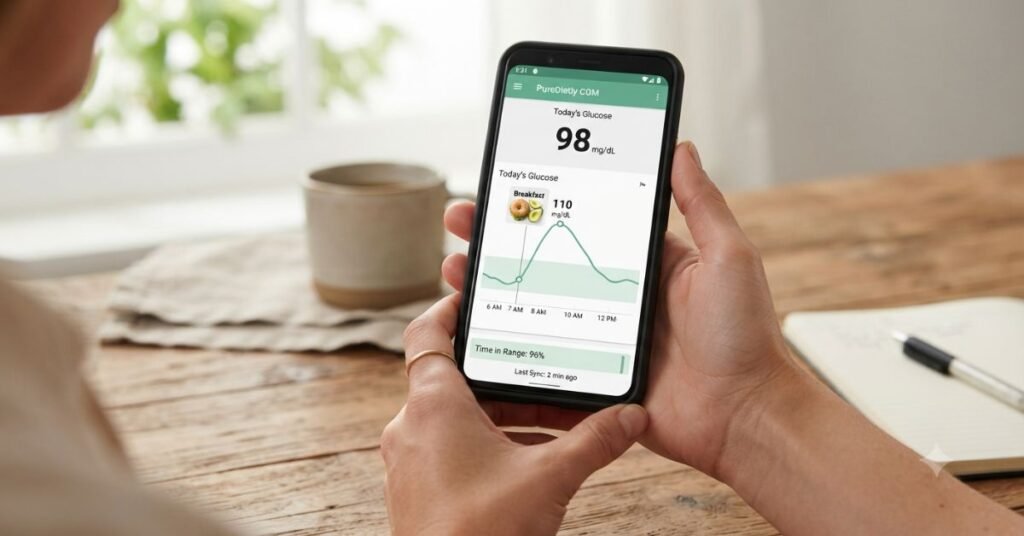
In the era of personalized nutrition, the “guesswork” approach to diet is quickly becoming obsolete. Using a Continuous Glucose Monitor (CGM) provides a real-time feedback loop that transforms a standard breakfast from a health risk into an educational data point. When you eat a bagel, you can observe exactly how high your glucose peaks and, more importantly, how long it takes to return to your baseline. This data is unique to you—influenced by your gut microbiome, stress levels, and even the quality of your sleep. By treating your meals as a series of experiments, you move from being a passive consumer of “diet advice” to an active manager of your own metabolic destiny.
Frequently Asked Questions (FAQ)
- Are bagels healthy for diabetics?
- They can be part of a balanced diet if portioned correctly and paired with fiber, protein, and fat.
- Does walking after a bagel help?
- Yes. A 15-minute walk significantly improves glycemic control by helping muscles utilize the glucose.
- Can I eat a bagel if I use a CGM?
- Absolutely. It is the best way to audit your personal tolerance.
Conclusion: Your Metabolic Autonomy
Building metabolic resilience is a journey. By moving away from “fast-digesting” habits and toward a protocol centered on fiber, protein, and glucose-stable alternatives, you take control of your metabolic autonomy.
Building metabolic resilience is a journey. If you are just starting your path, don’t miss our foundational post: The Fast-Digesting Carbs Audit: Why Your “Healthy” Snack Is Spiking Your Glucose.
Want to check the impact of this food on your sugar?
📊 Open Net Carb Calculator1. About the Author (Bio)
About Gohar Fatima Gohar Fatima is a Metabolic Health Researcher and the founder of PureDietly. Specializing in Clinical Nutrition and Glycemic Variability, Gohar is dedicated to helping individuals transition from restrictive dieting to metabolic autonomy. With a focus on “Zero-Spike” strategies and evidence-based clinical nutrition, she empowers her readers to take control of their health through data-driven insights and metabolic audits.
Medical Disclaimer
The information provided on PureDietly is for educational and informational purposes only and does not constitute professional medical advice, diagnosis, or treatment. The content is based on metabolic health research and is not intended to replace consultation with a licensed physician or registered dietitian. Always seek the advice of your doctor or another qualified health provider with any questions you may have regarding a medical condition. Never disregard professional medical advice or delay in seeking it because of something you have read on this website. If you think you may have a medical emergency, call your doctor or emergency services immediately.