

Editor’s Note:
At PureDietly, we believe nutrition is not a static set of rules but a dynamic, personal journey. This 2026 audit reviews the mango glycemic index through the lens of glycemic velocity and insulin sensitivity to help you make data-driven choices. Always prioritize your unique CGM data and metabolic markers when making dietary adjustments.
The Mango Paradox: Is it a Metabolic Trap?
For decades, diabetics have been told to avoid the “King of Fruits” entirely. However, in the world of clinical nutrition, we must move beyond binary “good vs. bad” labels. When we evaluate the mango glycemic index in 2026, we find it sits in a moderate range, typically between 50 and 60. Yet, relying solely on this number is a foundational error for anyone managing insulin resistance.
Metabolic autonomy requires understanding how the fruit’s fructose and fiber content interact with your unique biology. While a mango can be a source of vital antioxidants, it is also energy-dense. The goal of this audit is to determine whether this fruit serves as performance fuel or a metabolic trap for your blood sugar levels. We are moving away from fear-based dieting and into a phase of “Metabolic Auditing,” where we track how individual foods affect our internal chemistry.
The Nutritional Reality: What Are You Actually Eating?
To understand mangoes, we must first look at their structural makeup. Unlike berries, which are naturally low in sugar, mangoes are a concentrated source of carbohydrates. Understanding this is key to maintaining your metabolic flexibility.
- Fiber Content: While present, the fiber in a mango is often insufficient to fully neutralize its fructose content if consumed in large portions. You need to treat the fiber as a buffer that can be easily overwhelmed by the sugar density.
- Fructose vs. Glucose: Fructose is processed primarily in the liver. Unlike glucose, which is used by every cell in the body, excessive fructose can lead to hepatic stress and contribute to metabolic dysfunction if consumed in large, concentrated doses.
- Antioxidant Profile: Mangoes are rich in polyphenols, such as mangiferin. Emerging research suggests these compounds help reduce systemic inflammation—a major driver of metabolic dysfunction and insulin resistance.
Metabolic Impact: Glycemic Velocity vs. GI
The primary reason we conduct a metabolic audit is to understand “glycemic velocity”—the speed at which glucose enters your bloodstream. Because mangoes contain significant natural sugars, they can trigger a rapid spike if eaten on an empty stomach.
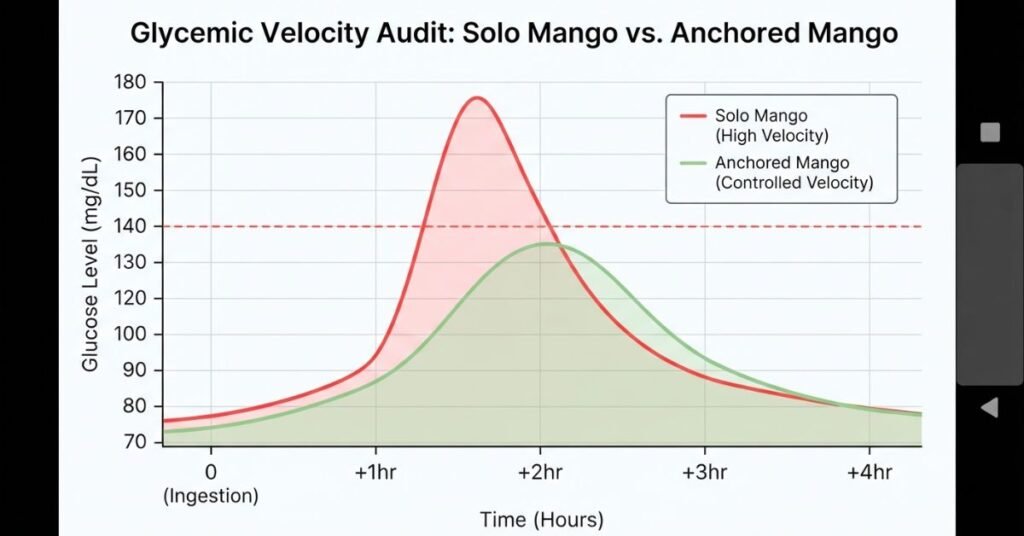
“…However, the “protein/fat anchor” effect is where you can regain control. When you pair a mango slice with protein or healthy fat, you physically slow down the absorption rate. If you are looking for more strategies to master your glucose levels, our 2026 Metabolic Audit: Morning Blood Sugar Spikes guide explains exactly how to stabilize your starting baseline before you consume higher-carb fruits. This combination prevents the “glucose roller coaster” that often leads to fatigue and cravings later in the day.”
| Feature | Fresh Mango | Dried Mango / Nectar |
| Fiber | Moderate | Very Low |
| Sugar Spikes | Moderate (with pairing) | Rapid & Severe |
| Metabolic Effect | Stabilizing (if anchored) | Highly Volatile |
The 2026 Metabolic Audit: Beyond the Macros
Clinical research in 2026 suggests that the timing of fruit intake is just as important as the portion size. If you are struggling with insulin resistance, your metabolic flexibility is likely compromised during the early morning hours.
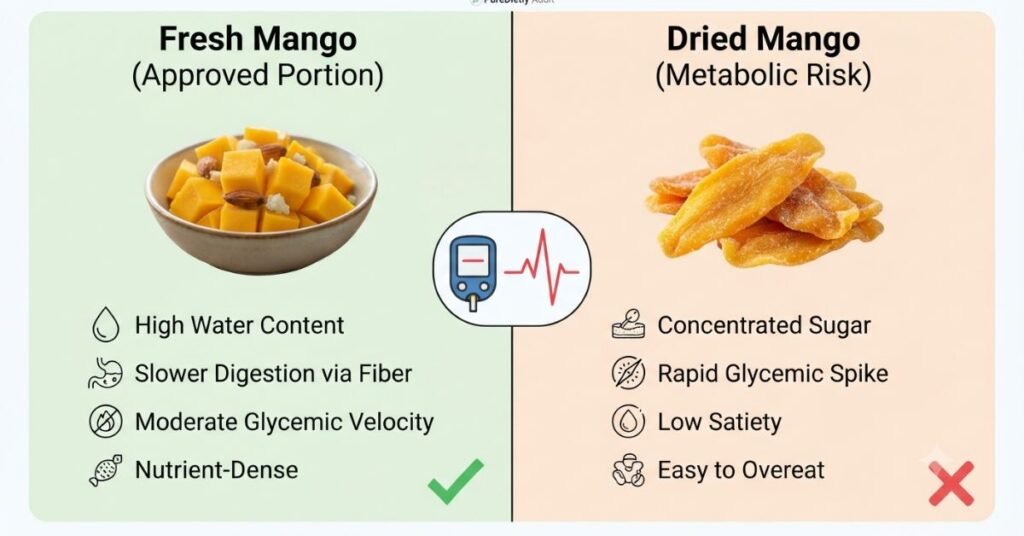
- The “Anchor” Strategy: Never consume mangoes as a standalone snack. Pair them with Greek yogurt, cottage cheese, or a handful of raw almonds. This creates a “glycemic buffer” that prevents the insulin surge that usually follows a high-sugar snack.
- Variety Selection: Opt for slightly under-ripe mangoes, as they contain higher levels of resistant starch and less free glucose than fully ripened, softer varieties. This is a subtle but effective way to lower the glycemic load of your meal.
- “…CGM Testing: Use your Continuous Glucose Monitor (CGM) to audit your specific response. If you see a spike above 140 mg/dL, you have your data-driven answer on your personal tolerance. Before you finalize your diet, you might also want to review our Sugar Substitutes for Diabetics: A Research-Based Audit to understand how sweeteners and natural fruit sugars fit into your long-term metabolic resilience protocol.”
Why “Metabolic Resilience” Matters More Than Avoiding Fruit
The goal isn’t just to survive without mangoes; it’s to improve your body’s ability to handle them. Metabolic resilience is the capacity of your mitochondria to switch between fuel sources efficiently. By strategically adding small amounts of whole fruits like mangoes back into your diet after you have stabilized your blood sugar with protein and fat, you test and improve your metabolic tolerance. This is the hallmark of a high-functioning metabolic system.
Actionable Tips: Your “Zero-Spike” Mango Protocol
To optimize your metabolic health while enjoying mangoes, follow these data-driven guidelines:

- Portion Control: Stick to a 1/2 cup serving. Precision is key to maintaining glucose stability. Don’t eyeball it; use a measuring cup for the first week until you learn the correct volume.
- Fiber First: Consume your non-starchy vegetables or a high-protein source before eating your fruit to create a “fiber buffer” in your gut.
- Hydration: Always drink a full glass of water after your meal to support metabolic processing and kidney function. Proper hydration helps flush excess glucose from the system.
- Movement: A 10-minute brisk walk after eating a mango can significantly blunt the glucose peak by forcing your muscles to burn the glucose immediately.
Frequently Asked Questions (FAQ)
Q: Can diabetics eat mango?
Yes, but with strict strategy. The mango glycemic index is moderate, so pairing with protein is essential to avoid spikes.
Q: Does mango cause a massive spike?
It depends entirely on your metabolic state. If your insulin resistance is high, even “healthy” fruits can trigger a response. Always monitor your CGM data to see how your body handles it.
Q: Is dried mango safer for my blood sugar?
No. Dried mango is highly concentrated in sugar and lacks the water content of fresh fruit, leading to much faster and more severe glucose spikes. It is effectively a “sugar bomb” for the metabolic system.
Conclusion: Your Metabolic Autonomy
Ultimately, mangoes can be a nutritious treat if you move away from fear-based dieting and toward a protocol centered on protein, healthy fats, and glucose stability. By treating your meals as educational data points, you take control of your health.
If you enjoyed this audit, don’t miss our foundational post: The Pizza Hut Glucose Experiment: Why Your Sugar Stays High for 8 Hours. Remember, your metabolic health is not just about what you eliminate; it is about how you strategically choose the foods that nourish your mitochondria for the long term. Start auditing your intake today, and watch your metabolic flexibility grow.
About the Author

Gohar Fatima is a Metabolic Health Researcher and the founder of PureDietly. Specializing in clinical nutrition and glycemic variability, she helps individuals move beyond restrictive, fear-based dieting. By using data-driven “metabolic audits,” Gohar empowers her readers to regain control of their health through evidence-based, actionable dietary strategies.
Medical Disclaimer
The information on PureDietly is for educational purposes only and does not constitute medical advice, diagnosis, or treatment. Always seek the advice of your physician or qualified health provider regarding any medical condition or dietary changes.