
By Gohar Fatima

Editor Note
This article breaks down the science of the Thermic Effect of Food (TEF) to help you look beyond restrictive diets and workouts. By understanding how your body naturally burns energy to process different macronutrients especially lean proteins and high-fiber carbs you can optimize your daily meal structure for long-term metabolic health, steady energy, and sustainable weight management.
When it comes to weight management, metabolic optimization, and body composition, most people focus entirely on two main pillars: grueling workouts and strict calorie deficits. We track every single mile logged on the treadmill and meticulously measure every portion on our plates. However, did you know that your body naturally expends a significant amount of energy simply by chewing, digesting, absorbing, transporting, and storing the food you consume?
This hidden metabolic engine is known as the Thermic Effect of Food (TEF), sometimes referred to as dietary-induced thermogenesis or the specific dynamic action of food. As a metabolic health researcher, I frequently look at how understanding and optimizing this internal mechanism can completely change how you structure your daily meals. Rather than relying on crash diets or restrictive fads, learning how to leverage thermic energy expenditure offers a sustainable, scientifically backed pathway to long-term vitality and blood sugar stability.
In this comprehensive guide, we will break down the precise mechanics of TEF, analyze how different macronutrients impact energy expenditure, explore practical ways to boost your daily thermic burn, and separate wellness myths from biological reality.
What Is the Thermic Effect of Food (TEF)?
To truly master your metabolism, it helps to understand how energy balance works within the human body. Your Total Daily Energy Expenditure (TDEE) the total number of calories you burn in a 24-hour period is made up of three distinct core components:
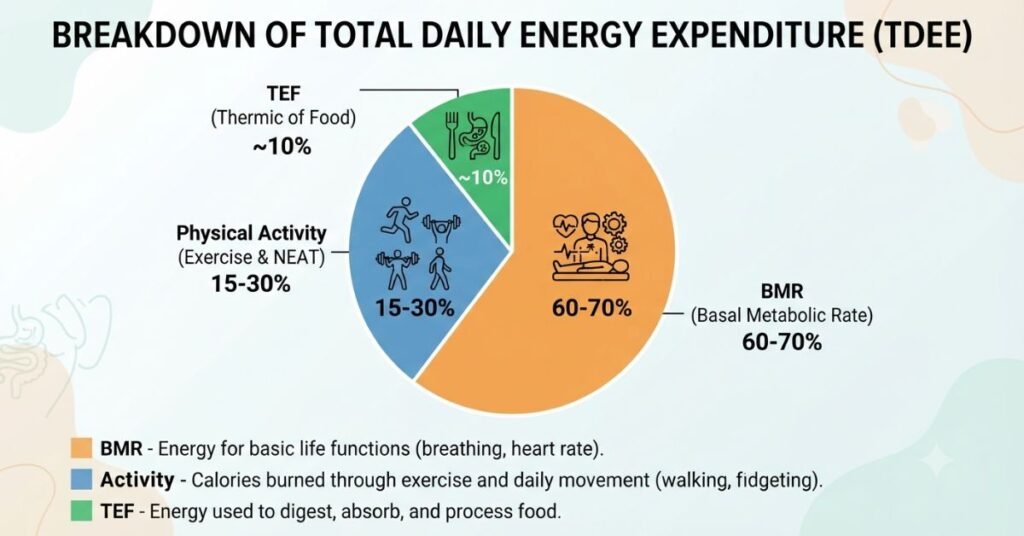
- Basal Metabolic Rate (BMR): This accounts for roughly 60% to 70% of your total daily calorie burn. It represents the baseline energy your body requires at complete rest just to keep your vital organs functioning, regulate your body temperature, and maintain cellular integrity.
- Physical Activity & Exercise: This includes structured workouts (like weightlifting, running, or swimming) alongside Non-Exercise Activity Thermogenesis (NEAT), which covers everyday movements like walking, fidgeting, and standing. This typically accounts for 15% to 30% of your daily burn depending on your lifestyle.
- The Thermic Effect of Food (TEF): This is the energy cost of processing what you eat. Your digestive tract must mechanically and chemically break down food items, activate enzymes, transport nutrients across intestinal walls, and convert them into usable substrates or stored energy.
On average, TEF accounts for about 10% of your total daily calorie intake. If you consume 2,000 calories in a day, your body naturally burns roughly 200 of those calories simply processing and metabolizing that food. However, this 10% figure is merely an average baseline. In fact, actual thermic expenditure shifts dramatically based on your meal composition, individual metabolic health, and the specific macronutrients on your plate.
How Different Macronutrients Impact TEF (The Metabolic Cost of Macros)
One of the most powerful insights in nutritional science is that not all calories are created equal. The human body expends vastly different amounts of energy to process proteins, carbohydrates, and fats. Understanding these percentages allows you to strategically design meals that maximize your internal calorie burn.
1. Protein: The King of Thermogenesis (20% to 30% TEF)
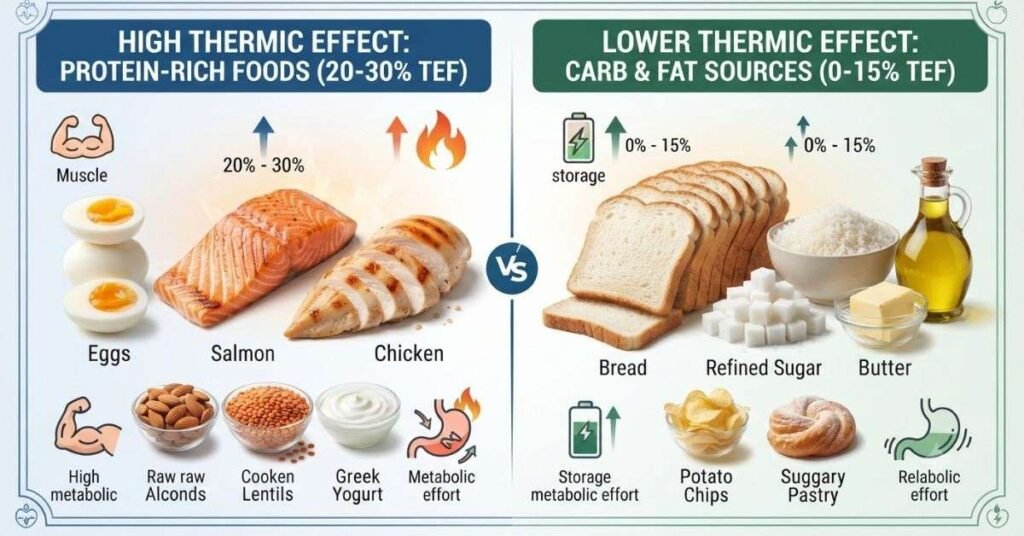
Protein requires the highest metabolic effort of all three macronutrients. When you consume 100 calories of pure protein, your body burns up to 20 to 30 of those calories just breaking down complex peptide bonds, denaturing structures, and metabolizing individual amino acids.
- Why it matters: This high energetic cost is a major reason why high-protein diets consistently outperform low-protein diets for weight management. Not only does protein promote cellular repair and muscle retention, but it also triggers greater satiety hormones (like PYY and GLP-1), keeping you full longer while boosting your daily thermic output.
2. Carbohydrates: Moderate Processing Effort (5% to 15% TEF)
Carbohydrates sit in the middle of the spectrum, but their thermic impact varies wildly depending on their chemical structure and fiber content:
- Simple, Refined Carbs: Highly processed sugars and white flours break down rapidly into glucose with minimal metabolic effort, resulting in a low TEF (closer to 5%) and sharp blood sugar spikes.
- Complex, High-Fiber Carbs: Whole grains, legumes, and fibrous vegetables require significantly more digestive work from your gastrointestinal tract, pushing their thermic efficiency toward the higher end of the spectrum while protecting your glycemic stability.
3. Fats: Highly Efficient Energy Storage (0% to 5% TEF)
Dietary fats are exceptionally efficient for the human body to process, store, or utilize for cellular energy. Because fats require very little chemical transformation to be absorbed or stored in adipose tissue, their thermic effect is extremely low typically ranging from 0% to 5%. While healthy fats (like avocados, olive oil, and nuts) are vital for hormone production and neurological health, they contribute very little to active calorie burning during digestion.
Macronutrient TEF Comparison Matrix
| Macronutrient Group | Average TEF Percentage | Primary Metabolic Role |
| Protein | 20% – 30% | Muscle synthesis, tissue repair, high satiety, maximum calorie burn |
| Complex Carbohydrates | 5% – 15% | Sustained cellular energy, high fiber, moderate digestive effort |
| Dietary Fats | 0% – 5% | Hormone regulation, structural cellular support, efficient storage |
Factors That Influence and Modulate Your Thermic Burn
While macronutrient distribution is the primary driver of the Thermic Effect of Food, several physiological and lifestyle factors can alter your body’s overall thermic response:
- Meal Composition and Synergy: Combining proteins, healthy fats, and high-fiber carbohydrates in a single, cohesive meal creates a prolonged and sustained digestive workload. In contrast, consuming isolated, highly refined ingredients triggers a rapid, short-lived spike followed by an energy crash.
- Gut Health and Microbiome Diversity: A thriving, diverse gut microbiome optimizes nutrient extraction and digestive efficiency. Emerging nutritional research suggests that individuals with robust gut health may experience subtle variations in how energy is processed through the gastrointestinal tract.
- Insulin Sensitivity and Metabolic Flexibility: Healthy metabolic function ensures that nutrients are efficiently shuttled into cells for immediate use or storage. Conversely, insulin resistance can impair metabolic efficiency, altering how energy substrates are handled and stored across body tissues.
- Total Daily Caloric Intake: Because TEF operates as a percentage of total energy consumed (roughly 10%), eating larger, nutrient-dense meals naturally results in a higher absolute number of calories burned through digestion compared to strict, ultra-low-calorie restriction.
Smart Strategies to Boost Your Daily TEF Naturally
You cannot completely overhaul your metabolism overnight through a single lifestyle hack, but you can leverage thermic science to support your wellness goals with sustainable habits:

- Anchor Every Meal with Lean Protein: Ensure that breakfast, lunch, and dinner feature a clean, high-quality source of protein such as pastured eggs, wild-caught fish, poultry, grass-fed meats, or dense plant-based proteins. This immediately maximizes your meal’s thermic cost.
- Prioritize Whole, Fibrous Carbs: Swap out stripped, refined grains for nutrient-dense whole grains and ancient options (like barley, quinoa, or steel-cut oats) and load your plate with cruciferous vegetables. The added fiber forces your digestive system to work harder while preventing rapid glucose fluctuations.
- Avoid Ultra-Processed Food Traps: Highly processed convenience foods are heavily stripped of natural fiber, water, and structural integrity. They require almost zero digestive effort, leading to a low thermic effect, rapid absorption, and subsequent blood sugar volatility.
- Maintain Balanced Meal Sizes: Rather than constantly grazing on tiny, highly processed snack packs throughout the daywhich keeps your digestive tract in a low-level, sluggish state focus on well-structured, satisfying meals that trigger a clear, robust metabolic response.
Ready to Check Your Levels?
Use our Free Diabetic Calculators to track your A1C, Sugar Spikes, and Fasting Progress.
OPEN ALL CALCULATORS ➔Fast • Accurate • Free for Puredietly Readers
Frequently Asked Questions (FAQs)
Q1: Do certain “fat-burning” foods like chili peppers or green tea dramatically increase TEF?
While specific compounds such as capsaicin in peppers or catechins and caffeine in green tea—can cause a temporary, minor spike in thermogenesis, their overall impact on daily calorie burning is relatively small. Therefore, they should be viewed as supportive additions rather than standalone weight-loss miracles.
Q2: Does eating frequent small meals boost metabolism more than eating three standard meals?
No. This is one of the most persistent myths in the fitness and wellness space. Clinical research consistently demonstrates that the total daily thermic effect is determined by the total quantity and macronutrient quality of the food consumed over 24 hours, not by the frequency of how often you eat.
Q3: Can I rely on the Thermic Effect of Food alone to lose weight or manage blood sugar?
Absolutely not. TEF typically accounts for only about 10% of your daily energy expenditure. Achieving sustainable wellness requires a balanced, holistic approach combining whole-food nutrition, protein prioritization, daily physical movement, and mindful portion awareness.
Conclusion
The Thermic Effect of Food is a fascinating reminder that your metabolism is an active, dynamic biological system rather than a static calculator. By shifting your dietary focus toward high-protein, high-fiber, and nutrient-dense whole foods, you can naturally elevate the energy your body uses for digestion while protecting your metabolic health for the long run.
About the Author
Gohar Fatima is a dedicated metabolic health researcher and wellness content writer. With a strong passion for nutritional science, Gohar specializes in breaking down complex metabolic concepts, evaluating dietary impacts, and guiding readers toward sustainable, health-conscious choices for everyday living.
Medical Disclaimer
The information provided in this article is for educational and informational purposes only and is not intended as medical advice. Always consult with a qualified physician or healthcare provider before making major changes to your diet, nutrition plan, or lifestyle, especially if you are managing pre-existing metabolic conditions.