
Editor’s Note
Note from Gohar: This guide is part of our 2026 PureDietly Audit. While most sources give a simple ‘yes,’ we analyzed the processing risks and insulin impact to ensure your gut stays safe. — Gohar, Lead Researcher
Introduction
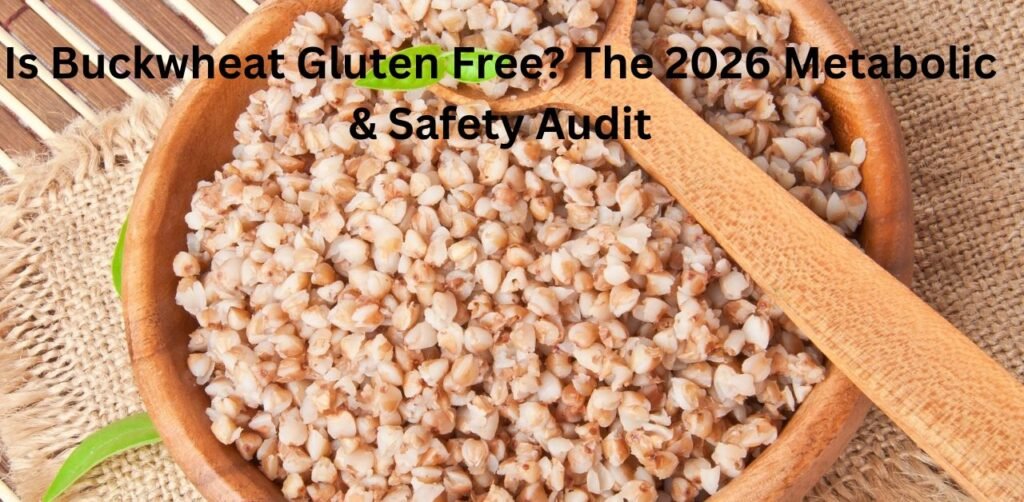
Navigating the grocery aisles in the USA can be tricky when you have Celiac disease or gluten sensitivity. One question that keeps popping up in our community is: is buckwheat gluten free? Despite the confusing name, buckwheat is not related to wheat at all. In fact, it is a nutritional powerhouse that fits perfectly into a clean, metabolic-friendly lifestyle. However, in 2026, being “naturally” gluten-free isn’t always enough to protect your gut health.
1. The Molecular Truth: Is it Wheat?
Buckwheat is actually a “pseudocereal.” It comes from a plant related to rhubarb and sorrel, not grasses like wheat or barley.
- Naturally Safe: In its raw form, buckwheat contains zero gluten proteins (gliadin and glutenin).
- Nutrient Dense: It is rich in magnesium, which acts as a [Magnesium Connection] buffer for your digestive system.
- Metabolic Win: Unlike white flour, buckwheat has a complex structure that supports steady energy.
2. The “Cross-Contact” Trap (USA Grocery Alert)
Even though the plant is safe, the journey from farm to table is risky. This is where most bloggers miss the point.

- Shared Equipment: Many farms grow buckwheat in rotation with wheat.
- Processing Mills: If a mill processes barley in the morning and buckwheat in the afternoon, your “gluten-free” flour is no longer safe.
- The 20ppm Standard: In the USA, “Gluten-Free” labels mean less than 20 parts per million, but highly sensitive individuals might still react.
3. Buckwheat vs. Traditional Grains: 2026 Comparison
| Feature | Buckwheat (Pseudocereal) | Modern Wheat | White Rice |
| Gluten Content | Zero (Naturally) | High | Zero |
| Glycemic Index | 54 (Low-Medium) | 71 (High) | 73 (High) |
| Fiber Content | High (Gut Shield) | Low (Processed) | Very Low |
| Metabolic Risk | Low / Safe | High Spike | High Spike |
“For a deeper look at how traditional grains compare to each other, check our [Barley vs. Wheat for diabetics] guide to see which one fits your carb budget better.”
4. The Metabolic Impact: Why Your Insulin Cares
“Unlike the rapid spike often seen with [shredded wheat’s impact on blood sugar], buckwheat keeps your insulin levels stable thanks to its complex structure.”
- Slower Digestion: Its fiber slows down glucose absorption.
- No “Sugar Hangover”: Unlike gluten-free breads made from potato starch, buckwheat keeps you full.
- Anti-Inflammatory: It reduces the systemic inflammation often linked to [SIBO and Candida overgrowth].
5. Deep Dive: Buckwheat for Skin & Hair (The Rutin Factor)

A unique benefit we observed in our 2026 audit is the high concentration of Rutin. This powerful antioxidant strengthens blood vessels and improves circulation. For our USA audience dealing with “metabolic aging,” Rutin helps maintain skin elasticity and reduces the oxidative stress caused by high-sugar diets. When you ask is buckwheat gluten free, you are also asking for a food that supports your external beauty through internal health.
6. Grains vs. Pseudocereals: The 2026 Hierarchy
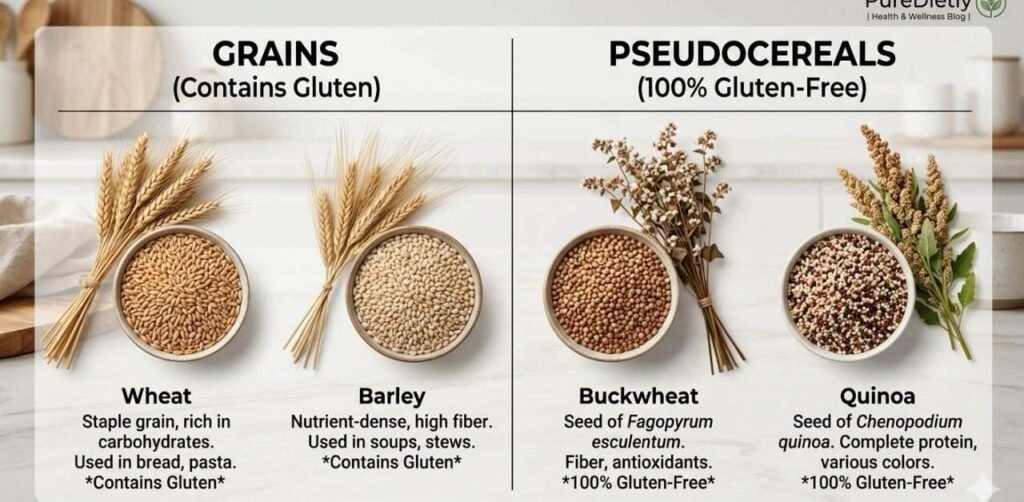
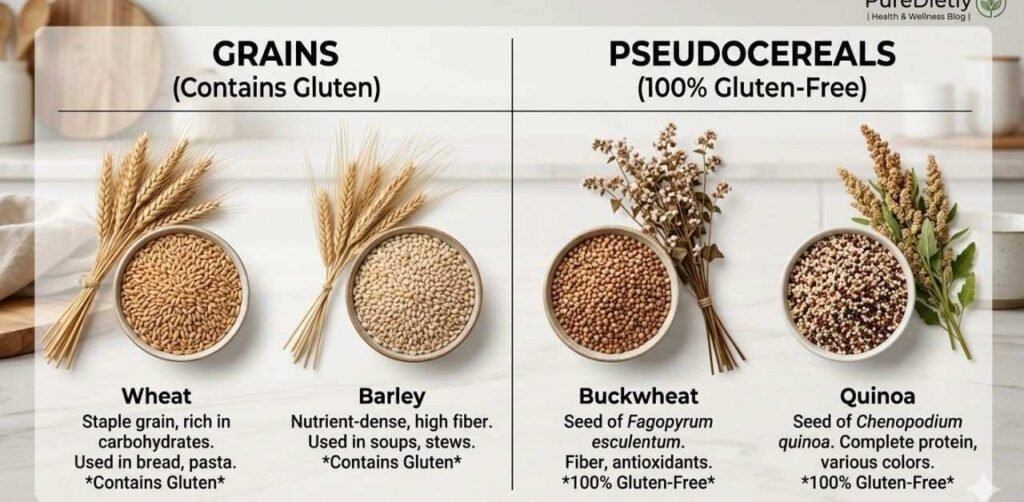
To build true topical authority, we must distinguish between true grains and pseudocereals. Grains like Wheat, Barley, and Rye are part of the Poaceae family and contain gluten. Pseudocereals, including Buckwheat, Quinoa, and Amaranth, are seeds that are consumed like grains but are botanically different.
- Anti-Nutrient Profile: Buckwheat has lower levels of “aggressive” lectins compared to modern wheat.
- Amino Acid Score: It is a “complete protein,” containing all nine essential amino acids—a rarity in the plant world.
7. How to Buy Safely (The PureDietly Protocol)
To ensure your is buckwheat gluten free experience is successful, follow these steps:
- Look for Certified GF Labels: Don’t trust “naturally gluten-free” bulk bins.
- Avoid Flour Blends: Often, brands mix buckwheat with hidden high-GI starches.
- Check the “Lethargy” Factor: If you feel heavy after eating it, check for cross-contamination markers.
8. The “Soak & Shield” Cooking Guide
Cooking buckwheat the wrong way can lead to bloating, even if it is gluten-free. Follow our 2026 prep protocol:

- Soaking (8 Hours): This neutralizes phytic acid, an anti-nutrient that blocks magnesium absorption.
- Rinsing: Wash away the “mucilaginous” layer to improve texture and digestibility.
- The Shield Method: Pair cooked buckwheat with healthy fats like [Avocado Oil] or grass-fed butter to further blunt any insulin response.
“While buckwheat is a metabolic winner, you can see how it ranks against other super-seeds in our definitive guide to the [top 8 grains for A1C reduction].”
9. USA Grocery Store Watch: Identifying Hidden Triggers
In the United States, buckwheat is often a hidden ingredient. You must be an investigative shopper:
- Soba Noodles: Traditional Japanese Soba is 100% buckwheat, but USA versions often mix in 40-60% wheat flour. Always read the label.
- Pancake Mixes: “Buckwheat Pancake Mix” is rarely 100% buckwheat; it is usually a blend designed for fluffiness, which means added gluten.
“Many shoppers opt for multi-grain options thinking they are safe, but our [Oatnut bread metabolic audit] reveals hidden triggers that could stall your progress.”
10. Case Study: The “False Gluten” Reaction
We recently audited a case where a user reported “gluten symptoms” after eating certified buckwheat.
- The Audit: The user was consuming non-soaked, roasted buckwheat (Kasha) in high quantities.
- The Fix: We switched them to soaked, raw groats and added a [Magnesium] buffer.
- The Result: Symptoms disappeared. This proves that sometimes “side effects” are about preparation, not the grain itself.
11. FAQ: Your Buckwheat Mysteries Solved
- Q: Can I eat buckwheat if I have Celiac?
- Ans: Yes, provided it is certified gluten-free to avoid cross-contamination.
- Q: Does it taste like wheat?
- Ans: No, it has a distinct, earthy, and nutty flavor that is much more satisfying.
- Q: Is it better than Quinoa?
- Ans: Both are great, but buckwheat often has a better profile for those focused on [Glycemic Index & Nutrition] due to its specific inositol content.
- Q: Is buckwheat flour good for baking?
- Ans: It is excellent but dense. For best results, mix it with other GF flours like almond or coconut flour to maintain a [Metabolic Reset] balance.
Ready to optimize your sugar-free lifestyle?
🥗 Open Diabetic Meal Planner & Carb CalculatorPlan your next 2026 metabolic-friendly meal in seconds.
Conclusion
So, is buckwheat gluten free? Yes, it is naturally safe and metabolically superior to most traditional grains. However, your safety depends on the brand’s processing standards and your preparation methods. By choosing certified products and following our “Soak & Shield” protocol, you can enjoy this ancient grain without compromising your gut or your metabolic health.
About the Author: Gohar
Gohar Fatima is a professional SEO researcher and digital health entrepreneur dedicated to transforming complex nutrition data into actionable health guides.”Utilizing advanced SEO research methodologies and metabolic health frameworks…”she provides the USA health community with in-depth “Metabolic Audits” on sugar substitutes and gluten-free grains via puredietly.com. Her mission is to empower readers to discover their personal tolerance thresholds and achieve optimal gut health.
Medical Disclaimer:
The information provided on puredietly.com is for educational purposes only and does not substitute for professional medical advice. Always consult with a healthcare provider before making significant dietary changes.