

By Gohar Fatima | July 16, 2026
Editor’s Note
At PureDietly, we believe that nutrition is not merely about counting calories or restricting intake; it is about auditing how your food interacts with your unique biology. This 2026 metabolic audit reviews the humble lentil through the lens of glycemic velocity and metabolic resilience. Our goal is to move you beyond the “good vs. bad” food paradigm and into a space of informed, data-driven eating, where every ingredient serves a purpose in stabilizing your glucose and fueling your long-term health.
If you are wondering, “Are lentils good for you?” when it comes to blood sugar management, you are not alone. In the modern world of nutrition, we often focus on the wrong data points. While many people fear carbohydrates, the real key to metabolic autonomy is understanding glycemic velocity how quickly food impacts your biology. In this 2026 metabolic audit, we analyze lentils through the lens of glucose stability and long-term cellular health.
The Metabolic Audit: Nutritional Breakdown
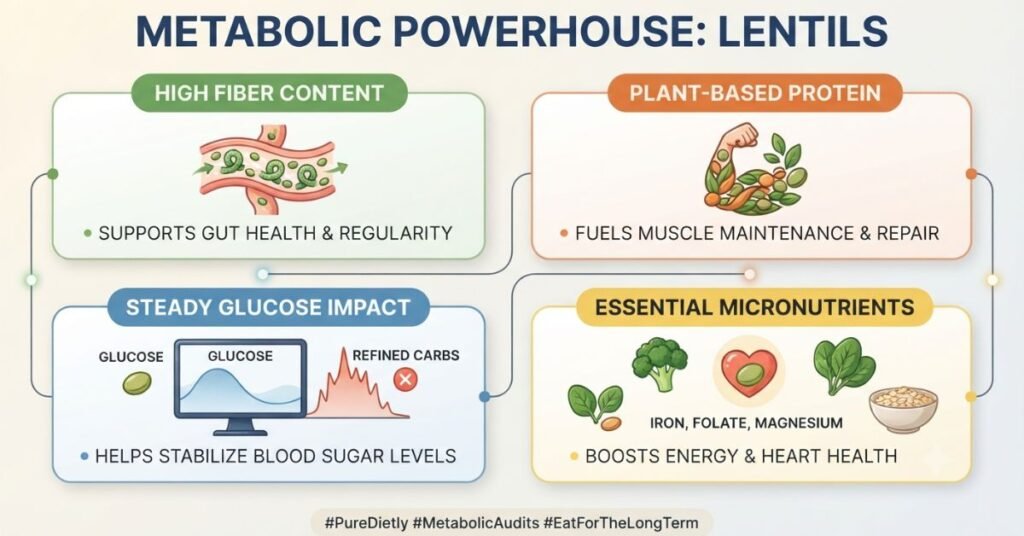
Lentils are more than just a pantry staple; they are a nutrient-dense, fiber-rich powerhouse. Unlike processed snacks that trigger rapid insulin release, lentils offer a slow-release energy profile.
| Nutrient | Amount (per 1 cup cooked) | Metabolic Impact |
| Fiber | ~15.6g | High (Supports satiety & gut health) |
| Protein | ~17.9g | High (Supports muscle maintenance) |
| Carbs | ~39.8g | Moderate (Slow-digesting) |
| Glycemic Impact | Low-Moderate | Steady glucose response |
The “Metabolic Hidden Costs” of Standard Lentil Dishes

In the US market, many “healthy” canned lentil soups or pre-packaged lentil salads contain hidden sugar, inflammatory seed oils (like soybean or canola oil), and excessive sodium. For a metabolic auditor, these are “hidden cost” ingredients.
- The Audit: Always flip the can. If the ingredient list contains “sugar,” “maltodextrin,” or “sunflower oil,” it is a metabolic disruptor, not a health food.
- The Fix: Opt for dry lentils or canned versions where the only ingredients are lentils, water, and salt.
Why Lentils Are a Metabolic Asset
For those of you looking to improve your [Metabolic Flexibility], lentils provide biological benefits that go beyond basic macronutrients.
- Steady Glucose Response: Because lentils are packed with fiber, they digest slowly. This prevents the “glucose roller coaster” effect, making them a safer choice than refined grains.
- High-Quality Plant Protein: Lentils are comprised of approximately 25% protein, making them an excellent tool for maintaining lean muscle mass, which is vital for efficient glucose burning.
- Mineral Synergy: They are rich in folate, magnesium, and zinc critical cofactors for enzymatic reactions that keep your metabolism humming.
- Anti-Inflammatory Properties: Lentils contain polyphenols, which have been shown in laboratory studies to possess antioxidant and anti-inflammatory effects, helping protect against insulin resistance.
Lentils and the “Satiety Gap”
One of the biggest problems for people managing glucose in the US is the “satiety gap”—the feeling of hunger 60 minutes after a meal.
- Why it happens: Meals high in processed carbs digest too fast, leading to an insulin crash.
- How lentils solve it: The unique combination of high fiber and plant protein in lentils triggers the release of satiety hormones (like GLP-1). This keeps you full for hours, effectively closing the satiety gap and preventing late-night snacking.
The “Anti-Spike” Pairing Strategy
Even a nutrient-dense food can become a metabolic disruptor if paired incorrectly. To ensure lentils support your goals rather than hinder them, we use the PureDietly Pairing Strategy:
| Component | Goal | USA-Friendly Examples |
| Protein Anchor | Stabilize Insulin | Wild-caught salmon, organic chicken breast, grass-fed beef. |
| Fat Buffer | Slow Glucose Absorption | Extra virgin olive oil, avocado, hemp seeds, walnuts. |
| Volume Builder | Increase Fiber/Satiety | Sautéed kale, spinach, roasted broccoli, zucchini noodles. |

- Watch the “Dal-Chawal” Trap: In many cultures, lentils are paired with large portions of white rice. White rice is a high-glycemic trigger. Opt for a smaller portion of lentils alongside a large serving of non-starchy, sautéed greens instead.
Addressing Antinutrients: Debunking the Myth
You may hear that lentils contain “antinutrients” like lectins or phytic acid. While it is true they exist, it is important to maintain context.
- Cooking Matters: Boiling or simmering lentils significantly reduces the presence of these compounds, making the nutrients within them highly bioavailable.
- Soaking Advantage: If you are particularly sensitive, soaking your lentils overnight before cooking is a simple, effective way to further minimize antinutrient levels.
- The Bottom Line: For the vast majority of people, the health-promoting fiber, minerals, and antioxidants in lentils far outweigh any theoretical concerns regarding antinutrients.
Audit Your Pantry: 3-Step Lentil Readiness
Before you cook, perform a quick 3-step audit of your kitchen:
- Clear the Shelves: Identify and remove any lentil products that contain added sugars or refined sauces.
- Stock the Basics: Keep dry lentils (green or brown hold their shape best) in a clear glass jar. Visible food is more likely to be used.
- Prep for Success: On Sunday, boil a large batch of lentils with herbs. Store them in the fridge—this “pre-audit” step ensures you have a ready-to-eat protein source, preventing you from choosing a high-GI fast-food option during a busy weekday.
Conclusion: Data-Driven Choices
So, are lentils good for you? When integrated into a well-audited diet, they are an exceptional tool for metabolic health. They provide the fiber and protein needed to stay full, keep your insulin response stable, and provide your body with essential micronutrients.
Remember, your CGM is the ultimate source of truth. Try incorporating lentils into your next meal, pair them with healthy fats, and observe your own personal data. By consistently auditing your food, you transform your relationship with nutrition from one of restriction to one of empowerment.
Add Seaweed Salad to your daily carb limit in 30 seconds!
Frequently Asked Questions (FAQs)
Q: Can I eat lentils if I have diabetes?
A: Yes. Research suggests that consuming lentils can help lower post-meal glucose levels and improve inflammatory markers, making them a suitable addition to a diabetes-friendly diet.
Q: Do lentils spike blood sugar?
A: Compared to refined carbohydrates, lentils cause a significantly slower and lower rise in blood glucose due to their high fiber content.
Q: How often should I include lentils in my diet?
A: They are a great versatile staple. Aim for 1-2 times per week as part of a varied, nutrient-dense diet to keep your gut microbiome diverse and healthy.
About the Author
Gohar Fatima is a Metabolic Health Researcher and the founder of PureDietly. Specializing in clinical nutrition and glycemic variability, she empowers individuals to achieve “metabolic autonomy.” By using data-driven metabolic audits, Gohar helps readers move beyond restrictive, fear-based dieting to regain control of their health through sustainable, evidence-based strategies. Her work focuses on translating complex nutritional data into actionable pantry habits for long-term glucose stability.
Medical Disclaimer
The information provided on PureDietly is for educational purposes only and does not constitute medical advice, diagnosis, or treatment. While we strive to provide accurate, data-driven content, it is not a substitute for professional medical guidance. Always seek the advice of your physician or a qualified healthcare provider regarding your specific medical condition, health goals, or before making any significant dietary changes. Never disregard professional medical advice or delay seeking it because of something you have read on this website.