

Editor’s Note
Editor’s Note: Nutrition isn’t about rigid rules; it’s about biochemical feedback. Brown rice is a staple for many, but for those auditing their metabolic health, it requires a strategic approach. This article moves beyond simple GI numbers to provide you with actionable protocols for maintaining glucose stability.*
Introduction
For years, brown rice has been marketed as the ultimate “healthy alternative” to white rice. But if you are managing insulin resistance or diabetes, simply switching to brown rice might not be enough. The brown rice glycemic index (GI) often surprises people who expect it to be a low-glycemic superfood.
At PureDietly, we don’t just look at labels; we audit your biology. In this guide, we will uncover the reality of the brown rice glycemic index, explain why it might still trigger glucose spikes, and share metabolic hacks to keep your energy stable.
Understanding the Glycemic Index of Brown Rice
The Glycemic Index (GI) is a scale from 0 to 100 that ranks how quickly a carbohydrate raises your blood glucose levels.
- Low GI: 55 or less
- Medium GI: 56–69
- High GI: 70+
The brown rice glycemic index typically falls between 50 and 55. While it is technically in the “low” category, it sits right on the borderline. For someone with severe metabolic rigidity, this can still be enough to cause a notable insulin response.
If you are curious how other varieties compare, check out our deep dive into the benefits of red rice or why bamboo rice has become a modern favorite.
Brown Rice vs. White Rice: The Metabolic Audit
Many people assume that because brown rice is “whole,” it is automatically metabolic-friendly. Let’s look at the actual metabolic impact.
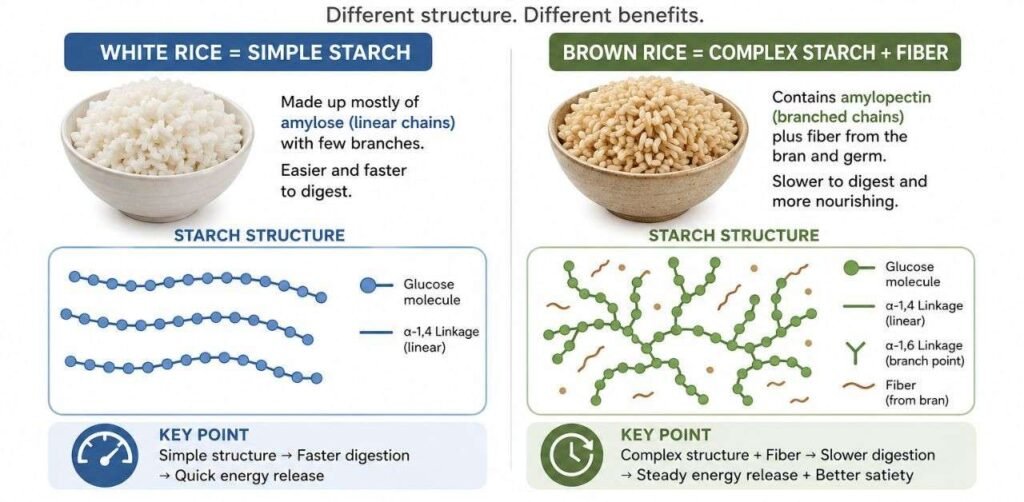
| Feature | Brown Rice | White Rice |
| Fiber Content | Moderate | Very Low |
| Glycemic Index | 50–55 | 70–89 |
| Metabolic Effect | Slower Glucose Release | Rapid Glucose Spike |
| Nutrient Density | Higher (contains germ/bran) | Low (stripped) |
While brown rice retains its fiber-rich bran and germ, it is still a significant source of starch. If you are comparing this to white rice nutrition, brown rice is undoubtedly the better choice. However, “better” does not always mean “metabolic-proof.”
Why the Glycemic Index Isn’t the Whole Story
The brown rice glycemic index is only one piece of the puzzle. Your blood sugar response depends on several other factors that go beyond the food itself:
- Portion Size: Even a low-GI food can spike your glucose if you eat two cups of it.
- Food Sequencing: This is the most effective “hack” in our protocol. Eating fiber and protein before your rice dramatically blunts the glycemic response.
- Metabolic Flexibility: If your body is already insulin resistant, even “healthy” carbs can trigger an exaggerated glucose curve.
If you aren’t familiar with the sequence, read our guide on Food Sequencing for Blood Sugar. It is the missing link in most metabolic protocols.
3 Hacks to Lower the Glycemic Impact of Brown Rice
You don’t have to give up rice entirely. Here is how to make it work for your metabolic health:
1. The Cooling Hack (Resistant Starch)
When you cook brown rice and let it cool in the refrigerator for at least 12–24 hours, the starch molecules change structure. This creates resistant starch, which acts like fiber in your body, meaning it is not fully digested and results in a significantly lower glucose response.
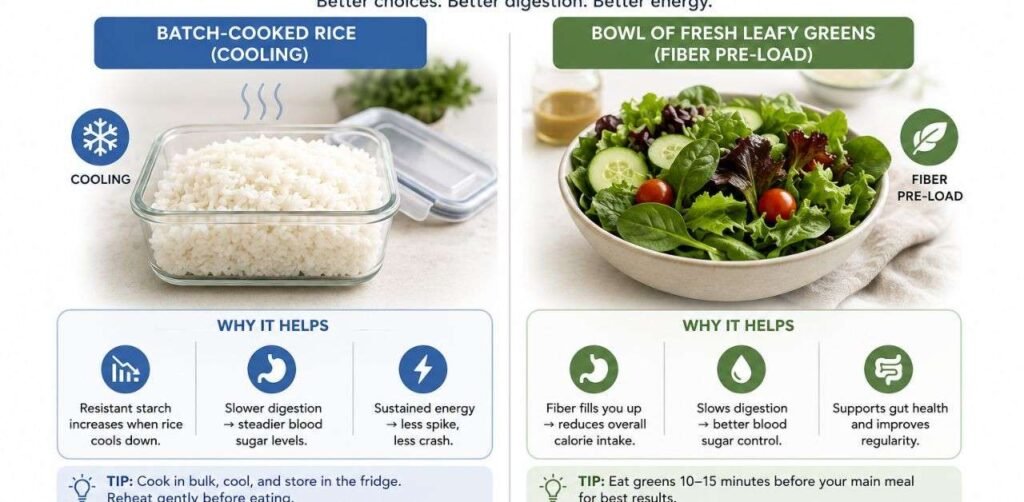
“For the busy American household, the ‘Cooling Hack’ is a game-changer. By batch-cooking your brown rice on Sunday, chilling it for 24 hours, and then gently reheating it (or eating it cold in a salad), you’re not just saving time you’re chemically transforming your starch. This creates resistant starch, a type of fiber that bypasses digestion and feeds your gut microbiome, effectively lowering the glycemic load of your meal without changing the recipe.”
2. The Fiber Pre-Load
Never eat rice on an empty stomach. Start your meal with a bowl of leafy greens or a portion of protein (like chicken or salmon). The fiber in the greens creates a mesh in your small intestine that slows down the absorption of the rice starch.
3. Pair with Healthy Fats
Adding a tablespoon of avocado oil or ghee to your rice can further slow down gastric emptying, leading to a flatter glucose curve.
Monitoring Your Metabolic Response
At PureDietly, we encourage you to perform your own “Metabolic Audit.” Don’t take our word for it listen to your body.

- Do you feel sleepy 30 minutes after eating?
- Is your hunger returning within two hours?
- Do you experience brain fog after lunch?
If the answer is “yes,” your body is signaling that your current rice intake is exceeding your metabolic capacity. You might need to adjust your portion or increase your movement. Speaking of movement, our Metabolic Walking Guide is designed specifically to help you clear glucose from your blood after meals.
Q&A: Your Questions Answered
Q: Is brown rice safe for diabetics?
A: It is generally safer than white rice, but portion control and proper food sequencing are mandatory to avoid glucose spikes.
Q: Does the brown rice glycemic index change with cooking time?
A: Yes. Overcooking rice breaks down the starch faster, making it easier to digest and raising the GI. Keep your rice al dente for a lower metabolic impact.
Q: How does bamboo rice compare to brown rice?
A: Bamboo rice is quite unique, often having a lower glycemic load and higher protein. You can see how it stacks up in our Bamboo Rice Guide.
⚡ Takes only 60 seconds
Audience Connection (The “Why”)
“At PureDietly, I’ve seen hundreds of individuals struggling with the ‘healthy grain’ trap. You’ve been told to ditch white rice for brown, yet your energy remains erratic. That’s because metabolic health isn’t about swapping one carbohydrate for another; it’s about auditing how your mitochondria handle the load. If you’re ready to stop guessing and start measuring, we provide the tools to make that happen.”
Conclusion: Take Charge of Your Biology
Understanding the brown rice glycemic index is essential for anyone serious about their metabolic vitality. It is a better choice than refined alternatives, but it is not a free pass to overeat. By using food sequencing, portion control, and the cooling hack, you can enjoy rice while keeping your blood sugar firmly in the “stable” zone.
Consistency is the ultimate driver of health. Stop searching for “perfect” foods and start building “perfect” habits. Download My Free Metabolic Audit Checklist today to track how different rice varieties impact your unique metabolic response.
About the Author
Gohar Fatima is a Metabolic Health Researcher and the founder of PureDietly.com. She specializes in simplifying complex clinical nutrition data into actionable, science-backed protocols. Through her signature “Metabolic Audit” approach, Gohar empowers individuals to overcome insulin resistance and regain their metabolic vitality by focusing on biochemistry rather than just calories.
Medical Disclaimer
Medical Disclaimer: The information provided in this article is for educational purposes only. Always consult with your physician before making significant dietary changes, especially if you have diabetes or chronic metabolic conditions.