Propylene Glycol in Food: The Silent Metabolic Stressor in Your Pantry (2026 Audit)
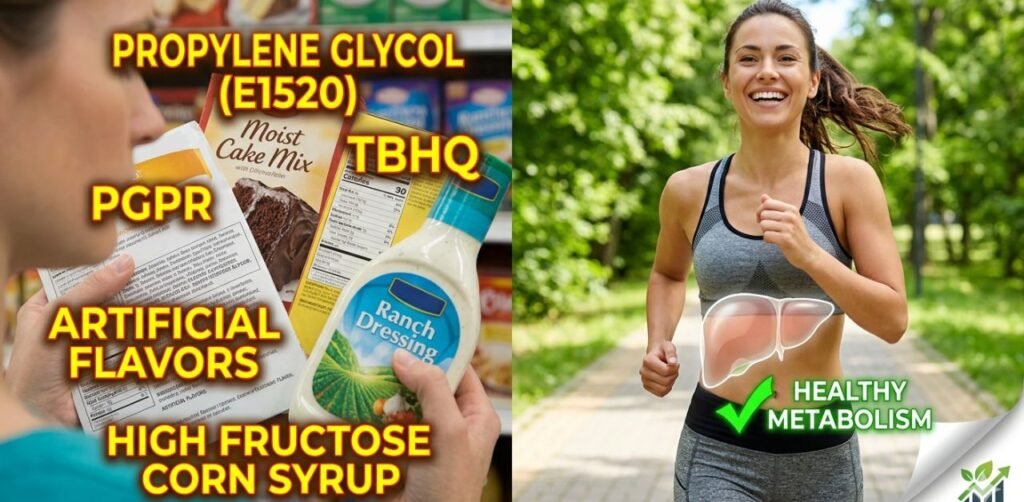
Editor’s Note: The 2026 Additive Audit “At Pure Dietly, we look beyond just calories or macros; we audit the ‘hidden chemicals’ that silently disrupt your metabolic functions. While propylene glycol in food is often dismissed as ‘safe,’ 2026 clinical research reveals that these synthetic additives place a significant burden on liver detoxification and gut health. Our mission is to provide you with the tools to transform your pantry into a ‘Metabolic Safe Zone.’” — Gohar Fatima, Founder & Metabolic Health Researcher Introduction: The Hidden Guest in Your Groceries Have you ever looked at the back of your favorite salad dressing or boxed cake mix and noticed a chemical called propylene glycol in food? If you’ve heard rumors that this same ingredient is used in anti-freeze, you might be feeling a bit uneasy. You aren’t alone. In the world of 2026 metabolic research, we are moving beyond just counting calories; we are now auditing the “hidden stressors” that affect our liver and gut integrity. As a Metabolic Health Researcher at Pure Dietly, I’ve seen how even “FDA-approved” additives can create subtle friction in your biology. While the food industry loves this additive for its ability to keep moisture in, your body might have a different opinion. This guide will break down the science of propylene glycol in food and how to protect your metabolic fire from chemical interference. What Exactly is Propylene Glycol? Propylene Glycol (PG) is a synthetic liquid that absorbs water. In the food world, it’s known as E1520. It acts as a humectant (keeping things moist) and a solvent (helping colors and flavors mix). While it is “Generally Recognized as Safe” (GRAS) by the FDA, there is a massive difference between “safe for consumption” and “optimal for metabolic health.” The Metabolic Friction: Why Pure Dietly Cares Most health blogs tell you it’s safe because it doesn’t cause immediate toxicity. But at Pure Dietly, we look at the long-term “Body Burden.” When you consume propylene glycol in food frequently, your liver has to prioritize detoxifying this synthetic compound over its usual jobs, like regulating blood sugar or managing fat-burning hormones. Where is it Hiding? (The 2026 Pantry Audit) You might be surprised where this additive lurks. It’s not just in “junk” food; it’s often in “diet” products too. Food Category Why it’s used Common Example Baked Goods To keep textures soft and moist Boxed cake mixes, muffins Dairy Products To prevent ice crystals Low-fat ice creams, frozen yogurt Condiments To blend flavors and oils Salad dressings, BBQ sauces Beverages As a carrier for artificial flavors Soda, flavored iced teas Treats Texture consistency Marshmallows, [Reese’s Fast Break] The Global Debate: USA vs. The World In the USA, the FDA allows higher concentrations of propylene glycol in food. However, in the European Union, its use is much more restricted, especially in direct food applications. This gap in regulation is exactly why we recommend a “Precautionary Protocol.” If other countries are wary, your liver should be too. The Connection to Systemic Inflammation Chronic intake of synthetic additives is a primary driver of systemic inflammation. This isn’t just about a stomach ache; it’s about the internal signals your body sends. If you’ve recently seen a [High Globulin Protein] result in your blood work, it’s a sign your immune system is on high alert. Reducing chemical exposures like PG is a critical step in “cooling” that internal fire. Deep Dive: Is Your “Diet” Food Making You Sick? The irony of the 2026 wellness industry is that many “low calorie” or “sugar-free” items use propylene glycol in food to mimic the mouthfeel of fat. When we use our [Net Carb Calculator] to track our macros, we often forget to track the “chemical load.” These additives can disrupt the microbiome, leading to what many call a [Hormonal Belly] where weight loss stalls despite a calorie deficit. How to Spot and Swap: Pure Dietly’s Protocol You don’t have to be afraid of your pantry; you just need to be informed. Pure Dietly’s “Clean Pantry” Checklist To help you transition, focus on these three easy swaps: Summary: Managing Your Chemical Load Convert Fasting Blood Sugar to A1C Frequently Asked Questions (FAQs) 1. Is propylene glycol in food the same as antifreeze? Technically, yes. While food-grade (E1520) is purified, it’s the same chemical used in industrial antifreeze. At Pure Dietly, we consider it a metabolic stressor that adds unnecessary load to your liver. 2. Does propylene glycol cause inflammation? Yes. Chronic intake of synthetic additives triggers low-grade systemic inflammation. If your blood work shows [High Globulin Protein], cutting out PG is a crucial step to “cool” your internal system. 3. Can propylene glycol affect weight loss? Yes. When the liver is busy detoxifying chemicals, it slows down fat metabolism. This can lead to a [Hormonal Belly] or weight loss plateaus, even if you are counting calories. 4. How can I avoid propylene glycol? 5. Is it Keto-friendly? It has zero carbs on a [Net Carb Calculator], but it is not “Metabolic-Friendly.” True healing comes from clean ingredients, not just staying in ketosis with synthetic chemicals. Conclusion: Healing Starts with Awareness Propylene glycol in food isn’t an immediate poison, but it is a metabolic distraction. At Pure Dietly, we believe that your body performs best when it isn’t busy fighting off synthetic additives. By choosing cleaner, whole-food options, you allow your metabolism to focus on what matters: energy, clarity, and long-term health. Fixing your metabolic health isn’t just about what you take out; it’s about the quality of what you put in. Medical Disclaimer The content on PureDietly.com is for informational purposes only. Always consult with your healthcare provider to interpret your specific health needs or before making significant dietary changes. About the Author: Gohar Fatima Founder & Metabolic Health Researcher Gohar Fatima is the founder of Pure Dietly and a dedicated metabolic health researcher. She specializes in uncovering the links between food chemistry and biomarkers, such as [High Globulin]. Gohar empowers individuals to identify “hidden toxins” like propylene