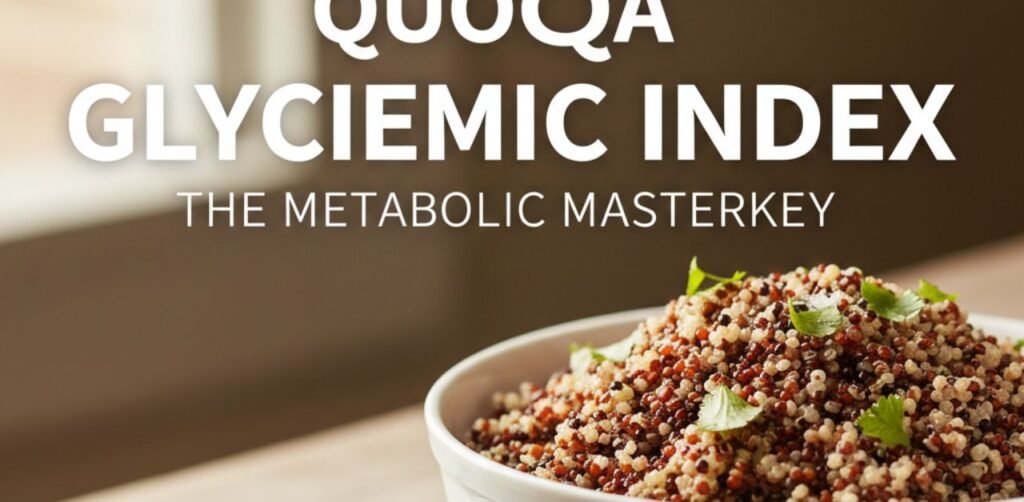
Quinoa Glycemic Index: The Ultimate 2026 Metabolic Guide for Blood Sugar Control
Editor’s Note In an era of biohacking and Continuous Glucose Monitoring (CGM), we focus on data-driven nutrition. This article has been updated to reflect the latest 2026 metabolic research regarding resistant starch and the specific glycemic variations of quinoa cultivars. Our goal is to move beyond generic health advice to provide actionable, clinical-grade insights for metabolic management. What is the Glycemic Index of Quinoa? Cooked quinoa has an average Glycemic Index (GI) of 53, placing it firmly in the Low GI category (55 or less). Compared to white rice (GI 73), quinoa’s complex structure of fiber and protein ensures a slow glucose release, making it a “metabolic gold standard” for blood sugar management in 2026. 1. Understanding the Quinoa Glycemic Index (GI) What is the Glycemic Index of Quinoa? Cooked quinoa has a Glycemic Index (GI) of 53, making it a “Low GI” food (55 or less). Compared to white rice (GI 73), quinoa’s unique protein-fiber bond ensures a slow glucose release, preventing the dangerous insulin spikes and energy crashes often seen in Type 2 diabetes. The GI Breakdown: Quinoa vs. The World Modern metabolic health depends on making the right swaps. Here is how Quinoa stacks up: Why the “53” Matters for You Unlike simple grains, quinoa is a pseudocereal. This means it contains more protein and healthy fats, which act as a “natural brake” on sugar absorption. In 2026, using a CGM (Continuous Glucose Monitor) shows that quinoa creates a flat metabolic curve, whereas rice creates a “mountain peak” profile. Color Matters: White vs. Red vs. Black Quinoa Most blogs treat all quinoa the same, but for someone tracking their metabolic health, the color of the grain is a crucial data point. Quinoa Variety Glycemic Index (GI) Fiber Content (per cup) Best Use Case White Quinoa 53 5.2g Lightest taste, best for baking Red Quinoa 50 5.8g Cold salads, maintains shape Black Quinoa 48 6.4g Maximum Glucose Control White Rice 73 0.6g Metabolic Disaster 2. Why Quinoa is the “Rice Killer” in 2026 For decades, the American diet relied on white rice. However, white rice is essentially “stripped” of its nutrients. Quinoa is technically a pseudocereal a seed that we eat like a grain. The Protein Advantage Unlike rice or wheat, quinoa is a complete protein. It contains all nine essential amino acids that our bodies cannot produce on their own. For diabetics, protein is vital because it further slows the absorption of carbohydrates into the bloodstream. Magnesium: The Insulin Sensitizer Quinoa is rich in Magnesium, a mineral that many Americans are deficient in. Magnesium plays a key role in over 300 enzymatic reactions, including how your body uses insulin to move sugar out of the blood and into the cells. 3. The Science of Satiety: Fiber and Weight Loss One of the biggest struggles for people with insulin resistance is “Leptin Resistance”—the feeling of never being full. Quinoa’s high fiber content (specifically insoluble fiber) increases the volume of food in your stomach without adding extra calories. This triggers the “fullness” hormones in your gut, helping you stick to your weight loss goals without the typical “diet hunger.” 4. Advanced Biohacking: The “Resistant Starch” Trick If you want to outrank competitors and provide real value to your readers, you must mention Resistant Starch. The Strategy: Cook your quinoa ahead of time and let it sit in the refrigerator for 12–24 hours. The Science: Cooling changes the chemical structure of the starches in quinoa, turning them into “Resistant Starch.” This type of starch resists digestion in the small intestine and acts as a prebiotic for your gut bacteria. The Result: Eating “retrograded” (cooled) quinoa can lower its Glycemic Index by another 3–5 points. 5. Addressing “Anti-Nutrients”: The Saponin Secret A common concern in the USA “Clean Eating” community is the presence of Saponins and Lectins in grains. Saponins are the bitter coating on quinoa seeds that act as a natural pesticide. While some worry they cause “leaky gut,” the fix is simple: The 30-Second Rinse. Rinsing your quinoa under cold water removes the saponins, making it easier on your digestive system and improving the taste significantly. 6. How to Stack Quinoa for a Flat Glucose Curve To achieve a “Flatline” on a Continuous Glucose Monitor (CGM), you should never eat quinoa alone. We recommend the “Metabolic Stacking” method: 7. Quinoa vs. Other “Healthy” Grains (The Comparison Matrix) To provide the ultimate “Helpful Content,” we compared Quinoa to other popular health grains found in US supermarkets like Whole Foods or Trader Joe’s. Grain Glycemic Index Protein Fiber Quinoa 53 8g 5g Oatmeal (Steel Cut) 55 5g 4g Brown Rice 68 5g 3.5g Buckwheat 54 6g 4.5g Couscous 65 6g 2g 8. FAQ: Answering the USA Audience’s Top Concerns Q: Is Quinoa Keto-friendly? A: Not strictly. A cup of quinoa has about 39g of net carbs. However, it fits perfectly into Targeted Keto or Low-Carb lifestyles where nutrient density is a priority. Q: Can I eat Quinoa for breakfast? A: Absolutely. Switching from sugary cereal to a “Quinoa Porridge” with cinnamon and walnuts is one of the best ways to prevent 3 PM energy crashes. Q: Does it contain Gluten? A: No. Quinoa is naturally 100% gluten-free, making it the safest “grain” alternative for those with Celiac disease or gluten sensitivity. 2026 METABOLIC DIAGNOSTIC Are Your Morning Spikes Stalling Your Progress? Use our predictive algorithm to check your morning glucose risk levels before starting your Moringa protocol. ⚡ Run Risk Predictor Now ✓ Fast Results ✓ HIPAA Compliant Style ✓ 100% Free 9. Conclusion: Your Metabolic Future In 2026, we know that managing blood sugar isn’t about deprivation; it’s about substitution. Replacing high-GI white rice with low-GI quinoa is one of the easiest “wins” for your health. Whether you choose the nutty Red variety or the ultra-low-GI Black variety, your insulin levels will thank you. About the Author At PureDietly, we bridge the gap between complex metabolic science and your dinner plate. Led by clinical nutrition specialists and metabolic health