

By Gohar Fatima / September 20, 2026
Editor’s Note
Navigating the modern produce aisle in search of nutrient-dense vegetables can feel overwhelming when you are managing prediabetes, tracking macros, or trying to eat clean. Many popular diet trends promise miraculous health transformations, but finding truly versatile, low-carb whole foods is essential. If you are tracking your continuous glucose monitor (CGM) or looking for powerful plant-based antioxidants, understanding traditional whole foods is crucial. In this data-driven audit, we break down the clinical science behind eggplant nutrition, separating marketing hype from sustainable wellness habits to help you protect your long-term vitality.
Introduction: The Hidden Nutritional Power of Eggplant in Modern Diets
Walking down the fresh produce section in the United States, you will frequently spot glossy, deep purple eggplants stacked neatly next to zucchini and bell peppers. If you feel constantly uninspired by standard green vegetables or struggle to find low-carb ingredients that actually satisfy your appetite, adding this unique nightshade to your routine can feel like a game-changer.
However, before dismissing this vegetable due to its spongy texture, look closely at the clinical science. Eggplant is a low-calorie, nutrient-dense food that has supported human nourishment for centuries. Instead of relying on over-processed artificial supplements, incorporating clean whole foods like eggplant nutrition profiles into your daily meal planning helps support your metabolic health safely. By focusing on whole-food nutrients, you can boost your vitality without risking blood sugar volatility or digestive distress.
The Core Nutritional Profile: What’s Inside a Single Serving?
Evaluating the physiological impact of adding a new vegetable to your daily meal plan requires clear nutritional metrics. Review the breakdown below to understand how raw eggplant compares nutritionally:
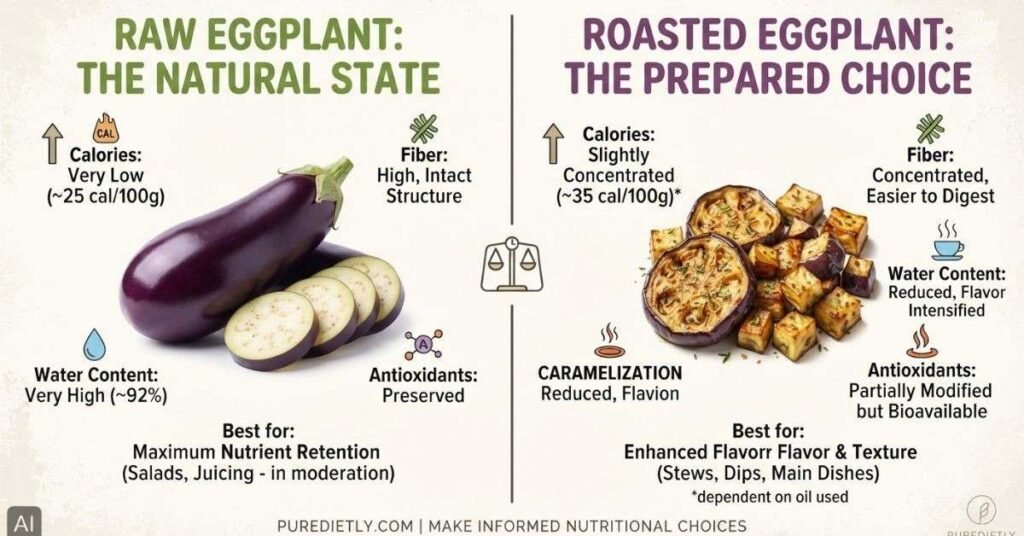
| Evaluation Metric | Raw Eggplant (Per 100g Serving) | Cooked / Roasted Eggplant |
| Calorie Count | Extremely low (~25 calories) | Low calorie density (~35 calories depending on oil) |
| Dietary Fiber | Rich in insoluble fiber (aids gentle digestion) | Concentrated fiber structure |
| Carbohydrate Profile | Low net carbs (~6g total carbs) | Easily managed in diabetic meal plans |
| Blood Sugar Impact | Maintains a flat, stable continuous glucose monitor (CGM) curve | Supports steady glycemic control |
How Fiber and Antioxidants Influence Metabolic Health
Understanding how your body processes plant-based nutrients is vital for long-term metabolic health. Eggplants are packed with specific biochemical compounds that protect your cellular structure.
- The Power of Nasunin: Eggplant skin contains a potent antioxidant called nasunin, which is an anthocyanin that scavenges free radicals and protects cell membranes from oxidative stress.
- Gut Lining and Digestion: The dense dietary fiber found in eggplants helps strengthen your intestinal mucosal lining, preventing unwanted particles from triggering systemic inflammation. If you want to explore smart gut strategies that protect your digestion, check out our guide on [Is Gelatin Good For You? The Ultimate 2026 Gut, Skin & Metabolic Health Guide].
- Blood Sugar Stability: Because of its low glycemic index and high water content, eating eggplant slows down carbohydrate absorption, preventing sharp insulin spikes. For deeper insights into safe metabolic management, review our breakdown on [Natural Detox Diets: Do They Actually Work? A 2026 Metabolic Cleanse Guide].
The “Sponge Effect”: Why Preparation Matters Most
While plain eggplant is inherently a healthy choice, how you prepare it changes its nutritional value completely. Many people mistakenly think all eggplant dishes are equally beneficial for weight management.

- High Oil Absorption: Eggplant flesh acts like a natural sponge, quickly soaking up excessive cooking oils and butter if fried. Consequently, this can turn a low-calorie vegetable into a high-fat meal.
- Smart Cooking Techniques: Instead of deep frying, opt for air-frying, roasting, or grilling with a light mist of avocado oil. For more on supportive hydration and clean swaps during your meal prep, explore our insights on [Sugar-Free Isotonic Drinks: The Ultimate 2026 Metabolic & Hydration Guide].
- Preserving the Skin: Peeling the eggplant strips away valuable fiber and nasunin antioxidants. Keeping the skin on maximizes your nutritional intake.
Comparing Eggplant to Other Popular Low-Carb Vegetables
When managing prediabetes or watching your daily carbohydrate intake, choosing the right vegetables can make or break your routine. Let’s look at how eggplant stacks up against other common pantry choices:

- Eggplant vs. Zucchini: While zucchini is fantastic for low-carb noodles, eggplant offers a meatier texture that mimics comfort foods, making it easier to stick to plant-forward meal plans.
- Eggplant vs. Potatoes: Potatoes are high in starchy carbohydrates that trigger rapid glucose spikes. Eggplant provides a similar comforting consistency with a fraction of the glycemic load.
- Eggplant vs. Bell Peppers: Both belong to the nightshade family, but eggplant’s unique sponge-like absorption allows it to carry robust spices and savory flavors exceptionally well.
A Sample Daily Routine to Incorporate Eggplant Safely
Instead of changing your entire routine overnight, you can seamlessly transition by adding clean, nutrient-dense eggplant preparations into your day:

- Morning Cellular Support: Kickstart your day with a balanced breakfast, keeping lunch ready with meal-prepped roasted vegetables. If you enjoy soothing morning options, you can also look at our insights on [Celery Juice Benefits: The Ultimate 2026 Metabolic and Gut Health Guide].
- Nourishing Lunch Bowl: Grilled eggplant slices layered over a bed of mixed greens, topped with pumpkin seeds and a light lemon-olive oil dressing.
- Evening Wind-Down: A warm, comforting ratatouille or baked eggplant parmesan made with clean, low-sodium ingredients that support overnight recovery without causing CGM volatility.
Frequently Asked Questions (FAQs)
Is eggplant good for weight loss and satiety?
Yes, eggplant is a low-calorie, high-fiber food that significantly boosts satiety hormones, helping you feel full longer and preventing unnecessary snacking between meals.
Can eggplant help manage blood sugar levels?
Yes, incorporating fiber-rich vegetables into your meals slows down carbohydrate absorption, supporting stable glycemic control and preventing sharp insulin spikes.
How does eggplant benefit heart health?
Eggplants contain heart-healthy fiber, potassium, and antioxidants like nasunin, which together help support healthy blood pressure and balanced cholesterol levels.
Are there any side effects when eating eggplant?
Eggplants belong to the nightshade family. While safe for most people, individuals with specific sensitivities or inflammatory joint conditions sometimes choose to limit nightshades.
Conclusion: Making Smart Choices for Your Daily Wellness
Ultimately, when evaluating eggplant nutrition, scientific evidence proves that this versatile whole food offers remarkable benefits for your metabolic health, digestion, and antioxidant defense. If your primary goal is to protect your long-term metabolic health, enhance energy levels, and enjoy satisfying meals, incorporating fresh eggplant into your diet is a smart strategy.
For more data-driven insights and healthy lifestyle swaps designed for modern wellness seekers, continue exploring our latest articles right here at PureDietly!
About the Author
Gohar Fatima is the founder and lead metabolic health researcher at PureDietly, dedicated to translating complex nutritional science and practical wellness habits into easy-to-follow advice for everyday readers navigating prediabetes and metabolic wellness.
Medical Disclaimer
The content provided on PureDietly is for informational purposes only and is not intended as medical advice, diagnosis, or treatment. The team at PureDietly are not licensed medical physicians. Always seek the advice of your physician or qualified health provider with any questions regarding a medical condition or dietary changes. Individual metabolic responses and health results may vary.