

Editor’s Note
Walking down the modern grocery store aisle often feels like an obstacle course, especially when you are cutting back on added sugars. Everywhere you look, food labels flash claims like “sugar-free,” “zero sugar,” or “made with natural botanical extracts.” For millions managing prediabetes, tracking CGM metrics, or reversing insulin resistance, finding the right sweetener is a daily challenge.
If you have ever asked yourself, is stevia healthier than sugar, you are definitely not alone. Traditional table sugar provides a quick burst of energy, but it always comes with an aggressive metabolic crash. Conversely, modern plant-based alternatives promise guilt-free sweetness without the heavy metabolic baggage.
Let us dive deep into the clinical facts and examine how stevia stacks up against regular cane sugar.
What Is Stevia and Where Does It Come From?
Before comparing the two sweeteners, it helps to understand what stevia actually is. Unlike synthetic sweeteners created in a laboratory, stevia is a natural product derived from the green leaves of the Stevia rebaudiana plant, which is native to South America.
- Rich Historical Origin: Indigenous communities in South America utilized stevia leaves for centuries due to their intense natural sweetness and traditional medicinal properties.
- Intense Sweetness Power: Sweet compounds found within the plant, known as steviol glycosides, are roughly 200 to 400 times sweeter than regular sucrose. Because it is highly concentrated, only a tiny fraction is needed.
- Zero Calorie Profile: Because the human digestive tract does not metabolize these specific sweet glycosides like carbohydrates, stevia contributes zero calories and zero net carbs to your daily diet.
Stevia vs. Sugar: Side-by-Side Metabolic Comparison
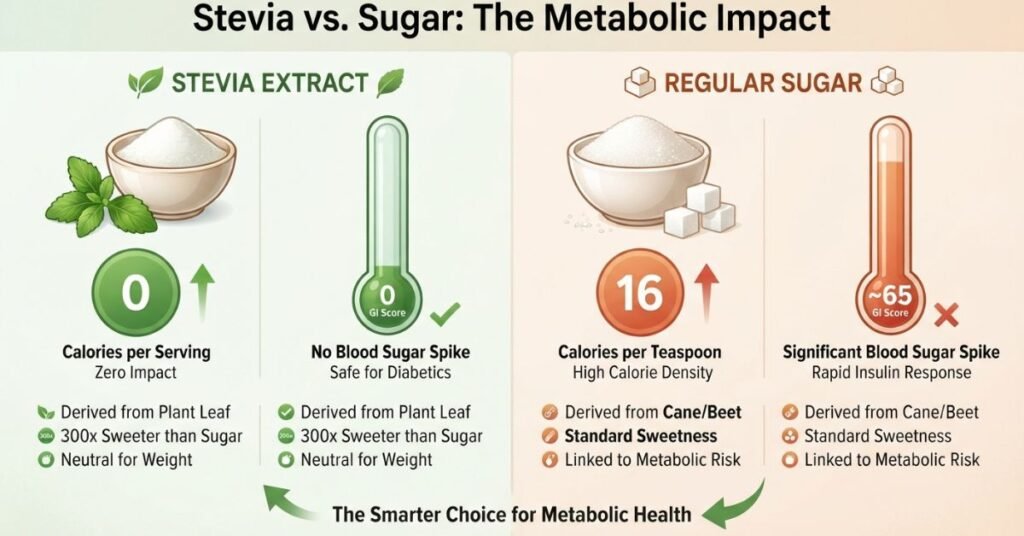
To accurately answer whether stevia is healthier than sugar, we must look at how each sweetener interacts with human biochemistry. Review the comparison table below to visualize these differences:
| Evaluation Metric | Regular Cane Sugar | Pure Stevia Extract |
|---|---|---|
| Calorie Count | 4 calories per gram | 0 calories per gram |
| Glycemic Index (GI) | High (approx. 65) | Zero (0) |
| Blood Sugar Impact | Triggers sharp, rapid insulin spikes | No direct impact on blood glucose levels |
| Dental Health | Actively promotes tooth decay and cavities | Tooth-friendly; does not feed oral bacteria |
| Metabolic Risk Profile | Strongly linked to obesity and type 2 diabetes | Safe and neutral for glycemic control and weight management |
How Refined Sugar Disrupts Metabolic Health
To appreciate the protective benefits of stevia, we must examine what regular cane sugar does to your system. When you consume foods loaded with refined sucrose or high-fructose corn syrup, your upper digestive tract breaks them down into glucose and fructose instantly.
- The Rapid Glucose Spike: Free glucose floods your bloodstream immediately. This causes a sudden upward spike in blood sugar, forcing your pancreas to pump out large surges of insulin.
- Cellular Fatigue and Resistance: Over months and years of constant exposure to high insulin demands, your cells stop responding efficiently. This paves the way toward insulin resistance and prediabetes.
- Hepatic Overload: Excess fructose travels directly to the liver. There, it is rapidly converted into stored fat deposits, significantly increasing the risk of fatty liver disease.
Because of these profound physiological risks, finding a reliable, metabolic-friendly alternative is crucial for long-term health.
Why Stevia Wins for Blood Sugar and Weight Management
For anyone keeping a close eye on their continuous glucose monitor or trying to reverse prediabetes, pure stevia offers a massive biological advantage over nutritive sweeteners.

- Zero Glycemic Response: Clinical research consistently demonstrates that high-purity stevia extracts do not raise blood glucose or serum insulin levels, making them safe for diabetics.
- Weight Control Support: By swapping out high-calorie sugary sodas and teas for stevia-sweetened options, you can effortlessly eliminate hundreds of empty calories.
- Sustained Energy Stability: Without experiencing the frustrating roller-coaster of glucose spikes and reactive crashes, your daily mental focus and sustained energy levels improve remarkably.
Navigating Safety, Quality, and Common Misconceptions
Although high-purity stevia is widely recognized as safe by regulatory bodies like the FDA, many consumers still wonder about potential side effects.
- Understanding Extract Purity: It is vital to distinguish between raw leaves, highly refined rebaudioside extracts, and commercial packets blended with bulk agents. High-purity extracts undergo rigorous filtration to eliminate bitter components.
- The Aftertaste Factor: Some individuals notice a mild herbal or licorice-like aftertaste, particularly with lower-quality extracts. Selecting pure Reb-A extracts largely resolves this issue.
- Check the Blending Ingredients: Always check your product labels. Many commercial boxes mix pure stevia extract with sugar alcohols like erythritol. If you have a sensitive digestive tract, large quantities of certain fillers can trigger mild bloating.
Add Seaweed Salad to your daily carb limit in 30 seconds!
Frequently Asked Questions (FAQs)
1. Is stevia completely safe for people with prediabetes?
Yes. Because high-purity stevia has a glycemic index rating of zero, it does not trigger the dangerous blood sugar spikes associated with regular cane sugar.
2. Can I use stevia for baking just like regular sugar?
Generally yes, but because stevia lacks physical bulk and moisture-retention properties, you may need to adjust your baking recipes or use specialized measured blends.
3. Does stevia cause weight gain or insulin resistance over time?
No. Unlike artificial sweeteners that older studies debated, clinical research indicates that pure stevia is metabolically inert and does not negatively impact insulin sensitivity.
4. Is stevia a healthier option than artificial chemical sweeteners like aspartame?
Many health-conscious consumers prefer stevia because its primary sweetening compounds are extracted directly from a natural plant leaf rather than synthesized in industrial labs.
Conclusion: Making the Smart Choice for Your Metabolic Future

Ultimately, when evaluating whether stevia is healthier than sugar, the overwhelming scientific evidence points clearly in favor of stevia. If your primary goal is to protect your long-term metabolic health, avoid energy crashes, and reduce daily caloric intake without giving up sweet treats, transitioning to stevia is a brilliant strategy.
For more data-driven insights and healthy lifestyle swaps designed for modern wellness seekers, continue exploring our latest articles right here at PureDietly!
About the Author
Gohar Fatima is the founder and lead metabolic health researcher at PureDietly, dedicated to translating complex nutritional science and practical wellness habits into easy-to-follow advice for everyday readers navigating prediabetes and metabolic wellness.
Medical Disclaimer
The content provided on PureDietly is for informational purposes only and is not intended as medical advice, diagnosis, or treatment. The team at PureDietly are not licensed medical physicians. Always seek the advice of your physician or qualified health provider with any questions regarding a medical condition or dietary changes. Individual metabolic responses and health results may vary.onses and health results may vary.nue exploring our latest articles right here at PureDietly!