
By Gohar Fatima | Puredietly
In 2026, the search for metabolic resilience has shifted from simple calorie counting to “glucose stabilization.” For those of us navigating insulin resistance, type 2 diabetes, or PCOS, the question is no longer just “how many calories is this?”, but “how will this impact my glucose curve?”
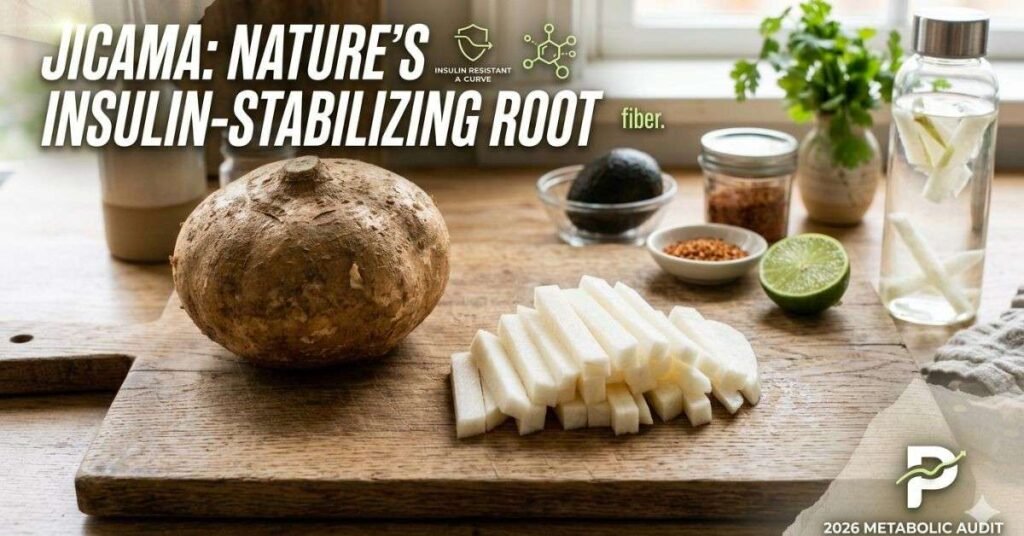
Enter Jicama. Often overlooked in the shadow of more common tubers like potatoes, this Mexican root vegetable also known as the yam bean or Mexican potat is emerging as a functional metabolic stabilizer. Unlike traditional starchy vegetables that cause rapid glucose spikes, Jicama serves as a powerful, low-glycemic tool for those trying to flatten their glycemic response.
1. The Metabolic Profile: Understanding the “Metabolic Brake”
At its core, Jicama is a globe-shaped root vegetable with a papery, golden-brown skin and a starchy white interior. While some compare its flavor to a potato, its metabolic impact is vastly different.
The Fiber-to-Carb Ratio
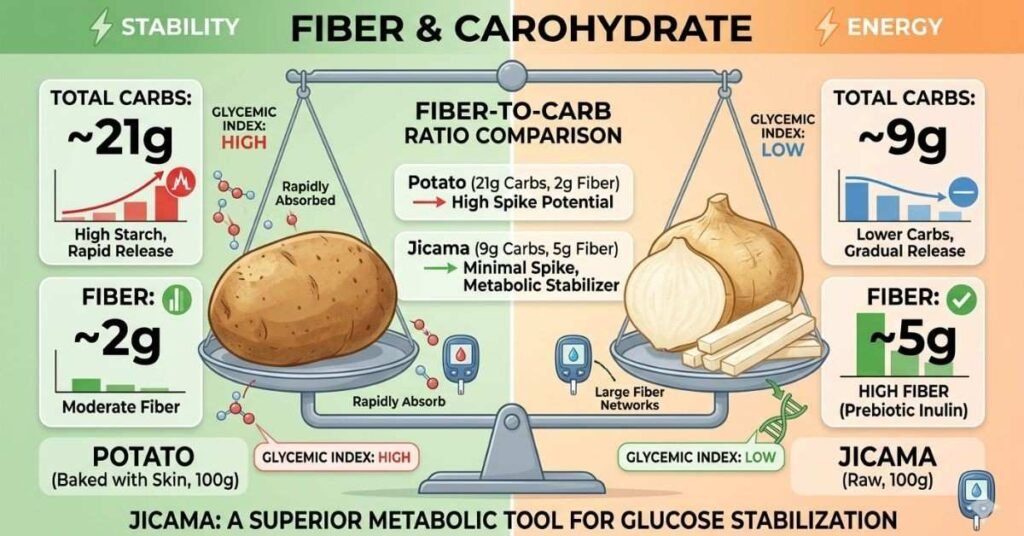
Most tubers are high in starch, which breaks down rapidly into glucose, causing spikes. Jicama is unique because it provides a high volume of fiber with a relatively low carbohydrate load.
- The Data: A 130-gram cup contains only 49 calories and 11.5 grams of carbohydrates, but a significant 6.4 grams of fiber.
- Insulin Sensitivity: This high fiber-to-carb ratio is the key to its success in an insulin-safe diet. Emerging research suggests that Jicama extracts may increase insulin sensitivity and help regulate hepatic glucose (liver glucose production) in insulin-resistant models.
The Power of Inulin
Jicama is exceptionally rich in inulin, a type of prebiotic fiber that the human body cannot digest.
- The Gut-Metabolic Axis: By fueling beneficial bacteria in the gut, inulin may improve overall metabolic health and reduce systemic inflammation, which is a core driver of chronic disease.
- Glucose Regulation: Studies in diabetic mice have shown that Jicama-based prebiotics can help lower blood sugar levels more effectively than standard probiotic supplementation alone.
The Microbiome and Metabolic Diversity
The inclusion of Jicama in a “Zero-Spike” diet is not just about fiber intake; it is about cultivating microbial diversity in the gut. A diet rich in prebiotic inulin, such as that found in Jicama, significantly increases the population of beneficial bacteria, which in turn optimizes how your body manages inflammation and immune function. This microbial modulation is a critical component of a 2026-focused metabolic audit, as it influences not only how you process glucose but also your long-term metabolic markers, mood, and satiety levels. By shifting your gut ecology, Jicama helps create a systemic environment that is less prone to the metabolic chaos often associated with modern, ultra-processed diets.
2. Jicama vs. Traditional Tubers: A Comparative Audit
When auditing your pantry for metabolic health, the choice of carbohydrates is everything. Using a “Zero-Spike” lens, let’s compare Jicama to a common potato:
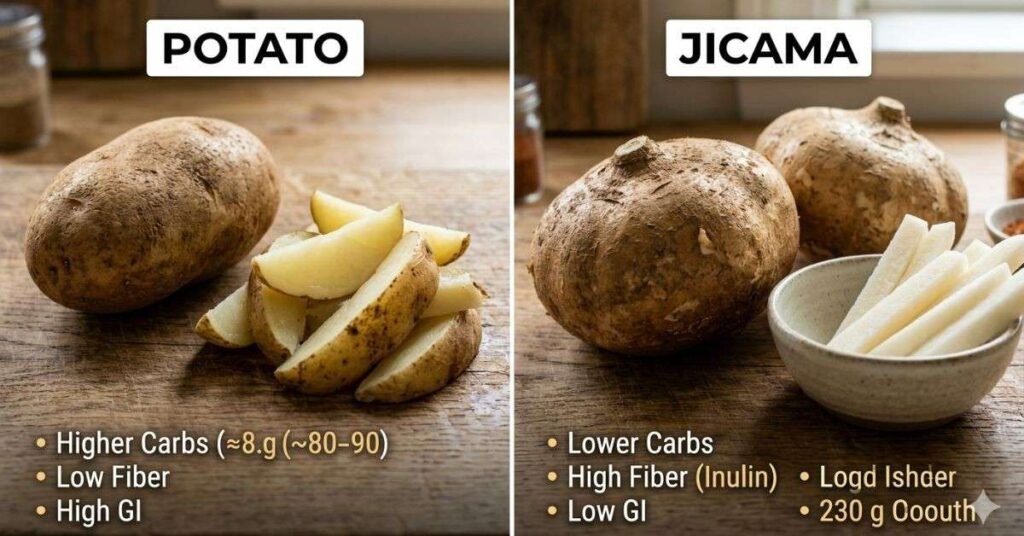
| Feature | Potato | Jicama |
| Glycemic Impact | High Spike | Minimal/Stable |
| Fiber Content | Moderate | High (Prebiotic Inulin) |
| Metabolic Role | Rapid Energy (Starch) | Bio-modulator |
By choosing Jicama over refined alternatives, you are essentially reducing the metabolic friction in your body, allowing for more stable gastric emptying and a flatter glucose curve.
3. Strategic Usage: How to Incorporate Jicama
To maximize the metabolic benefits of Jicama, it should not be treated merely as a side dish, but as a functional “metabolic appetizer.”
The Pre-Meal Appetizer Strategy

Consume raw Jicama slices 15 minutes before your main meal. The high fiber and water content provide a satiety signal to your brain and help prime your gut, buffering against the glycemic load of your main course. This is a simple but effective technique for managing post-prandial glucose.
Replacing Pro-Inflammatory Snacks
Processed chips are often the downfall of a metabolic reset. Replace processed, pro-inflammatory snacks with raw Jicama sticks. Pair them with healthy fats like guacamole, hummus, or a drizzle of sesame oil and chili powder. Combining fiber with healthy fat is the gold standard for maintaining a flat glucose curve throughout the day.
Culinary Versatility
Jicama maintains its signature crunch even when cooked. Stir-frying it with sesame oil and light aromatics creates a texture-rich addition to any meal without the glucose-spiking potential of traditional grains or starchy pastas.
4. Scientific Validation: Beyond the Hype
The metabolic benefits of Jicama are backed by rigorous scientific inquiry rather than just anecdotal wellness trends.
Weight Loss and Metabolic Health
A 2019 animal study demonstrated that Jicama fiber could prevent excessive blood glucose and body weight increase in high-sugar diet models without affecting overall food intake. This suggests that Jicama’s impact is directly related to how the body processes glucose and insulin at a cellular level, rather than just a reduction in caloric density.
Antioxidant Capacity
Jicama’s high antioxidant profile including vitamin C, vitamin E, and selenium helps neutralize free radicals. Oxidative stress is a primary driver of insulin resistance; by mitigating this stress, Jicama supports cellular health from the inside out. Furthermore, a 2021 review highlights that antioxidants in Jicama may decrease the risk of chronic diseases such as cardiovascular issues and cognitive decline.
Heart Health
Jicama is rich in nutrients that support heart health, including fiber and water content. A 2018 review noted that dietary fiber helps decrease the risk of heart disease and stroke by lowering LDL cholesterol and blood pressure.
The Anticancer Potential of Jicama Seeds and Roots
Beyond metabolic stability, recent research has highlighted Jicama’s potential role in cellular defense. A 2021 review indicates that the phytochemicals found in Jicama specifically compounds like rotenone have shown intriguing anticancer properties in laboratory settings. Furthermore, researchers have successfully purified a ribosome-inactivating protein from Jicama seeds, known as pachyerosin, which has demonstrated the ability to inhibit the growth of human hepatoma (liver cancer) cells. While these findings are primarily based on isolated compounds and animal models, they underscore the complex bioactive nature of Jicama beyond just its fiber and calorie profile.
5. How to Select and Store for Maximum Potency
To ensure you are getting the metabolic benefits, you must select high-quality Jicama:

- Selecting: Look for roots that are firm, heavy for their size, and have dry, smooth skin. Avoid roots that are soft, bruised, or have damp skin.
- Storing: Keep unpeeled Jicama in a cool, dark, and dry place, much like a potato. Once peeled, store it in an airtight container in the refrigerator for up to 3 days to maintain its nutrient profile.
6. Frequently Asked Questions (FAQ)
- Is Jicama safe for insulin resistance?
- Yes. Its high fiber content, particularly inulin, combined with a low glycemic impact, makes it a superior choice for those managing insulin resistance.
- Does Jicama have any side effects?
- Because it is very high in fiber, consuming too much at once can lead to digestive discomfort, such as bloating, stomach pain, or flatulence. Start with small portions to see how your gut responds.
- Is the entire plant edible?
- No. While the root is a nutritional powerhouse, the seeds of the Jicama plant contain a toxin called rotenone. Always ensure you are consuming only the root, and discard any seeds or skin.
- Is Jicama a natural laxative?
- Jicama is not a laxative, but its high fiber content can help relieve constipation and regulate bowel movements in those who are fiber-deficient.
7. Conclusion: A Simple Upgrade for Your Metabolic Audit
Building metabolic resilience in 2026 is about making small, data-backed swaps. Integrating Jicama into your diet is a low-effort, high-reward strategy. It provides the crunch you crave while simultaneously supporting your gut health, stabilizing your blood sugar, and providing vital antioxidants.
As you continue your journey toward “Zero-Spike” nutrition, remember that the goal is to bridge the gap between complex health data and your daily kitchen habits. Jicama isn’t just a vegetable it’s functional fuel. By auditing your intake and prioritizing nutrient-dense, fiber-rich choices, you take one more step toward reclaiming your metabolic health.
About the Author: Gohar Fatima
Gohar Fatima is a dedicated metabolic health researcher, professional content writer, and the founder of Puredietly. With a data-driven approach to nutrition, she specializes in translating complex glycemic science into actionable, “Zero-Fluff” lifestyle strategies.
Driven by her commitment to E-E-A-T standards, Gohar focuses on helping individuals navigate insulin resistance, PCOS, and blood sugar management through evidence-based dietary audits. Her mission with Puredietly is to bridge the gap between rigorous nutritional research and the daily kitchen habits of those seeking long-term metabolic resilience. When she isn’t auditing the latest health trends or optimizing nutritional data, she is busy curating science-backed content that empowers her readers to take control of their glucose curves and overall gut health.
Medical Disclaimer
The information provided in this article is for educational purposes only. Always consult with your qualified healthcare provider before beginning any new health-tracking protocol or making significant changes to your diet.