
By Gohar Fatima | Published on August 24, 2026
Editor’s Note: At PureDietly, we believe that navigating modern convenience food should not mean compromising your health. Popeyes buttermilk biscuits are famous for their flaky layers. However, understanding their true metabolic footprint is vital for guarding your energy stability. Let’s decode the nutritional facts of this iconic side item so you can enjoy your meals without glucose spikes.
Imagine driving through a busy Friday evening fast-food lane. The aroma of seasoned batter and sizzling fryers fills the air. Naturally, you add their legendary buttermilk biscuit to your order. It arrives piping hot, feather-light, and dripping with buttery goodness.
For millions of Americans, a fast-food order feels incomplete without it. Yet, for people monitoring their metabolic health or trying to avoid an energy crash, a casual attitude toward fast-food sides can cause trouble.
In this guide, we unpack the exact nutritional mechanics of the Popeyes nutrition biscuit. We evaluate its physiological toll and share smart strategies to balance your cravings with metabolic clarity.
1. What Makes the Popeyes Biscuit So Alluring?
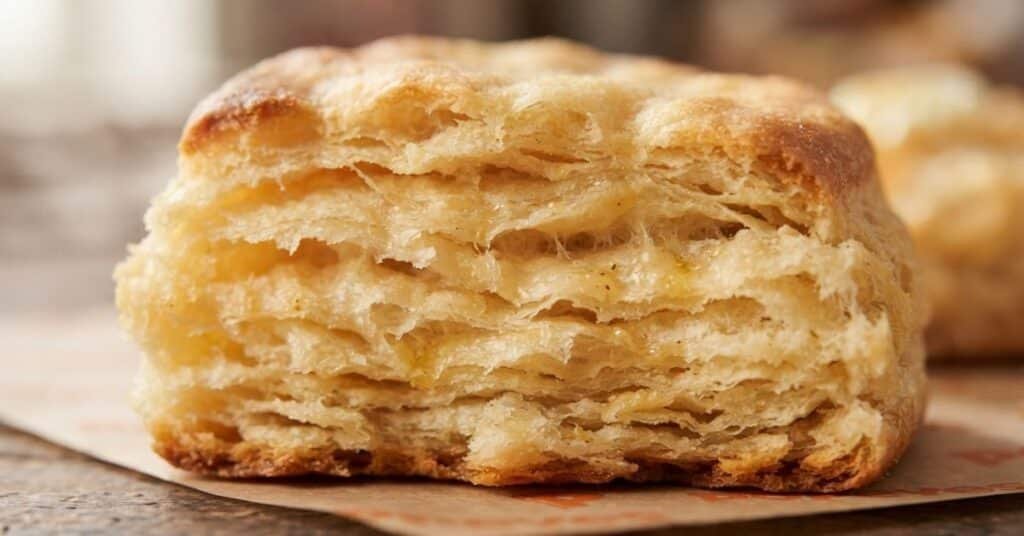
To understand why these biscuits are popular, we must look at how they are made. Unlike artisanal breads, a commercial Southern-style buttermilk biscuit relies on rapid leavening and heavy lamination techniques.
Bakers fold chilled fats repeatedly into enriched wheat flour, creating micro-layers of dough. In the oven, trapped moisture flashes into steam, forcing those layers apart. This creates a flaky interior and a crisp, golden crust.
However, this process relies heavily on refined grains and hydrogenated fats. To explore how stripped white grains compare to fiber-rich alternatives in your diet, read our guide on [Can Diabetics Eat Rice? The Shocking Truth About White vs Brown Rice!].
2. Popeyes Biscuit Nutrition Facts: Breaking Down the Macros
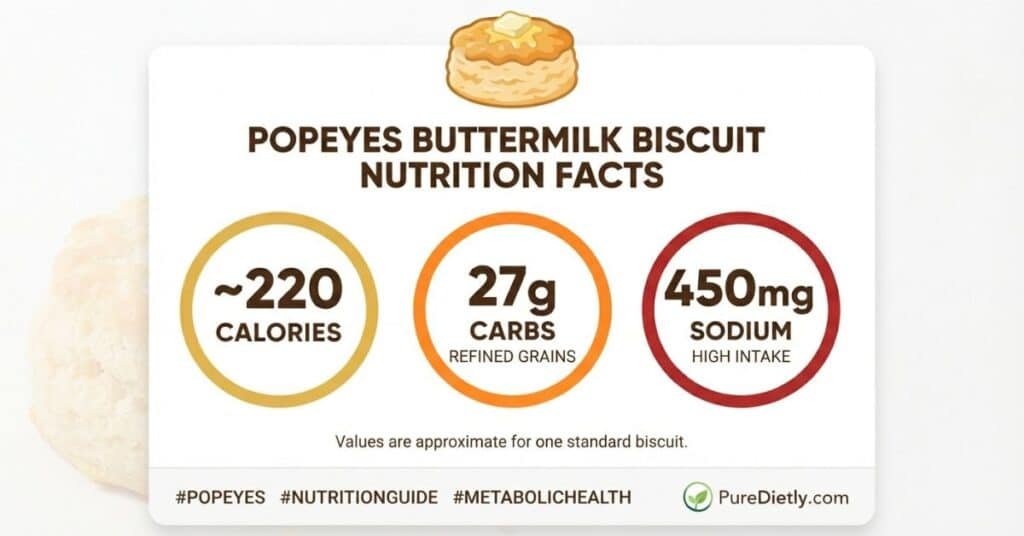
When evaluating menu items through a clinical lens, raw macro data reveals how a single item impacts your body. A standard single Popeyes buttermilk biscuit yields the following profile:
| Macro Component | Standard Popeyes Biscuit (Per Unit) | Metabolic Impact Analysis |
|---|---|---|
| Total Energy (Calories) | ~200 to 220 kcal | Moderate baseline caloric density |
| Total Lipids (Fat) | ~11g to 12g | High in saturated and trans-associated fats |
| Saturated Fat | ~5g | Contributes to cardiovascular lipid loads |
| Sodium Content | ~400mg to 450mg | Influences acute fluid retention and pressure |
| Total Carbohydrates | ~25g to 27g | Rapidly digested starches (like 1.5 slices of white bread) |
| Dietary Fiber | < 1g | Lacks sufficient fiber to slow absorption |
| Added Sugars | ~2g to 3g | Traces of sucrose and natural dairy sugars |
| Protein Content | ~3g | Low structural protein relative to starch density |
As this breakdown shows, a single biscuit delivers nearly 27 grams of fast-acting carbohydrates in a small volume. Consumed on its own or with a heavy meal, it acts as a rapid glucose delivery mechanism.
3. How Fast-Food Breads Disrupt Glucose Equilibrium
When you eat foods rich in refined starches without fiber, your digestive system breaks them down into simple sugars very quickly.
- Accelerated Gastric Transit: Because the biscuit lacks a protective fiber network, gastric emptying occurs rapidly. Glucose floods your bloodstream unimpeded.
- The Insulin Surge: Faced with a blood sugar spike, your pancreas releases a surge of insulin. For people with insulin resistance, this surge is often followed by a reactive dip, triggering lethargy and brain fog.
- The Compound Effect: Rarely is a biscuit eaten alone. When paired with breaded chicken and sugary sauces, the total glycemic load multiplies exponentially.
For a comprehensive framework on managing post-meal glucose curves, review our clinical resource on [Glycemic Index Management].
4. Smart Strategies for Drive-Thru Culture
Absolute dietary restriction rarely works long-term. Sustainable wellness requires awareness and strategic trade-offs. If you choose to indulge in a Popeyes biscuit, use these tactical guardrails:
- Enforce Portion Control: Rather than eating a multi-pack, split a single biscuit with a dining companion or save half for later.
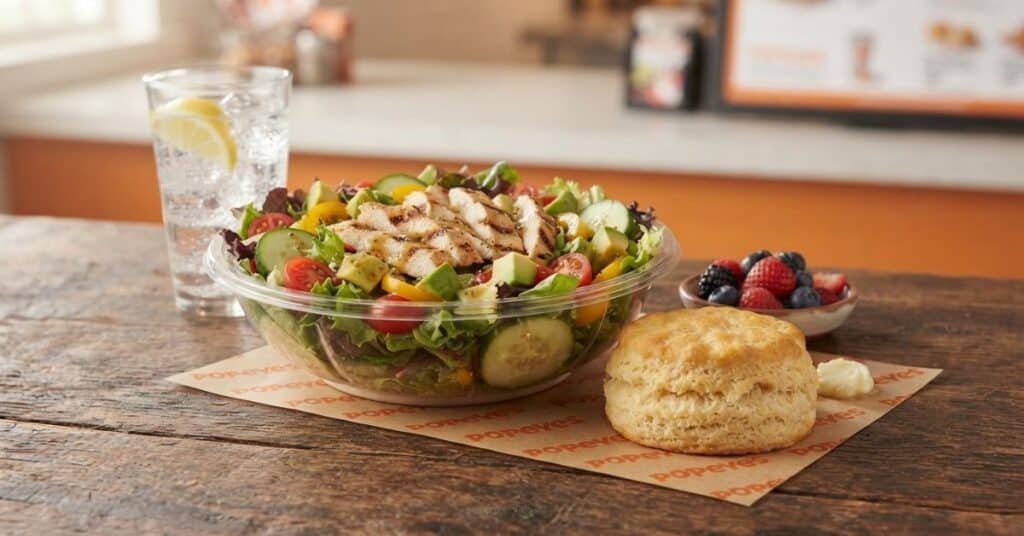
- Isolate Protein Anchors: Ensure your meal’s core consists of clean proteins and fibrous greens. Proteins and fats help blunt the glycemic velocity of subsequent carbs.
- Prioritize Hydration: High-sodium meals cause temporary water retention. Counteract this by hydrating aggressively with pure water or herbal infusions. For recovery support post-meal, explore our insights in the [Ginger Tea Benefits Guide].
- Replicate Comfort at Home: If you love warm pastries during weekends, experiment with home-baked versions using almond flour, coconut flour, or psyllium husk, sweetened naturally with allulose or monk fruit.
Add Seaweed Salad to your daily carb limit in 30 seconds!
5. Frequently Asked Questions (FAQs)
Q1: How many carbohydrates are hidden in a Popeyes biscuit?
Answer: A standard buttermilk biscuit features about 25 to 27 grams of total carbohydrates, driven entirely by refined wheat flour.
Q2: Can individuals managing diabetes safely consume a fast-food biscuit?
Answer: While no food is strictly forbidden, clinical caution and strict portion boundaries are necessary. Its elevated glycemic index can provoke glucose spikes echoing the refined starch dynamics in our guide on [Can Diabetics Eat Rice?].
Q3: Why do commercial fast-food breads cause rapid spikes?
Answer: Bakeries use stripped, ultra-fine flours. Without bran and germ layers to slow down digestion, enzymes convert these starches into glucose instantly.
Q4: What are the best methods to mitigate a high-carb meal?
Answer: Pair starchy items with dense proteins, stay hydrated, and take a 10-to-15-minute brisk walk immediately after eating to significantly flatten glucose spikes.
Conclusion: Balancing Comfort and Long-Term Wellness
The Popeyes buttermilk biscuit remains an icon of comfort food. However, knowing its macro data—its 220 calories, 27 grams of carbs, and high sodium shifts you from a passive consumer to an empowered decision-maker.
By practicing portion control and remaining mindful of your glycemic thresholds, you can savor the occasional drive-thru tradition while protecting your metabolic health!
About the Author
Gohar Fatima is the founder and lead health researcher at PureDietly, dedicated to translating complex metabolic science and dietary data into practical guidance for sustainable wellness.
Medical Disclaimer
The content provided on PureDietly is for informational purposes only and is not a substitute for professional medical advice. Always seek the advice of your physician regarding any medical condition or dietary changes.