
By Gohar Fatima / April 3, 2026
Editor’s Note:
At Puredietly, we don’t just look at calories; we look at metabolic impact. This 2026 guide is based on the latest clinical data regarding insulin sensitivity and the glycemic index. Our mission is to simplify complex science for our American readers.
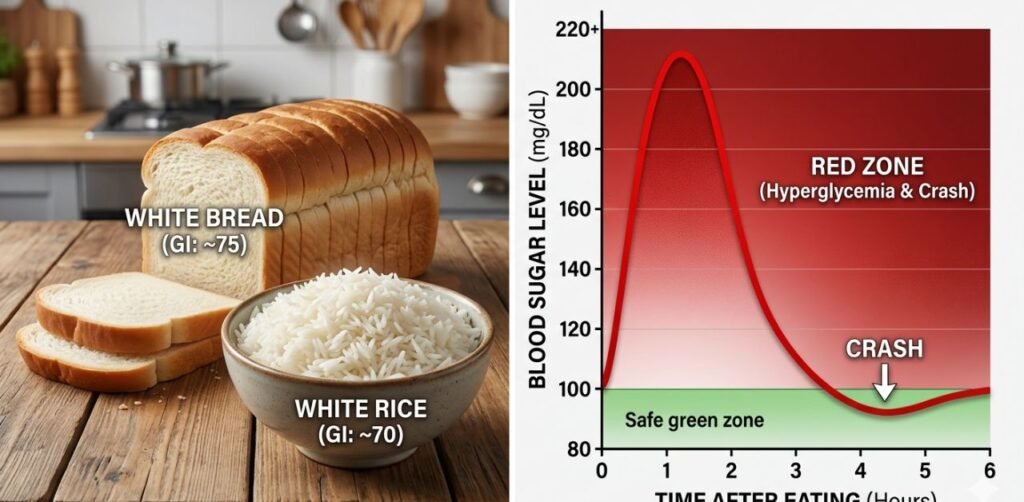
The “Sugar Rollercoaster” You Didn’t Sign Up For
Have you ever finished a large bowl of white rice? Do you feel like you need a nap 30 minutes later? This is not just a “food coma.” Instead, it is a massive glucose spike followed by a crash.
High glycemic index foods are the primary culprits in metabolic health. These foods break down into glucose rapidly. Consequently, your pancreas must pump out insulin at high speeds. Over time, this constant spiking leads to insulin resistance. Furthermore, it causes weight gain and Type 2 Diabetes complications.d by a crash.
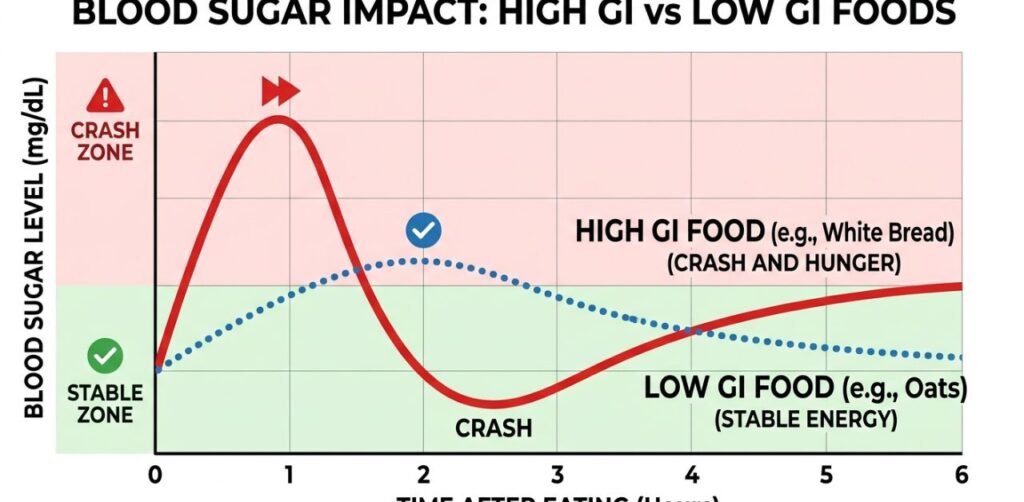
In the world of metabolic health, high glycemic index foods are the primary culprits. These foods break down into glucose rapidly, forcing your pancreas to pump out insulin at high speeds. Over time, this constant “spiking” leads to insulin resistance, weight gain, and Type 2 Diabetes complications.
What Exactly is the Glycemic Index (GI)?
The Glycemic Index is a rating system (0 to 100) that tells you how quickly a food raises your blood sugar.
- High GI (70-100): Rapid digestion, sharp spikes.
- Medium GI (56-69): Moderate impact.
- Low GI (0-55): Slow digestion, stable energy.
However, in 2026, experts also focus on Glycemic Load (GL), which accounts for the portion size. But for a quick “Yes/No” in the grocery aisle, the GI remains your best friend.
The 2026 “Red List”: 7 High Glycemic Index Foods to Watch Out For
1. White Bread & Bagels (GI: 75-90)
1. White Bread & Bagels (GI: 75-90) Most American breakfast staples are “glucose bombs.” Specifically, refined flour lacks the fiber needed to slow digestion. Consequently, it hits your bloodstream almost as fast as pure table sugar. The Swap: Choose Sourdough or 100% Stone-ground Whole Wheat.
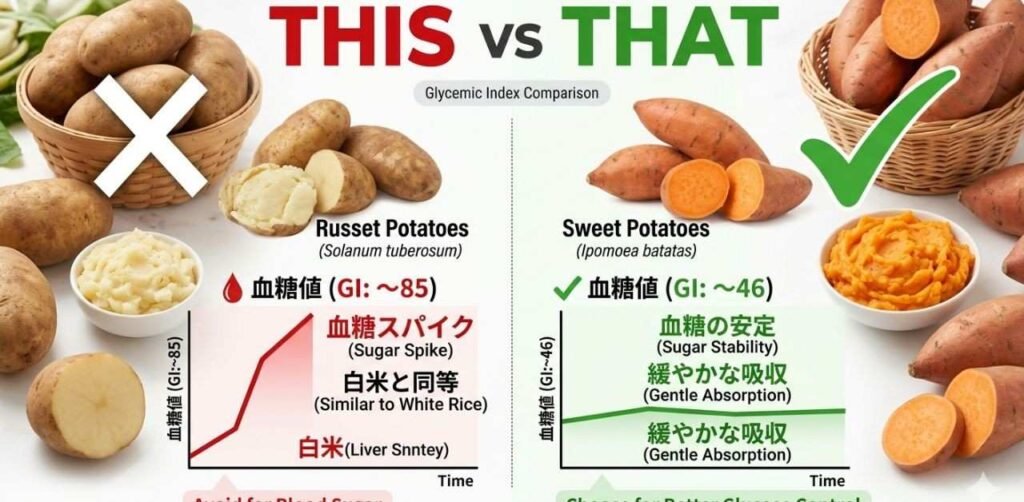
2. Russet Potatoes (GI: 85-111) Surprisingly, a baked Russet potato has a higher GI than actual sugar! This is because the starch structure in these potatoes is highly branched. Therefore, your body digests it very easily. The Swap: Opt for Sweet Potatoes or Roasted Cauliflower.
3. Sugary Breakfast Cereals (GI: 70-95)
Even the ones labeled “Heart Healthy” are often loaded with corn syrup and refined grains. If you experience Morning Spikes, your cereal is likely the reason.
Internal Link: Check out our guide onHow to Stop Morning Spikesfor better breakfast ideas.
4. Instant Oatmeal (GI: 80+)
While steel-cut oats are great, “Instant” packets are pre-processed to cook fast, which also means they digest fast.
- The Swap: Overnight Steel-Cut Oats.
5. White Rice (GI: 70-75)
A staple in many households, but for a diabetic, it’s a quick way to hit a 200+ mg/dL reading after dinner.
- The Swap: Quinoa or Barley (Barley is a metabolic powerhouse!).
6. Tropical Fruits: Watermelon & Pineapple (GI: 72-80)
Nature is sweet, but these fruits lack the fiber needed to buffer the sugar.
- The Swap: Berries (Strawberries/Blackberries) which have a GI of 30-40.
7. Rice Cakes & Pretzels (GI: 85-90)
The ultimate “diet food” trap. Because they are “puffed” or highly processed, they spike glucose instantly.
The “Healthy” Halo Sneaky High GI Foods
Not everything labeled “Natural” is safe for your glucose. Some modern “healthy” trends in the USA have a shockingly high glycemic index:
Oat Milk (GI: 69-80): Popular in American cafes, but the process of making oat milk turns complex starches into Maltose. Specifically, it can spike sugar faster than a soda! Consequently, Puredietly recommends Unsweetened Almond or Macadamia Milk instead.
Gluten-Free Snacks (GI: 80-90): However, most GF breads use Potato Starch or White Rice Flour. Because these are highly refined, they hit your bloodstream instantly.
Did you know you can physically change the GI of your food? Use these metabolic hacks to enjoy your favorites without the crash:
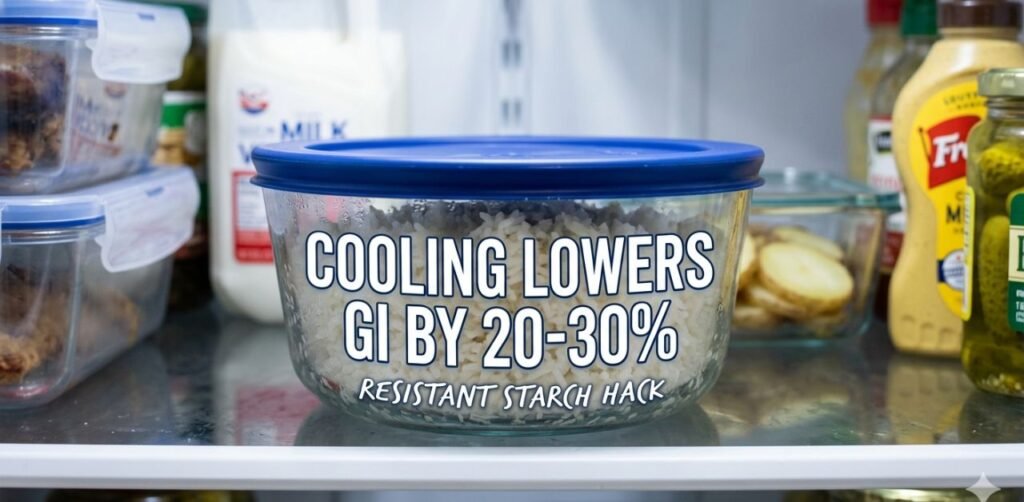
- The “Cooling” Magic: Cook your white rice or potatoes, then cool them in the fridge for 24 hours. This is because cooling turns starch into “Resistant Starch.” Therefore, it isn’t fully digested and won’t spike your sugar as much.
- Add an Acid: Additionally, drizzling Apple Cider Vinegar or lemon juice over a high-GI meal slows down digestion. Consequently, it buffers the glucose hit.
Comparison Table: High GI vs. Low GI Swaps
| High GI Food (Avoid) | GI Score | PureDietly Swap (Choose) | GI Score |
| White Bagel | 72 | Sprouted Grain Toast | 53 |
| Instant White Rice | 87 | Pearl Barley | 28 |
| Corn Flakes | 93 | Rolled Oats (Steel Cut) | 45 |
| Watermelon | 72 | Blueberries | 53 |
| Mashed Potatoes | 82 | Mashed Cauliflower | 15 |
The “Protein Pairing” Hack: Lowering the GI Manually
Here is a secret: You can actually “lower” the impact of high glycemic index foods by what you eat with them.
Shutterstock
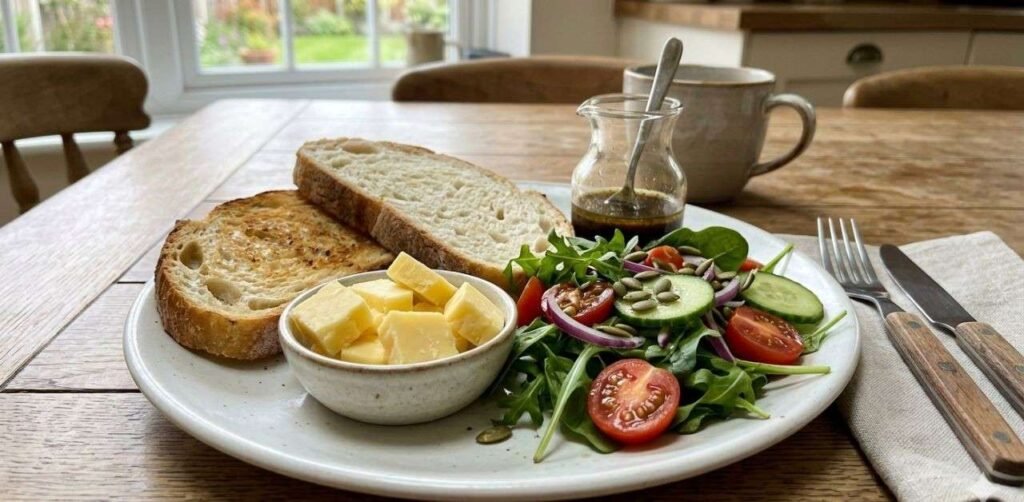
Adding healthy fats and proteins slows down stomach emptying. For example, if you must have a slice of bread, pairing it with Aged Cheddar or Minced Meat (Keema) buffers the sugar hit.
Internal Link: Learn more about whyAged Cheddar is a Carb-Zero Heroin our latest Cheese Guide.
Why Mobile Users Should Care About GI in 2026
In a fast-paced world, we often grab “on-the-go” snacks. Most packaged snacks in US gas stations (granola bars, muffins, energy drinks) are high GI. Using a Sugar Spike Analyzer after these meals can help you see the hidden damage.
Ready to Check Your Levels?
Use our Free Diabetic Calculators to track your A1C, Sugar Spikes, and Fasting Progress.
OPEN ALL CALCULATORS ➔Fast • Accurate • Free for Puredietly Readers
Quick Tips for a Low-GI Lifestyle:
- Vinegar First: A tablespoon of Apple Cider Vinegar in water before a high-GI meal can lower the spike by 30%.
- The Order Matters: Eat your fiber (veggies) first, protein second, and carbs last.
- Cool Your Carbs: Cooling cooked rice or potatoes overnight creates “Resistant Starch,” which significantly lowers their GI.
Frequently Asked Questions (FAQs)
Q: Is honey better than sugar because it’s natural?
A: Not necessarily. Honey has a GI of 58-60. While lower than table sugar, it still causes a significant spike for diabetics.
Q: Does “Gluten-Free” mean Low GI?
A: No. In fact, many gluten-free products use rice flour or potato starch, which have a higher GI than wheat.
Q: Can I never eat high GI foods again?
A: You can, but moderation and “Protein Pairing” are key. Don’t eat them alone on an empty stomach.
Final Thoughts from Gohar
Managing your health in 2026 isn’t about deprivation it’s about information. By swapping out high glycemic index foods for slower-burning alternatives, you’re giving your pancreas a much-needed break.
Ready to see how your favorite food affects you? Use our [Sugar Spike Analyzer] today and take control of your metabolic health!
. About the Author (High EEAT Version)
About Gohar Fatima Gohar Fatima is a dedicated health researcher, professional content strategist, and the founder of Puredietly.com. With a deep focus on metabolic health and nutritional science, she specializes in decoding complex dietary data for the modern American audience. Gohar’s mission is to bridge the gap between clinical research and everyday eating habits, helping thousands manage insulin resistance and weight loss through evidence-based lifestyle changes. When she isn’t analyzing glycemic loads, she is optimizing digital health tools to make wellness accessible for everyone.
2. Medical Disclaimer (Essential for Google Ranking)
Medical Disclaimer: The information provided on Puredietly.com, including text, graphics, and images, is for educational and informational purposes only. It is not intended to be a substitute for professional medical advice, diagnosis, or treatment. Always seek the advice of your physician or another qualified health provider with any questions you may have regarding a medical condition, especially before making significant changes to your diet or managing a chronic condition like diabetes. Never disregard professional medical advice or delay in seeking it because of something you have read on this website.