
Editor’s Note
At PureDietly, our mission is to translate complex metabolic science into actionable steps for the health-conscious community. This 2026 Audit on “What to Eat After a 72 Hour Fast” was conducted by our metabolic research team to ensure that the transition from deep ketosis back to regular eating is safe, efficient, and science-backed. Every recommendation in this guide is cross-referenced with the latest clinical data on refeeding syndrome, insulin sensitivity, and autophagy to help you maximize the benefits of your extended fast without metabolic distress. — Gohar Fatima, Founder, PureDietly.
Completing a 3-day journey is a huge win for your cellular health. However, knowing what to eat after a 72 hour fast is actually more important than the fast itself. If you jump straight into a high-carb meal, you risk a massive insulin spike and digestive distress.
In this PureDietly Audit, we use the latest metabolic science to guide you through the “Refeeding Phase.” Our goal is to keep your insulin stable while maximizing the fat-burning benefits you just earned.
1. The Science of the “Refeeding Window”
After 72 hours, your digestive enzymes are “sleeping.” Your body has been in deep ketosis, burning fat for fuel. Introducing food too quickly can lead to bloating or the “refeeding syndrome” in extreme cases. Consequently, we follow a specific sequence to wake up your metabolism gently.
2. Phase 1: The 0-2 Hour Liquid Wake-Up
Your first meal shouldn’t be a meal at all. It should be a “metabolic primer.”

- Bone Broth: Rich in glycine and minerals, it heals the gut lining.
- Electrolytes: Sodium, potassium, and magnesium are critical to prevent heart palpitations.
- Apple Cider Vinegar: One tablespoon in water helps prime your stomach acid.
3. Phase 2: The Soft Fat & Protein Bridge (2-6 Hours)
Once your stomach is awake, introduce easy-to-digest fats. This keeps you in ketosis while providing cellular building blocks.
| Food Item | Why It Works | PureDietly Tip |
| Avocado | High potassium and healthy fats. | Sprinkle with sea salt. |
| Soft Boiled Eggs | Most bioavailable protein source. | Avoid frying in seed oils. |
| Full-Fat Greek Yogurt | Probiotics to restart gut flora. | Check for [Maltitol] or hidden sugars. |
4. Phase 3: The First Real Meal (6-24 Hours)
Now you can introduce solid proteins. However, you must still avoid high-glycemic carbohydrates to prevent a “rebound” weight gain. Focus on what to eat after a 72 hour fast that supports muscle repair.
- Lean Proteins: Baked salmon or chicken breast are excellent choices.
- Cooked Vegetables: Steamed spinach or zucchini are easier on the gut than raw kale or broccoli.
- Fermented Foods: Sauerkraut or Kimchi help replenish healthy bacteria.
5. Dangerous Foods to Avoid (The “Blacklist”)
Breaking a fast with these items can cause instant brain fog and “disaster pants.”
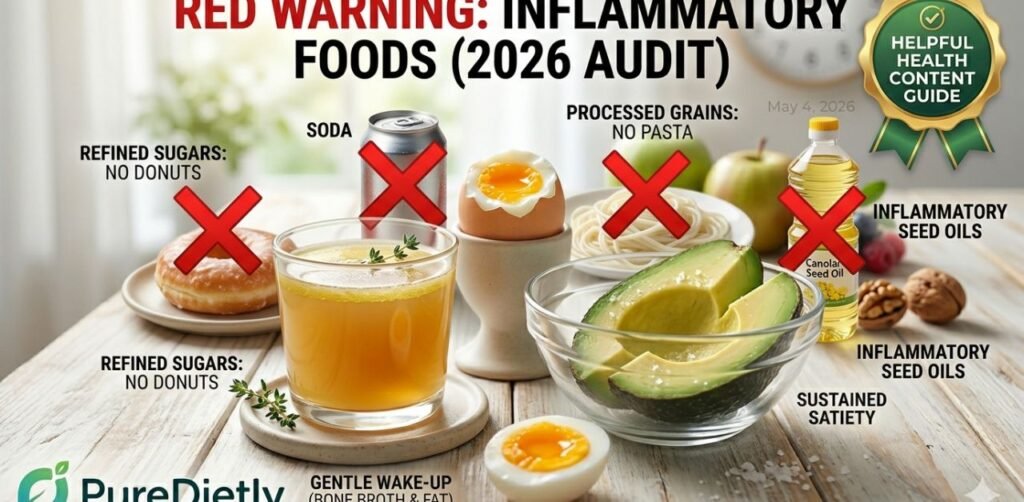
- Refined Sugars: No donuts or soda. Your insulin sensitivity is at its peak.
- Processed Grains: Avoid bread and pasta for at least 48 hours.
- Heavy Dairy: Large amounts of cheese or milk can cause severe bloating.
- Seed Oils: Canola or soybean oils are highly inflammatory right now.
6. Managing the 72-Hour Glucose Curve
If you use a Continuous Glucose Monitor (CGM), you will notice that your body reacts differently now. Using our [Metabolic Sequencing] strategy ensures that your blood sugar stays in the “Green Zone.” This is a core part of being a metabolic researcher—watching the data, not just following trends.
7. Why USA Professionals Choose the 72-Hour Protocol
In the USA, from Silicon Valley to Wall Street, high-performers use long fasts for cognitive clarity. By choosing the right foods, you sustain the “mental edge” that comes with high ketone levels. Furthermore, it simplifies your lifestyle and resets your relationship with food cravings.
The Autophagy Transition: Why Your First Bite Matters
The most significant benefit of a 72-hour fast is Autophagy—a process where your body recycles old and damaged cells. According to research, this process peaks at the 72-hour mark. When you break this fast, your body shifts from “Cleanup Mode” to “Build Mode”.
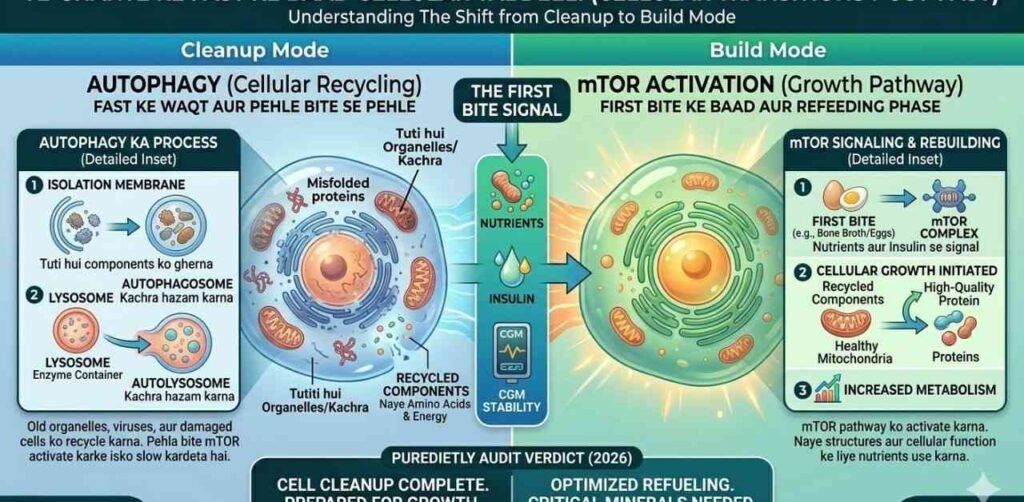
- mTOR Activation: As soon as you eat, your mTOR (Growth Pathway) is activated.
- The Protein Priority: If you consume high-quality protein (such as bone broth or eggs) at this time, your body begins creating new, healthy cells.
- Insulin Sensitivity: After 72 hours, your cells are highly sensitive to insulin. This means even a small amount of sugar can cause a major spike in your levels. Therefore, choosing what to eat after a 72-hour fast must be done with extreme care.
9. Deep Dive: Micronutrient Replenishment (The US Perspective)
In the USA, there is a lot of discussion regarding “Refeeding Syndrome“. When we go without food for three days, our minerals (electrolytes) shift significantly.
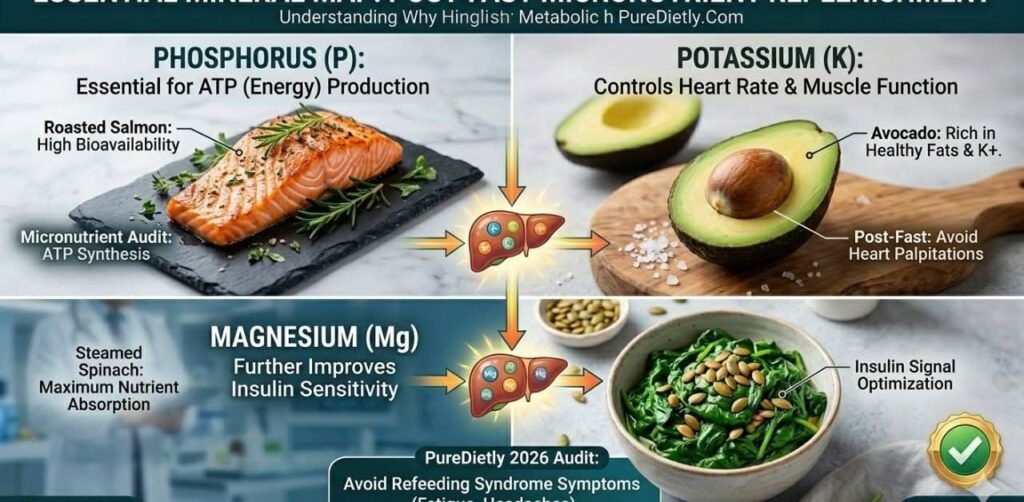
| Mineral | Role After Fasting | Best Food Source |
| Phosphorus | Essential for ATP (Energy) production. | Roasted Salmon, Pumpkin Seeds. |
| Potassium | Controls heart rate and muscle function. | Avocado, Coconut Water. |
| Magnesium | Further improves insulin sensitivity. | Steamed Spinach, Hemp Seeds. |
According to PureDietly research, if you do not replenish these minerals with your meals, you may experience fatigue and headaches (similar to the Keto Flu).
10. 3-Day Post-Fast Recovery Meal Plan (The PureDietly Protocol),we have designed this 3-day roadmap to ensure your weight loss becomes “permanent”.
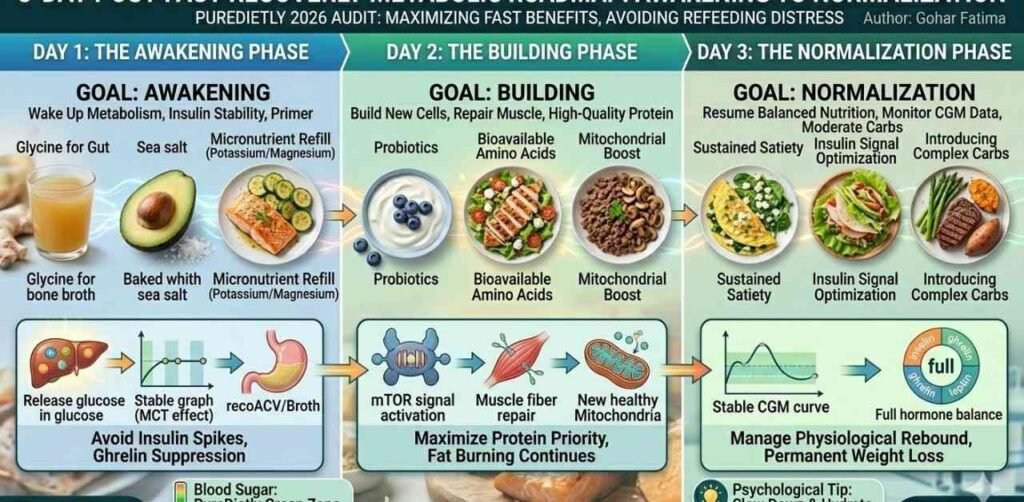
Day 1: The Awakening Phase
- Morning: 1 cup of bone broth with sea salt.
- Afternoon: 1 soft-boiled egg and half an avocado.
- Evening: Baked white fish (Cod or Tilapia) with steamed zucchini.
Day 2: The Building Phase
- Breakfast: Full-fat Greek yogurt with 5 blueberries.
- Lunch: A large salad with grilled chicken, olive oil, and goat cheese.
- Dinner: Grass-fed ground beef with sautéed mushrooms.
Day 3: The Normalization Phase
- Breakfast: Omelet with spinach and feta cheese.
- Lunch: Turkey wrap using lettuce instead of bread.
- Dinner: Steak with asparagus and a small side of sweet potato (introducing complex carbs).
11. Emotional Eating: Managing the Psychological Rebound
In the USA, “Binge Eating” after fasting is a major issue. When you stay hungry for 72 hours, your “Ghrelin” (hunger hormone) forces you to overeat.
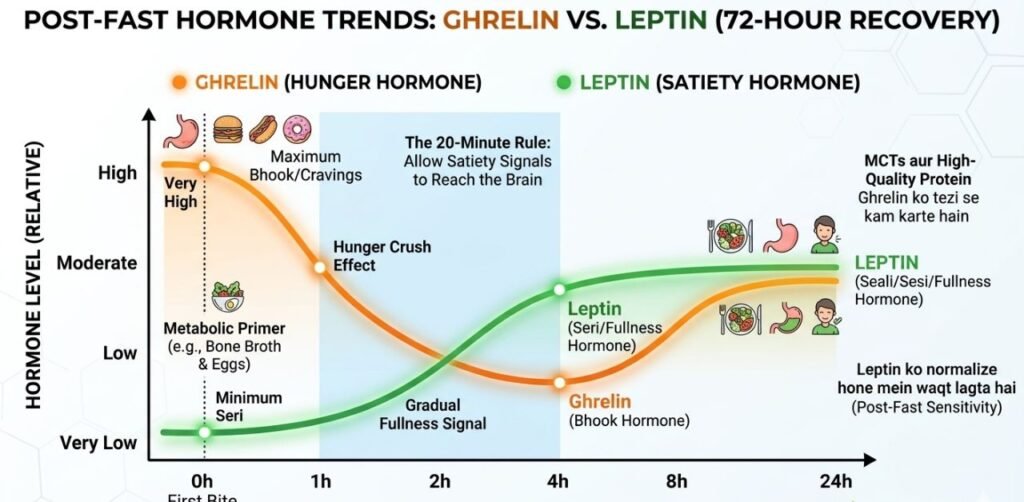
- Slow Down: Chew every bite at least 20 times.
- The 20-Minute Rule: Wait 20 minutes after your first small serving to allow satiety signals to reach the brain.
- Hydration First: Drink two glasses of water before eating to help the stomach feel full.
Frequently Asked Questions (FAQs)
- Can I drink coffee?
- Yes, but keep it black or with a dash of [MCT Oil] to maintain ketosis.
- Will I gain the weight back?
- If you follow our sequencing and avoid sugar, most of the weight loss will stay off.
- Is fruit okay?
- Stick to berries (blueberries/raspberries). Avoid high-sugar fruits like bananas or grapes immediately.
Conclusion: Respect the Process
Ultimately, deciding what to eat after a 72 hour fast is a commitment to your long-term health. You’ve done the hard work of fasting; now let the nutrition do the healing. For more specialized help, check out our [Diabetic Health Calculators] to see how your refeeding impacts your A1C goals.
Ready to Check Your Levels?
Use our Free Diabetic Calculators to track your A1C, Sugar Spikes, and Fasting Progress.
OPEN ALL CALCULATORS ➔Fast • Accurate • Free for Puredietly Readers
About the Author
Gohar Fatima is a metabolic health researcher and the founder of PureDietly. she audits the latest US health trends to provide actionable, science-backed nutrition advice.
Medical Disclaimer
Fasting for 72 hours is a serious physiological event. Always consult with your healthcare provider before attempting long fasts, especially if you are diabetic or on medication.