
Editor’s Note
Editor’s Note: In the noise of modern nutrition trends, the debate between flax and chia seeds often gets reduced to “which is healthier.” At PureDietly, we flip the script: it’s not about which seed is better; it’s about which seed serves your specific metabolic state. Whether you are battling insulin resistance or aiming for hormonal balance, your choice of fiber matters. This guide audits the biochemistry of these superfoods so you can stop guessing and start fueling for results.
Introduction
Choosing the right superfood can be overwhelming, especially when the debate of flax seeds vs chia seeds is everywhere. Both are tiny, nutrient-dense powerhouses, but they are not identical. If you are focused on optimizing your insulin sensitivity and gut health, picking the right seed can make a significant difference.
At PureDietly, we believe in auditing your biology to see how specific foods interact with your unique system. Instead of following generic health trends, we look at the biochemistry. In this deep-dive guide, we will break down the nutritional differences and metabolic impacts of these seeds, helping you decide which one deserves a place in your diet.
The Nutritional Clash: What’s Under the Hood?
Both seeds offer an impressive profile of protein, healthy fats, and fiber. However, they serve different metabolic purposes. When auditing your diet, look beyond the surface level of “healthy fat” and consider the bioavailability.
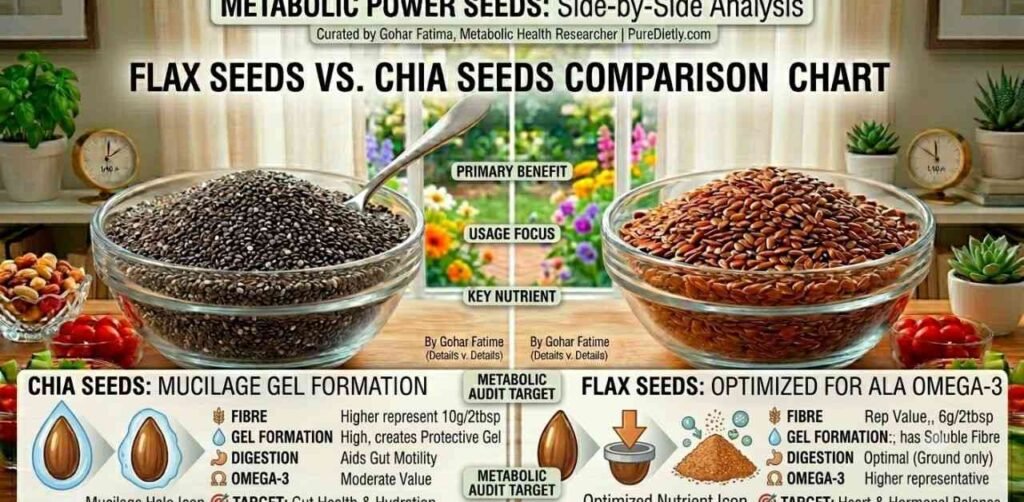
| Feature | Flax Seeds (Alsi) | Chia Seeds |
| Primary Omega-3 | High ALA Content | High ALA Content |
| Digestion | Needs grinding to absorb | Easily absorbed whole |
| Best For | Hormonal balance | Blood sugar regulation |
| Fiber Profile | Mostly Lignans/Insoluble | High Mucilage (Soluble) |
| Minerals | High Magnesium | High Calcium & Phosphorus |
While both are great, you must understand that the way you consume them is just as important as the seeds themselves. If you are struggling with sluggish digestion, our guide on Foods That Are Digested Quickly can offer extra clarity on how your body processes fiber.
The Absorption Audit: Why Grinding Matters
One of the most critical differences in the flax seeds vs chia seeds debate is bioavailability. Many people consume flax seeds whole, unaware that they are essentially flushing their money down the drain.
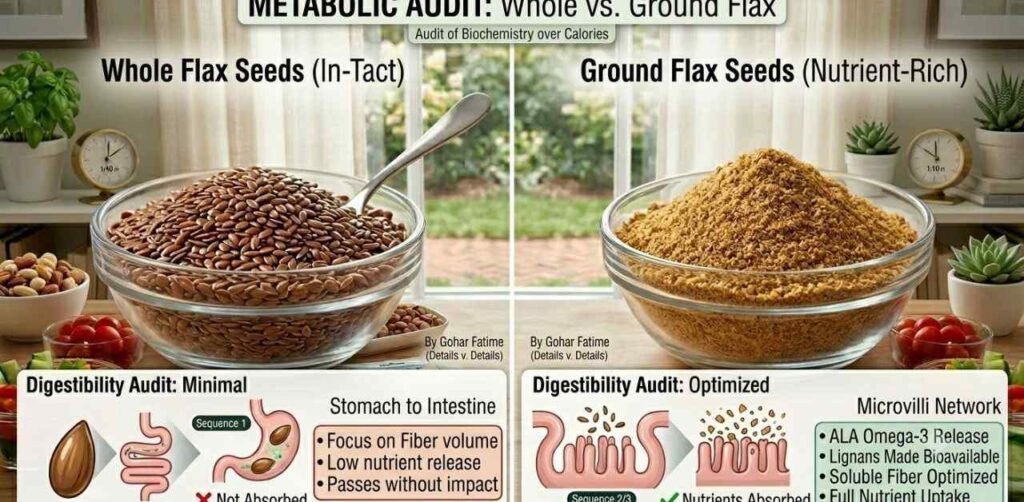
- Flax Seeds: These seeds have a remarkably hard outer shell designed by nature to protect the inner oils. If you eat them whole, they will likely pass through your entire digestive system intact. You must grind them to get the benefits. Once ground, they oxidize quickly, so the best practice is to grind small batches and keep them refrigerated.
- Chia Seeds: These have a soft, permeable shell. Your body can access the nutrients easily even if you eat them whole. This makes them a much more convenient option for your busy metabolic lifestyle.
Metabolic Impact: Fiber, Blood Sugar, and Gut Microbiome
One of the main reasons we recommend these seeds at PureDietly is their ability to blunt glucose spikes. This is essential for anyone dealing with insulin resistance or metabolic rigidity.
1. Chia Seeds and the Mucilage Effect
When chia seeds hit liquid, they form a thick, protective gel called mucilage. This soluble fiber acts as a buffer in your gut, slowing down the digestion process and the subsequent absorption of sugar into your bloodstream. This is a game-changer for someone trying to improve their insulin sensitivity. By “blunting” the glucose curve, you prevent the massive insulin spikes that lead to midday energy crashes.
2. Flax Seeds and Lignans
Flax is a world leader in lignans—antioxidants that have a unique relationship with your hormones. Lignans are phytoestrogens, which help the body maintain hormonal balance. If you are concerned about metabolic inflammation or hormonal shifts related to stress, flax can be a powerful, supportive tool.
How to Use Them for Metabolic Stability
Instead of just sprinkling them on random meals, use them strategically. By incorporating these seeds into your Food Sequencing protocol, you can significantly reduce post-meal fatigue and hunger.

- The Chia Gel Strategy: Soak chia seeds in water, almond milk, or bone broth for 20 minutes before a meal. This “pre-load” of fiber creates a satiating gel in your stomach, which helps stabilize your blood sugar during the meal that follows.
- The Flax “Crunch” Strategy: Add a tablespoon of freshly ground flax to your salad greens. The fiber from the greens, combined with the healthy fats from the flax, is a metabolic win that keeps your glucose levels steady for hours.
If you are looking to increase your movement and sensitivity alongside your diet, pair these seeds with your Metabolic Walking routine to ensure your mitochondria are primed to burn fat effectively.
The Omega-3 Reality: Quality Over Quantity
It is important to address a common myth: the belief that seeds are the only Omega-3 source you need. Both flax and chia provide Alpha-Linolenic Acid (ALA). While ALA is essential, your body needs to convert it into EPA and DHA for optimal brain health and cellular function.
This conversion process is notoriously inefficient in humans, particularly in those with existing metabolic issues or high inflammation. Therefore, while these seeds are excellent for fiber and trace minerals, they should not be your only source of Omega-3s. We suggest you regularly audit your intake and consider whole-food sources of marine fats (like wild-caught fish) if necessary.
Digestive Considerations: The “Start Slow” Rule
Because both flax and chia are extremely high in fiber, your gut microbiome may react strongly if you increase your intake too quickly. Fiber acts as a prebiotic, feeding your gut bacteria. If you are used to a low-fiber diet, a sudden jump can cause bloating or cramping.
PureDietly Audit Tip: Start with just one teaspoon per day. Monitor your digestion for three days. If your gut feels stable, increase the portion slowly. This incremental approach allows your microbiome to adjust without causing digestive distress.
Q&A: Your Questions Answered
Q: Can I eat both flax and chia seeds together?
A: Absolutely! They offer complementary benefits. Combining them provides a broader spectrum of fiber types, which can support a more diverse gut microbiome.
Q: Do they cause bloating?
A: Yes, if introduced too quickly. Because they are high in fiber, your body needs time to adapt. Always drink extra water when increasing fiber, as fiber needs water to move through your system effectively.
Q: Are they safe for everyone?
A: Generally, yes. However, if you have specific digestive conditions like diverticulitis or inflammatory bowel disease, consult your physician before increasing your fiber intake, as the roughage might irritate the gut lining.
Conclusion: Which Seed Wins?
In the flax seeds vs chia seeds comparison, there is no single “winner.” It depends entirely on your current metabolic audit:

- Choose Chia Seeds if you want easy digestion, powerful blood sugar regulation, and absolute convenience.
- Choose Flax Seeds if you are focused on hormonal support and are willing to commit to grinding them fresh.
No matter which you choose, the key is consistency and quality. Do not let the marketing myths of “superfoods” distract you from the basics. Focus on how your body responds to these foods. Download My Free Metabolic Audit Checklist today to track how these seeds and other foods impact your energy levels throughout the week.
About the Author
Gohar Fatima is a Metabolic Health Researcher and the founder of PureDietly.com. She specializes in simplifying complex clinical nutrition data into actionable, science-backed protocols. Through her signature “Metabolic Audit” approach, Gohar empowers individuals to overcome insulin resistance and regain their metabolic vitality by focusing on biochemistry rather than just calories. When she isn’t auditing health metrics, she’s developing protocols to prove that you don’t need expensive “health foods” to achieve peak physical performance.
Medical Disclaimer
Medical Disclaimer: The information provided in this article is for educational purposes only and does not constitute professional medical advice, diagnosis, or treatment. Dietary fiber and seeds can interact with certain medications or existing digestive conditions, such as diverticulitis or inflammatory bowel disease. Always consult with your physician or a qualified healthcare provider before making significant dietary changes, especially if you have chronic metabolic conditions or are managing blood glucose with medication. Never disregard professional medical advice or delay seeking it because of something you have read on PureDietly.com.