

Editor’s Note
This article has been audited for nutritional accuracy based on current 2026 data regarding polyphenols and glycemic impact. Our team at PureDietly prioritizes evidence-based research over trend-driven health advice. We regularly update our content to reflect the latest metabolic findings, ensuring that our readers have access to the most precise protocols for long-term health. If you notice any outdated information or have questions regarding specific citations, please feel free to reach out to our research desk at puredietly@gmail.com.
In the modern landscape of functional nutrition, finding beverages that offer more than just empty calories is a constant challenge. As a metabolic researcher, I frequently analyze how specific plant compounds interact with our internal systems to help you cut through the marketing noise. Today, we are performing a deep-dive Metabolic Audit of pomegranate juice. While often celebrated as a “superfood” drink, we must look at the evidence to see how it fits into a precise wellness protocol for the American consumer prioritizing metabolic longevity.
1. The Metabolic Breakdown: Beyond Marketing Hype
When we audit a beverage, we focus on its bioactive compounds specifically polyphenols, ellagitannins, and punicalagins and how they influence glucose management, oxidative stress, and systemic inflammation.
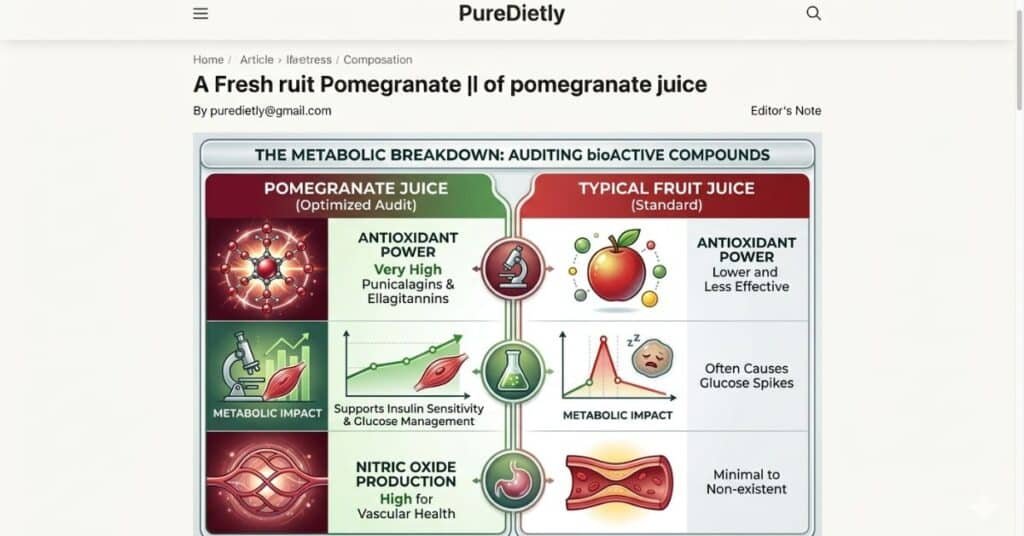
| Feature | Pomegranate Juice | Typical Fruit Juice |
| Antioxidant Power | Very High (Punicalagins) | Low |
| Metabolic Impact | Supports Insulin Sensitivity | Often Spikes Glucose |
| Nitric Oxide Production | High | Minimal |
Unlike standard sugar-heavy juices, the metabolic value of pomegranate juice lies in its ability to support vascular health and cellular signaling. Because of its high polyphenol content, it is frequently studied for its potential to help the body manage oxidative damage, which is a core component of our metabolic health audits.
2. Evidence-Based Health Benefits
As researchers, we prioritize data over anecdotal claims. Here is how pomegranate juice fits into an optimized health protocol for the American consumer:

- Vascular & Heart Support: High levels of potassium and antioxidants help in the production of nitric oxide, which allows blood vessels to relax, potentially improving blood flow and blood pressure markers.
- Inflammatory Modulation: Chronic, low-grade inflammation is a hidden driver of metabolic syndrome and weight gain. Compounds like punicalagins help neutralize free radicals, protecting vessel walls from oxidative damage.
- Cellular Signaling: Emerging research suggests that gut bacteria convert ellagitannins (found in pomegranate) into urolithins, which may support brain health and cognitive longevity by reducing inflammation.
- Synergy with Other Berries: Interestingly, the anti-inflammatory profile of pomegranate works well alongside other antioxidant-rich foods. If you are looking to boost your daily phytonutrient intake, consider pairing pomegranate juice with the polyphenols found in our [Blueberries Metabolic Audit], which provide excellent support for cognitive and vascular pathways.
- Exercise Recovery: Some athletes use pomegranate juice to support muscle recovery because its anti-inflammatory properties may help manage the soreness associated with intense physical activity.
3. The Role of Pomegranate Juice in Insulin Sensitivity
As a metabolic researcher, I often emphasize that beverages are not just “fuel” they are signaling molecules. While pomegranate juice contains natural sugars, its unique polyphenol profile may influence how your body handles glucose.
By potentially enhancing insulin sensitivity, the juice may create a more favorable environment for glucose uptake in muscle cells. However, the key to metabolic health is “Metabolic Housekeeping” ensuring that the total glycemic load of your diet remains stable. Therefore, while the polyphenols are beneficial, the sugar content cannot be ignored. If you are concerned about urinary tract health and want an alternative with a lower glycemic impact, compare this with the findings in our [Cranberry Juice Metabolic Audit], which offers a different set of bioactive compounds often used for targeted health support.
4. The “PureDietly” Audit: Precision & Safety Protocol
While beneficial, pomegranate juice is not a “magic bullet” and must be used with precision to avoid unintended glucose volatility.
Audit Checklist for Your Pantry:
- Look for 100% Juice: Always avoid “cocktails” or “blends” that contain added sugars or high-fructose corn syrup, as these negate the metabolic benefits.
- Cold-Pressed Matters: Heat processing (pasteurization) can destroy delicate antioxidants. Opt for cold-pressed or whole-pressed varieties to ensure nutrient density.
- Portion Control is Key: Pomegranate juice is dense in natural sugars. For those monitoring glycemic index or managing insulin resistance, I suggest limiting intake to 4 ounces daily.
- Timing Matters: Drink it alongside a fiber-rich meal or after protein consumption to blunt the glucose spike, effectively “hacking” your metabolic response.
5. Integrating Pomegranate into a Metabolic Lifestyle

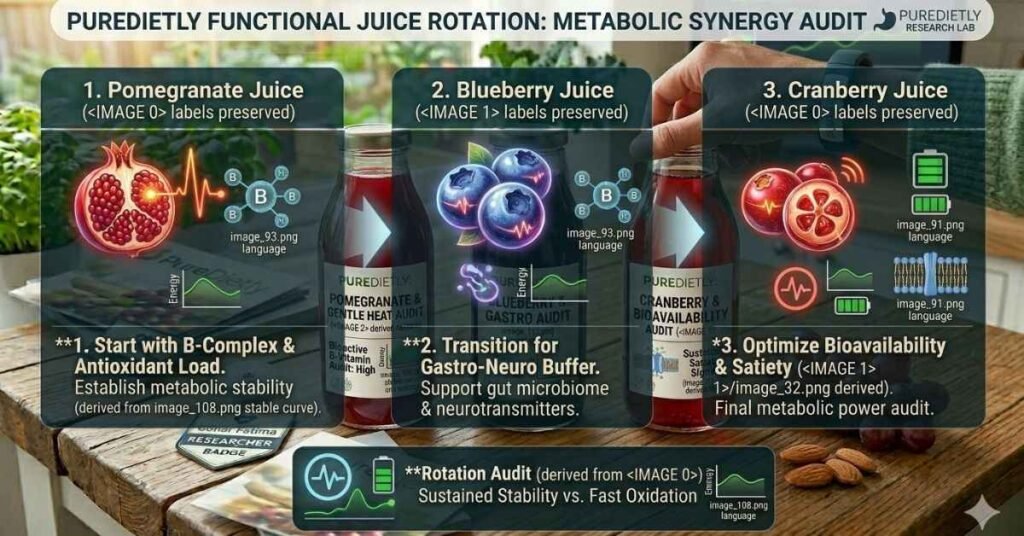
To truly benefit from pomegranate juice, it should not be an isolated addition but part of a broader, data backed protocol. Many of my clients find that when they rotate their functional juices using pomegranate for vascular support, cranberry for gut/urinary integrity, and whole blueberries for daily antioxidants they achieve a more stable metabolic baseline. This variety ensures you are getting a spectrum of different polyphenols rather than relying on one source.
6. Frequently Asked Questions (FAQs)
- Q: Can pomegranate juice help with belly fat?
- No single food targets belly fat directly. However, supporting a healthy metabolism through stable blood sugar and reduced inflammation can indirectly assist in weight maintenance and metabolic health.
- Q: Should individuals with diabetes drink it?
- If you have diabetes, please monitor your glucose response closely. It is a calorie-dense drink, and timing is essential consider drinking it in small amounts alongside a fiber-rich meal to manage the glycemic impact.
- Q: How does it compare to eating the whole fruit?
- Eating the whole fruit is almost always superior because it retains the dietary fiber, which is critical for regulating sugar absorption and supporting gut health.
- Q: Is it safe for everyone?
- Pomegranate juice can interact with certain medications, including blood pressure medications and blood thinners. If you are on prescribed medication, consult your physician before adding it to your daily protocol.
Final Researcher’s Verdict: A Strategic Choice
For the American household, pomegranate juice represents a strategic metabolic tool rather than just another kitchen trend. By choosing pure, cold-pressed versions and practicing precise portion control, you can leverage its potent antioxidant profile to support cardiovascular, inflammatory, and cellular health.
Remember: True metabolic longevity is found in the consistency of your protocols. Pair your intake with our [Diabetic-Friendly Carb Manager] to ensure your macros remain on target and your glucose stays within your desired range. Your health is a long-term audit; make choices today that provide consistent, sustainable, and measurable results tomorrow. Stay informed, stay precise, and keep auditing your intake.
About the Author
Gohar Fatima Metabolic Health Researcher & Enthusiast
Gohar Fatima is the founder of PureDietly, where she bridges the gap between complex nutritional science and everyday dietary choices. As a dedicated researcher, she focuses on metabolic health, glycemic index management, and evidence-based nutrient profiling. Her mission is to empower individuals to make data-backed decisions through her signature “Metabolic Audits,” helping readers navigate the modern food landscape with precision and clarity.
Medical Disclaimer
Important Health Disclosure
The content provided on PureDietly, including this article, is for informational and educational purposes only. It is not intended to be a substitute for professional medical advice, diagnosis, or treatment. Always seek the advice of your physician or other qualified health provider with any questions you may have regarding a medical condition. Never disregard professional medical advice or delay in seeking it because of something you have read on this website. Reliance on any information provided here is solely at your own risk.