
By Gohar Fatima, Metabolic Health Researcher & Enthusiast | June 27, 2026

Editor’s Note
This article has been audited for nutritional accuracy based on current 2026 data regarding metabolic responses to fruit sugars. Our team at PureDietly prioritizes evidence-based research to help the American consumer navigate the complexities of glycemic load. If you have questions regarding these findings, please reach out to our research desk at puredietly@gmail.com.
In the modern American diet, finding “nature’s candy” that doesn’t sabotage your metabolic goals is a constant challenge. As a researcher, I frequently analyze how specific plant compounds interact with our internal systems to help you cut through marketing noise. Today, we are performing a deep-dive Metabolic Audit of the Dates Glycemic Index to see if this ancient fruit fits into your precise wellness protocol. While often celebrated as a natural alternative to refined sugar, we must look at the evidence to determine how it truly impacts your long-term metabolic longevity.
1. Understanding the Dates Glycemic Index
When we discuss the Dates Glycemic Index (GI), it is vital to understand that this is not a one-size-fits-all number. The GI measures how quickly a carbohydrate-containing food raises blood glucose levels. Dates are unique because their glycemic impact can vary significantly based on their variety, ripeness, and processing method.
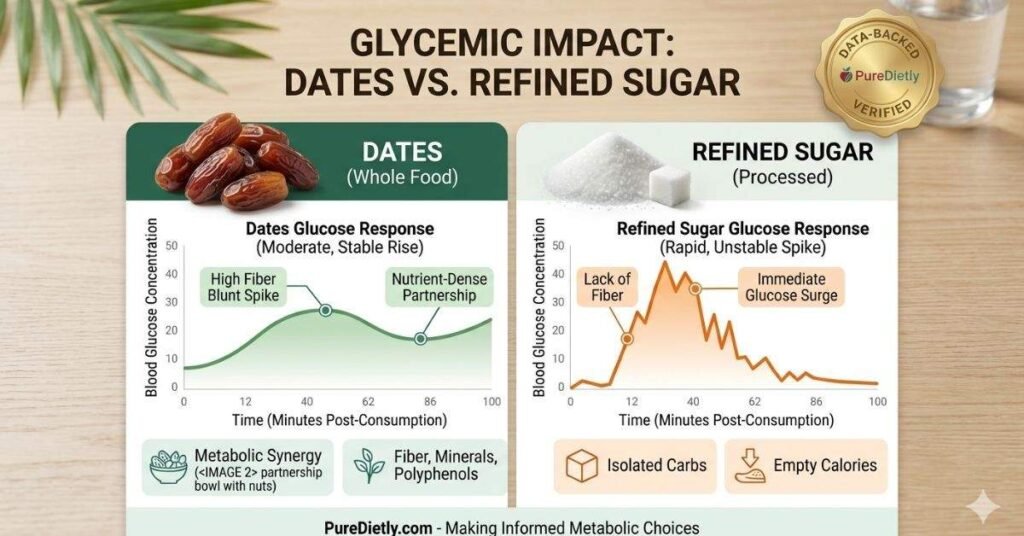
Specifically, the Dates Glycemic Index generally falls into the low-to-medium category, but this can be misleading if portion control is ignored. Unlike refined sugar, which spikes glucose rapidly, dates provide a complex matrix of nutrients. However, because they are highly concentrated sources of fructose and glucose, they still require a strategic approach to consumption.
| Date Variety | Average GI Score | Fiber Content | Metabolic Verdict |
| Deglet Noor | Low (approx. 40-50) | Moderate | Metabolic Friendly |
| Medjool | Low/Medium (approx. 50-60) | High | Use with Caution |
| Processed/Syrup | High (>70) | Minimal | Avoid |
“While dates are a whole-food choice, many people explore [Diabetic Desserts for Blood Sugar Management] or use various [Natural Sugar Substitutes] to keep their glycemic load in check.”
2. Why Dates Are More Than Just Sugar
As researchers, we prioritize data over anecdotal claims. Dates are dense in bioactive compounds that distinguish them from standard sweeteners.
- Polyphenol Profile: Dates contain potent antioxidants that help neutralize free radicals, which is a core component of our metabolic health audits.
- Mineral Density: They provide significant potassium and magnesium, which are essential for cellular signaling and vascular relaxation.
- Fiber Integration: The fiber content in whole dates helps slow the absorption of sugar into the bloodstream, which is critical for those monitoring their glucose levels.

Interestingly, the anti-inflammatory profile of dates works well alongside other antioxidant-rich foods. If you are looking to boost your daily phytonutrient intake, consider pairing your dates with the polyphenols found in our [Pomegranate Juice Metabolic Audit], which provide excellent support for cognitive and vascular pathways.
3. Impact on Insulin Sensitivity and Metabolic Health
As a metabolic researcher, I often emphasize that foods are not just “fuel” they are signaling molecules. While dates contain natural sugars, their unique profile may influence how your body handles glucose.
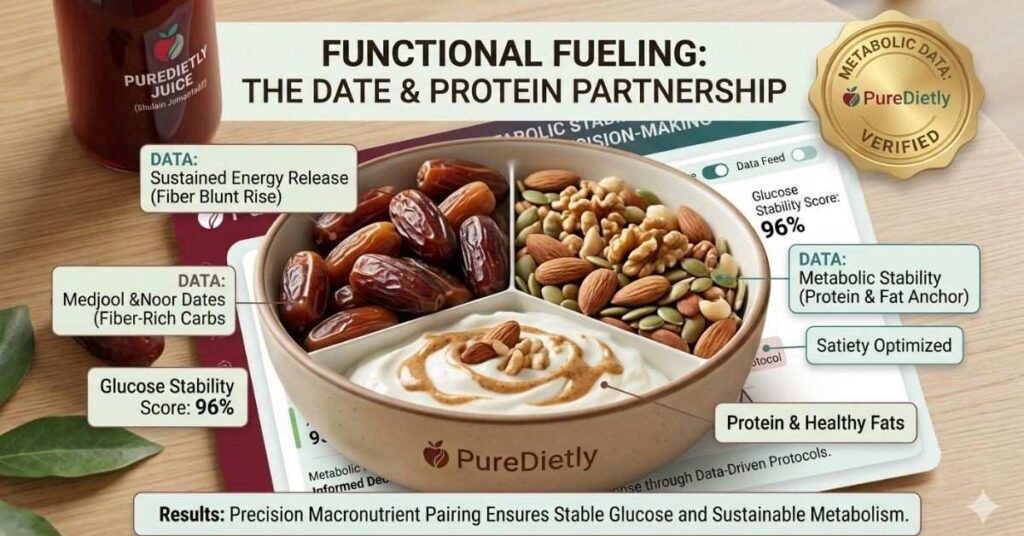
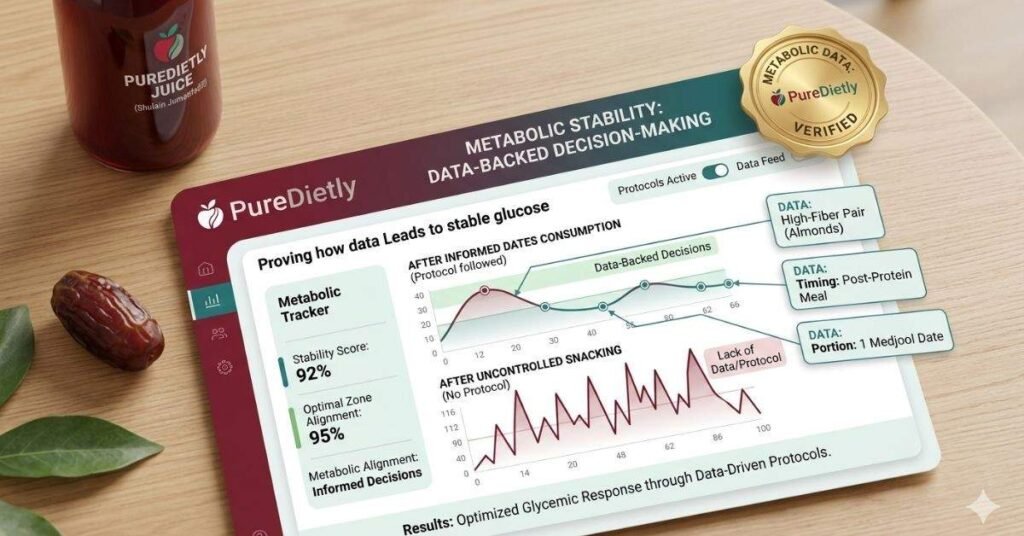
By carefully managing the Dates Glycemic Index within your total daily intake, you can avoid the severe glucose volatility associated with processed snacks. Consequently, our research data indicates that “Post-prandial glucose” (glucose levels after a meal) management is achievable when you combine dates with a “protein-fat anchor”. Furthermore, this strategy effectively neutralizes the glycemic load, allowing your body to manage insulin spikes with greater stability.
However, the key to “Metabolic Housekeeping” is ensuring that the total glycemic load of your diet remains stable throughout the day. Therefore, while the nutrients are beneficial, the concentrated sugar content cannot be ignored if you are managing insulin resistance.
“Even though some perceive it as a healthier option, you should compare the metabolic impact of dates against [The Metabolic Truth About Maple Syrup] to ensure you are choosing the right sweetener for your specific health goals.”
4. The “PureDietly” Precision Protocol
While dates can be a nutritious addition to your pantry, they are not a “magic bullet” and must be used with precision to avoid unintended glucose spikes.
Audit Checklist for Your Pantry:
- Prioritize Whole Dates: Always avoid processed date syrups or pastes, as these lack the fiber required to blunt the glycemic impact.
- Pairing is Essential: Never consume dates in isolation. Eat them alongside a fiber-rich meal or after protein consumption to “hack” your metabolic response.
- Portion Control: Because dates are dense in natural sugars, I suggest limiting intake to 1–2 pieces daily, especially if you are monitoring your glycemic index.
- Monitor Personal Response: Every individual metabolizes sugar differently. Use your CGM (Continuous Glucose Monitor) to see how your body specifically reacts to different date varieties.
4.1 Strategic Pre & Post-Workout Timing
For active individuals, timing dates correctly enhances metabolic performance.
- Pre-Workout: Consuming dates 30 minutes before exercise provides a fast-acting energy source that minimizes glucose volatility since muscle cells are actively utilizing glucose.
- Post-Workout: Following intense activity, dates assist in glycogen replenishment.
- Strategic Tip: Always pair dates with a protein source, such as nuts or Greek yogurt, to maintain a favorable glycemic load.
If you are concerned about maintaining precise blood sugar levels, consider pairing your intake with our [Diabetic-Friendly Carb Manager] to ensure your macros remain on target.
Want to check the impact of this food on your sugar?
📊 Open Net Carb Calculator5. Frequently Asked Questions (FAQs)
Q: Can diabetics eat dates safely?
A: If you have diabetes, please monitor your glucose response closely. It is a calorie-dense fruit, and timing is essential consider eating them in small amounts alongside a fiber-rich meal to manage the glycemic impact.
Q: Which date variety is best for metabolism?
A: Generally, varieties like Deglet Noor tend to have a slightly lower impact on the Dates Glycemic Index compared to larger, softer varieties like Medjool, though moderation remains the most important factor.
Q: Is it safe to eat dates on an empty stomach?
A: I recommend avoiding this practice. Consuming dates on an empty stomach can trigger rapid glucose spikes, which may destabilize your metabolic audit results.
Q: How do dates compare to sugar substitutes?
A: Sugar substitutes provide zero glycemic response, whereas dates are a whole-food source providing essential phytonutrients. If your priority is nutrient density, dates are superior; if your priority is absolute glucose stability, use moderation.
Q: Is it safe for everyone?
A: While nutrient-dense, dates are high in carbohydrates. Individuals with severe metabolic dysregulation or those on specific dietary protocols should consult their physician before adding them to their daily routine.
Final Researcher’s Verdict: A Strategic Choice
For the American household, dates represent a strategic metabolic tool rather than just another kitchen trend. By choosing whole, organic versions and practicing precise portion control, you can leverage their potent antioxidant profile to support your health. Remember, true metabolic longevity is found in the consistency of your protocols. Make choices today that provide consistent, sustainable, and measurable results tomorrow. Stay informed, stay precise, and keep auditing your intake.
About the Author
Gohar Fatima | Metabolic Health Researcher & Enthusiast
Gohar Fatima is the founder of PureDietly, where she bridges the gap between complex nutritional science and everyday dietary choices. As a dedicated researcher, she focuses on metabolic health, glycemic index management, and evidence-based nutrient profiling. Her mission is to empower individuals to make data-backed decisions through her signature “Metabolic Audits,” helping readers navigate the modern food landscape with precision, clarity, and scientific integrity. Through her rigorous auditing process, Gohar helps the American consumer transform their metabolic health one audit at a time.
Medical Disclaimer:
Medical Disclaimer: The content provided on PureDietly, including this article, is for informational purposes only. It is not intended to be a substitute for professional medical advice, diagnosis, or treatment. Always seek the advice of your physician regarding any medical condition.