Editor’s Note: At PureDietly, we believe nutrition is not just about counting calories; it is about auditing how food affects your biology. This 2026 audit reviews the McDonald’s sausage biscuit through the lens of glycemic velocity. Please prioritize your unique CGM data when choosing fast-food options.
When you are on the go, a McDonald’s sausage biscuit often seems like a quick, filling choice. However, if you are managing metabolic health or insulin sensitivity, a simple “grab-and-go” meal can quickly become a metabolic hazard. In this audit, we break down exactly what this breakfast staple does to your body and how you can manage its impact.
The Metabolic Breakdown: Nutritional Audit
Understanding the McDonald’s sausage biscuit requires looking past the flavor profile. While the taste might be satisfying, the internal biological cost is significant. Below is the data-driven breakdown of a standard serving.
Nutrient
Typical Value
Metabolic Impact
Calories
440 kcal
High energy density
Protein
10g
Moderate but incomplete
Net Carbs
35g
Triggers rapid glucose spike
Total Fat
28g
High saturated fat content
Key Metabolic Observations:
The high carbohydrate count from the refined flour biscuit promotes an immediate blood sugar surge upon consumption.
The combination of high saturated fats and refined carbohydrates can slow down insulin clearance for some individuals.
Despite containing 10g of protein, the high glycemic load makes this a suboptimal choice for those pursuing metabolic resilience.
The “Hidden” Costs of Fast Food
Beyond the macronutrient numbers, the McDonald’s sausage biscuit presents a challenge to your mitochondria—the power plants of your cells. When you consume highly processed fats combined with high-glycemic carbohydrates, you increase “oxidative stress.” This stress occurs because your body struggles to process these two energy sources simultaneously, leading to an accumulation of metabolic waste products. For someone prioritizing metabolic health, this is not just about the scale; it is about how efficiently your cells produce energy throughout the day. By auditing your food, you gain the clarity needed to avoid these hidden metabolic pitfalls.
Why Your Body Needs “Metabolic Autonomy”
Achieving metabolic autonomy means your body is capable of switching between burning glucose and burning stored body fat seamlessly. The McDonald’s sausage biscuit, with its heavy reliance on refined grains, forces your body to remain in “glucose-burning mode” for hours. This constant demand for insulin effectively blocks your ability to access fat stores, creating a cycle of dependency on frequent, high-carb meals. By auditing such meals, you are not just counting calories; you are training your body to be flexible.
Is the McDonald’s Sausage Biscuit a Metabolic Hazard?
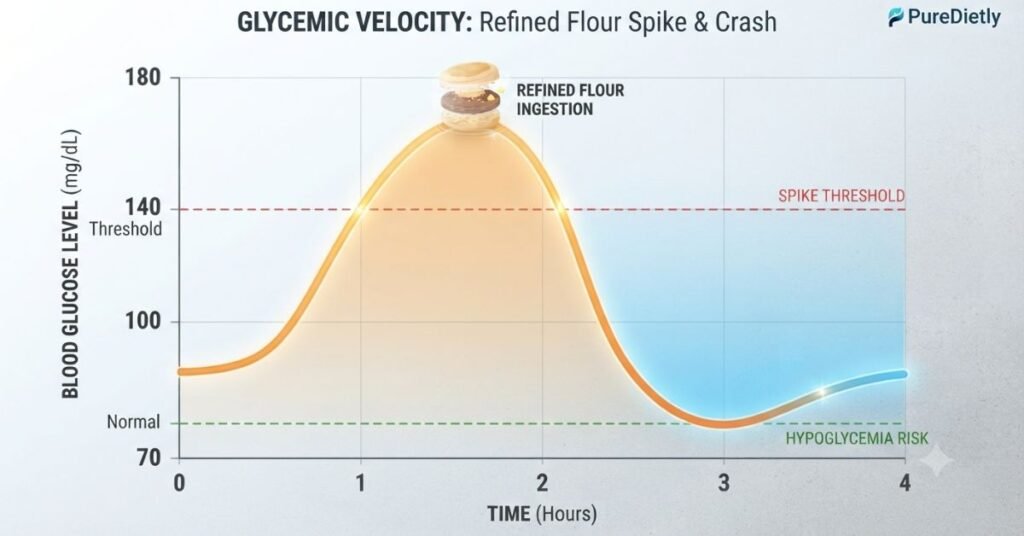
The primary concern regarding this breakfast item is not merely the calorie density; it is the Glycemic Index (GI). When you consume a McDonald’s sausage biscuit, your bloodstream experiences a rapid influx of glucose. Because the meal lacks meaningful fiber, there is no physiological “brake” on your digestion.
For individuals working to optimize their metabolic health, this creates a “glucose roller coaster.” This phenomenon leads to an initial surge followed by a rapid crash, which explains why you might feel lethargic or experience sugar cravings later in the morning. If you are curious about how to stabilize your levels after such a meal, check out our Anchor Strategy protocol to learn how to pair proteins to blunt glucose spikes effectively.
Understanding Glycemic Velocity
Glycemic velocity is the speed at which your glucose levels rise after eating. When you consume refined flour found in a standard biscuit, your body is essentially receiving a “glucose dump.”
Fast-food breakfasts are engineered for taste, not for metabolic stability.
Refined grains are stripped of their natural fiber, which normally slows down sugar absorption.
Without fiber, your pancreas must work harder to release insulin to manage the sudden spike.
Actionable Tips & Advanced Damage Control Protocols
If you find yourself in a position where you must rely on fast food, you can still apply a “damage control” mindset. You do not have to abandon your goals; you simply need to audit your choices.
Strategic Adjustments:
Remove the Biscuit: Eating just the sausage patty significantly reduces your carb intake, effectively lowering the glycemic load of the meal.
Prioritize Timing: Try to consume this meal on a day when you are physically active, as movement can help your muscles utilize the glucose more efficiently.
Hydration: Always drink plenty of water to support your kidneys in processing the high sodium content typically found in fast-food breakfast items.
Advanced Protocols for Mitigation:
Post-Meal Movement: A simple 10-minute walk immediately after eating can increase your muscles’ glucose uptake by up to 20%, effectively blunting the spike.
The Apple Cider Vinegar Hack: Consuming one tablespoon of diluted apple cider vinegar before your meal has been shown to improve insulin sensitivity and reduce the post-meal glucose rise.
Prioritize Later Meals: If your breakfast was heavy on carbs, ensure your next two meals are strictly protein and non-starchy vegetables to keep your insulin levels low for the remainder of the day.
Semantic Keywords & Topical Context
To ensure you are building true authority, remember that metabolic health involves more than just one meal. Topics such as fast food breakfast, insulin resistance, glycemic impact, refined carbohydrates, and nutritional transparency are critical components of your broader health education. By consistently auditing your food intake, you move away from fear-based dieting and toward a state of metabolic autonomy.
Add Seaweed Salad to your daily carb limit in 30 seconds!
Conclusion: Data-Driven Choices
The McDonald’s sausage biscuit is a classic convenience food, but it comes at a cost to your metabolic flexibility. By treating your meals as educational data points, you can make smarter, more informed choices without feeling deprived. Before your next drive-thru visit, read our previous audit on healthier protein anchors to see better alternatives that keep your glucose levels stable throughout the day.
Frequently Asked Questions (FAQs)
Q: Are there any healthy ways to eat a McDonald’s sausage biscuit?
A: While not ideal, removing the biscuit and consuming only the sausage patty can lower your glycemic load significantly, as you are removing the primary source of refined carbohydrates.
Q: Why does this biscuit cause a sugar spike?
A: It contains high amounts of refined flour, which is rapidly converted into glucose in the bloodstream, causing a spike without sufficient fiber to slow the process down.
Q: How does this compare to other fast-food breakfasts?
A: Most fast-food biscuits have similar glycemic profiles; always look for options that prioritize high-quality protein over refined grains to protect your metabolic markers.
Q: Can I improve my metabolic resilience if I eat fast food occasionally?
A: Yes. Metabolic resilience is about your overall pattern of eating. If you use protein anchors and prioritize fiber in other meals, your body can handle occasional convenience meals much more effectively.
About the Author
Gohar Fatima is a Metabolic Health Researcher and the founder of PureDietly. Specializing in clinical nutrition and glycemic variability, she helps individuals move beyond restrictive, fear-based dieting. By using data-driven “metabolic audits,” Gohar empowers her readers to regain control of their health through evidence-based, actionable dietary strategies. Her mission is to transform how you view food—from a source of stress to a powerful tool for long-term metabolic resilience and biological autonomy.
Medical Disclaimer:
The information on PureDietly is for educational purposes only and does not constitute medical advice, diagnosis, or treatment. Always seek the advice of your physician or qualified health provider regarding any medical condition or dietary changes.