

By Gohar Fatima | July 15, 2026
Editor’s Note:
At PureDietly, we believe nutrition is not just about counting calories; it is about auditing how food affects your biology. This 2026 audit reviews cherries through the lens of glycemic velocity and metabolic resilience. While fruits are often painted with a broad brush, our focus is on data-driven metabolic impact. Please prioritize your unique CGM (Continuous Glucose Monitor) data when choosing pantry staples.
Introduction
In the modern world of nutrition, fruit is often misunderstood. For those managing blood sugar, the common question—”Can I eat cherries and diabetes?” is more than just a simple diet query. It is a vital data point for your metabolic health. While many people fear fruit due to natural sugars, cherries offer a unique and scientifically interesting profile. In this 2026 metabolic audit, we look past the surface to analyze how cherries truly impact your glucose levels and whether they belong in your metabolic-friendly pantry.
The Metabolic Audit: Decoding the Glycemic Index
To understand if a specific food is “safe” for your glucose management, we must look at its Glycemic Index (GI). The GI score measures how quickly a carbohydrate-containing food raises blood glucose levels. Cherries are generally classified as a low-GI fruit, making them a potential ally for those pursuing metabolic stability.
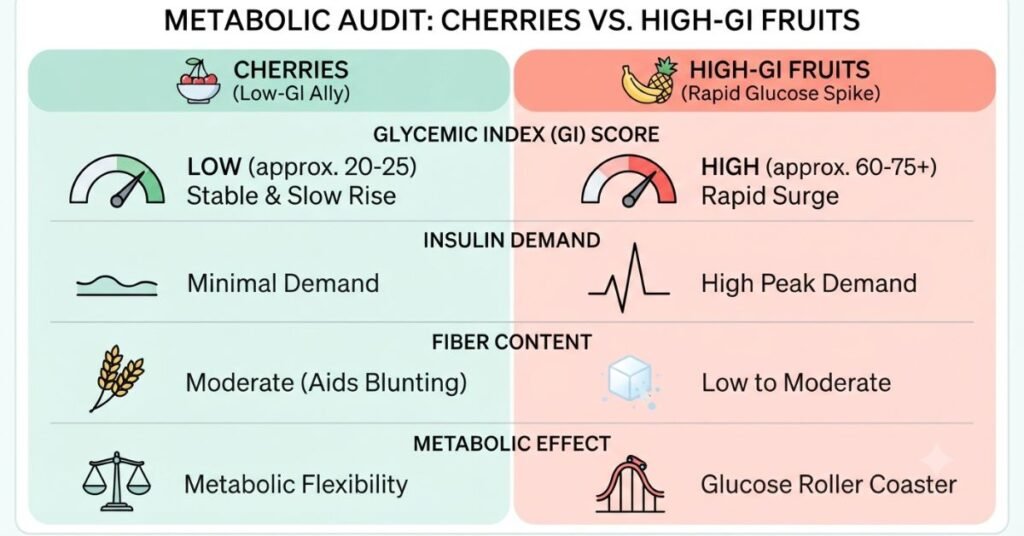
| Metric | Typical Value | Metabolic Impact |
| Glycemic Index (GI) | ~20–25 | Very Low impact |
| Glycemic Load (GL) | Low | Minimal insulin demand |
| Fiber Content | Moderate | Aids in glucose blunting |
- Low Glycemic Velocity: Because of their low GI score, cherries cause a slower, more controlled release of glucose into the bloodstream.
- Stable Insulin Response: Unlike processed snacks that cause rapid spikes, cherries provide a steady energy supply, helping to avoid the typical “glucose roller coaster” effect.
Understanding Variety: Sweet vs. Tart Cherries

When auditing your kitchen, it is important to distinguish between varieties, as their impact can differ slightly:
- Tart (Sour) Cherries: These often have a slightly lower GI than their sweet counterparts. They are packed with even higher concentrations of polyphenols, which are excellent for managing systemic inflammation.
- Sweet Cherries: While slightly higher in sugar, they are still well within the “low GI” category. They provide an excellent “crave-crushing” mechanism for those moving away from processed sweets.
Why Cherries Are a Metabolic Asset
For those aiming for metabolic autonomy, cherries provide specific biological benefits beyond their low sugar impact. When you audit your snack choices, you want ingredients that improve your biological resilience.
- Anthocyanin Power: Cherries are rich in anthocyanins, which are potent antioxidants. These compounds help reduce systemic inflammation, which is a major driver of insulin resistance.
- Melatonin for Recovery: Cherries are one of the few natural food sources of melatonin. By supporting better sleep quality, they indirectly assist in metabolic recovery and hormonal balance.
- Mineral Synergy: Packed with essential minerals like potassium, cherries support mitochondrial function, which is critical for maintaining electrolyte balance and long-term metabolic health.
Strategic Consumption: How to Audit Your Snack
On the PureDietly protocol, we believe in “auditing” your intake. Even healthy, low-GI foods can be problematic if consumed in excess or without context. To get the most out of your cherries, consider these strategic steps:

- Portion Control is Key: Even with a low GI, cherries contain carbohydrates. Stick to a half-cup serving to ensure your total daily carb load remains within your personal metabolic limits.
- The Protein Anchor Strategy: Always pair your cherries with a high-quality protein anchor. For example, adding them to plain Greek yogurt or eating them alongside a handful of raw walnuts helps slow down digestion even further. This is a core concept we covered in our [Previous Audit: Healthy Protein Anchors].
- Optimal Timing: Consume your fruit post-meal rather than on an empty stomach. This allows the fiber and protein from your main meal to act as a buffer, preventing any minor glucose spikes that might otherwise occur.
The Role of Cherries in Post-Workout Recovery
For those focusing on metabolic fitness, post-workout nutrition is critical. Cherries can serve as a “metabolic recovery” tool.
- Muscle Recovery: The anti-inflammatory properties of cherries can help reduce post-exercise muscle soreness naturally.
- Glycogen Replenishment: They provide a gentle, natural source of glucose that can help replenish glycogen stores without triggering the massive insulin response associated with refined sports drinks or processed post-workout bars.
Your Metabolic Pantry: A Quick Audit Checklist
Before you add cherries to your shopping list, use this simple audit checklist to ensure quality:
- Check the Label: Ensure no added sugars or high-fructose corn syrup.
- Fresh or Frozen: These are your best options for structural integrity.
- Pairing Ready: Do you have your protein anchor (nuts, yogurt, or seeds) ready to pair?
- Measure First: Are you pre-portioning your half-cup serving?
Damage Control: What to Watch Out For
A true metabolic auditor must remain vigilant. Not all cherry products are created equal, and some common forms can actually harm your metabolic flexibility.
- Avoid Canned or Syrupy Versions: Most canned cherries are soaked in heavy sugar syrups. These are essentially “glucose bombs” that will trigger an immediate spike, regardless of the fruit’s natural profile. Always check the label for added sugars.
- Prioritize Quality: When shopping, choose fresh or flash-frozen cherries without any added sweeteners or preservatives. These options preserve the structural integrity and nutrient profile of the fruit.
- Individual Variability: Remember that metabolic health is deeply personal. Your CGM data is the ultimate truth. If you notice a spike after eating cherries, adjust your portion size or your pairing strategy.
Conclusion: Data-Driven Choices
Cherries can be a delicious, nutrient-dense addition to a diabetes-friendly diet when managed with data. By focusing on low glycemic velocity and pairing them with the right protein anchors, you can maintain your metabolic flexibility without feeling restricted. As always, prioritize your personal CGM data to see how your unique biology responds to this ingredient.
Metabolic health is a continuous process of auditing. Every ingredient you choose is a data point. If you are curious about how to further optimize your pantry, read our previous audit on [Protein Anchors] to see how you can pair your favorite fruits with the right proteins to keep your glucose levels stable throughout the day. By consistently auditing your food, you transform your relationship with nutrition from one of fear to one of empowerment.
Add Seaweed Salad to your daily carb limit in 30 seconds!
Frequently Asked Questions (FAQs)
- Q: Can cherries cause a blood sugar spike?
- A: Because cherries have a low glycemic index, they are unlikely to cause a rapid spike when eaten in moderate portions and paired with protein.
- Q: Are frozen cherries as healthy as fresh ones?
- A: Yes, provided they are plain and have no added sugars. Frozen cherries are often processed quickly, which helps preserve their nutrient content.
- Q: How many cherries should I eat in one sitting?
- A: A standard serving size is about half a cup. This provides nutritional benefits while keeping your total net carb intake manageable.
- Q: Should I worry about the natural sugar in cherries?
- A: The natural fructose in whole fruit is accompanied by fiber, which slows absorption. This is very different from the concentrated sugars found in processed foods.
About the Author:
Gohar Fatima is a Metabolic Health Researcher and the founder of PureDietly. Specializing in clinical nutrition and glycemic variability, she empowers individuals to achieve “metabolic autonomy.” By using data-driven metabolic audits, Gohar helps readers move beyond restrictive, fear-based dieting to regain control of their health through sustainable, evidence-based strategies.
Medical Disclaimer
The information on PureDietly is for educational purposes only and does not constitute medical advice, diagnosis, or treatment. Always seek the advice of your physician or qualified health provider regarding any medical condition or dietary changes.