
Are Grits Healthy? The Ultimate 2026 Metabolic and Blood Sugar Guide
Editor’s Note
Navigating traditional comfort foods while managing prediabetes or tracking your continuous glucose monitor (CGM) can feel tricky. With endless conflicting advice on Southern staples, knowing whether standard corn dishes genuinely support your metabolic health is tough. In this data-driven audit, we break down the clinical science and nutritional facts behind grits, helping you make an informed choice for your daily wellness routine.
Walking down the digital wellness aisle often feels like an obstacle course, especially when you are trying to balance traditional comfort foods with stable blood sugar. Everywhere you look, food blogs debate whether classic breakfast bowls fit into a healthy lifestyle. For millions managing prediabetes, tracking CGM metrics, or fighting chronic inflammation, finding a reliable breakfast habit is a daily challenge.
If you have ever asked yourself whether grits are healthy for your specific metabolic goals, you are definitely not alone. Traditional breakfast routines often trigger immediate blood sugar spikes, but understanding grain processing helps you make smarter choices without sacrificing flavor.
Let us dive deep into the clinical facts and examine how grits stack up across every major metabolic and nutritional health metric.
What Are Grits and How Are They Processed?
Before examining their health impact, it helps to understand what makes this traditional Southern staple unique. Grits are made from ground corn, typically hominy, which means the kernels have been soaked in an alkaline solution to soften the hulls and release vital nutrients.
- Nutrient Extraction: Traditional stone-ground varieties retain more of the corn kernel’s natural fiber and mineral content compared to heavily refined instant versions.
- Carbohydrate Profile: Grits consist primarily of complex carbohydrates, meaning they break down into glucose during digestion.
- Bioactive Compounds: Whole-grain or stone-ground options provide trace amounts of iron, magnesium, and B vitamins to support cellular energy.
When corn goes through modern milling, manufacturers often strip away the germ and outer hull to increase shelf life. Unfortunately, this stripping process removes critical micronutrients and dietary fiber. Understanding this mechanical difference is the first step toward choosing a bowl that respects your metabolic baseline.
Grits vs. Oatmeal: Side-by-Side Comparison
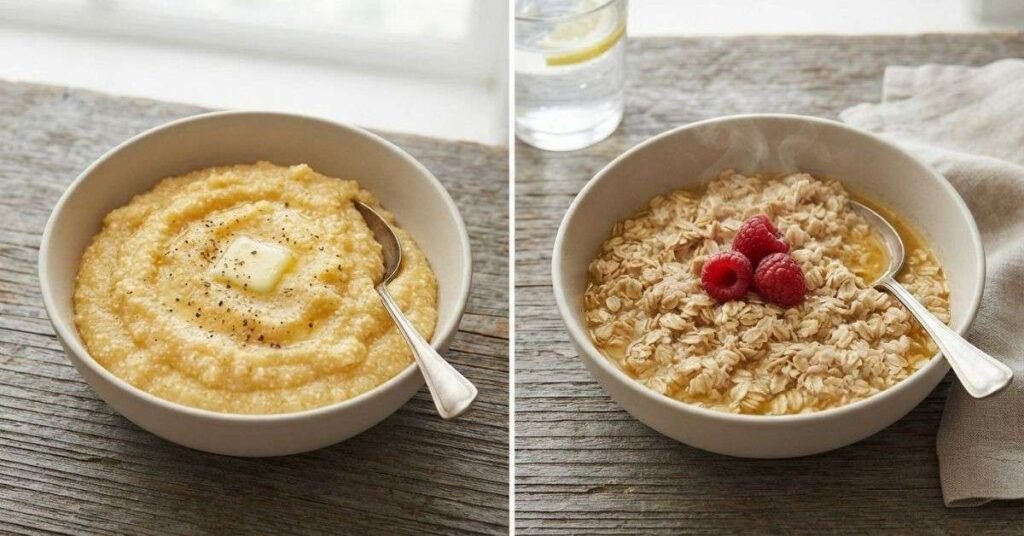
To accurately evaluate their role in a wellness routine, we must look at how grits interact with human biochemistry compared to other popular breakfast grains like rolled oats. Review the comparison table below to visualize these differences:

| Evaluation Metric | Instant Corn Grits | Traditional Stone-Ground Grits | Rolled Oatmeal |
| Fiber Content | Low (approx. 1g per cup) | Moderate (2 to 3g per cup) | High (4g+ per cup) |
| Glycemic Index (GI) | Moderate to High | Moderate | Lower (slow-release beta-glucan) |
| Blood Sugar Impact | Can trigger rapid glucose elevation | Steadier rise when paired with protein | Friendly for sustained insulin stability |
| Processing Level | Highly refined and stripped | Minimally processed whole grain | Whole grain with intact soluble fiber |
| Metabolic Risk Profile | May cause sharp post-meal spikes | Moderate choice with healthy fats/protein | Excellent for long-term glycemic control |
While oatmeal holds a clear structural advantage due to its viscous beta-glucan soluble fiber, stone-ground corn grits can still find a disciplined place in your weekly meal rotation. The key lies entirely in how the grain is milled and what you pair it with on your plate.
How Refined Carbohydrates Impact Insulin Sensitivity
To appreciate the nutritional reality of grits, we must examine what high-glycemic carbohydrates do to your system. When your body processes heavily refined grains without sufficient fiber or fat protection, glucose enters your bloodstream rapidly.
- The Post-Meal Glucose Spike: Fast-digesting starches flood your system, forcing your pancreas to release a sudden surge of insulin to clear the sugar.
- Energy Crashes: Rapid insulin responses frequently lead to reactive hypoglycemia, leaving you fatigued and craving more carbohydrates by mid-morning.
- Metabolic Fatigue: Repeated high-glycemic loads over time strain your metabolic pathways and worsen insulin resistance.
Because of these profound physiological hurdles, understanding how to modify your breakfast bowl is crucial for long-term health. When unshielded starches hit an empty stomach, your continuous glucose monitor will quickly reflect a sharp upward trajectory. Mitigating this response requires a strategic approach to food combining and portion architecture.
Why Stone-Ground Grits Win for Blood Sugar Control
For anyone keeping a close eye on their continuous glucose monitor or trying to manage prediabetes, choosing the right variety of grits makes a massive biological difference.
- Slower Digestion Rates: Stone-ground options retain more natural texture and fiber, which slows down gastric emptying and blunts sharp glucose spikes.
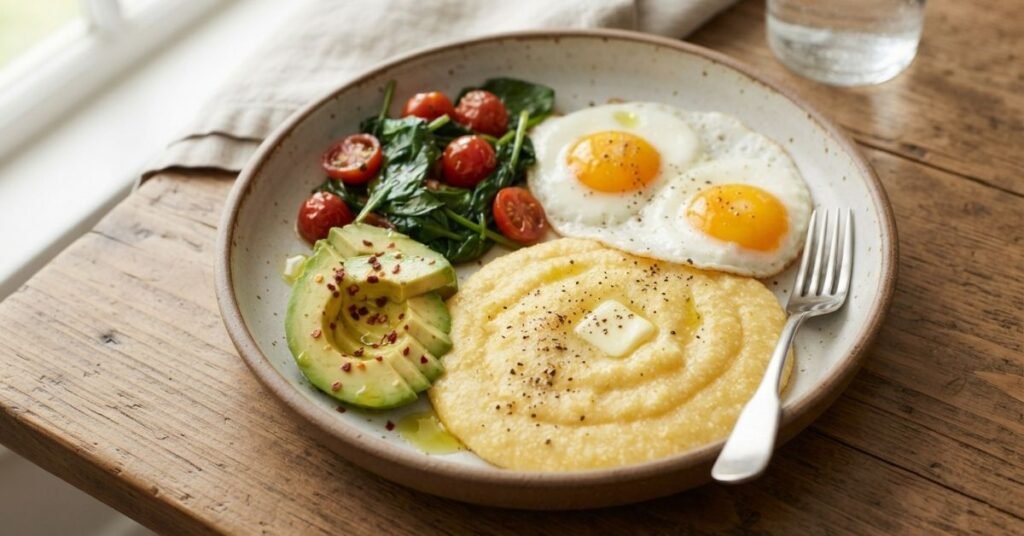
- Strategic Macronutrient Pairing: Adding healthy fats and clean proteins—such as pasture-raised eggs, aged cheddar, or a drizzle of olive oil—transforms your bowl into a balanced metabolic meal.
- Portion Control Advantage: Enjoying a modest, controlled serving size allows you to satisfy traditional comfort cravings without overwhelming your daily carbohydrate limit.
By respecting portion dynamics and avoiding instant packets loaded with artificial additives, you protect your fasting window. Eating mindfully ensures that comfort food never compromises your long-term wellness milestones.
Deep Dive: The Science of Grain Processing and Glycemic Load
A healthy metabolic approach requires looking beyond basic calorie counts to evaluate the actual glycemic load of your meals. When corn kernels undergo harsh industrial processing, vital outer layers are stripped away.
- Preserving Complex Starches: Choosing unrefined or stone-ground corn ensures that your digestive system works harder to break down starches, promoting steady energy.
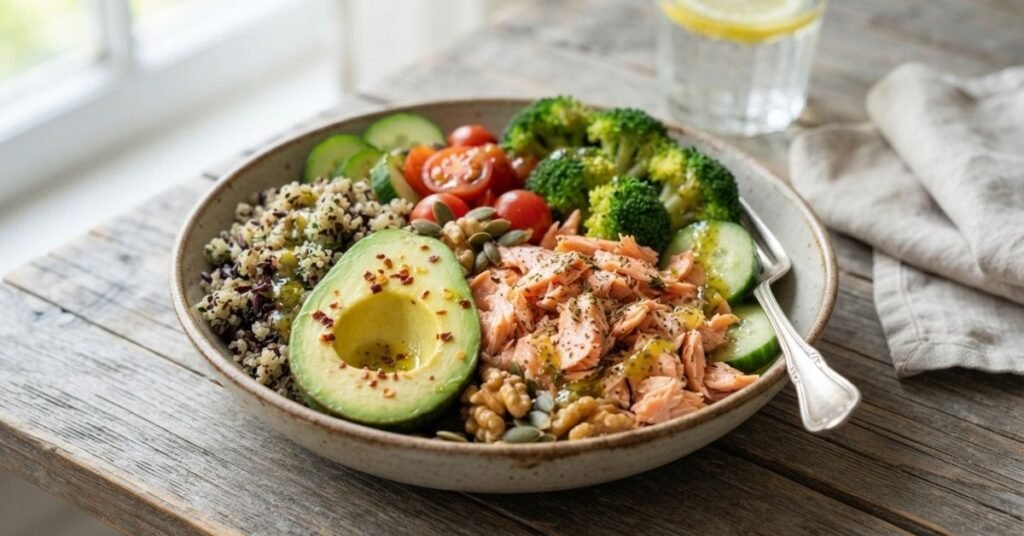
- Gut Microbiome Interaction: While refined corn offers minimal prebiotic fiber, pairing your bowl with fiber-rich sides or greens supports a diverse, balanced gut ecosystem.
- Managing Inflammation: Minimizing ultra-refined, high-sugar breakfast items helps reduce overall systemic inflammation and protects long-term metabolic function.
Researchers studying metabolic biochemistry note that the physical matrix of a food dictates how fast enzymes can access internal starches. Whole-kernel grinding preserves a tougher cellular matrix, requiring more digestive effort. This built-in biological slowdown is precisely what guards your bloodstream against sudden glycemic shocks.
Navigating Safety, Quality, and Common Misconceptions
Although traditional grits can fit into a healthy diet, many consumers still wonder about preparation myths, sodium risks, and hidden ingredients.
- The Butter and Salt Trap: Restaurant-style grits are often loaded with heavy cream, excessive butter, and sodium. Keep your home preparations clean and nutrient-dense.
- Beware of Instant Packets: Flavored instant grits frequently contain added sugars and artificial preservatives, which instantly sabotage their nutritional value.
- Balancing Your Daily Carbs: If you enjoy grits for breakfast, balance out your remaining meals with high-protein and healthy fats, similar to our Celery Juice Benefits: The Ultimate 2026 Metabolic and Gut Health Guide approach.
Clearing up these common marketing myths empowers you to enjoy regional favorites without falling prey to hidden traps. Always inspect ingredient labels carefully, ensuring your pantry staples remain free from unwanted chemical preservatives or refined sugars.
Add Seaweed Salad to your daily carb limit in 30 seconds!
Frequently Asked Questions (FAQs)
1. Are grits safe for people managing prediabetes?
Yes, in moderation, especially if you choose stone-ground varieties and pair them with healthy fats and proteins to slow down glucose absorption.
2. Do instant grits cause higher blood sugar spikes?
Instant grits are more heavily processed, meaning they digest much faster and can cause sharper blood glucose elevations compared to stone-ground alternatives.
3. How can I lower the glycemic impact of my morning grits?
You can blunt the glucose response by stirring in healthy fats like butter or olive oil, adding a source of protein like eggs or cheese, and keeping your portion size moderate.
4. Are grits healthier than oatmeal?
Oatmeal generally contains more soluble fiber (beta-glucan), which offers superior cholesterol-lowering and blood sugar benefits, but stone-ground grits can still be enjoyed as part of a varied rotation.
Conclusion: Making Smart Choices for Your Daily Wellness
Ultimately, when evaluating whether grits belong in your routine, the evidence points to a versatile grain that can be enjoyed safely with mindful preparation. If your primary goal is to protect your long-term metabolic health, avoid sharp morning sugar spikes, and enjoy traditional foods intelligently, choosing stone-ground options is a brilliant strategy.
For more data-driven insights and healthy lifestyle swaps designed for modern wellness seekers, continue exploring our latest articles right here at PureDietly!
About the Author
Gohar Fatima is the founder and lead metabolic health researcher at PureDietly, dedicated to translating complex nutritional science and practical wellness habits into easy-to-follow advice for everyday readers navigating prediabetes and metabolic wellness.
Medical Disclaimer
The content provided on PureDietly is for informational purposes only and is not intended as medical advice, diagnosis, or treatment. The team at PureDietly are not licensed medical physicians. Always seek the advice of your physician or qualified health provider with any questions regarding a medical condition or dietary changes. Individual metabolic responses and health results may vary.